REVIEW · OAHU
Certified Diver: 2-Tank Night Dive
Book on Viator →Operated by Dive Oahu Inc · Bookable on Viator
Night water on Oahu changes everything fast. This is a certified two-tank night scuba outing built for PADI divers, where the ocean shifts from daylight colors to flashlight-and-darkness detail. I love the PADI Professional guidance that keeps everything calm and safe, and I love the fact you get two very different underwater stops across the evening.
One thing to plan for: the ride is weather-dependent, and the night show can vary with conditions. On a bad-visibility or slow-night, you’ll still have a great experience, but you might not see every headline creature.
In This Review
- Key points before you go
- Night scuba timing on Oahu: 5:30 pm start, sunset surface interval, and 3 hours total
- What you actually see: wreck and pipe stops after the lights go out
- Sea Tiger wreck in twilight (before full dark)
- Kewalo Pipe / Mid-Pipe after sunset (the real night show)
- The crew and gear setup that make night feel easy
- Lights, buoyancy, and why your guide matters more than you think
- Included snacks, refreshments, and the small comfort wins
- Price check: is $248.81 worth it for a two-tank night outing?
- Add-ons that can level up your night (and when they’re worth it)
- How to make this a smooth night: what you must be ready for
- Group size and vibe: controlled, friendly, and sometimes surprisingly small
- Lost items and customer care: a real signal of how they operate
- Should you book this Oahu night scuba with two tanks?
- FAQ
- What time does the 2-tank night scuba session start?
- How long is the experience?
- What’s included in the price?
- Do I need proof of certification?
- What are the basic participation requirements?
- Where is the meeting point?
- Are add-ons available?
- Can I fly after this outing?
- What’s the cancellation policy?
Key points before you go
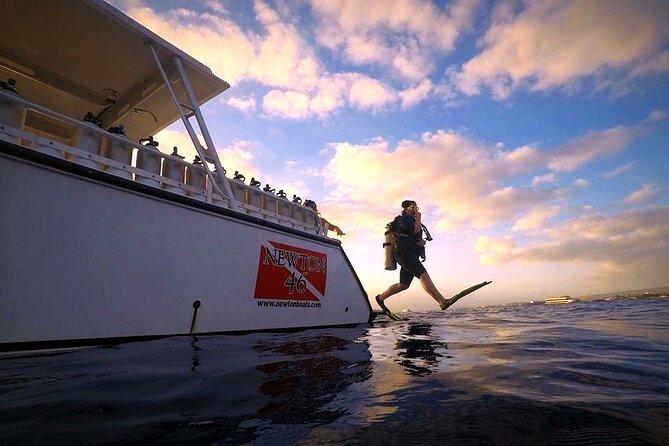
- Twilight-to-night schedule: you ride out sunset on the surface, then continue after dark.
- Two-tank format: more underwater time and a chance to compare habitats (wreck vs. pipe).
- Premier gear + snacks: included gear rental (ScubaPro gear is mentioned) plus refreshments.
- A crew that talks and guides well: names you may hear include Capt. Adam, Megan, Patrick, Miranda, Josh, Nacho, and Alex.
- Cap of 21 divers: the group size stays controlled, and small groups can happen.
Night scuba timing on Oahu: 5:30 pm start, sunset surface interval, and 3 hours total
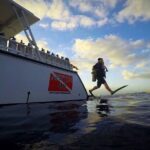
This outing starts at 5:30 pm at the Kewalo Basin Harbor area (1085 Ala Moana Blvd, suite 109). The whole experience runs about 3 hours, so it’s an evening plan, not a half-day that spills into the rest of your vacation.
Here’s why the timing matters. You leave before sunset, then you get a surface interval with the sunset over the ocean. That break is not filler. It helps you reset, hydrate, and mentally switch from daytime scuba habits to night-only awareness before the second underwater section.
You can also read our reviews of more evening experiences in Oahu

What you actually see: wreck and pipe stops after the lights go out
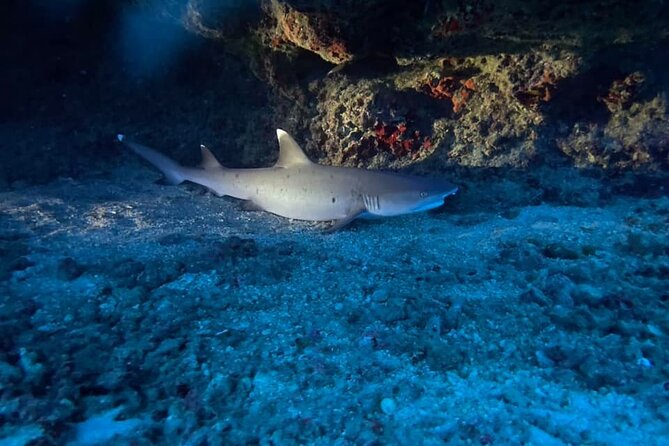
The heart of this program is the contrast between a structured spot and a habitat spot. Based on the stops commonly used, you’ll likely experience something like a wreck location (often mentioned: Sea Tiger) before sunset, then a pipe area after dark (often mentioned: Kewalo Pipe or Mid-Pipe).
Sea Tiger wreck in twilight (before full dark)
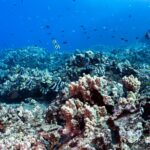
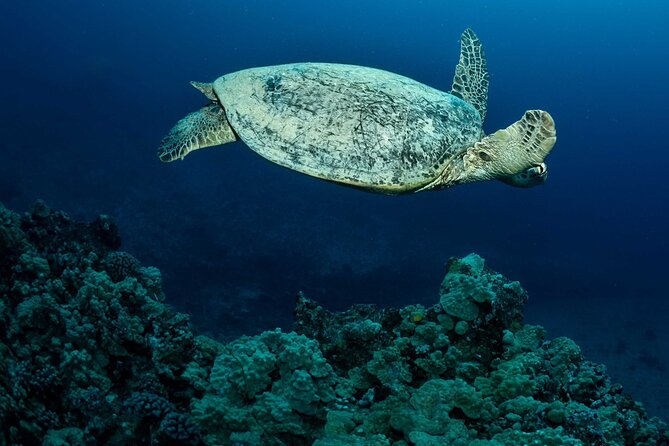
In the earlier section, you’re often still working in fading light. That’s a neat transition because you can compare how fish behavior shifts as it gets darker. On wrecks like Sea Tiger, the structure gives cover and food sources, so you can see a lot of movement close to the reef-like surfaces.
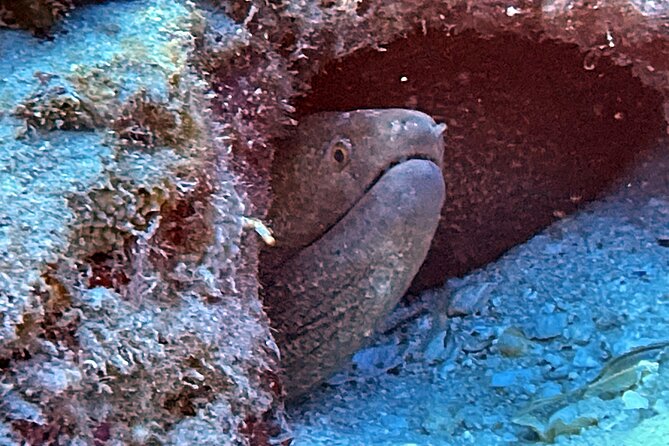
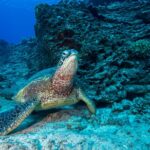
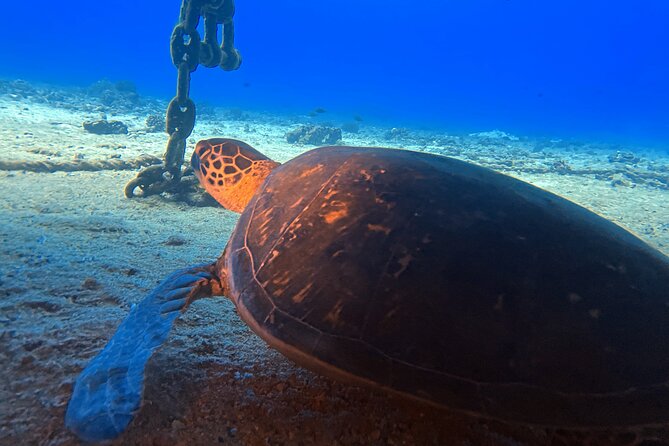
Examples people mention from the earlier portion include eels, urchins, lots of fish, and even turtles. If you like “I can read the scene” visibility, this phase is usually the easiest place to start.
Kewalo Pipe / Mid-Pipe after sunset (the real night show)
After the sun drops, the ocean becomes a different world. You’re scanning with your light, and you start noticing small behavior details that day diving often misses. Pipes and similar structures tend to concentrate life and create predictable spots where creatures feed or shelter.
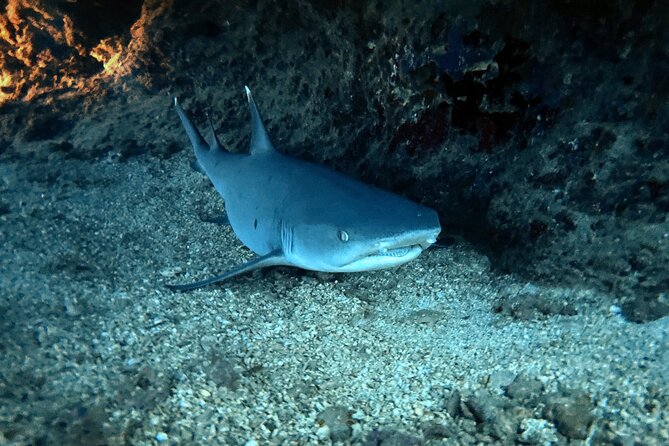
Sightings people call out for the later portion include unicorn fish and slipper lobster, glowing cuttlefish, octopus activity, bioluminescent-type critters like nudibranch, and even a monk seal that swam with the group for part of the session. One review also mentions a shark sighting, which tells you the night can be exciting, not just pretty.
A quick reality check: every night isn’t equally busy. If conditions are tough or marine life is elsewhere, your guide will still point out the “what to watch for” signs—movement near structure, eye-shine moments, and the small glowing stuff that makes night scuba special.
The crew and gear setup that make night feel easy
Night scuba succeeds or fails on two things: clear instruction and good gear. This operator includes FREE premier gear rental, and people specifically mention ScubaPro gear. That matters because you want your equipment sorted before darkness arrives, not during.
What I like about the crew’s approach is that multiple guides and captains show up in feedback as friendly, organized, and safety-focused. Names that come up include Capt. Adam (with guides Jeff, Heather, and Chris), Megan, Jordan, Patrick, Miranda, Alex, and Kevin. You can treat that as a signal: you’re not getting a random “good luck” attitude.
Between dives, there’s also time to reset. People mention the in-between conversation with the captain and guides as fun, which helps take the edge off if you’re new to night conditions.
You can also read our reviews of more scuba diving tours in Oahu

Lights, buoyancy, and why your guide matters more than you think
Night changes reference points. In daylight, you use everything—horizon, shadows, sand colors. At night, you lean more on buoyancy control and flashlight discipline. A strong PADI guide helps you keep the lights working for you, not against you.
Even if you’re a confident certified diver, that guidance matters more at night than you’d expect.
Included snacks, refreshments, and the small comfort wins
The price includes snacks and refreshments, which sounds minor until you’re out on the water in the evening. You’re starting at 5:30 pm, so many people are coming from a full day on Oahu. Having food and drinks onboard keeps the experience comfortable and helps you stay focused during the surface interval.
Also included: free premier gear rental and a guided tour by a PADI Professional. That bundle gives this outing a better value feel than “pay extra for everything” day trips.
Price check: is $248.81 worth it for a two-tank night outing?
At $248.81 per person, this isn’t a bargain-basement activity. But it’s also not overpriced when you look at what’s bundled.
You’re getting:
- Two tank sessions in one evening plan (more time in the water than single-tank options)
- FREE gear rental
- Snacks and refreshments
- A PADI Professional guiding you through night conditions
For many divers, the real cost comes from what you’d otherwise pay separately: equipment rental, guide attention, and a structured evening schedule that makes night feel manageable. Here, you’re paying once for the full setup.
If you already own all gear, you might wonder if you’re paying just for the tanks and guide. The answer is still yes, because night depends heavily on the guide’s ability to spot targets and manage safety and timing across dark-water conditions.
Add-ons that can level up your night (and when they’re worth it)
If you want to personalize the experience, add-ons are available, including:
- GoPro rental
- DPV underwater scooter rental
- Nitrox tank rental
- Private Guide
Here’s how I think about value:
- A GoPro makes sense if you’re determined to capture the bioluminescent-looking moments and close-up behavior near structure.
- A DPV can be great if you want to cover more water efficiently, but only if your certification and comfort with night conditions are solid.
- Nitrox can be useful if it’s part of how you plan your dives (and you’ve used it before).
- A Private Guide is the best move if you want extra attention on buoyancy, light technique, or pacing.
If you want the simplest plan, stick with what’s included and spend your energy watching, not fiddling.
How to make this a smooth night: what you must be ready for
This outing is for PADI-certified divers (proof of certification through PADI or another approved diving course is required before boarding). You also need to be able to swim, be over age 15, and be in good health.
You’ll also need to provide your weight and date of birth. And a practical must: do not fly within 24 hours of diving.
Plan to arrive at the harbor at least 30 minutes early. That buffer gives time for waivers and equipment fitting, which matters even more at night when you don’t want delays.
Group size and vibe: controlled, friendly, and sometimes surprisingly small
The cap is 21 travelers. That’s a good size for night scuba: large enough to run smoothly, small enough that you’re not lost in the crowd.
One review also points out a situation where only two people were on the boat during a trip meant for many divers. That kind of small-group reality can lead to more direct attention and a more personal feel.
Either way, the overall vibe in feedback is stress-free: staff create a fun atmosphere while still running a tight safety process.
Lost items and customer care: a real signal of how they operate
One of the more memorable bits of service mentioned is that a diver left glasses behind and was able to call at night. The shop handled getting them returned the next morning, including for flight timing.
That’s not part of the scuba experience itself, but it signals something important: when logistics get messy, this team doesn’t disappear.
Should you book this Oahu night scuba with two tanks?
If you’re PADI-certified and you want your first real taste of Oahu at night, I think this is an easy yes. The biggest reason is the two-part format: twilight clarity in one spot, then darker habitat moments after sunset in another.
Book it especially if:
- You want a guided night plan that doesn’t feel improvised.
- You like seeing how a wreck or structure changes the night scene.
- You’re happy with an evening schedule and want to use the night sky over Waikiki-area waters for your surface interval.
Skip it or think twice if:
- You’re not comfortable with night visibility being variable.
- You need parking included or expect to drive somewhere easy—parking isn’t included, so plan accordingly.
If you’re ready for a fun, well-run evening with premier gear and a PADI Professional steering the experience, this one is a strong value way to see Oahu’s underwater world after dark.
FAQ
What time does the 2-tank night scuba session start?
It starts at 5:30 pm.
How long is the experience?
It’s about 3 hours.
What’s included in the price?
The price includes FREE premier gear rental, FREE snacks and refreshments, and a guided tour by a PADI Professional.
Do I need proof of certification?
Yes. All divers must show proof of certification through PADI or another approved diving course before boarding.
What are the basic participation requirements?
You must be able to swim, be over age 15, and be in good health. You also need to provide your weight and date of birth.
Where is the meeting point?
Kewalo Basin Harbor: 1085 Ala Moana Blvd, suite 109, Honolulu, HI 96813, USA.
Are add-ons available?
Yes: GoPro rental, DPV underwater scooter, Nitrox tank rental, and a Private Guide.
Can I fly after this outing?
No. Divers must not be flying within 24 hours of diving.
What’s the cancellation policy?
The provided info includes a stated 48-hour cancellation policy (no refund if canceled within 48 hours) and also a separate policy section saying you can cancel up to 24 hours in advance for a full refund. Check your booking confirmation email for the exact window used for your date.