REVIEW · OAHU
DISCOVER Scuba Diving Experience in Honolulu
Book on Viator →Operated by Dive Oahu Inc · Bookable on Viator
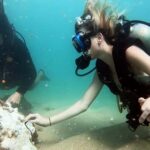
First-timers, this makes you feel ready. The Honolulu intro scuba experience pairs you with a PADI Professional for a 1-on-1 skills session, then sends you to Oahu reefs where sea life shows up fast—think turtles, eels, rays, and more. It’s a real step beyond snorkeling, because you get that 30-foot-down feeling and you’re closer to the action.
The main thing you should plan for is medical clearance. You’ll need to clear a medical questionnaire (or bring a physician’s note), and the rules say there’s no refund if you don’t pass during the allowed window.
In This Review
- Key highlights to know before you go
- Kewalo Basin Harbor setup and your first warm-up
- The 1-on-1 skills session: what you’re actually learning
- Reef time after training: shallow, guided, and close to wildlife
- Marine life you can hope for on Oahu’s reefs
- Safety and comfort: how the crew helps you stay relaxed
- What’s included for $141.10 and why it feels like good value
- Before you go: swimmer level, forms, and what to bring
- Who this Honolulu intro scuba experience fits best
- Should you book? My honest take for first-timers
- FAQ
- Where does this experience start?
- How long is the experience?
- What’s included in the price?
- Do I need medical clearance before I can participate?
- What are the age and swimming requirements?
- Can I bring my own camera underwater?
- What’s the cancellation policy for refunds?
Key highlights to know before you go
- 1-on-1 instruction with a PADI Professional so you practice skills without getting rushed
- Reef sessions built for beginners, often with a first practice area like Turtle Canyon/Turtle Cove, then another reef spot such as shallow reef or Mario Land
- Free premier gear rental plus snacks and light refreshments during the experience
- Small group size (max 21 travelers), which helps keep the training more personal
- Real-world conditions matter: wind can affect visibility, and sea sickness can happen
- You must be comfortable swimming and follow safety limits, including no flying within 24 hours
Kewalo Basin Harbor setup and your first warm-up
Your experience starts at Kewalo Basin Harbor, at 1085 Ala Moana Blvd, Suite 109, Honolulu. You’ll want to arrive early because the schedule calls for check-in 30 minutes before departure.
Once you check in, you’ll get matched up with the equipment you need. The big comfort factor here is that all scuba equipment is provided and gear rental is included, so you don’t have to guess about fin fit, mask sizing, or what to bring.
You’ll also handle the safety paperwork. Even when you’re excited, you should expect a lot of forms and waivers—normal for scuba. The upside is that the staff is used to anxious first-timers. In multiple reports, instructors like Jeff, Jared, Justin, and Nacho get praised for explaining what hand signals mean, why certain safety rules exist, and how to stay calm underwater.
If you’re the type who gets nervous in open water, don’t pretend you won’t feel it. Instead, lean into the 1-on-1 approach they use for skills practice. That’s the part that tends to make people stop thinking and start breathing.
You can also read our reviews of more scuba diving tours in Oahu
The 1-on-1 skills session: what you’re actually learning
This is a “learn it first, then go see the reef” structure. The training is led by a PADI Professional, and the goal is to teach essential safety guidelines and basic skills under close supervision.
What that looks like in practice: you’ll review procedures on land, then you’ll move into the water for a practice segment. Several first-timer accounts describe three main skills underwater, followed by a short controlled swim—often in the 5–7 minute range for the first session.
You’ll also get the underwater communication system down. Many reports specifically mention going over hand signals and maneuvers step-by-step. That matters more than people expect, because once you’re under, you’re not going to hear instructions. You’ll rely on those gestures and the instructor’s calm presence.
A helpful detail: some trips are structured so each non-certified diver gets that 1-on-1 coaching before the group heads out. One report described an instructor working with each person individually and others waiting on the boat between sessions. If you hate feeling rushed, that pacing is a plus.
Reef time after training: shallow, guided, and close to wildlife
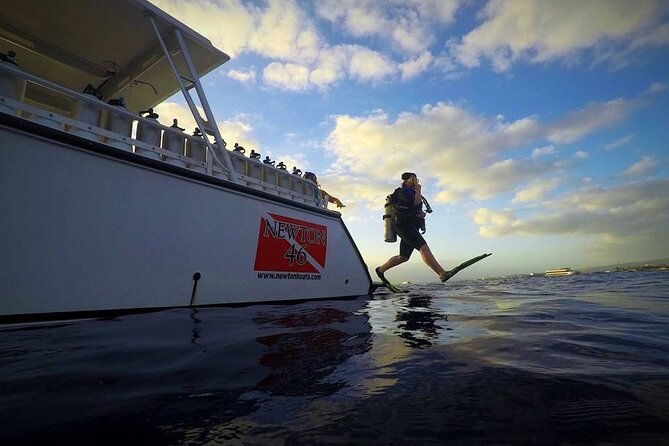
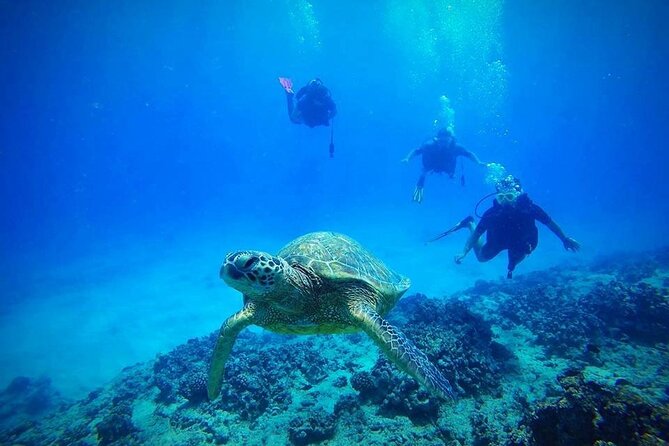
After the skills portion, you’ll go on a guided reef tour. This is where the experience starts to feel like a different planet compared to snorkeling. You’re not just looking at fish from the surface—you’re floating down at shallow depths and using your breathing pace to explore.
First-timer reports commonly mention shallow reef depths around 30–40 feet. Some people described an experience that included two reef stops, with a practice site first (often Turtle Canyon/Turtle Cove) and another reef location afterward (such as shallow reef or Mario Land, depending on conditions).
The guide keeps you oriented on the reef. That means you don’t just drift and hope. You follow the plan, stay aware of spacing, and get to enjoy the view without turning it into a solo problem-solving mission.
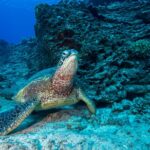
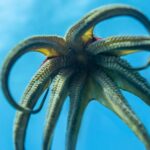
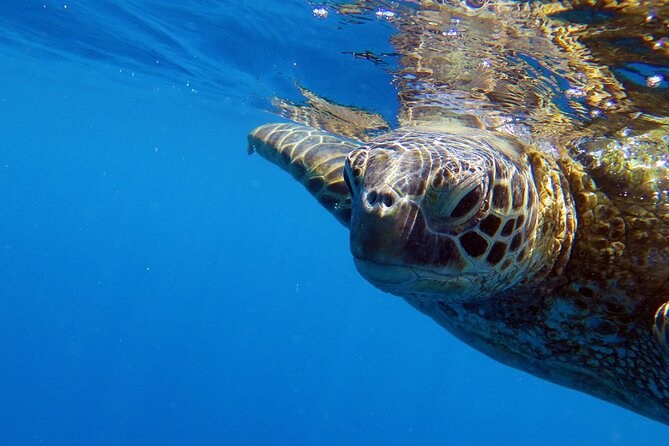
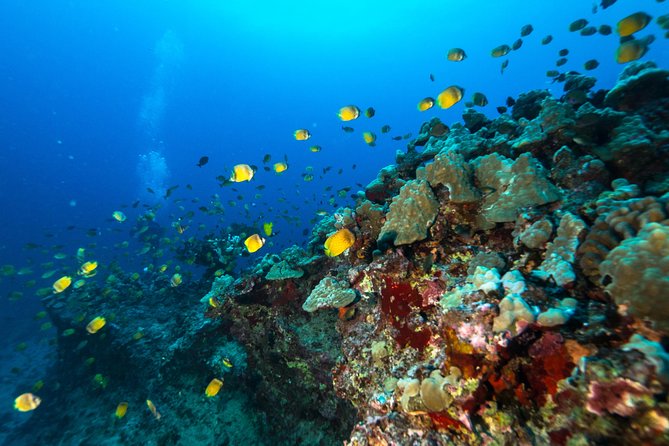
Marine life sightings are a big part of why this is so highly rated. Reports include sea turtles right away for some groups, plus plenty of reef fish. Other memorable sightings mentioned in reviews include eels, rays, octopus, puffer fish, and sometimes a shark. A few groups also reported seeing a pod of dolphins from the boat, which is a nice bonus even if underwater wildlife is the main event.
Marine life you can hope for on Oahu’s reefs
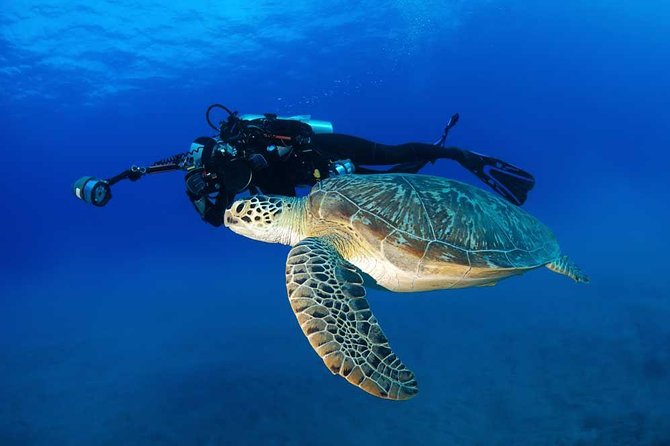
If you’re coming to Oahu for sea life, you’re in the right place. What’s encouraging is that first-timers don’t just see the reef “in theory.” Multiple accounts describe getting turtles early, then continuing to spot smaller surprises—fish patterns, coral shapes, and the way animals move when you’re not kicking up sand.
Here’s what’s repeatedly shown up:
- Sea turtles (often the highlight, sometimes spotted quickly)
- Eels and other reef dwellers
- Colorful reef fish, including puffer fish mentioned in reports
- Rays and occasional larger wildlife like sharks
A quick reality check: sightings depend on conditions and timing. Water clarity and animal behavior vary. Wind can also make the boat ride a bit choppy, and one review notes that wind rocking affected visibility. Still, even when visibility isn’t perfect, being underwater tends to feel special because the reef is right there, not just off to the side.
If wildlife is your priority, consider this a great middle ground. It’s more involved than snorkeling, but it’s also designed to be approachable for non-certified divers.
Safety and comfort: how the crew helps you stay relaxed
Scuba is physical, but it’s also mental. The best thing about this experience is how often the training is described as patient and confidence-building, even for nervous first-timers.
Expect instruction around:
- Safety rules and how to respond underwater
- Hand signals and basic maneuvers
- Staying close to your guide and practicing skills at your pace
Older first-timers also report improved confidence, and families note the crew can work with kids when everyone is willing and ready. The minimum age is 10 years old (and 10–11-year-olds require an additional fee). That means you may share the boat with families and older teens, not just couples.
Weather and motion can be the wildcard. Wind and boat movement can trigger seasickness for some people. One account mentions the guide and crew being patient and offering options when someone felt sick. If you’re prone to motion sickness, plan ahead and consider what helps you usually.
Also note the rules around flying. Divers must not be flying within 24 hours of the underwater session. That’s one of those small constraints that can matter if your itinerary is tight between islands or flights.




What’s included for $141.10 and why it feels like good value
At $141.10 per person for about 3 hours, you’re paying for a complete intro package, not just a boat ride. The value shows up in the practical inclusions:
- Free premier gear rental
- Snacks and light refreshments
- Guided instruction by a PADI Professional
Gear rental alone can cost real money elsewhere, and first-time scuba has a lot of “hidden costs” if you’re not careful—mask fitting, regulator setup, and the right fin size. Here, you don’t have to manage that.
You’re also not dealing with a giant class. The group has a maximum of 21 travelers, and the training is structured around close supervision for the skills portion. That matters because the whole point of an intro experience is to build comfort, not just complete a checklist.
The one item not included is parking. If you’re driving, you’ll want to account for that locally. If you’re staying near Waikiki, it’s also worth noting the meeting spot is near public transportation, which can make the day easier.
If you’re tempted by add-ons, there’s an option for a private guide. That can be useful if you want more direct coaching, but the standard format already tends to feel personal because of the 1-on-1 skills structure.
Before you go: swimmer level, forms, and what to bring
This experience isn’t for everyone physically, and the requirements are clear.
You’ll need to:
- Be able to swim
- Provide weight and date of birth
- Clear a medical questionnaire ahead of time (or provide a physician’s note)
Also, you should plan on carrying your paperwork process with you. You’ll receive a confirmation at booking, and you’ll get details by email, including medical questionnaire info. Bring a valid email address so you don’t miss the critical steps.
On the day itself, check in 30 minutes early. A calm arrival helps you focus on the training instead of scrambling for gear or trying to remember what happens next.
For what to bring: comfortable clothes for the wait, and anything you usually use to manage sun and motion. The experience provides snacks and light refreshments, but you’ll still want to think like it’s Hawaii: sun is relentless, even when the water looks inviting.
One more practical note from reviews: photography is available for a fee, and uncertified divers can’t bring their own camera for safety reasons. If you want photos, plan to pay for the official option rather than counting on your own GoPro or phone rig.
Who this Honolulu intro scuba experience fits best
This is built for beginners, but it can also work for refresher divers.
It’s especially a good fit if:
- You’re non-certified and want formal instruction with a PADI Professional
- You feel nervous and want 1-on-1 coaching
- You want a “try it” day before committing to full certification
- You prefer shallow reef conditions around the 30–40 foot range
If you’re very anxious about open water or rougher boat rides, you might want to consider a shoreline-based option instead of a boat schedule. Some reports mention that wind can make conditions choppier, and if you’re sensitive, that can be a deal-breaker.
For families, it can be a meaningful shared memory. Multiple accounts praise the crew’s friendliness with kids, and the minimum age of 10 makes it possible for some families to do this together.
Should you book? My honest take for first-timers
If you want an intro scuba day in Honolulu that doesn’t ignore nerves, this is a strong choice. The combination of 1-on-1 skills practice, free equipment, and a guided reef tour is exactly what you need to go from surface curiosity to real underwater confidence.
One reason it scores so well is that the experience is structured. You don’t just get thrown into the water and hoped for the best. The staff’s focus on hand signals, safety, and pacing shows up in the way people describe their first time.
Book it if:
- You’re comfortable swimming and can meet the medical requirement
- You want sea turtles and reef life close up
- You like training that takes your pace seriously
Skip it if:
- You can’t pass the medical questionnaire
- You’re likely to be knocked out by boat motion and conditions
- You need to bring your own camera for underwater photos
If you’re ready to try something you’ll remember long after the souvenir photos, this is one of the better ways to do it in Oahu.
FAQ
Where does this experience start?
It starts at Kewalo Basin Harbor, 1085 Ala Moana Blvd, Suite 109, Honolulu, HI 96813. The activity ends back at the meeting point.
How long is the experience?
Plan for about 3 hours total.
What’s included in the price?
Included: free premier gear rental, snacks and light refreshments, and a guided tour led by a PADI Professional.
Do I need medical clearance before I can participate?
Yes. You must clear a medical questionnaire or provide a physician’s note prior to the excursion. The rules also state that there’s no refund if you fail the medical release within the cancellation period.
What are the age and swimming requirements?
The minimum age is 10 years old. You must be able to swim, and you’ll need to provide weight and date of birth. 10–11-year-olds require an additional fee.
Can I bring my own camera underwater?
Photography is available for a fee, but uncertified divers are not allowed to bring their own camera for safety reasons.
What’s the cancellation policy for refunds?
The policy details shown state you can cancel up to 24 hours in advance for a full refund, and within 24 hours you won’t receive a refund. Another note in the details mentions a 48-hour cancellation policy for forfeit of payment, so confirm the exact cutoff in your confirmation email.