REVIEW · OAHU
Honolulu Historic District a Smartphone Audio Walking Tour
Book on Viator →Operated by Tripvia Tours · Bookable on Viator
Downtown Honolulu turns into a storybook on your phone. This smartphone audio walking tour takes you through key landmarks around Aliʻiolani Hale, with your route shown on a live map and guided narration that plays automatically as you reach each stop.
I like the live GPS map and the simple, “keep walking” setup. I also like that it’s truly self-paced, so you can slow down, pause, or skip without feeling like you’re falling behind. One drawback to keep in mind: this is an outdoor walk, so don’t count on entry tickets for the buildings you see.
In This Review
- Key highlights you’ll actually care about
- Aliʻiolani Hale is a perfect starting point
- King Kalakaua, Kamehameha I, and the legends you can spot
- Victorian Honolulu at Kanaina Building and Patsy’s statue
- A reading room built for control—and a different kind of history
- Old church, a king’s choice, and the meaning of where people rest
- The city hall puzzle: dates that don’t match the building
- Honolulu’s modern civic buildings and the quiet power of routine
- Peace with the Bell of Nagasaki and the value of symbolism
- Queen Emma and King Kamehameha IV: the Queen’s Conference Center
- A clipper ship captain’s home story and a museum detour
- The Kamehameha dynasty wrap-up plus more sacred and civic space
- Street mall stroll and Hawaii Theatre’s creative pivot
- Pace it like a local: how to use the GPS and audio
- Practical value: is $10.99 a good deal?
- Who this tour is best for
- Should you book it
- FAQ
- FAQ
- How long is the Honolulu Historic District smartphone audio walking tour?
- Where does the tour start?
- Do I need internet or mobile data during the tour?
- Is the tour self-guided or live with a person?
- Is the audio available in English?
- Do I need headphones?
- Are attraction tickets included?
- Do I need a smartphone or tablet to do the tour?
- Is there a way to see where I am on the route?
- What is the cancellation policy?
Key highlights you’ll actually care about

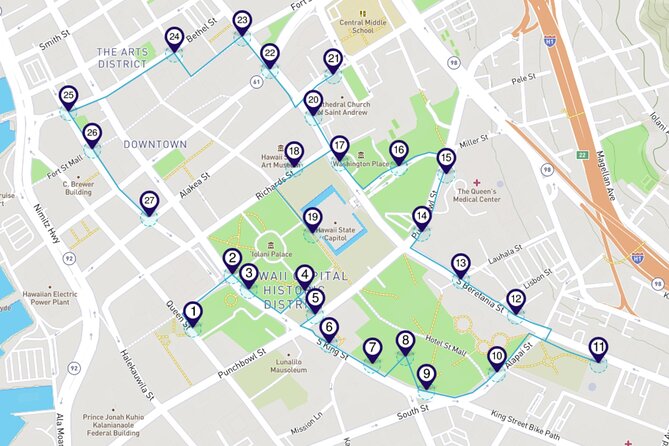
- Live GPS route on your phone, so you always know where you are in the walking loop
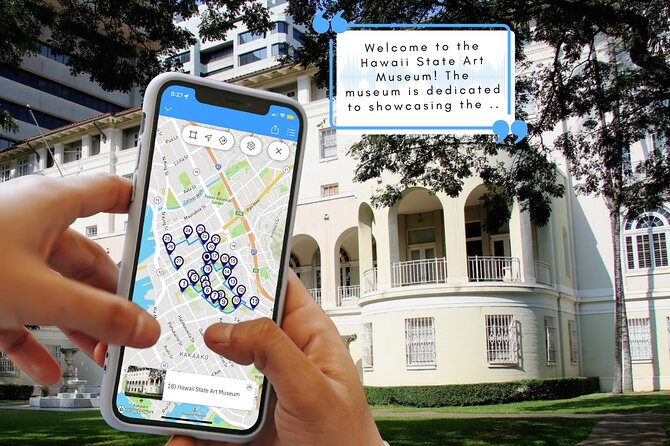
- Audio plays automatically at each point, which makes the tour feel guided without the pressure
- You can take your time (1 to 2 hours) and choose your own pace instead of being herded
- Great value at $10.99, especially if you want background on the downtown landmarks
- Outdoor-only tour mindset, so separate attraction entries may be needed
- Earbuds help because some audio can be quiet when you’re near street noise
Aliʻiolani Hale is a perfect starting point
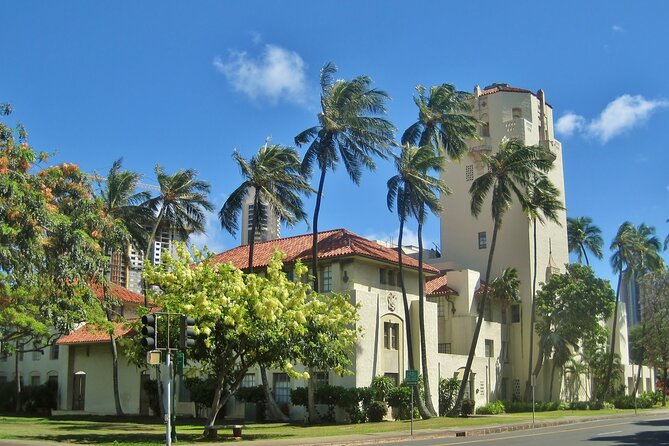
Most audio tours in big cities start with a vague “meet here.” This one starts with something concrete: Aliʻiolani Hale at 417 S King St. It’s a smart pick because it anchors the entire story of downtown Honolulu—right at the House of the Heavenly Kings.
From the start, the narration frames what you’re seeing instead of just naming it. You’ll learn what Aliʻiolani Hale is, and you’ll connect it to the people and eras that shaped the Hawaiian Kingdom.
I also like that you’re not stuck in a single spot. You’re free to walk, glance around, and let the audio do the teaching while your feet handle the rest.
You can also read our reviews of more walking tours in Oahu



King Kalakaua, Kamehameha I, and the legends you can spot
The tour quickly turns from setting the scene to pointing out the big players. One stop focuses on the structure itself—built in 1879 for King Kalakaua, the king of the Hawaiian Kingdom. That date matters. It puts the downtown historic core into a clear timeline, and it explains why so many buildings here feel like they belong to the same chapter.
Then you’ll hear folklore connected to King Kamehameha I, while you’re at his statue. This is the kind of stop that works well on an audio tour: a short walk, a clear landmark, then narration that fills in meaning without you having to hunt for a plaque.
If you’re the type who likes history but doesn’t want a lecture, this section is a good match. The stories are built around things you can actually see.
Victorian Honolulu at Kanaina Building and Patsy’s statue
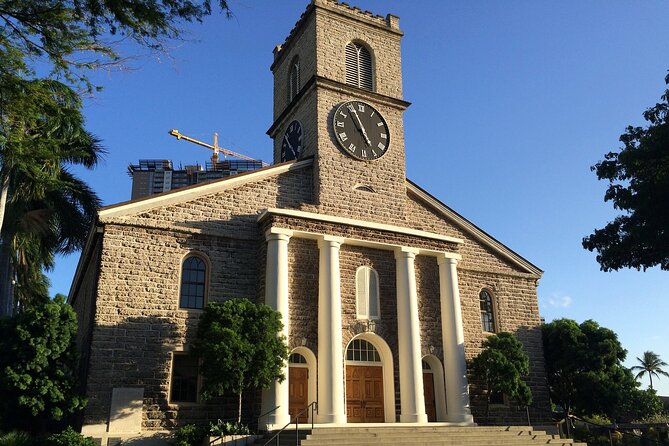
As you keep moving, the tour gives you the “wait, this is the style?” moment. The Kanaina Building is described as an important example of Victorian architecture in Hawaii and it’s noted as added to the National Register of Historic Places in 1978.
This is where the walking tour earns its keep. It helps you notice the details you’d otherwise ignore: how architecture signals outside influence, local adaptation, and the way Honolulu grew and modernized.
Next comes a stop focused on a Patsy statue. The narration explains Patsy’s greatest accomplishments and why a statue was created. You may not need the background to enjoy the artwork, but the extra context turns it from “a statue” into “a marker of a life that changed things.”
A reading room built for control—and a different kind of history

One of my favorite kinds of stops is the odd one that reveals how daily life worked. Here, the tour takes you to a haven for book lovers that started as a simple reading room established in 1879. The purpose was blunt: keeping unruly sailors from getting into trouble.
That explanation makes the place more interesting in a real-world way. Instead of treating old buildings like museum pieces, you get a glimpse of what people were trying to manage—social behavior, public space, and order—over a century ago.
This section also works well if you’re walking with family. It’s an easy story to understand, and it gives you a break from heavy political history without turning into fluff.
Old church, a king’s choice, and the meaning of where people rest

Honolulu’s religious landmarks have a way of feeling both calm and powerful, and the audio tour takes advantage of that. You’ll hear about Hawaii’s oldest church, and then you’ll move into a stop connected to burial choices.
One narration focuses on King Lunalilo, explaining why he refused to be interred in the Royal Mausoleum and instead is buried here. This is one of those details that makes a location feel personal. It’s not just “who’s buried here,” it’s why a ruler acted that way, and what it suggests about priorities and beliefs.
If you’re short on time, this is a section worth not speeding through. Even if you only skim the audio, the story gives you a reason to slow down and look at the place with more respect.
You can also read our reviews of more historical tours in Oahu





The city hall puzzle: dates that don’t match the building

Downtown Honolulu has a few places where what you see isn’t what you expect. The tour includes a city hall building where the front has the years 1820 and 1915 engraved—even though it was built in 1921.
Instead of leaving you with a head-scratch, the audio explains the meaning behind those dates. That’s a major advantage of doing this by phone: you get the “why” while you’re standing in the right spot.
It’s also a good reminder for you as a planner. When something looks weird or out of place, don’t assume it’s random. In Honolulu, weird details often have a story.
Honolulu’s modern civic buildings and the quiet power of routine
After the older landmarks, the tour shifts to more modern civic life, including the Frank F Fasi Building, described as Honolulu’s new municipal building as of 2006. The design is noted as unique, and the audio tells you why.
Then there’s a stop with relaxed stone figures connected to Seagull Schools, an early childhood education center. If you’ve got kids, or you simply like human-scale community stories, this one can be a pleasant change of pace.
The route also includes something unique with the Honolulu Police Department. The audio doesn’t just show you where to stand—it frames what makes the department’s presence distinctive in this area. You don’t need to be a policing nerd to get value from it. It’s another example of the tour using a visible landmark to explain a local quirk.
Peace with the Bell of Nagasaki and the value of symbolism

Next up is the Bell of Nagasaki, presented as a symbol of peace and friendship between the United States and Japan.
This kind of stop is worth treating gently. The bell may feel small in the middle of city sidewalks, but symbolism works best when you actually pause and let it land. The tour’s narration helps you do that without turning the moment into something awkward or too solemn.
Queen Emma and King Kamehameha IV: the Queen’s Conference Center
Now the story leans into royalty and governance. You’ll visit the Queen’s Conference Center, described as a historic and cultural landmark. The narration ties it directly to Queen Emma and King Kamehameha IV, explaining their vision.
Then the tour moves into the milestone year of 1969, when the building officially became Hawaii State Capitol.
This is where you start seeing how Honolulu’s downtown buildings aren’t isolated attractions. They’re layers of government, identity, and public life built over decades. The audio helps you track that evolution so it doesn’t feel like a pile of separate stops.
A clipper ship captain’s home story and a museum detour
The next stop is a regal manor built in 1842 by a clipper ship captain for his wife and young son. Even if you don’t know the full background, the tour explains that there’s a tale behind it, and the building serves as a physical reminder of how global trade shaped life here.
After that, you’ll reach a museum dedicated to showcasing Hawaii’s art and culture. The tour treats it like a must-see for people interested in island traditions. If your time is tight, you might only skim your way through this section, but it’s an easy “if I had more time, I’d go in” stop.
The Kamehameha dynasty wrap-up plus more sacred and civic space
One of the narration moments is framed around a thought the Queen could have said: that she was the last surviving member of the Kamehameha dynasty. It’s a dramatic line, but it also connects several nearby landmarks into a shared story arc.
Then you’ll visit a place of worship described as another dream of King Kamehameha and Queen Emma. The audio connects the spiritual setting to the same broader vision that shaped governance and public spaces.
You also get a stop about a pretty little area originally named for Queen Emma, which as of 2016 shares that honour with James and Abigail Campbell. That kind of naming detail is easy to miss when you’re walking without guidance, but it matters because it’s part of how Honolulu remembers different chapters of its past.
Street mall stroll and Hawaii Theatre’s creative pivot
Not every stop is about crowns and churches. The tour includes a pedestrian-only street mall established in the 1960s as part of an effort to revitalize downtown. It continues to be a popular destination for shopping, dining, and entertainment.
That matters because a walking tour should include breaks where you can reset. After standing and listening through multiple historic structures, the mall gives you a chance to look around without pressure.
Next is the Hawaii Theatre Center, which opened in 1922 for vaudeville and silent film. Then the narration explains the theatre’s later shift: the building was donated to the Kumu Kahua Theatre Company, formed to produce new works by Hawaii playwrights and works reflecting the diverse cultures and experiences of people in Hawaii.
The audio even mentions material and building choices, including how the company picked substitutions for bricks newcomers were accustomed to building with back home. Even if you don’t care about construction, it’s a reminder that arts institutions also shape local identity in practical ways.
Pace it like a local: how to use the GPS and audio
This tour is designed for an easy flow. You download on WiFi before you go, and during the walk you don’t need mobile data or a strong signal. That’s a big practical win in a city where coverage can be inconsistent from block to block.
You’ll also get a mobile ticket and a live GPS map showing the route and your location. That means you’re not guessing. You can focus on the landmarks and let the phone handle direction.
Two tips I’d give you based on what people commonly find with audio tours:
- Use earbuds if your device speaker can’t compete with street noise. The audio can be quiet at times, especially in busy downtown areas.
- Start earlier if you can. One experience noted the tour felt longer than expected, and morning timing helped avoid heat and sun.
You’re told the tour is yours to keep and enjoy anytime, and there are no time constraints once you’re on the loop. Still, I recommend giving yourself a little buffer. If you stop for photos or linger for a story, the 1 to 2 hours can stretch.
Practical value: is $10.99 a good deal?
At $10.99 per person, this is priced like an activity you can “fit in” instead of a major paid outing. You’re paying for three main things:
- Automatic audio at each point of interest
- Live GPS guidance so you don’t waste time
- A dense downtown route that connects multiple eras and landmarks without extra admissions
What it doesn’t include is attraction entry. So if you want to go inside specific sites, you may need to buy separate tickets. That’s not a deal-breaker; it’s just how you should plan. Think of this as the history primer and orientation tool, not as a bundled admission pass.
Where it really shines is if you enjoy learning as you walk. You’ll get stories tied to the buildings themselves—Kalakaua, Kamehameha I, Queen Emma, state-capitol history, peace symbolism—and you can choose when to slow down.
Who this tour is best for
This works especially well if you:
- Want a guided-feeling tour without joining a group vanishing into the crowd
- Prefer history that’s tied to what you’re standing next to
- Have flexible time and like to wander at your own speed
- Are comfortable using your phone for navigation and audio
It may be less ideal if you strongly want indoor access included. Since this is an outdoor walking tour, you’ll want to plan separate entries if that’s a priority for you.
Should you book it
Book it if you want an efficient, low-cost way to understand Honolulu’s downtown through a string of landmarks—from Aliʻiolani Hale through the civic buildings, symbols like the Bell of Nagasaki, and the creative legacy of the Hawaii Theatre.
Skip it or treat it as optional if you’re expecting included entry into the buildings you pass. This tour is built to walk and listen outside, with the phone doing the narration.
If you do book, come prepared with downloaded audio, consider earbuds, and give yourself an hour and a half so you’re not rushing during the good story stops.
FAQ
FAQ
How long is the Honolulu Historic District smartphone audio walking tour?
It runs about 1 to 2 hours, depending on how long you pause at each stop.
Where does the tour start?
The meeting point is Aliʻiolani Hale at 417 S King St, Honolulu, HI 96813, USA.
Do I need internet or mobile data during the tour?
No. You download on WiFi before you start, and no signal is required during the tour. Data use is not required.
Is the tour self-guided or live with a person?
It is a private activity for your group with tour guide commentary that plays automatically at each point of interest. There’s no live walking guide described.
Is the audio available in English?
Yes, the tour is offered in English.
Do I need headphones?
Headphones are optional. The audio can play from your device speaker too.
Are attraction tickets included?
No. Attraction tickets are not included, so if you want to enter specific sites, you’ll need separate tickets.
Do I need a smartphone or tablet to do the tour?
Yes. You’ll use a smartphone or tablet as part of the experience.
Is there a way to see where I am on the route?
Yes. A live GPS map shows your route and your location.
What is the cancellation policy?
You can cancel for a full refund up to 24 hours in advance of the experience start time. Free cancellation is available under that window.