REVIEW · OAHU
Honolulu Downtown Walking Tour
Book on Viator →Operated by Hawaii Free Tours · Bookable on Viator
Honolulu has a lot going on, but this walk keeps it focused. You get a guided loop through downtown landmarks tied to monarchy, statehood, and the people who shaped modern Hawaii, with guide Susan often steering the conversation in plain language.
I especially like the way this tour packs big ideas into short stops—think the push-pull between Polynesian roots, Hawaiian ali’i leadership, and outside influences—without turning into a lecture hall. I also love that the route stays tight in the city core, so you can do real sightseeing without chewing up your whole day; one reason the rating is so high is that the guide consistently answers questions and keeps the chronology clear. One possible drawback: it can feel more like standing and listening than long-walking, since the sites sit close together and some people want more pavement time than the talk time.
In This Review
- Key Highlights You Shouldn’t Miss
- Where the Tour Starts: King Kamehameha Statue in Downtown Honolulu
- Price and Value: Why $5 Can Still Feel Like a Full Experience
- Route Overview: A Compact Loop That Teaches the City Core
- Stop-by-Stop: King Kamehameha Statue and the Roots of Hawaiian Nationhood
- Aliiolani Hale: Seeing Government Symbols Up Close
- Iolani Palace: Monarchs, Outside Influence, and the Turning Points
- Hawaii State Capitol: How Hawaii Became a US Territory and Then a State
- Kawaiaha’o Church: More Than a Photo Stop
- Honolulu City Hall and Hawaii State Library: The Civic Core of the Story
- King Lunalilo Mausoleum: Garden and Burial at the End of the Loop
- What I’d Watch For: Walking Pace, Standing Time, and Rainy-Day Reality
- Who This Tour Fits Best (and Who Might Want More Walking)
- The Best Way to Make This Tour Work for You
- Should You Book the Honolulu Downtown Walking Tour?
- FAQ
- How long is the Honolulu Downtown Walking Tour?
- Where do I meet the guide?
- What time does the tour start?
- What language is the tour offered in?
- How much does it cost?
- Is admission required for the stops?
- What happens if the weather is bad?
Key Highlights You Shouldn’t Miss
- Susan’s storytelling style makes the timeline of Hawaiian rule and unification easy to follow
- Free-entry landmarks on the route mean you’re not stuck adding tickets on the fly
- Tight downtown loop around Honolulu’s core, ideal when you have limited time
- Questions welcome: the guide actively works in answers rather than rushing past them
- Outside Waikiki: you’ll see a different side of Honolulu than the hotel strip
Where the Tour Starts: King Kamehameha Statue in Downtown Honolulu
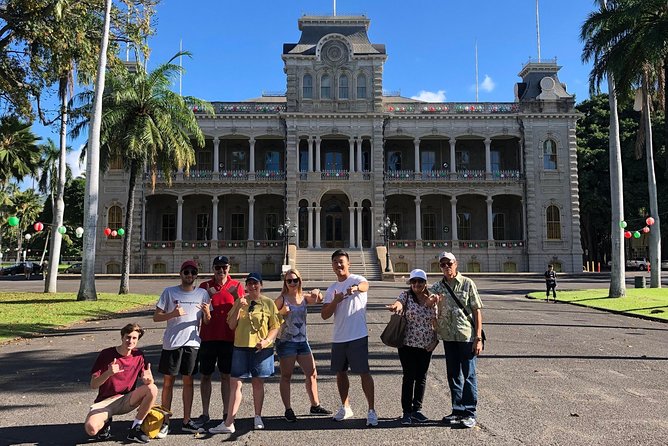
This tour begins at the King Kamehameha Statue, at 447 S. King St, Honolulu, HI 96813 (right by Punchbowl St). Start time is 9:00 am, and the experience ends back at the same meeting point, so you’re not left figuring out transit afterward.
What matters for your planning: this is outside Waikiki, in Honolulu’s downtown area. If you’re staying in Waikiki, give yourself enough time to cross town. The route also runs on foot through public areas, so you’ll want to dress for sun or rain and keep water handy.
The guides wear a white or black t-shirt with the Hawaii Free Tour logo, so even if you’re running late, you should be able to spot the group quickly. The tour is kept to a maximum of 30 travelers, which helps it stay conversational instead of chaotic.
You can also read our reviews of more walking tours in Oahu



Price and Value: Why $5 Can Still Feel Like a Full Experience
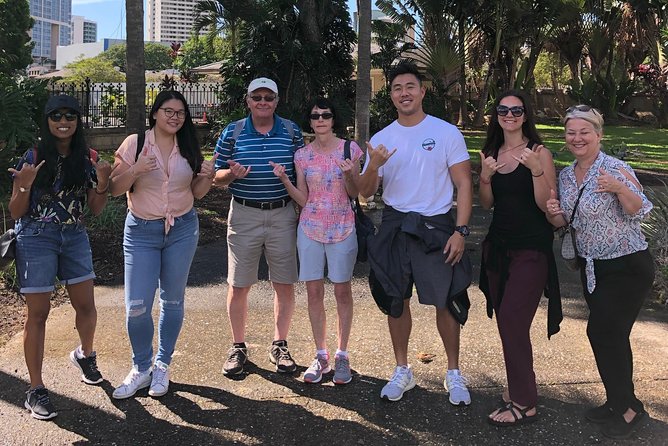
At $5.00 per person, this is the kind of tour that makes you wonder what you were saving money for in the first place. The reason it works isn’t just the price tag. It’s that the stops are anchored by major sites—royalty, government, and religious architecture—where a guide’s context actually saves you time.
Also, most of the stops are listed as free admission, so you’re not paying extra just to see what you came for. On a practical level, you also get a mobile ticket (so you’re not hunting for printouts) and the tour runs in English.
Finally, the structure helps: it’s about 1 hour 10 minutes on average (some groups run close to 1 hour 20 minutes). That’s a smart length for first-time visitors—long enough to build understanding, short enough that you can still do beaches, hikes, or other island priorities later.
Route Overview: A Compact Loop That Teaches the City Core
The tour is designed around a walkable cluster in central Honolulu. You’ll visit multiple landmark stops spread across a small radius, centered on the government and historic heart of the city.
You should expect a pace that’s more “city stroll with frequent pauses” than “touring on fast legs.” One commenter even flagged that it can feel like more talking than walking. That’s not automatically bad—especially if you want clarity—but it’s worth knowing before you book. If you’re the type who hates standing still, plan to bring a little patience.
Weather matters, too. This is an outdoor walking experience, and if it’s canceled due to poor weather, you’ll be offered a different date or a full refund. So don’t plan this as your one-and-only outdoor activity on a wildly unpredictable morning.
Stop-by-Stop: King Kamehameha Statue and the Roots of Hawaiian Nationhood
Your first landmark is the King Kamehameha Statue, where the guide sets the tone with the bigger picture: the history of Polynesians, Austronesians, Hawaiians, and then how that foundation ties into the formation of the first and only nation of Hawaii.
This is a strong opening because it doesn’t treat Hawaiian history like a series of disconnected facts. Instead, you get the origin story first, then you can understand why the later sites—palaces, capitols, churches—matter.
If you want a practical takeaway: listen for how the guide links culture, leadership, and political organization. That connection is what turns Iolani Palace and Hawaii’s government buildings from “pretty old places” into “where power and identity were negotiated.”
Time on this stop is around 15 minutes, and it’s a free stop.
Aliiolani Hale: Seeing Government Symbols Up Close
After the opening, the tour moves through the downtown government zone with Aliiolani Hale included as a stop. This is the kind of building that can look like just another civic structure if you’re passing by quickly.
On a guided walk, though, it becomes a reference point. You’ll get the sense that Hawaii’s story isn’t only in monuments—it’s also in institutions that show how authority was organized and practiced.
Because the time per stop stays relatively short, the guide keeps things tight: you’re meant to come away with a mental map, not leave with a stack of notes. If you’re into photos, this is also where you’ll likely capture the “government architecture” shots you don’t get from the beach view.






Iolani Palace: Monarchs, Outside Influence, and the Turning Points
Next up is Iolani Palace, a major highlight for anyone interested in how Hawaii moved from monarchy to modern political life.
At this stop, you’ll hear about the different monarchs and how US mainlanders and Europeans played a vital role in shaping Hawaii’s history. The value here is the framing: it’s not presented like simple good guys versus bad guys. Instead, you’ll learn how outside pressure and local leadership collided, and how that collision changed the island nation’s future.
This is another 15-minute stop and free to visit. If you take one tip from this section: pay attention to the chronology. When the guide threads the monarchs and the external forces together, the later part of the tour (statehood and territory) clicks into place.
Hawaii State Capitol: How Hawaii Became a US Territory and Then a State
The route continues to the Hawaii State Capitol, where the focus turns to one of the most consequential shifts in the islands’ political story—how Hawaii became a US territory / US state.
This is where the tour shifts from royal-era narrative to the machinery of state governance. You’ll see the building, you’ll get the context, and you’ll come away understanding why modern political life in Hawaii traces back to these earlier turning points.
Expect this to be another 15-minute stop, free-entry. If you’re trying to connect dots between what you just learned at Iolani Palace and what you’ll see at later civic sites, this is the bridge.
Kawaiaha’o Church: More Than a Photo Stop
Next, the tour includes Kawaiaha’o Church, where the guided time is around 10 minutes.
Churches often get treated like quick stops on walking tours, but here the point is to understand cultural foundations alongside political ones. You’re not just ticking off a landmark; you’re seeing how religion, community, and identity have lived side by side with governance.
It’s also a good moment to slow down slightly. Even if your feet are fine, the mind benefits from a shorter pause. If you’ve been thinking about monarchs and statehood, this is the stop that helps anchor the story in place and tradition.
Honolulu City Hall and Hawaii State Library: The Civic Core of the Story
Two more downtown anchors round out the middle of the walk: Honolulu City Hall and the Hawaii State Library.
These stops might not look as dramatic as Iolani Palace, but that’s exactly why they matter. They show you how Hawaii’s civic identity plays out in day-to-day institutions. With a guide, these aren’t just buildings you pass—you learn what to look for when you glance at the architecture and signage.
If you enjoy practical history—how the story shows up in the city you’re walking through—these are solid stops. The time blocks are not listed for each of these specific civic stops, but the overall tour timing keeps them efficiently paced.
King Lunalilo Mausoleum: Garden and Burial at the End of the Loop
The final major stop is the King Lunalilo Mausoleum, including King Lunalilo’s Garden and Burial. This stop takes about 15 minutes and stays free.
A good way to think about it: after you’ve been through political shifts and civic institutions, this adds an emotional and human layer. You see what a burial site and garden space communicate—memory, legacy, and respect for leadership.
This is often the last moment where your understanding becomes more than facts. If you’re the type who likes to match stories to places, this is where the walk can feel most complete.
What I’d Watch For: Walking Pace, Standing Time, and Rainy-Day Reality
Based on the way this tour is commonly experienced, here are the practical factors that decide whether it feels great or merely okay:
- Pace can skew toward talking. The sites are close together, so you may spend more minutes listening than moving. One person summed it up as a lot of standing and not a lot of walking. That can be perfect if you enjoy guided context. If you want exercise, you might feel shorted.
- You’ll still cover a small cluster. One note put the route around about a 1.5 km radius, which supports the idea that this is a compact downtown loop rather than a long trek.
- Weather is real. The tour runs outdoors and depends on good weather. If it’s rainy, you’ll still likely be out there—so bring something you’re comfortable standing under.
If you’re planning the rest of your day, treat this as a history-building morning. Then go do what Hawaii does best the rest of the day—sun, beach time, and whatever keeps you moving.
Who This Tour Fits Best (and Who Might Want More Walking)
This is ideal for:
- First-time visitors who want a quick map of Honolulu’s historic core
- History buffs who like when the guide ties events into a clear sequence
- People with limited time who still want context at major sites
- Anyone who enjoys a small-group format (max 30)
It might be less ideal if:
- You need a tour that delivers more walking and less standing
- You’re extremely sensitive to rain and don’t want an outdoor tour morning
The tour also says it’s a fit for most travelers and that service animals are allowed. It’s near public transportation, which helps if you’re mixing it with other downtown plans.
The Best Way to Make This Tour Work for You
Here’s how to get the most out of it without overthinking.
First, arrive a bit early and find the King Kamehameha meeting spot before you’re rushed. The guide(s) wear the Hawaii Free Tour logo t-shirts, so it’s easy once you’re there.
Second, go in expecting guided context, not a long walking workout. If you’re happy trading motion for story, you’ll probably find it satisfying and easy to follow.
Third, bring one or two questions you genuinely care about. The tour is structured so the guide can answer questions during the walk. That turns the stop-by-stop information into something personal, and you’ll leave with a better mental map than you’d get from reading a plaque alone.
Should You Book the Honolulu Downtown Walking Tour?
If your goal is to understand Honolulu’s downtown story fast—monarchy, state governance, and the shift from kingdom to US territory/state—this tour is a solid value at $5. The main reason I’d book it is the consistent emphasis on clear explanation and the guide’s willingness to answer questions, often highlighted by groups led by Susan (including Susan Hogan).
I’d skip it only if you’re hoping for a lot of walking. This one is built for short stops, frequent listening, and a concentrated downtown loop. If that sounds like your kind of morning, book it, show up on time, and wear comfortable shoes. You’ll walk away with a better sense of where Hawaii’s story shows up in the city you’re standing in.
FAQ
How long is the Honolulu Downtown Walking Tour?
The tour lasts about 1 hour 10 minutes on average (some groups run a bit longer around 1 hour 20 minutes).
Where do I meet the guide?
Meet in front of the King Kamehameha Statue at 447 S. King St, Honolulu, HI 96813.
What time does the tour start?
The start time is 9:00 am.
What language is the tour offered in?
The tour is offered in English.
How much does it cost?
It costs $5.00 per person.
Is admission required for the stops?
Most stops listed are free (including King Kamehameha Statue, Iolani Palace, Hawaii State Capitol, Kawaiaha’o Church, and others on the route).
What happens if the weather is bad?
This experience requires good weather. If it’s canceled due to poor weather, you’ll be offered a different date or a full refund. Free cancellation is available up to 24 hours before the experience starts.