REVIEW · OAHU
Honolulu’s Waikiki Self-Guided Walking Audio Tour
Book on Viator →Operated by History with Action · Bookable on Viator
Waikiki gets a second soundtrack. This self-guided walking audio tour layers hands-free stories onto real landmarks, so you learn as you move, not from a bus window. You pick your pace, start when you want within the day, and keep the app for future trips.
Two things I really like: the offline playback (after you download it once on strong signal) and the fact that you can do it on your schedule. At $9.99 with lifetime access and no expiry, it feels more like paying for a tool you’ll reuse than a one-time tour.
One thing to think about: the full route is long—over 14 miles—with more than 45 audio stories, and it can take about 2–3 hours. If you want a quick stroll only, you’ll likely need to skip some stories or take more breaks than you planned.
In This Review
- Quick things to know before you hit the sidewalks
- Price and what $9.99 buys you in Waikiki time
- Getting the app working: from password to first story at Brothers In Valor
- The walk begins with a coast-defense mystery: Taft’s Ring of Steel
- Kawehewehe and Bali Oceanfront: healing sites and the first Polynesian arrivals
- Princess Kaiulani statue and the Duke Kahanamoku lagoon: royalty to surfing hero
- Moana Surfrider: first electric elevator in Hawaii and the Jane Stanford mystery
- Kuhio Beach Hula Show: calm water, family-friendly wading, and a prince’s home
- Waikiki Wall and Kalākaua Avenue: why concrete can feel like culture
- Makua and Kila statue and Waikiki Walkway: the aloha theme that closes the loop
- Timing and pacing: how to finish without feeling rushed
- What kind of traveler gets the most from this walk
- Safety notes to keep in mind
- Should you book it? My take on the value
- FAQ
- How long does the Waikiki self-guided walking audio tour take?
- Do I need cellular service during the tour?
- Where do I start and where does it end?
- Is this tour guided by a person?
- Can I pause the audio and take breaks?
- Is the audio available on future trips?
Quick things to know before you hit the sidewalks
- Over 14 miles, 45+ stories: plan on 2–3 hours if you want most stops
- Offline maps and auto-playing audio: download first on strong Wi-Fi or cellular
- Start anytime, pause anywhere: snacks and photo stops are built into the format
- All stops are free to view: no attraction tickets needed for the audio points
- No guide walking with you: you’ll follow location cues from the start point
- Private activity: only your group participates
Price and what $9.99 buys you in Waikiki time
At $9.99 per person, this tour lands in the category of affordable activities that don’t require reservations or special tickets. That matters in Waikiki, where you can spend a day bouncing between beaches, hotels, and street scenes—and still feel like you’re getting your money’s worth.
The bigger value play is lifetime access with no expiry. You’re not just buying an hour or two of audio. You’re buying the ability to re-walk the route on a future Oahu trip, or even do it in pieces across different days, because the app stays yours.
And because the audio is designed to play based on where you are, it’s not just a “read on your phone” experience. You’re hearing context right at the spot, which is what turns random Waikiki landmarks into a meaningful walk.
You can also read our reviews of more walking tours in Oahu



Getting the app working: from password to first story at Brothers In Valor

This is self-guided, so the setup step is your only real “logistics” work.
After booking, you get email and text instructions with a password. You’ll be directed to download the separate tour app by Action, then use the password to unlock your tour on your device. One key detail: you must download the tour while you have strong Wi‑Fi or cellular, because it’s built to work offline after that.
When you’re onsite, go to the starting point: Brothers In Valor memorial, 2081 Kalākaua Ave, Honolulu, HI 96815. No one meets you there. You start the audio in the app at the right time, and the stories begin automatically at the first audio point.
A practical tip: bring headphones/earbuds. The audio is hands-free, but you still need to hear it clearly while you’re walking. Also, your phone’s GPS helps with location-based playback, so it’s smart to keep your device charged.
The tour is available during the day, with opening hours listed as 6:00 AM to 9:00 PM (Mon–Sun). You can also pause and resume, which is useful if you want to step into shade, grab a snack, or linger for photos.
The walk begins with a coast-defense mystery: Taft’s Ring of Steel
Your route starts with a piece of concrete that goes back to 1904. The audio frames it around a demand by President Taft to build a “Ring of Steel” to help protect Hawaii’s coast from attacking battleships.
This is a smart opener because it tells you what you’re looking at before you’re tempted to treat it like just another wall. You start noticing how Waikiki’s scenery was shaped not only by tourism and resort life, but also by coastal defense and real-world history.
If you like when place and story match up, you’ll appreciate how this tour uses an early stop to set the tone: Waikiki is layered, even when it looks simple.
Kawehewehe and Bali Oceanfront: healing sites and the first Polynesian arrivals
Right after the opening stop, you move into the quieter side of Waikiki’s shoreline story.
Stop 1: Kawehewehe. The audio describes deeper blues around a strip of light blue, with a clean sand bottom—this marks one of four ancient healing sites in Waikiki. If you’re the type who likes more than just resort buzz, this is where the tour starts to feel meaningful. You’re not only watching the ocean; you’re learning that specific spots were part of traditional healing.
Stop 2: Bali Oceanfront. Here the story shifts to time: these waters were described as a life source for Hawaiian people, tied to ancient Polynesian settlement between 400 and 1100 CE. It’s a reminder that Waikiki isn’t just a beach neighborhood—it’s been a lived landscape for a very long time.
Both of these stops are free to view, and the audio time at each is short (around 10 minutes). That’s useful when you’re walking a longer route overall—you get enough context without spending an hour parked in one place.
Princess Kaiulani statue and the Duke Kahanamoku lagoon: royalty to surfing hero
Waikiki’s story swings from monarchy to the people who shaped modern Hawaiian identity in the eyes of the world.
Stop 3: Princess Kaiulani Statue. Waikiki has many famous figures, but this one focuses on Hawaii’s last heir to the throne, Princess Kaiulani. The payoff here is perspective. Instead of treating the statue like background sculpture, the audio connects it to Waikiki as a stage for political and cultural change.
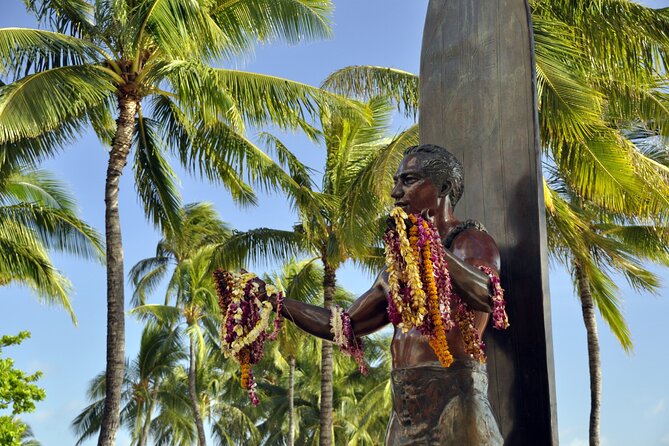
Stop 4: Duke Kahanamoku Lagoon. After Princess Kaiulani passed in 1899, the audio pivots to Duke Kahanamoku—the surfing legend of Hawaii. His story begins in the shadows of palm trees, with a visual cue tied to a breaker crest in the distance. Even if you’re not a surfer, the tour’s angle helps you understand why his name still travels so far beyond Hawaii.
This section also keeps you moving. Each stop is timed for a quick learn-and-go, so you’re not stuck at one photo spot for too long.
You can also read our reviews of more guided tours in Oahu






Moana Surfrider: first electric elevator in Hawaii and the Jane Stanford mystery
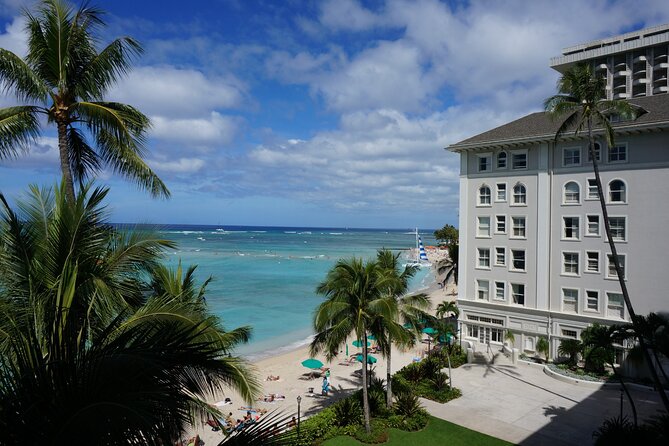
Stop 5 centers on Moana Surfrider, A Westin Resort & Spa, Waikiki Beach. The audio notes it debuted in 1901 and includes a detail you won’t get from the exterior alone: it featured the first electric-powered elevator in Hawaii, and that elevator is still in use today.
Then the story turns dark with the murder of Jane Stanford, described as one of America’s greatest unsolved mysteries. This is the kind of stop that makes the walk feel like a series of scenes, not just a list of landmarks.
Even if you’ve heard bits of the Stanford case elsewhere, having it anchored here changes how it lands. You’re standing in the place that absorbed the shock—and the hotel setting becomes part of the story, not just a backdrop.
Kuhio Beach Hula Show: calm water, family-friendly wading, and a prince’s home

Stop 6 brings you to Kuhio Beach and the hula show area. The audio calls this one of the best beaches in town and points out that it can work well if you’re into snorkeling or bodyboarding. It also explains why the water can feel calmer for families: both sides of the beach are enclosed by concrete walls stretching into the ocean, creating a kind of wading pool.
The story then identifies the person behind the name: Prince Jonah Kuhio Kalaniana’ole, the youngest son of a high Hawaiian priest, who lived in a home on this very spot in Waikiki with his wife, Princess Elizabeth Kahanu.
What I like about this stop is the balance. You get a culture component (hula show context and Hawaiian figures) plus a real-life “how this beach behaves” note that helps you plan your time.
Waikiki Wall and Kalākaua Avenue: why concrete can feel like culture
Stop 7: Waikiki Wall. At first glance, a wall like this can feel out of place in a tropical setting. The audio’s explanation is the real point: the wall has been here for so long that it’s become part of the scenery. That’s a useful mental shift for anyone who struggles to see past the postcard view.
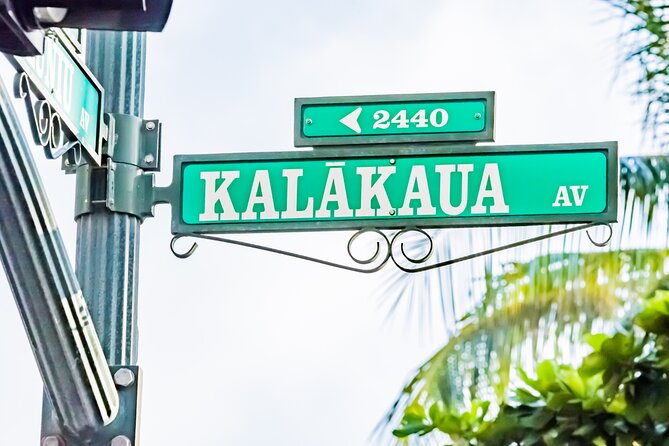
Stop 8: Kalākaua Avenue ties the route to Duke Kahanamoku again, but through achievements and service. The audio covers his Olympic medals (three gold and two silver), then shifts to World War II and later roles, including serving multiple terms as Sheriff of Honolulu. It’s not just “Duke was famous.” It’s “Duke mattered in multiple chapters.”
This is where the tour starts to help you connect dots across Waikiki. You begin to see the walk as more than sightseeing—it’s a timeline laid across streets and seaside viewpoints.
Makua and Kila statue and Waikiki Walkway: the aloha theme that closes the loop
Stop 9: Makua and Kila. You’ll meet a statue described as “Makua and Kila,” featuring a young surfer and an unlikely friend: a Hawaiian monk seal. The audio asks you to greet them with aloha, and it frames them as always glad to see visitors. The messaging is simple, but it fits the route’s theme: Waikiki is about people and place, not just concrete.
Stop 10: Waikiki Walkway. This is the ending emotional note. The audio says the spirit of Duke—and what he stood for—remains alive in Waikiki: people surf and swim, laugh and love. It also notes Duke’s hope for those things to live on until his death in 1968.
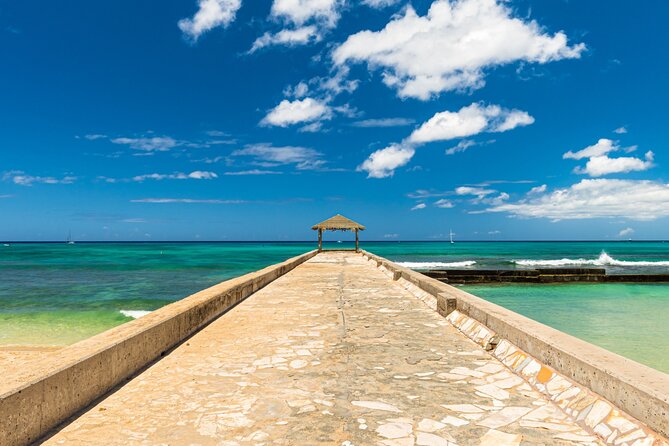
Your walk ends at Waikiki Walkway at Waikiki Wall. So the conclusion loops back to the wall motif: the tour begins with concrete from 1904 and ends with concrete that has aged into part of the landscape.
Timing and pacing: how to finish without feeling rushed
The tour description can feel a little contradictory at first: it’s listed as 1 to 2 hours approximate, but the route note says it’s over 14 miles and takes about 2–3 hours to complete. My practical advice: plan for 2–3 hours if you want to take it as designed, hitting the stories along the way.
Good news: it’s built to be forgiving. You can pause and resume, take breaks for snacks and photos, and skip stories you don’t care about. If you’re short on time, skip a few early stops and focus on the Duke and Waikiki Wall areas, where the audio themes tie together best.
Also, because audio plays based on your location, you’re not constantly checking your phone. Still, you’ll want to keep your eyes up for crosswalks and curb cuts. The route is urban, and your attention should stay on where you’re walking.
One more detail that helps: your app experience is designed to work without cellular or Wi‑Fi after download. That means you’re less likely to lose the tour mid-walk when signal gets spotty.
What kind of traveler gets the most from this walk
I’d especially recommend this for you if:
- You like stories that connect landmarks to people and events, not just architecture
- You want flexibility, not a rigid schedule
- You’re comfortable using a smartphone for GPS-based audio
- You’d rather pay a small amount once and reuse it later with lifetime access
It may be a tougher fit if you:
- Don’t want to walk long distances (remember the over-14-mile note)
- Prefer a live guide to answer questions on the fly
- Have battery anxiety, since you’ll rely on the device for playback and navigation
It’s also a private activity, so your group stays together. And there’s a practical savings tip built in: couples can share one tour by splitting headphones, which can cut the effective cost per person.
Safety notes to keep in mind
This isn’t just a history walk, it’s a city walk. Wear comfortable shoes, and take your time with the longer stretch so you don’t feel pressured near the end.
The tour data also mentions a tsunami warning message in Hawaii due to a massive earthquake in the Pacific Ocean, with a reference to tsunami.gov for updates. If you hear official alerts during your trip, follow local guidance and adjust plans accordingly.
Should you book it? My take on the value
Book it if you want a cheap, flexible way to understand Waikiki beyond the beach label. The lifetime access plus offline audio makes it feel like a smart purchase, not a disposable excursion. And the stops do a good job covering several angles—ancient healing sites, Polynesian settlement timelines, Hawaiian figures like Princess Kaiulani and Duke Kahanamoku, plus a real-world mystery tied to Moana Surfrider.
Skip it or modify your expectations if you only want a short “greatest hits” walk. The full experience is long, and Waikiki can chew up time fast. If you’re okay with picking and choosing stories, you can still make it work.
FAQ
How long does the Waikiki self-guided walking audio tour take?
The tour is listed as about 1 to 2 hours, and there’s also a note that the full route is over 14 miles and takes about 2 to 3 hours to complete.
Do I need cellular service during the tour?
No. The tour includes offline maps and works without cellular or Wi‑Fi after you download the tour while you have strong signal.
Where do I start and where does it end?
You start at Brothers In Valor memorial, 2081 Kalākaua Ave, Honolulu, and the tour ends at Waikiki Walkway at Waikiki Wall, also on Kalākaua Ave.
Is this tour guided by a person?
No. It’s self-guided, and no one will meet you at the start. You start the first story at the starting point and follow the location cues.
Can I pause the audio and take breaks?
Yes. You can pause and resume whenever you like, and the format is designed for breaks for snacks and photos.
Is the audio available on future trips?
Yes. The tour includes new lifetime access with no expiry, so you can use it anytime on any trip as many times as you want.