REVIEW · OAHU
1.5-Hour Semi Private Surfing Lesson in Honolulu
Book on Viator →Operated by Gone Surfing Hawaii · Bookable on Viator
Waikiki surf lessons can feel surprisingly doable. In about 1.5 hours, you’ll go from sand coaching to your first rides on beginner-friendly waves with a small group. It’s a great way to experience Oahu without needing to be athletic in a gym-every-day way.
I especially like the on-the-sand start: ocean awareness, wave conditions, and surf safety are taught right where you can see everything clearly. I also love that the coaching is hands-on, with groups matched to the right number of licensed instructors—so you’re not just watching from the beach.
One thing to consider: surfing depends on real ocean conditions. If conditions like weather don’t cooperate, the lesson may be canceled or require a reschedule.
In This Review
- Key highlights at a glance
- Waikiki surf for beginners: why this spot helps you learn fast
- Where you meet and how the lesson flows
- The on-sand coaching: safety, wave reading, and surf etiquette
- In the water: what you practice during your surf session
- Semi-private group lessons: up to five friends, real attention
- Coaches, confidence, and why patience matters here
- Your gear: what’s included and what you should bring
- Photos and keepsakes: optional, but often worth it
- Duration and expectations: what 1.5 hours really feels like
- Tides, weather, and when the lesson may change
- Value for your money: what you’re really paying for
- Who should book this surf lesson (and who might wait)
- Should you book Gone Surfing Hawaii in Waikiki?
- FAQ
- How long is the 1.5-hour semi private surfing lesson?
- Where does the lesson start?
- Is this lesson private?
- What’s included in the lesson?
- Is there a minimum age requirement?
- Do all participants need to know how to swim?
- What should I do if I want photos or souvenirs?
- What happens if the weather is poor?
- What is the cancellation window for a full refund?
Key highlights at a glance

- Waikiki beginner waves: a friendly place to learn and build confidence
- On-sand safety teaching before anyone paddles out
- Licensed instructors with first aid and lifeguard-level CPR training
- Semi-private format with up to five friends so you get real attention
- Surfboard and rash guard included, so you don’t waste vacation time shopping
- Photos are optional add-ons, not required to enjoy the lesson
Waikiki surf for beginners: why this spot helps you learn fast
Waikiki is famous for a reason: the water is generally structured for learning, and the conditions are often calmer than you might expect for a first surf session. For you, that means less panic and more time actually practicing the motions that make standing up possible—paddling, timing, positioning, and getting your balance.
The other big win is the way the lesson is taught. It starts with awareness and safety, not just a rush into the water. When you understand what the waves are doing, you stop guessing and you start responding. That’s when surfing stops being confusing and starts feeling like a skill you can improve wave by wave.
You can also read our reviews of more private tours in Oahu


Where you meet and how the lesson flows
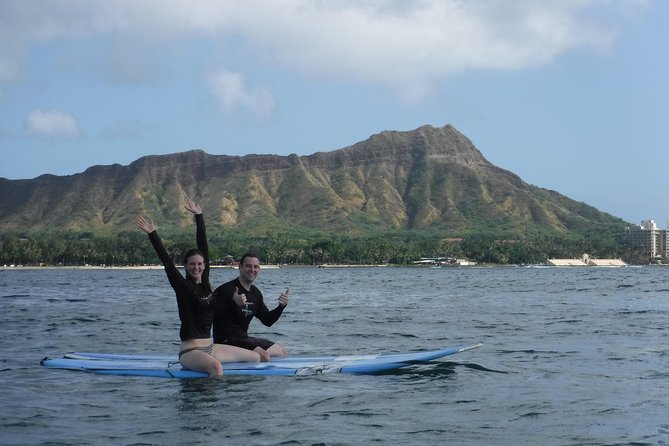
You’ll meet at Gone Surfing Hawaii, 2169 Kālia Rd Ste 102, Honolulu, HI 96815. The activity ends back at the meeting point, so you don’t have to plan extra transportation once you’re done.
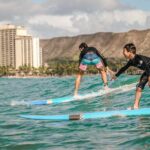
From there, the key part happens at Waikīkī Beach. The lesson is designed to feel simple: land instruction first, then you move into the water to apply what you just learned. You’ll also have choices throughout the day, which matters because morning sessions and late-afternoon sessions can feel different in terms of light, crowds, and overall vibe.
The lesson is semi-private, meaning it’s just your group (up to five friends). That smaller setup tends to help first-timers because questions don’t get lost in a big class, and instructors can adjust coaching to each person’s comfort level.
The on-sand coaching: safety, wave reading, and surf etiquette
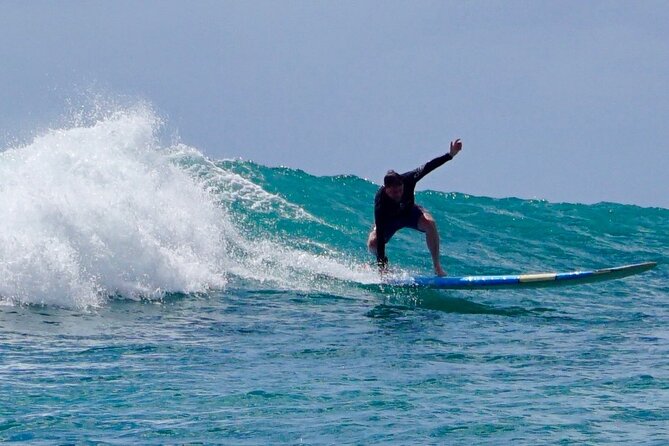
The lesson begins on the sand. That’s not just a formality. It’s where you’ll learn the basics that keep your session smooth and your group safer.
Here’s what you can expect before you go in:
- Ocean awareness and wave conditions: you learn what to look for so you’re not surprised once you’re floating
- Essential surf safety: what to do, what to avoid, and how to stay smart when waves get active
- Surf etiquette: how to share space in the water and move with others safely
This matters because Waikiki can look simple from shore. The minute you’re out there, you realize how much timing and positioning affect the outcome. If your coach sets you up correctly on land—like how to read what’s about to break and where to aim your takeoff—you’ll spend less energy on guessing and more energy on riding.
In the water: what you practice during your surf session
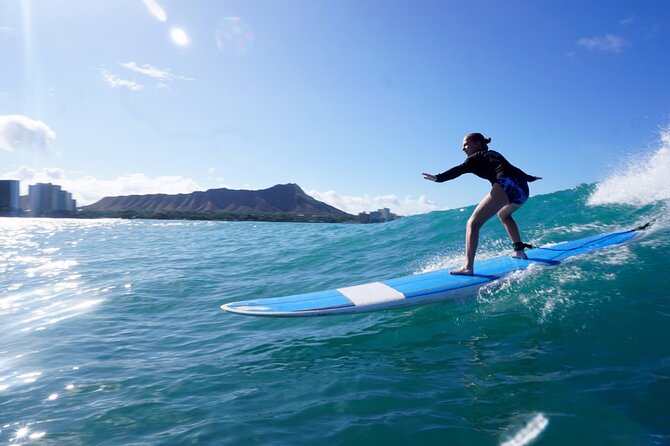
Once everyone is set, you head into the water to actually surf Waikiki’s gentle beginner waves. The coaching focuses on the steps that lead to your first stand and then your next attempt.
Instructors typically guide you on:
- Reading waves so you choose a wave that matches your skill level
- Position for takeoff so your body is in the right place when the wave lifts you
- Following surf etiquette while you’re paddling, waiting, and riding
Also, pay attention to how coaches help you conserve energy. Some instructors are known for pushing you at the right moment or supporting the swim out so you’re not exhausted before you start surfing. That’s a big deal for first-timers, because the hardest part for many people isn’t the stand—it’s getting out past the break and not panicking while paddling.
And yes, you should expect a mix of attempts. Even if standing doesn’t happen immediately for everyone, the structure is built for practice: you’ll keep trying, receive corrections, and go back out again when conditions allow.
Semi-private group lessons: up to five friends, real attention

The lesson is designed for families, friends, and small groups. The coaching is tailored to different ages and ability levels, and your group is matched with the appropriate number of licensed instructors. Translation for you: you’re not competing for attention with strangers.
That small-group approach shows up in how coaching is delivered. You’ll likely get:
- clear, repeatable instructions
- hands-on help when you’re struggling
- quick corrections after rides so you can adjust right away
Many people love this part because it makes the experience feel personal. One family setup can include adults and teens, and the coach can still keep everyone progressing by adjusting the pace and the instructions. When the group is small, an instructor can also spot fear and respond fast—encouraging you, resetting your expectations, and keeping you safe.
You can also read our reviews of more tours and experiences in Oahu





Coaches, confidence, and why patience matters here
Surfing is physical, but the mental part hits fast. You need to trust your coach, and you need to stop trying to power through mistakes.
In the coaching style praised most often, you’ll see a few themes:
- Patient guidance that keeps first-timers calm
- Encouragement that focuses on small wins, not perfection
- Clear instruction on what to fix next after each attempt
If you’re wondering whether you’ll feel overwhelmed, you should know that many first-time surfers come in nervous. The setup here is built for that. Instructors often work from simple step-by-step motions—then transfer those motions into the water once you’re ready.
Also, you may notice some instructors are extra fun. Names like Trevor, Mick, Owen, Jarret, Austin, Nate, Jason, Tommy, and Jojo show up in a lot of coaching stories for being supportive, energetic, and tuned in to beginners. You might not get the same coach, of course, but the coaching ethos seems consistent: keep you safe, keep you trying, and help you succeed.
Your gear: what’s included and what you should bring
Included in your lesson:
- Surfboard
- Rash guard
- Professional instruction and all activities
What that means for you is less hassle. You don’t need to bring a board or figure out what size to rent. Rash guard coverage also helps with comfort and friction while you’re learning.
What to bring (not provided in the details, so plan to have it):
- water and sunscreen
- a way to keep personal items secure (some lessons use lockers on site)
- a swimsuit you’re comfortable with getting wet and sandy
If you’re doing this with a family or mixed-age group, gear simplicity is a real advantage. Everyone can focus on learning instead of coordinating equipment.
Photos and keepsakes: optional, but often worth it
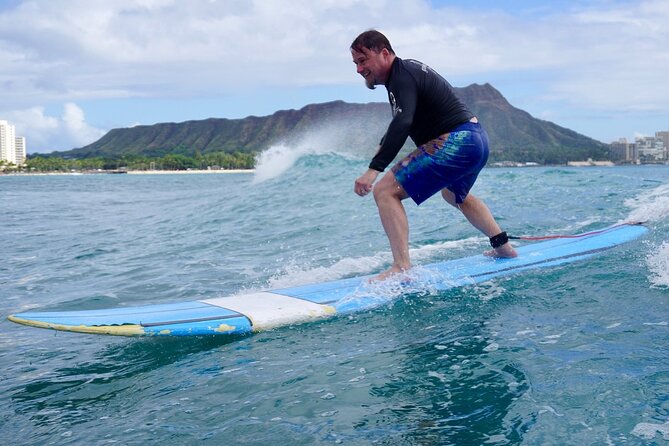
Your ticket includes instruction and surfing time, not souvenir packages. Photos and t-shirts, if you want them, are available to purchase.
The practical upside: you can concentrate on riding instead of trying to film everything. Several praised moments include photographers taking lots of action shots and getting plenty of good angles. If you like having a memory that doesn’t rely on shaky phone video, this is one of those add-ons that can feel like good value.
Just don’t plan on paying during the lesson to stay focused. If you want the photos, you’ll have the option afterward.
Duration and expectations: what 1.5 hours really feels like
The lesson runs about 1 hour 30 minutes. For first-time surfers, that time can feel long in a good way because there’s enough opportunity to learn the motions, try again, and build confidence.
Here’s what that time usually covers:
- meet and get organized
- sand-based safety and skills coaching
- going into the water for multiple attempts
- returning to shore and wrapping up
A common first-timer surprise is how much paddling takes out your arms. Coaches often help with the swim out or paddling support, but expect it to be a workout. If you’re generally comfortable swimming and you have moderate physical fitness, you’ll likely handle it well.
Tides, weather, and when the lesson may change
Surfing is weather-dependent, and the ocean doesn’t care about your itinerary. The experience requires good weather. If it’s canceled due to poor weather, you’ll be offered a different date or a full refund.
Also consider that surf conditions can shift quickly. In real-world situations, instructors will choose not to send people in if conditions don’t make sense for safe beginner learning. That’s not a failure of the company—it’s the whole point of having safety-focused, trained instructors.
If you’re booking close to other plans, give yourself a little flexibility. Having a backup day in Oahu makes everything easier.
Value for your money: what you’re really paying for
Even without a price listed here, you can judge value by what’s included and what kind of coaching time you get.
You’re paying for:
- Licensed instruction with safety training (first aid and lifeguard-level CPR)
- a semi-private group setup that keeps attention on your learning
- board and rash guard included, so you’re not adding rentals
- coaching specifically aimed at getting you to stand safely and improve over repeated attempts
If you’ve tried DIY surfing lessons before, you know how random it can be. A structured coach removes guesswork. And in a place like Waikiki, small changes—like wave choice, takeoff position, and timing—can be the difference between a rough session and a fun one.
Who should book this surf lesson (and who might wait)
This lesson is a strong fit if:
- you’re 13 or older
- you know how to swim
- you want a guided first-time experience without a huge class size
- you’re traveling with friends or family and want to learn together
It may not be the best first step if:
- you don’t feel comfortable swimming in open water
- you’re looking for a full-day surf adventure instead of a focused coaching session
- your group includes kids under 13 (the guidance says they must book a private lesson for them to be able to surf together)
Should you book Gone Surfing Hawaii in Waikiki?
If your goal is a beginner-friendly first surf experience with real coaching, safety-focused instruction, and gear provided, this is an easy yes.
I’d book it if you:
- want to learn in Waikiki’s gentler setting
- like the idea of a semi-private group (up to five friends)
- appreciate patient instructors who coach step by step
- want a straightforward, 90-minute activity with a clear start and finish at the meeting point
I’d think twice if you’re booking on a day you can’t change at all, because ocean conditions matter. If you can stay flexible and you’re comfortable swimming, you’re set up for a fun, confidence-building afternoon on Oahu.
FAQ
How long is the 1.5-hour semi private surfing lesson?
It runs about 1 hour 30 minutes.
Where does the lesson start?
It starts at Gone Surfing Hawaii, 2169 Kālia Rd Ste 102, Honolulu, HI 96815, USA.
Is this lesson private?
It’s private for your group. Only your group participates.
What’s included in the lesson?
You get surfboard and a rash guard, plus professional instruction and all activities.
Is there a minimum age requirement?
The minimum age is 13 years.
Do all participants need to know how to swim?
Yes. All participants must know how to swim.
What should I do if I want photos or souvenirs?
Souvenir photos, t-shirts, and rash guards are available to purchase. They are not included in the lesson.
What happens if the weather is poor?
This experience requires good weather. If it’s canceled due to poor weather, you’ll be offered a different date or a full refund.
What is the cancellation window for a full refund?
You can cancel up to 24 hours in advance for a full refund. If you cancel less than 24 hours before the start time, the amount paid is not refunded.