REVIEW · OAHU
Small-Group Deep Dive in Oahu with Shipwreck and Reef
Book on Viator →Operated by Hawaiian Diving Adventures · Bookable on Viator
Shipwreck sightings start before you even exhale. This small-group charter pairs an offshore shipwreck drop with a reef session on the same morning, and the whole setup is designed around certified divers who want real underwater variety. You get a divemaster or instructor with you, plus the chance to spot sea turtles, sharks, and lots of fish along the way.
What I like most is the way the plan is flexible once you’re in the water. The deeper part is typically a plunge around 100 feet, then you shift to a reef around 40–60 feet depending on what the group can handle and what the conditions allow. One possible drawback: this is for experienced divers only, so if your certification is on the light side or you’re not comfortable with deeper conditions, this won’t feel like a relaxing sightseeing outing.
In This Review
- Key Highlights You Should Know Before You Go
- A 7:45 a.m. Plan That’s Built Around Real Underwater Time
- Who This Charter Is For: Advanced Certification Isn’t Optional
- The Underwater Game Plan: Wreck First, Reef Second
- Stop 1: The deeper plunge to the shipwreck
- Stop 2: The reef around 40–60 feet
- Wildlife Chances on Oahu: What You Can Realistically Hope For
- Price and Value: What the $209 Covers (and What It Doesn’t)
- Small Group Size: Why Max 16 Changes the Feeling
- Gear, Comfort, and the Little Things That Save Your Morning
- Getting to the Meeting Point Without Stress
- A Note on Reliability: One Bad Experience Happened
- Should You Book This Oahu Shipwreck and Reef Charter?
- FAQ
- What is the duration of the experience?
- How much does it cost?
- What certification do I need to participate?
- Is there a minimum age?
- What time does the tour start and where does it meet?
- Is hotel pickup included?
- Do you provide dive equipment?
- What’s included in the price?
- Is the tour limited to a small group?
- What happens if conditions are unsafe or weather is poor?
Key Highlights You Should Know Before You Go
- 100-foot shipwreck plunge is usually first, often farther from shore for better chances at pelagic fish, turtles, and sharks
- 40–60-foot reef session comes second, with depth chosen based on conditions
- Pro divemaster or instructor accompanies every trip
- Certified-diver requirement (advanced certification or 25 logged dives) keeps the experience focused
- Max 16 divers helps keep the pacing and attention from feeling rushed
A 7:45 a.m. Plan That’s Built Around Real Underwater Time
This is an early start, with the trip kicking off at 7:45 am from the Honolulu meeting area (74VV+4X Honolulu). Plan to be ready to move, not just “arrive when you feel like it.” The schedule is compact too: it runs about 3 hours 30 minutes, so you’re spending your day underwater instead of waiting around.
I also like that this isn’t a one-size-fits-all tour. The deeper-then-shallower structure gives you two different flavors of Oahu water: wreck life and reef life. You’re not just repeating the same swim with a different backdrop.
One more thing that matters: the charter is geared toward experienced divers only. That usually means less time spent teaching basics, and more time actually looking for wildlife and structure.
You can also read our reviews of more tours and experiences in Oahu.


Who This Charter Is For: Advanced Certification Isn’t Optional
To book, you must be a certified diver with an advanced certification or at least 25 logged dives. The minimum age is 14, and the trip requires participants to complete a health questionnaire before diving.
That certification requirement is the big filter here. It changes the vibe. You’re not paying for a casual first-timer experience. You’re paying for a group that can handle a deeper plunge and a more active choice of sites.
You’ll also want a moderate physical fitness level. That doesn’t mean you need to be an athlete, but you should be comfortable with the demands of scuba work: controlled breathing, equalizing, and staying calm and steady in open water.
If you’ve done a lot of shore entries, but deeper offshore conditions make you tense, consider honestly whether you’re the right match for this itinerary.
The Underwater Game Plan: Wreck First, Reef Second
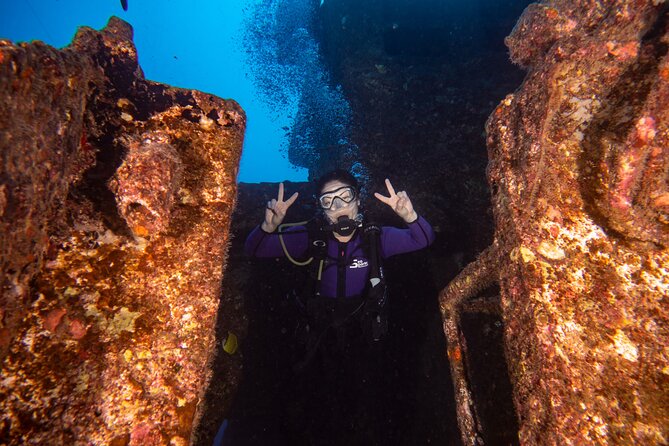
Here’s the core of what you should expect once you’re suited up and ready.
Stop 1: The deeper plunge to the shipwreck
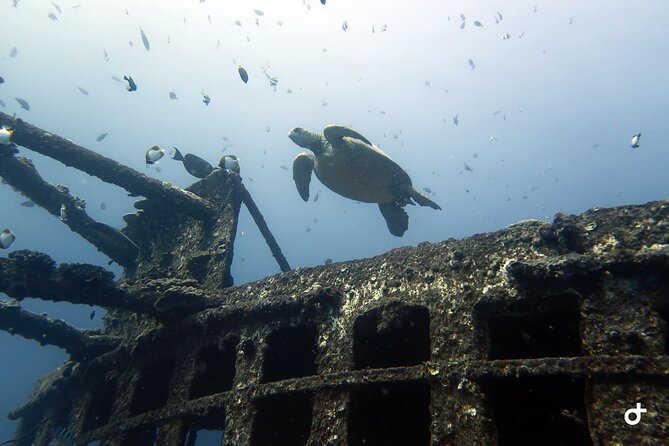
The first part is usually a 100-foot plunge to a shipwreck. Wrecks can be hit-or-miss depending on depth, currents, visibility, and how the site is behaving that morning. This charter is set up to go where the wrecks are significantly farther from shore, and that’s not a random detail. Offshore wrecks often bring in more open-water traffic, which can translate into more wildlife action.
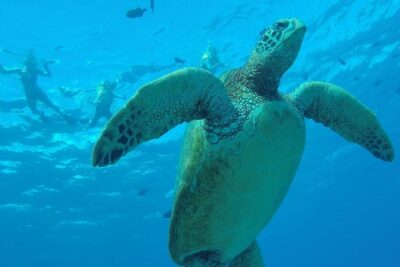
Based on the tour description, you might see pelagic fish, sea turtles, and even sharks in the right conditions. Even if you don’t get every animal, wrecks tend to be visually rewarding: structure, shadows, and fish life all add up fast once you’re at depth.
Practical note: going to a wreck at about 100 feet is not the place to “push through.” If you’re feeling off that day, tell your instructor or divemaster early.
Stop 2: The reef around 40–60 feet
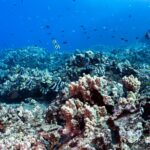
The second underwater session is usually a reef, typically around 40–60 feet deep. Depth here matters because it’s often the difference between a quiet swim over coral and a busier swim where fish and turtles feel like they’re around every corner.
This part of the plan is also flexible. The team can choose where to go depending on how you and the group feel and what they think will be best that day. That’s one reason this charter is geared toward experienced divers: it has room to steer toward better conditions instead of forcing a fixed script.


Wildlife Chances on Oahu: What You Can Realistically Hope For
Oahu’s underwater life is the headline for a reason. This charter explicitly sets you up for wildlife viewing, including opportunities for dolphins, whales, sea turtles, fish, and more.
Here’s the balanced way to think about it: wildlife sightings depend on season, time, water conditions, and luck. Still, the structure of this outing helps your odds.
- Wreck depth offshore can attract fish that move with open-water current and behavior, not just small reef residents.
- Reef depth in the 40–60 range often supports higher activity from turtles and reef fish since you’re not too deep for them to stay in your likely viewing zone.
Also, your guide’s choices matter. The more experienced the group, the more options the divemaster or instructor has to work with.
If dolphins or whales are part of your must-do list, keep your expectations flexible. But since the tour is built around those chances, it’s a good match for wildlife-focused divers.
Price and Value: What the $209 Covers (and What It Doesn’t)
At $209 per person for about 3.5 hours, the value is tied to two things: you’re paying for guided offshore underwater time, and you’re paying for a charter setup that’s not trying to squeeze first-timers through.
Your included costs cover:
- Environmental Management Charge (Reef Tax)
- Fuel surcharge
- Beverages and snacks
- Professional guide (divemaster or instructor)
Not included:
- Hotel pickup and drop-off
- Dive equipment rentals are not listed as included, though you do have the option to rent gear or bring your own
That means your real “out-the-door” price depends on whether you need rental gear and how you get yourself to the meeting point. Since there’s no hotel pickup, build in time and transport budget.
If you already have your own scuba gear and you’re a confident, experienced diver, the $209 becomes easier to justify. You’re mostly paying for the guide, the site access, and the offshore time.
Small Group Size: Why Max 16 Changes the Feeling
This is capped at 16 travelers. That number is not just trivia. A smaller group usually means:
- less waiting for everyone to gear up and check in,
- more personal attention at the start,
- and a smoother underwater flow when conditions change.
For this kind of charter, that matters. You’re going to different depths and potentially shifting sites based on what the team thinks is best. A bigger group can turn that flexibility into chaos. Here, the limit helps keep it controlled.
Also, the “experienced divers only” filter means you’re less likely to deal with someone who’s struggling with buoyancy or comfort. That keeps the whole experience calmer and more focused.
Gear, Comfort, and the Little Things That Save Your Morning
This charter gives you options: you can bring your own equipment or rent dive equipment. Since rental details aren’t specified here, I’d treat equipment rental as something to confirm before you arrive. Make sure you know what’s available and what size or setup you need.
Also, consider what “comfortable” means for you at depth. At around 100 feet, stress becomes the enemy. If you tend to get chilly quickly, plan for that. If your equalization takes work, warm up and practice your breathing calmly before you go down.
One small but important rule from the safety notes: diving within 18 hours of flying is not recommended. That’s a practical health safeguard related to pressure changes and risk management. If your trip includes flights the day before, plan your schedule accordingly.
Getting to the Meeting Point Without Stress
You meet at 74VV+4X Honolulu and the activity ends back at the meeting point. It’s also noted as being near public transportation, which is helpful if you don’t want to deal with rideshare logistics.
Because there’s no hotel pickup, you’ll want to choose a meeting plan that keeps you on time. For an early start, being late is more than an inconvenience. It can throw off the group rhythm for everyone.
Bring your paperwork readiness too. You’ll receive a confirmation at booking, and a mobile ticket is offered. Having that accessible usually prevents the classic morning scramble.
A Note on Reliability: One Bad Experience Happened
Most of the feedback score looks strong: 4.9 rating and 97% recommended, which suggests that the underlying diving experience works for most people.
Still, I saw at least one serious reliability complaint in the provided feedback. In that case, the trip was canceled the day before due to being the only client, and the person described difficulty reaching the company and getting a proper follow-up or refund handling. That’s not proof this happens often, but it is a reminder to stay engaged.
Practical advice: keep your phone handy, double-check your messages the day before, and don’t assume the plan is final until you’re close to departure.
Should You Book This Oahu Shipwreck and Reef Charter?
Book this if:
- you’re an advanced-certified diver (or have 25 logged dives),
- you want a morning with both a shipwreck plunge and a reef swim,
- you care about wildlife chances like turtles, pelagic fish, and possibly sharks,
- and you’re ready to handle deeper water confidently.
Skip it if:
- you’re not comfortable with a plunge around 100 feet,
- you’re looking for a beginner-friendly, relaxed tour where training time is the focus,
- or you need hotel pickup, since you’ll handle your own transport.
If you’re the right fit, this is the kind of charter that rewards preparation. The flexible site choices and the emphasis on experienced divers is exactly why this style of trip can feel more like skilled guiding than a canned product.
FAQ
What is the duration of the experience?
It runs about 3 hours 30 minutes.
How much does it cost?
The price is $209.00 per person.
What certification do I need to participate?
You must be a certified diver with an advanced certification or 25 logged dives.
Is there a minimum age?
Yes, the minimum age is 14 years.
What time does the tour start and where does it meet?
It starts at 7:45 am at 74VV+4X Honolulu.
Is hotel pickup included?
No. Hotel pickup and drop-off are not included.
Do you provide dive equipment?
You can rent dive equipment or bring your own.
What’s included in the price?
Included items are the Reef Tax, fuel surcharge, beverages, snacks, and a professional guide.
Is the tour limited to a small group?
Yes. The maximum group size is 16 travelers.
What happens if conditions are unsafe or weather is poor?
The experience requires good weather. If it’s canceled due to poor weather, you’ll be offered a different date or a full refund.