REVIEW · OAHU
Private Oʻahu Helicopter Experience: All Window Seats
Book on Viator →Operated by Mauna Loa Helicopter Tours · Bookable on Viator
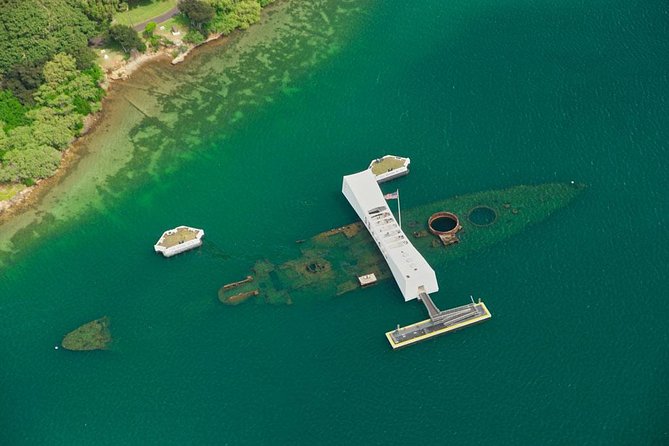
Float above Oʻahu in a private cabin. This all-window helicopter flight gives you big-sky views, live commentary, and that wow-moment look at the island from above, including the USS Arizona memorial area. I love that it stays strictly private (no mixing groups), and I also like how the flight is paced for seeing landmarks clearly, with pilots such as Jake, Mike, Lorenzo, and Hunter calling out what’s under you in real time.
The main thing to consider is the rules that keep the aircraft balanced and safe. There’s a 275 lbs per passenger weight limit (620 lbs total), and if it’s exceeded, the tour is canceled with no refund, so it’s worth checking before you plan the rest of your day.
In This Review
- Key things that make this Oʻahu helicopter ride special
- Why this private, all-window helicopter feels different over Oʻahu
- Where the flight starts at 134 Nakolo Place (and how to show up ready)
- Waikīkī coastline: the aerial warm-up that makes the rest click
- Diamond Head and ʻLeʻāhi: seeing the crater’s shape from above
- Makapuʻu and the lighthouse area: east-side views with a different mood
- Coral reefs and clear ocean: when the water becomes the headline
- Mokoliʻi (Chinaman’s Hat) at Kualoa Beach Park: small island, big context
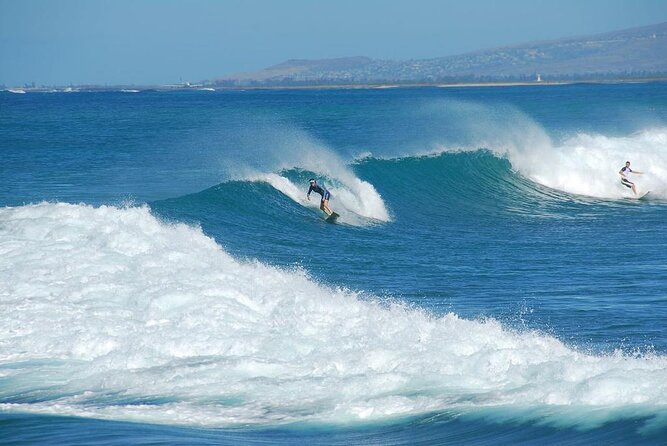
- North Shore surf spots: Banzai Pipeline, Sunset Beach, and Waimea Bay
- Doors-off setup: what it changes for photos, comfort, and the overall feel
- Live commentary that actually helps you look better
- Price and value: what you get for $415.08 per person
- Practical limits: weight, age, and weather
- Should you book this Oʻahu helicopter? My take
- FAQ
- FAQ
- How long is the Oʻahu helicopter experience?
- Is this a private tour?
- Are the doors off?
- What is the weight limit per passenger?
- What if the flight is canceled due to bad weather?
- How late can I cancel for a full refund?
Key things that make this Oʻahu helicopter ride special
- All-window seats for photo-friendly views over Waikīkī and the coast
- Strictly private for your family or group, with a min of 2 and max of 3 passengers per helicopter
- Live pilot commentary that turns the views into a quick island history and geography lesson
- Doors-off experience for most passengers, with door rules depending on age
- East and North Shore route that takes you from Diamond Head to Makapuʻu, then toward reefs and surf country
- Pearl Harbor from above, including views of the USS Arizona memorial area
Why this private, all-window helicopter feels different over Oʻahu
Oʻahu is easy to romanticize from the ground. Up in a helicopter, it gets real fast. You see how the island is shaped—coastlines cutting under cliffs, valleys dropping toward water, and the sharp contrast between sunlit beaches and darker hills.
With an all-window, strictly private setup, you don’t feel like you’re fighting for a view. You get your own group space, and the pilot can keep an eye on how everyone is doing. In the feedback I read, pilots like Jake and Mike were praised for making first-time flyers comfortable and for pointing out landmarks in a clear, steady way.
Another reason this works well is that the tour is designed as a “see the whole picture” flight. You’re not just skimming one neighborhood. You’re getting multiple zones of Oʻahu—Waikīkī, Diamond Head, the east side around Makapuʻu, then over toward the north shore surf line—so the island clicks into place as one connected map.
You can also read our reviews of more private tours in Oahu

Where the flight starts at 134 Nakolo Place (and how to show up ready)
Your tour begins at 134 Nakolo Pl in Honolulu. The check-in window is 40 minutes prior, and late check-ins are handled as a no-show, charged at the full price. That’s one of those details that matters more than it sounds—helicopter tours don’t wait around.
If you want to keep things smooth, plan to arrive with enough time to park, check in, and get to your helicopter without rushing. The location is also described as near public transportation, which can help if you’re not driving.
I also like that you’ll get a confirmation within 48 hours of booking, subject to availability. That helps you lock in your plans rather than wondering until the last minute.
Waikīkī coastline: the aerial warm-up that makes the rest click
Your first big view is the Waikīkī coastline. This is a smart place to start because Waikīkī gives you a recognizable baseline—hotel area shoreline, the long curve of the beach, and the way urban development meets ocean right away.
From the air, Waikīkī doesn’t look like a strip. It looks like a pattern—breakwaters, beaches, and the ocean color changing with depth. This is the part where you can really orient yourself, then notice later stops become easier to understand.
If you’re the type who likes photos, this is where you’ll likely want them. The flight style is geared toward spotting landmarks from angles that are good for quick snapshots.
Diamond Head and ʻLeʻāhi: seeing the crater’s shape from above
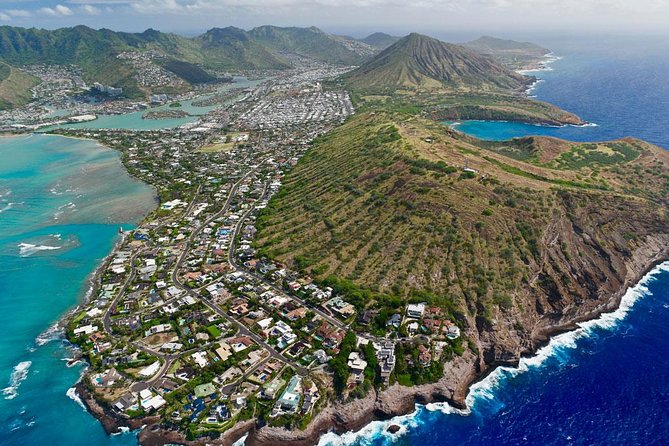
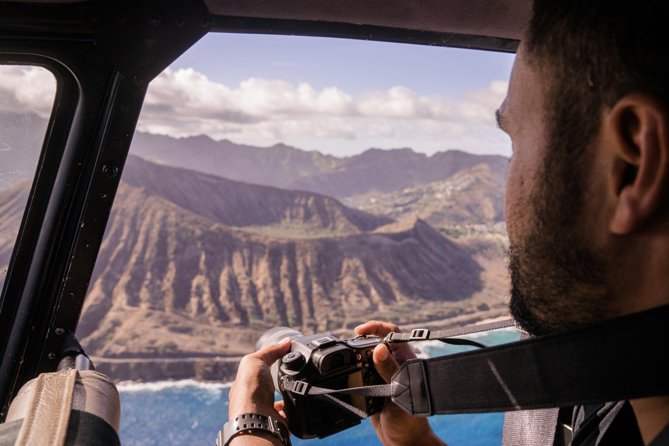
Next comes Diamond Head (ʻLeʻāhi). From the ground, Diamond Head is a hike and a viewpoint. From above, it becomes a geologic shape—an obvious bowl-like form, with ridges and slopes around it.
This stop is a great reminder that Oʻahu isn’t just beaches. It’s volcanic structure, and the landforms strongly influence the coastlines, wind patterns, and where people build and surf.
Pilots are also praised for narration that keeps you informed without turning into a lecture. That helps here, because seeing a crater from the air is dramatic, but it’s even better when you know what you’re looking at.
Makapuʻu and the lighthouse area: east-side views with a different mood
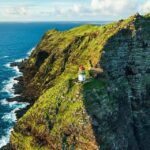
The flight then moves to Makapuʻu, including the hiking trail and lighthouse area. This is a change of scenery: the east side tends to feel more open and less built-up than Waikīkī.
From above, the coastline here looks more rugged. You can pick out headlands and how the ocean wraps around them. It’s also a useful contrast stop because you can compare how the island’s east and south coasts look under the same sky.
In the feedback, pilots were noted for giving heads-ups when conditions might be bumpy around the mountains. That kind of “what to expect” communication matters most during the transitions—so you don’t feel surprised by how the flight feels up close to the terrain.
You can also read our reviews of more tours and experiences in Oahu
Coral reefs and clear ocean: when the water becomes the headline
One of the most memorable parts is the stretch where you see coral reefs and pristine ocean waters. This is where helicopter viewing does something buses and cars can’t: you see underwater color changes and reef outlines, not just shoreline.
Even on a relatively short flight, this is the moment that makes people go quiet. You spot the difference between deeper blue and shallower areas, and you can often see how reefs sit like faint borders under the surface.
The tour’s pacing seems built for this kind of “look-and-learn” moment—so you’re not just being flown past scenery. You’re seeing how the ocean behaves around land.
Mokoliʻi (Chinaman’s Hat) at Kualoa Beach Park: small island, big context
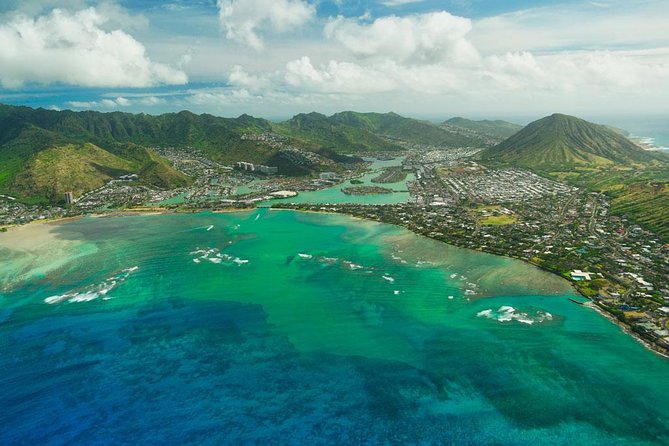
Then you fly by Mokoliʻi Island, often called Chinaman’s Hat, which sits near Kualoa Beach Park and across from Kualoa Ranch. This is one of those landmarks that many people recognize from photos, but the aerial view gives it context.
From above, it’s easier to see the relationship between the small island and the bigger coastline. You also get a clearer sense of the open water around Kualoa—how far the ocean extends and how the shoreline curves.
This is also a stop that helps connect your earlier views. By the time you reach this area, you’ve already seen Waikīkī and Diamond Head—now you’re seeing how the island looks farther from the main tourist strip.
North Shore surf spots: Banzai Pipeline, Sunset Beach, and Waimea Bay
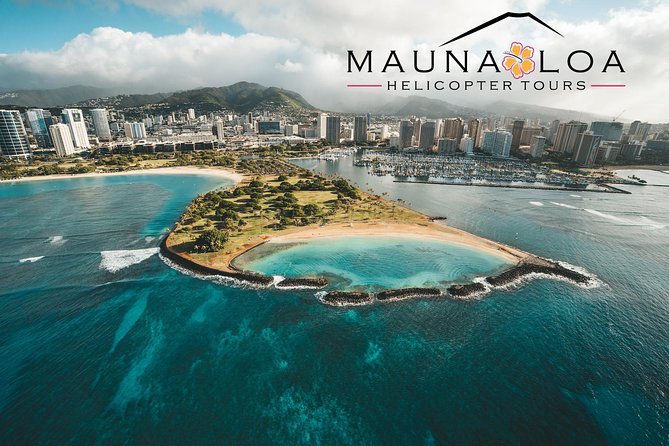
The tour continues into surf country, including Banzai Pipeline, Sunset Beach, and Waimea Bay—even with the big-wave reputation of Waimea Bay in mind.
From the air, surf spots can be hard to picture from memory, but the helicopter perspective makes them easier to understand. You see how points and shorelines shape where waves break. You also notice the way the coast changes as you move along the North Shore.
This section is a strong pick if you’re the kind of traveler who likes to see the locations that are famous for a specific thing. The narration helps connect the dots, so you’re not just collecting names—you’re getting the physical why behind the spots.
Doors-off setup: what it changes for photos, comfort, and the overall feel
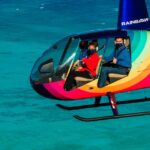
This is the big experiential divider. The tour is described as doors-off for all tours except passengers 7–11 years old. Also, ages 12 and older may sit next to an open door.
For many people, doors-off is the point. You get a more direct sense of the wind and speed, and the view has a clearer, more open frame—especially for wide shots along the coastline.
There’s a tradeoff, though. You’ll feel more exposure to the elements, and it’s worth taking seriously if you’re sensitive to wind or have questions about how it feels. One review mentioned that even with brief showers, the water did not come into the helicopter, which is reassuring. Another review noted the person had trepidation at booking due to doors-off, but found no issues with wind or cold.
The best approach is to decide what matters more to you: a more sheltered ride or maximum openness. If your priority is photos and full-sky immersion, doors-off tends to deliver that.
Live commentary that actually helps you look better
Helicopter rides can turn into a series of passing views. What makes this one different is the live commentary. In the feedback, pilots were repeatedly praised for being informative and for hitting the right balance—enough to make you understand what you see, not so much that you feel talked at.
Names that came up include Jake, Mike, Lorenzo, Hunter, Clay, Chris, Travis, and others. People singled out their style: friendly, steady, and focused on landmarks. That matters because you can’t always identify what you’re looking at at first glance from above.
One practical benefit: when a pilot gives you a heads-up about when things might get bumpy, you’re better prepared physically and mentally. That confidence can make the whole ride feel smoother.
Price and value: what you get for $415.08 per person
At $415.08 per person, this isn’t a casual add-on. But it’s also not just a “ride” price tag.
Your cost includes all taxes, fees, and handling charges, plus fuel surcharge, landing and facility fees, and the airport/departure tax, along with live commentary. That reduces the usual headache of piecing together what’s actually covered.
It’s also private. With a minimum of 2 seats required (even if only 1 person wants to fly), you’re paying for a small-group experience rather than a shared cabin with strangers. On top of that, groups of 4+ take place in multiple helicopters, and depending on availability, they may take off at the same time—so you don’t get a guaranteed “everyone together” situation for bigger groups, but you can still plan for a coordinated outing.
Bottom line: this feels like a “pay once, get the big view” purchase. If you’re deciding between multiple shorter activities and you want one unforgettable aerial perspective, this can be a strong value.
Practical limits: weight, age, and weather
There are a few boundaries you should plan around so the day doesn’t get stressful.
First is the weight limit: 275 lbs per passenger and 620 lbs total. If you exceed it, the tour is canceled and there’s no refund. If you’re close to the limit, check carefully before booking.
Second is the age door rule. Minimum age is 7 years, and younger passengers need to sit by a closed door. Ages 12 and older may sit next to an open door, which affects how exposed you might feel during the doors-off portion.
Third is weather. This experience requires favorable weather. If it’s canceled due to poor weather, you’ll be offered an alternative date or a full refund. For many islands, this is normal, but for a short 1-hour flight, it’s extra important to build flexibility into your schedule.
Cancellation is also strict: free cancellation is available up to 24 hours in advance. If you cancel within 24 hours, the amount paid isn’t refunded. Plan your timing like you would for a tight flight connection.
Should you book this Oʻahu helicopter? My take
Book it if you want one high-impact activity that helps you understand Oʻahu faster. The mix of Waikīkī, Diamond Head, Makapuʻu, reef waters, Mokoliʻi near Kualoa, and North Shore surf spots makes the island feel like one connected map. And if you like the idea of doors-off views, this is built for that.
Skip it (or be cautious) if any of these apply: you might have trouble with the weight limit, you’re uncomfortable with doors-off exposure, or you can’t handle weather-related rescheduling. A helicopter tour is worth it most when you can treat the sky as part of the plan.
If you’re aiming to choose just one aerial experience on Oʻahu, the private, all-window format is the kind of decision that pays off the moment you lift off and see the coastline turn into a panorama.
FAQ
FAQ
How long is the Oʻahu helicopter experience?
It’s about 1 hour (approx.).
Is this a private tour?
Yes. It’s strictly private for the same family or group. A helicopter takes 2 to 3 passengers.
Are the doors off?
All tours are doors-off, except for passengers 7–11 years old. Ages 12 and older may sit next to an open door.
What is the weight limit per passenger?
The total weight per passenger must not exceed 275 lbs, and the helicopter total must stay within 620 lbs. If limits are exceeded, the tour may be canceled with no refund.
What if the flight is canceled due to bad weather?
If weather is poor and the tour is canceled, you’ll be offered an alternative date or a full refund.
How late can I cancel for a full refund?
You can cancel up to 24 hours in advance for a full refund. Within 24 hours, the amount paid is not refunded.