REVIEW · OAHU
Private & Semi-Private Surf Lessons in Waikiki
Book on Viator →Operated by Ty Gurney Surf School · Bookable on Viator
Two hours can change your stance. This private surf lesson at Grays Beach turns Waikiki-area ocean time into hands-on coaching and real progress, not just sightseeing. You’ll learn on the water with your instructor watching closely and adjusting your technique as you go.
I love the private or semi-private setup, because you’re not blended into a big crowd. I also love the included basics that keep it simple to show up and start: a surfboard, a rash guard shirt, and an early land lesson that covers basic skills and water safety.
One consideration: if you want photos or a video, plan on paying extra and booking it in advance. After that, you’ll still need to be ready for the normal beginner payoff too, which is sore legs and an even bigger grin.
In This Review
- Key highlights worth knowing
- Entering the water at Grays Beach, the learning-friendly kind of Waikiki
- Your 2-hour flow: gear up at the shop, then onto sand and waves
- The land lesson: basic skills and water safety before you get tossed around
- Instructor attention in the surf: getting you standing with real feedback
- Gear included means you can travel lighter and start sooner
- Photos and video: worth it for the first time you stand
- Price and value: what $102.80 buys you in Waikiki time
- Who should book this surf lesson, and who might want a different plan
- Should you book this Waikiki private surf lesson?
- FAQ
- Where is the meeting point for the surf lesson?
- How long is the private surf lesson?
- What’s included in the surf lesson price?
- Is this lesson private or shared?
- Are photos or videos included?
- Is the lesson offered in English?
- Can I cancel for a full refund?
Key highlights worth knowing
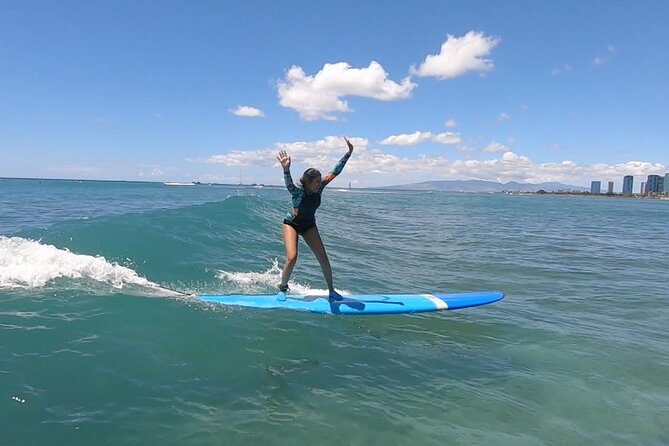
- Grays Beach coaching in Honolulu: a focused spot for learning, with your instructor guiding you as you try to stand.
- Private, not crowded: only your group participates, so feedback stays personal.
- Land lesson first: basic skills and water safety come before the first wave.
- Gear provided: surfboard and rash guard shirt included.
- Lots of waves: the goal is reps, not waiting on shore.
- Video and photo add-ons: optional, usually needs advance planning.
Entering the water at Grays Beach, the learning-friendly kind of Waikiki
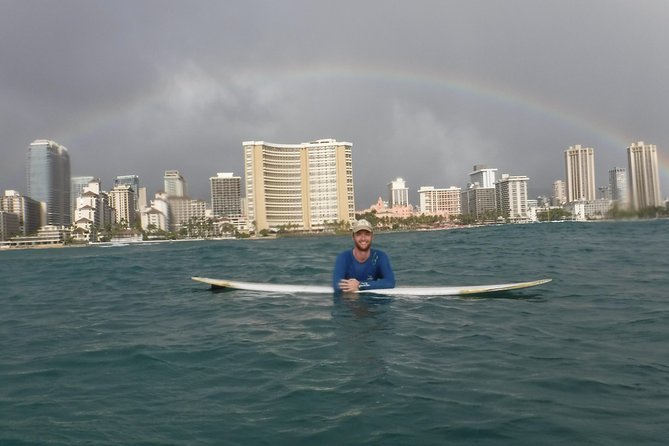
If you want a Waikiki surf lesson that feels real, this is the kind that starts with the right expectation: you’re here to learn technique and build confidence, not to rush through a checklist. Grays Beach in Honolulu is the named spot, and that matters because beginner lessons go smoother when your instruction is tailored to the conditions you’re actually practicing in.
What I like about lessons in this area is that they treat surfing as a skill you can learn fast, with the right sequence. You don’t just run toward the water and hope for the best. You get geared up, do a short warmup on land, and then head in to catch waves right away.
Also, the cultural angle is part of the pitch here. Surfing is described as an important part of Hawaiian culture, and even if you’re a first-timer, that framing changes the tone. You’re not just playing in the ocean. You’re learning a tradition that locals take seriously.
You can also read our reviews of more private tours in Oahu
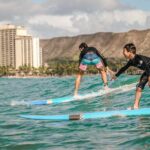
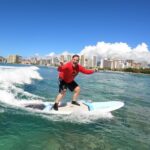
Your 2-hour flow: gear up at the shop, then onto sand and waves
The day is built around a straightforward rhythm, and that’s a good thing when you’re nervous about standing up.
You start at 205 Lewers St, Honolulu, and the activity ends back at the same meeting point. From there, the first step is getting sorted: you arrive, the crew helps you get geared up, and they store your personal belongings so you don’t have to carry your stuff down to the beach. That small detail is a big deal. When your focus stays on balancing and reading waves, you don’t have to manage bags, phones, or sandy distractions.
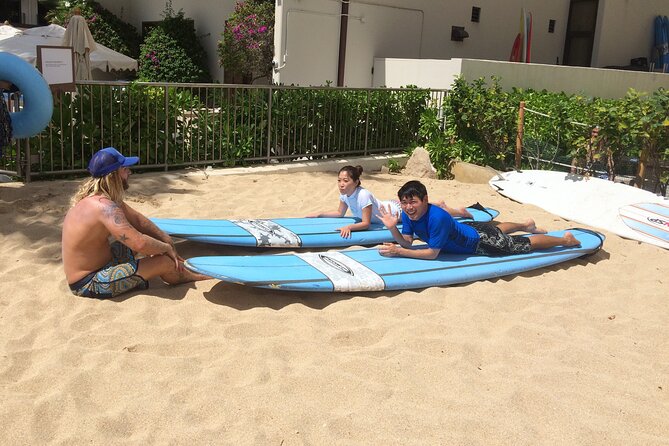
Next comes the “calm before the ocean” part: a short land lesson and safety briefing. This isn’t a long lecture. It’s timed to get you ready to move from shore to surf without confusion. In most beginner situations, the hardest part isn’t strength. It’s knowing what to do when the wave is coming, where to position yourself, and how to respond if it doesn’t work out.
Then you head into the water to catch waves. The lesson duration is listed as about 2 hours, and the structure is designed so you’re not stuck waiting around. The included promise is lots of waves and fun with strong instructors, and the format backs that up by keeping the coaching close.
The land lesson: basic skills and water safety before you get tossed around
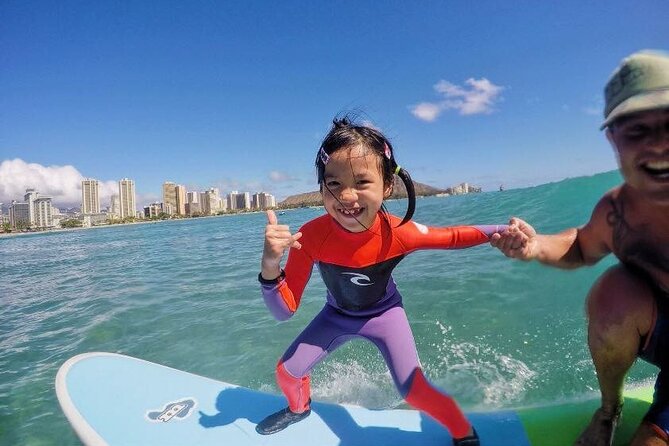
Even if you’re excited, the land lesson does real work. It helps you get your body pattern right before you’re dealing with water motion, wave timing, and balance all at once.
The lesson includes an introductory land session that reviews basic skills and water safety. That combination is smart. If you only learn how to move on the board but not how to handle yourself around surf, you’ll struggle. If you only learn safety but not the basic mechanics, you’ll freeze when it’s time to try.
Here’s how this typically helps you as a rider:
- You’ll get a clearer idea of what your goal is when a wave approaches, so you’re not panicking mid-attempt.
- You’ll understand the basics of staying safe in the water environment, which matters even when you’re with an instructor.
- You’ll feel less awkward about your stance and timing, because you practiced the fundamentals on land first.
This matters even more for people who haven’t surfed in years. One of the best signs for value here is that the coaching approach is consistent: instructors set a path, teach the basics, and then help you repeat until it clicks.
Instructor attention in the surf: getting you standing with real feedback
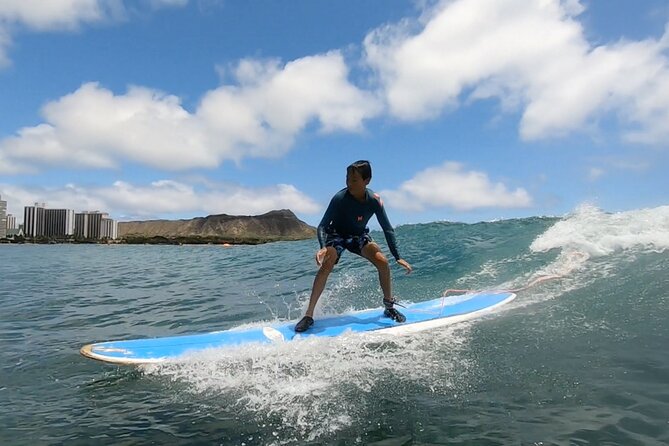
The headline for this experience is clear: you’re learning to stand up while on the water, and you’re doing it with undivided instructor attention. That’s what makes a private or semi-private surf lesson feel different from big-group lessons.
In practice, private instruction tends to produce two things you can feel fast:
- Faster correction. Your instructor can spot what’s off and adjust you immediately, rather than giving general tips that might not match what your body is doing.
- More wave attempts that fit your level. The lesson is set up to keep you trying so you’re not waiting for your turn to learn.
The coaching team includes instructors with names like Elliott, Kevin, Harry, Ty, Dakota, and James. You might not get the same exact coach every time, but the point is that the school uses an instructor lineup that works with beginners and kids. In a beginner lesson, that’s gold because the best teacher is the one who can translate technique into simple actions you can perform while you’re balancing.
If you’re wondering what to focus on during the lesson, here’s the simple mindset I’d bring:
- Listen for one key adjustment at a time.
- Try to match the technique on the next wave, not the one after that.
- Don’t measure the lesson by one perfect ride. Measure it by fewer mistakes and more successful attempts.
Also, soreness is part of the deal. One of the practical realities of surf lessons is that your body works in new ways. Even when you’re catching waves, you’ll use your legs and core differently than you expect. So bring your best attitude, hydrate, and don’t plan a long, intense day right after.
Gear included means you can travel lighter and start sooner
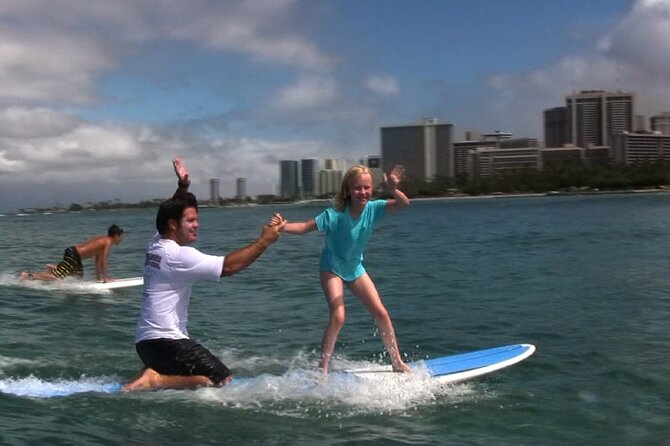
This lesson is built for convenience. Surfboard and a rash guard shirt are included, plus you get a safe place to store your belongings. That means you don’t need to find rental gear last minute or worry about whether you packed the right shirt.
What to bring yourself:
- A swimsuit and basics you’re comfortable getting wet with.
- Sunscreen and water for after. (The lesson is in the open air and you’ll be in the sun.)
- Any small items you need for the day, but rely on the included storage so you don’t walk around holding everything.
One extra note from real-world lesson planning: if you want to remember the session visually, video and photos are not automatically included. They’re optional and must be booked in advance.
You can also read our reviews of more tours and experiences in Oahu

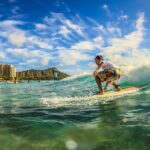


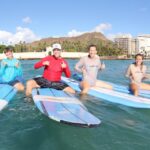
Photos and video: worth it for the first time you stand
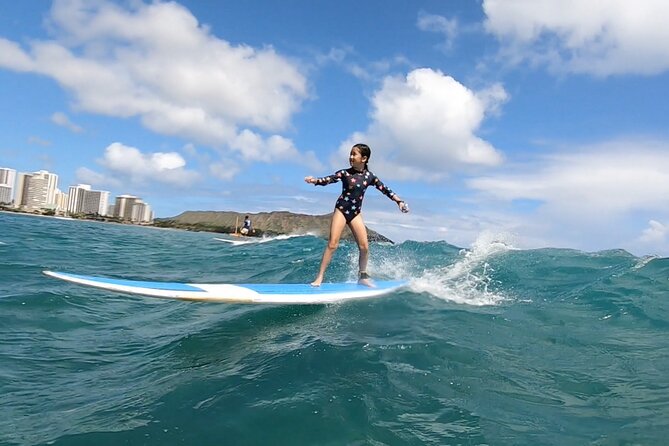
This is one of the most common “should I pay extra?” decisions for a first surf lesson. Here’s the honest way to think about it.
Video and photos cost extra, and you have to handle that planning ahead of time. In one case, people were told video is offered for about $35 and that you need to ask before the lesson. If you want it, decide early so you don’t miss the chance.
Is it worth it? For many beginners, yes. When you’re learning a new skill, your brain often focuses only on staying balanced. Afterward, it helps to see what actually happened. If you’re traveling with a birthday kid, a partner, or friends who want proof you didn’t just fall the whole time, having footage can turn the experience into a memory you can rewatch.
If you’re budget-tight, you can skip it. But if you’re the type who likes to track progress, video is one way to measure improvement from day to day.
Price and value: what $102.80 buys you in Waikiki time
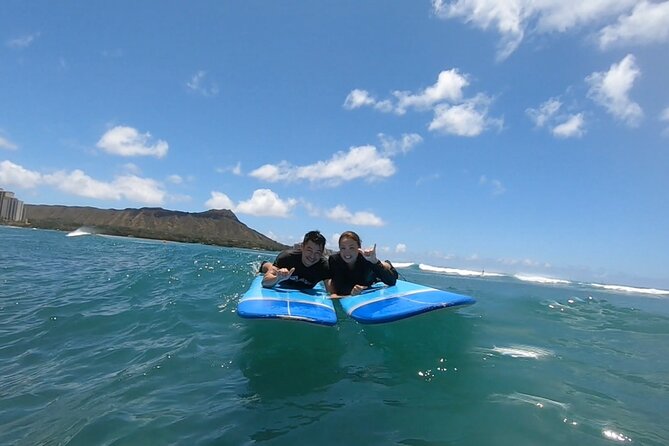
The price is listed at $102.80 per person, and the duration is about 2 hours. That can sound steep if you compare it to group rentals or casual surf board exchanges. But it’s not priced like a rental shop. It’s priced like coaching time.
Here’s what you’re really paying for:
- Instruction that is private or semi-private, meaning your attention is not split across a large class.
- Included essentials: a surfboard and rash guard, so you’re not juggling extra rental fees.
- A lesson flow that includes land coaching, not just time on the water.
So the best value depends on your goal. If you want to learn quickly, and you want someone watching you and correcting you, you’ll get more out of this than a self-guided attempt. If you just want casual time in the ocean, the price can feel less worth it.
One more value point: this experience is described as having lots of waves. In surf lessons, wave count is everything. You can have the best instructor in Hawaii and still leave disappointed if you spend too much time waiting your turn. This format aims to maximize actual attempts.
Who should book this surf lesson, and who might want a different plan
This experience says most travelers can participate, and the big selling point is that it’s appropriate for beginners who want structure and support. If you’ve never surfed, or you haven’t surfed in a long time, the land lesson and safety briefing help you start with less guessing.
It also fits well if you’re traveling with family. Instructors are set up to teach kids and first-timers, and the private/semi-private structure keeps attention on the person learning, not on managing a big group.
Consider a different approach if:
- You want a very long time in the water. The total lesson time is about 2 hours, and while that includes the water portion, it’s still a learning session, not an all-day surf camp.
- You’re hoping for an all-inclusive photo package. Photos and videos are optional extras.
Practical travelers note: it’s offered in English, it uses a mobile ticket, and the meeting point is close to public transportation. If you like arriving ready and minimizing fuss, that’s the vibe here.
Should you book this Waikiki private surf lesson?
I’d book it if your priority is getting coached while you learn to stand. The combination of private or semi-private attention, included gear, and a land-and-water teaching flow makes it a strong choice for first-timers.
I wouldn’t book it if you’re mainly seeking a cheap beach activity or you’re not interested in learning technique at all. This isn’t random ocean play. It’s a structured lesson focused on getting you on waves with coaching.
If you want your best shot at a great first session, bring the right mindset: focus on one correction at a time, take your safety cues seriously, and plan to be sore after. Then decide early if you want the video or photos, since that’s an optional add-on.
FAQ
Where is the meeting point for the surf lesson?
The meeting point is 205 Lewers St, Honolulu, HI 96815. The activity ends back at the meeting point.
How long is the private surf lesson?
The lesson runs for about 2 hours.
What’s included in the surf lesson price?
It includes a surfboard, a rash guard shirt, an introductory land lesson covering basic skills and water safety, lots of waves, and a safe place to store belongings.
Is this lesson private or shared?
This is listed as a private tour/activity, meaning only your group participates. The title also references private and semi-private surf lessons.
Are photos or videos included?
No. Photos & videos are optional and must be booked in advance.
Is the lesson offered in English?
Yes, the lesson is offered in English.
Can I cancel for a full refund?
Yes. You can cancel for a full refund up to 24 hours before the experience starts.