REVIEW · OAHU
Private Group Surf Lesson for 4 by Waikiki Beachboys at the Royal
Book on Viator →Operated by Waikiki Beach Services · Bookable on Viator
Waikiki makes learning to surf feel real. This private group lesson puts you in the action at Waikiki Beach, with a 1-hour session that covers the basics of paddling, standing, and balancing—plus surf history and how the sport works. You start from a convenient meeting point at Waikiki Beach Services (Royal Hawaiian area), and you return there when you’re done.
I like that you get real personal attention because your group stays small (minimum 4, maximum 5). I also like that the coaching isn’t just hands-off encouragement; you get surf theory and mechanics explained alongside what to do in the water.
One thing to consider: the lesson is built around getting you moving quickly, and that can feel challenging if you’re very new and want slower, more step-by-step land instruction. If you’re nervous, plan to speak up early so your coach knows what you need.
In This Review
- Key Highlights at a Glance
- Waikiki Beachboys at the Royal: What Makes This Lesson Worth Your Time
- The 1-Hour Plan: Paddling to Standing (and What You’ll Actually Practice)
- 1) Meet and get set up
- 2) Land instruction (short but important)
- 3) Water practice: paddling mechanics first
- 4) Standing and balance drills
- 5) Wrap-up back at the meeting point
- Price and Value: Paying for Coaching, Not Just the Board
- Who This Surf Lesson Fits Best (and Who Might Feel Frustrated)
- You’ll probably enjoy it most if you:
- If you’re very new and anxious:
- Age note that matters
- Meeting Point at Waikiki Beach Services: Easy to Find, Easy to Start
- What You’re Learning: Surf History Meets Real Mechanics
- The Small-Group Setup: The Real Reason People Like This Lesson
- FAQ
- FAQ
- How long is the private group surf lesson?
- Where does the lesson start and end?
- What age do you need to be for this group lesson?
- Do I need to be able to swim?
- How many people are in the group?
- What’s included in the lesson price?
- What is not included?
- What should I bring?
- Is the lesson offered in English?
- Do I get a mobile ticket?
- What happens if weather is bad?
- Should You Book This Waikiki Surf Lesson?
Key Highlights at a Glance
- Waikiki beachfront instruction at the birthplace of surfing
- Small private group setup (4–5 people total)
- Surfboard included, so you’re not renting gear last minute
- Coaching includes theory, mechanics, and history, not just showing moves
- Good for swimming-ready beginners, since you must be able to swim
- A tight 1-hour format, focused on paddling, standing, and balance
Waikiki Beachboys at the Royal: What Makes This Lesson Worth Your Time
This is a classic Oahu “learn to surf” experience, but with two smart twists that matter for real beginners.
First, the lesson happens right in Waikiki, where surfing has deep local roots. That setting changes the vibe. You’re not picturing surf from afar—you’re right where waves and culture meet. The tour also frames the day with surf mechanics and history, so you understand why certain motions matter, not just that you should do them.
Second, the format is private for your group. You’re not sharing coaching attention with a huge crowd. The company structures it for a minimum of 4 participants and a maximum of 5, so the guide can actually watch what each person is doing and correct common mistakes.
You can also expect a simple, no-drama flow: you meet, you gear up, you get in the water, you practice the core progression, and you end back where you started. It’s tight and focused—ideal when your Hawaii time is limited.
You can also read our reviews of more private tours in Oahu
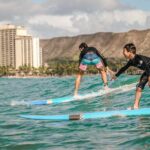
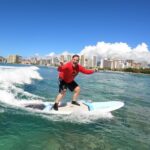
The 1-Hour Plan: Paddling to Standing (and What You’ll Actually Practice)
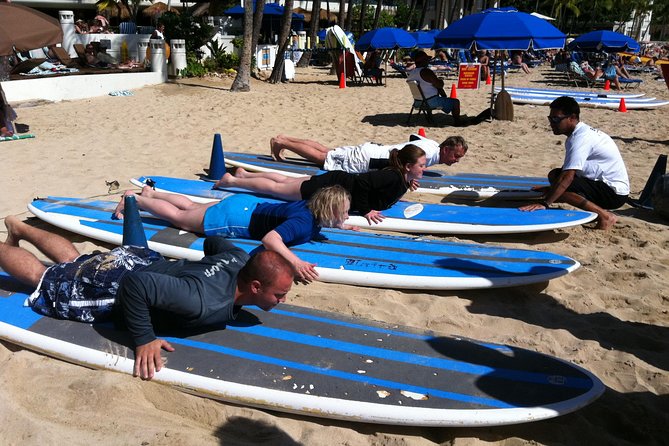
The entire lesson runs about 1 hour, and the focus is very clear: paddle, stand up, and balance on the surfboard. There isn’t a long, scenic itinerary here. This is training time.
Here’s what the structure typically looks like in a lesson like this (based on what they teach and how these sessions are usually coached):
1) Meet and get set up
You’ll meet at Waikiki Beach Services near the Royal Hawaiian area. At the start, you should be ready to sign a waiver (required) and show up with your basics.
Bring your own towel, rash guard, and sunscreen. Even if you’re not a towel person, bring one—wet lessons can still mean your next stop is a beach walk, dinner, or a long drive. If you forget the rash guard, you’ll feel it fast.
2) Land instruction (short but important)
The lesson includes surf theory and mechanics, which usually means you’ll get quick explanations on what to do and why. For beginners, this is the moment to get your questions answered—how to paddle efficiently, how to time the stand, and how to keep balance.
Based on past feedback you may see online, some people feel the land instruction can be brief. If you want extra clarity, ask for it early. A simple question like how many paddles you should try before attempting to stand can save you from guessing in the water.
3) Water practice: paddling mechanics first
You’ll start by working on how to get your body moving correctly on the board. Since participants must be able to swim, the coach can spend more time on technique without worrying as much about basic survival.
Watch for the small things: head and shoulders position, how your arms pull, and how you adjust when a wave comes through. This part matters because good paddling makes everything after it easier.
You can also read our reviews of more tours and experiences in Oahu



4) Standing and balance drills
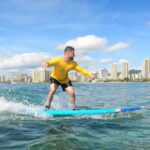
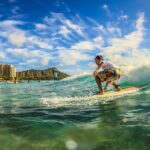
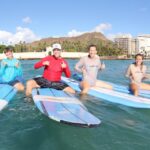
Once you can paddle and feel more stable, you’ll work on standing up. This is where beginners often hit the biggest mental wall: you try to stand and instantly feel wobbly, which then makes you freeze.
The goal here isn’t to become a surfer in one session. It’s to build enough muscle memory that standing and balancing starts to feel possible. The best lessons slow you down enough to get the core sequence right, even if the waves aren’t perfect.
5) Wrap-up back at the meeting point
Your session ends back at the starting point. It’s straightforward, so you can plan dinner or a sunset walk without a complicated schedule.
Price and Value: Paying for Coaching, Not Just the Board
At $100.76 per person, you’re paying for a guided lesson with a professional coach, a surfboard, and all included taxes and fees. That price can feel steep until you look at what you actually get: a full hour of coaching in one of the most popular surf areas on Oahu.
Here’s where the value comes from:
- Small-group attention (4–5 people): A shared lesson still gives the coach room to correct technique. You’re not being coached through a crowd.
- Surfboard included: You don’t have to calculate rental time or gear hassle. The board is part of the service.
- Theory + history: Many first-time surf lessons only focus on what to do. Here, you also get mechanics and history, which helps you understand what’s happening when you’re out there.
Keep one extra cost in mind: there’s a $1 Ocean Stewardship fee effective 01/01/2024. It’s not a huge amount, but it’s good to know it exists so you don’t get surprised at the end.
And one practical note: photos and video are not included. If you want souvenirs, plan to purchase separately.
Who This Surf Lesson Fits Best (and Who Might Feel Frustrated)
This lesson is built for people who can meet the basics fast. That’s not a bad thing—it keeps the experience efficient.
You’ll probably enjoy it most if you:
- Are 13+ (the group lesson requirement)
- Can swim comfortably enough to feel secure in the ocean
- Like hands-on coaching and don’t mind a short instruction window
- Have at least a moderate physical fitness level
If you’re very new and anxious:
You might still have an awesome time, but I’d go in with realistic expectations. This experience is structured around movement and repetition. Some people find that instructors can be patient and encouraging; others find the coaching on land is minimal and the pace can feel stern.
If you’re the type who needs extra reassurance, tell your guide at the start: you want slow, clear steps and you might ask questions mid-lesson. Good instructors can adjust, especially when your group is small.
Age note that matters
For 12 and younger, the group lesson rules don’t apply. You’ll need to sign up for one-on-one private individual lessons instead. This is a real deciding factor if you’re traveling with kids.
Meeting Point at Waikiki Beach Services: Easy to Find, Easy to Start
You’ll start at Waikiki Beach Services @ Royal Hawaiian, 2259 Kalākaua Ave, Honolulu, HI 96815. That’s in the central Waikiki area, which is helpful if you’re staying nearby and want minimal commute time.
The session ends back at the same meeting point, so you don’t get stuck figuring out pickup at a distant beach. In a place like Waikiki, that simplicity is worth something.
Practical prep tips:
- Bring your rash guard to protect your skin.
- Bring a towel so you’re comfortable right after.
- Bring sunscreen (it’s not provided).
- Come ready to sign the waiver.
- Bring your own patience—surf lessons take a few tries.
What You’re Learning: Surf History Meets Real Mechanics
What’s different here is that the lesson doesn’t treat surfing like a magic trick. They teach surfing theory, mechanics, and history—so when you learn a move, you also learn what it is doing.
That matters because it changes your mindset from I’m failing to I’m practicing a specific skill.
Common skills you should expect to work on:
- Paddling efficiently so you can reach the right spot
- Standing up safely by timing your body movement
- Balancing so you don’t immediately wobble off the board
- Understanding the role of technique, not just luck
And because the lesson is offered in English, it’s easier for first-timers to ask questions without language friction.
The Small-Group Setup: The Real Reason People Like This Lesson
If you’ve taken any big-group activities in Hawaii, you know the problem: one coach tries to manage a line of people, corrections get generic, and the lesson turns into a series of guesses.
This lesson’s design avoids that. With a group capped around 5 people, you’re more likely to get direct coaching and faster correction. That’s also why the best experiences tend to highlight patience and time taken to help people get the hang of it.
If you’re traveling as a family group, friends, or a small team, this format makes the lesson feel more like a guided class than a ticketed performance.
FAQ
FAQ
How long is the private group surf lesson?
It’s about 1 hour.
Where does the lesson start and end?
It starts at Waikiki Beach Services @ Royal Hawaiian, 2259 Kalākaua Ave, Honolulu, HI 96815 and ends back at the same meeting point.
What age do you need to be for this group lesson?
For the group lesson, participants must be over 13 years old.
Do I need to be able to swim?
Yes. You must be able to swim to participate.
How many people are in the group?
The group is minimum 4 and maximum 5 people. It’s private for your group.
What’s included in the lesson price?
Included: the professional guide and surfboard, plus all taxes, fees, and handling charges (and the Ocean Stewardship fee is listed separately).
What is not included?
Not included: souvenir photos & video, transportation, towels, sunscreen, and the $1 Ocean Stewardship fee effective 01/01/2024.
What should I bring?
Bring your own towel, sunscreen, and rash guard. You’ll also need to sign a waiver.
Is the lesson offered in English?
Yes, it’s offered in English.
Do I get a mobile ticket?
Yes. The tour provides a mobile ticket.
What happens if weather is bad?
This experience requires good weather. If it’s canceled due to poor weather, you’ll be offered a different date or a full refund.
Should You Book This Waikiki Surf Lesson?
If your group can meet the minimum of 4 people and you’re 13+ and able to swim, this is a strong way to learn without feeling lost. The best part is the small-group coaching plus a structured focus on the basics—paddling, standing, and balance—right where surfing culture lives.
I’d especially recommend it if you want more than random wave-chasing. The theory and mechanics angle helps you progress faster, even if you’re starting from zero.
Just be honest with yourself about learning pace. If you want lots of slow, on-land coaching before getting into the water, you should plan to communicate clearly at the start so the guide can adjust for your needs.