REVIEW · HONOLULU
Oahu: Whale Watching Cruise Whales Guaranteed
Book on GetYourGuide →Operated by Living Ocean Tours · Bookable on GetYourGuide
Sunset + whales is a hard combo to beat. This Oahu cruise puts you on the water with humpbacks during migration and classic views of Waikiki and Diamond Head from the sea. You get a double-decker power boat setup that helps you find your angle fast.
I especially like the timing: afternoon into sunset is when the water looks best and the light turns cinematic. I also like that the guides keep the trip moving with real marine talk as you scan for breaches, tail slaps, and other behavior up close.
One consideration: sightings are common, but not guaranteed. If you go in peak season you’ll stack the odds, but you still need to be okay with the possibility of a slow hunt for whales.
In This Review
- Key things I’d focus on before you go
- Getting to Pier B in Kewalo Basin: smooth boarding, easy orientation
- The 90-minute plan: Waikiki Beach first, then Diamond Head Lighthouse
- Waikiki Beach whale watching (about 45 minutes)
- Diamond Head Lighthouse whale watching (about 45 minutes)
- Back to Living Ocean Tours
- Why humpbacks in January–April feel different from “generic whale watching”
- How the captain and crew change the feel of your trip
- Boat comfort, bar snacks, and the seasickness question you should answer honestly
- Price and value: is $56 for 90 minutes fair?
- A realistic view of whale-watching odds (and what to do with that)
- Who this cruise fits best (and who should skip it)
- Should you book this whale watching cruise?
- FAQ
- Where do I meet for the whale watching cruise?
- How long is the cruise?
- Are humpback whale sightings guaranteed?
- What’s the best time to go?
- What should I bring?
- What’s included in the price?
- Is hotel pickup included?
Key things I’d focus on before you go
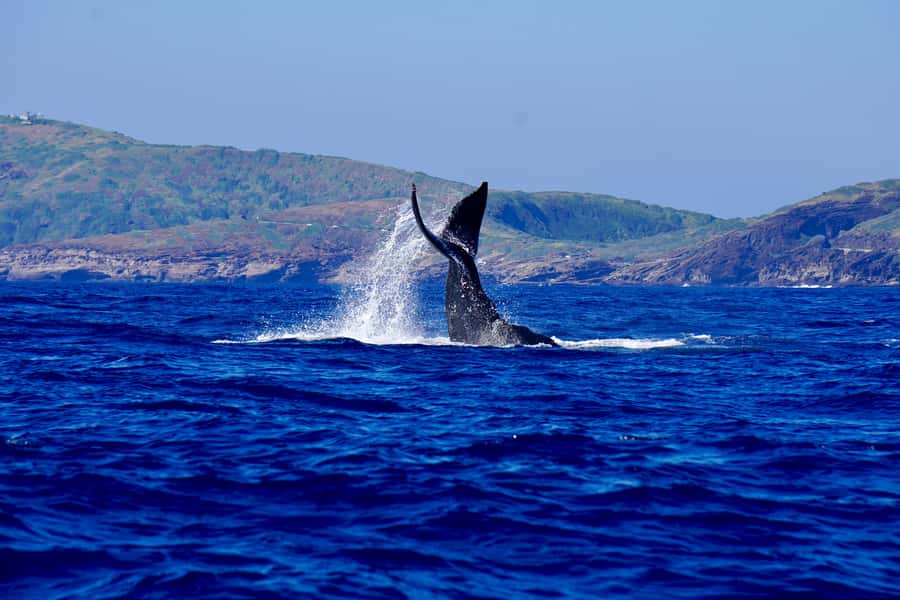
- Guaranteed-feeling odds in season: January to April is when humpbacks migrate to mate and give birth
- Two best-view stretches: Waikiki Beach area, then Diamond Head Lighthouse area
- On-board guide commentary: facts on whale behavior and marine ecology as you watch
- Best chance window: afternoon and sunset departures are the sweet spot
- If no whales show: there’s a free return trip offered in that rare case
- A workable boat setup: double-decker views plus included light snacks, soda, juice, and water
Getting to Pier B in Kewalo Basin: smooth boarding, easy orientation
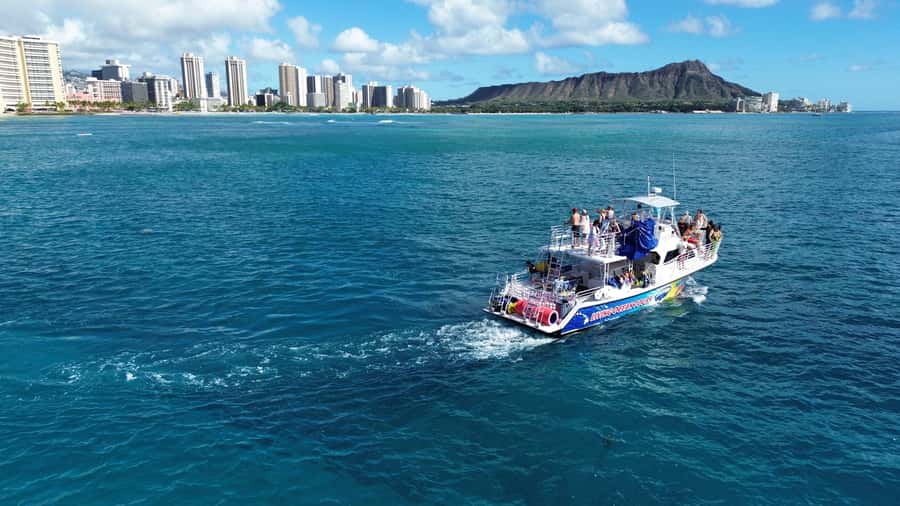
This cruise starts with a simple meet-up at Pier B in Kewalo Basin Boat Harbor. That matters because whale-watching runs on timing. When you’re not stuck waiting on complex hotel pickup logistics, you can show up, get oriented, and get ready to scan the horizon.
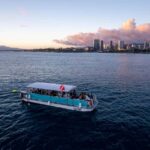
You’ll board a double-decker power boat. That layout is more than a gimmick. It gives you options: if the front of the boat is busy, you can shift levels and still see. It also helps if you’re taking photos, because you’re not stuck behind one row of heads the whole trip.
Before you leave the dock area, do the basic comfort prep: hat, sunscreen, and sunglasses go a long way. A lot of the action comes fast, and you don’t want to spend your one good viewing window fiddling with gear.
You can also read our reviews of more boat tours in Honolulu



The 90-minute plan: Waikiki Beach first, then Diamond Head Lighthouse
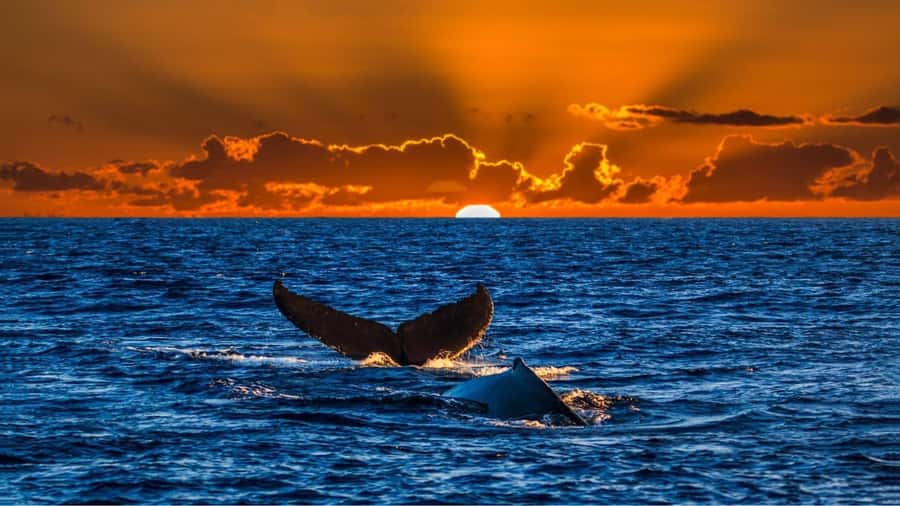
The cruise is built around two blocks of whale time, with views that change as you move along the coastline.
Waikiki Beach whale watching (about 45 minutes)
First up is the Waikiki Beach area. From the water, Waikiki isn’t just another postcard view. The buildings look different when you’re low on the sea, and you get that sense of Hawaii’s coastline as a working habitat, not just scenery.
This is also where you start building momentum. Guides typically get you keyed in on what to watch for. You’re looking for surface events that can be brief: the pop of a blow, a quick breach, a tail slap, or the telltale movement of a whale surfacing and moving on.
If your timing is right, the first stretch can feel like a warm-up that turns into the main show.
Diamond Head Lighthouse whale watching (about 45 minutes)
Then the cruise heads toward the Diamond Head Lighthouse area for another whale-watching stretch. This is where the horizon feels wider and the coastline has a dramatic edge. If you love photos, this is often the part where the light looks especially good because sunset glow tends to hit the water and the shoreline at different angles.
This second block is your chance to catch what the first stretch missed. Sometimes a pod is active in one area, then shifts. Having two 45-minute windows gives you more than a single try.
Back to Living Ocean Tours
You’ll return to Living Ocean Tours after the two whale-watching periods. With a 90-minute total runtime, the day doesn’t get swallowed up. That’s a big deal if you’re trying to fit it into a tight Waikiki schedule.
You can also read our reviews of more whale watching tours in Honolulu
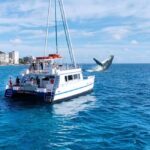
Why humpbacks in January–April feel different from “generic whale watching”
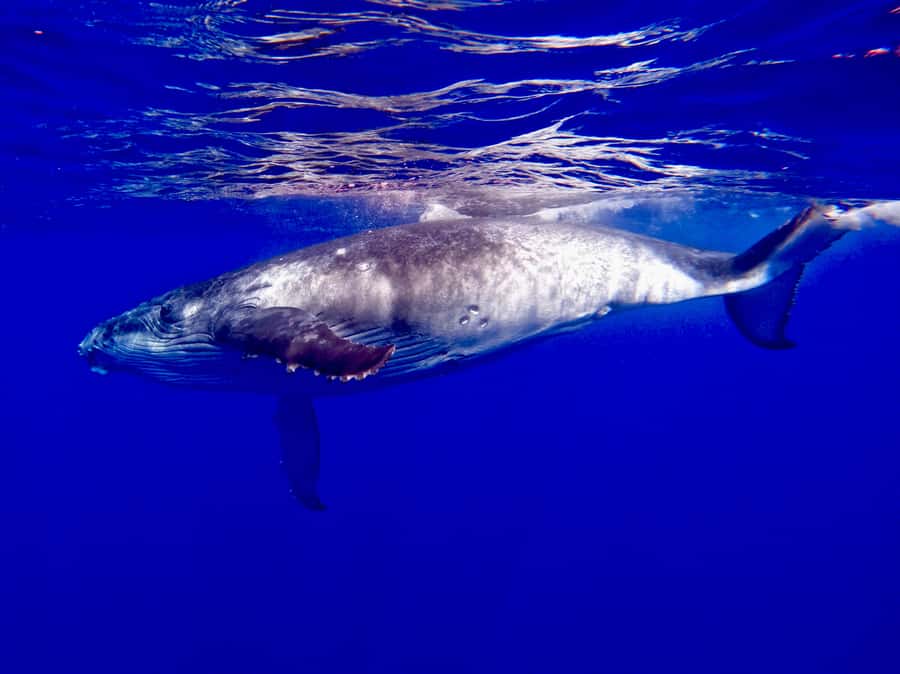
This isn’t year-round whale watching on any schedule. It’s focused on the season when humpbacks are in the area.
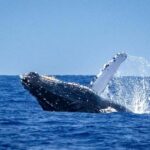
From January to April, humpback whales migrate to Hawaii to mate and give birth. That’s why this cruise’s whale-watching pitch feels grounded. The whales aren’t just passing through. They’re there doing whale things—breaching, surfacing, and moving with purpose.
What you should watch for, in plain terms:
- Breaches: the sudden jump that breaks the water surface and gives you a wow moment
- Tail slaps: you may hear or spot the motion right before you see the splash
- Playful interactions: when the behavior looks less like travel and more like curiosity
- Mom-and-calf moments: if you’re lucky, you can see family activity, which tends to draw extra attention
You’ll also sometimes see other marine life. I’ve seen people talk about spinner dolphins along with humpbacks, and that’s a realistic possibility when you’re out in these waters during migration.
A quick reality check: the cruise description emphasizes that whale sightings are very common, but not guaranteed. The ocean is the ocean. Conditions change, whales change their timing, and the best captains still have to read the water.
How the captain and crew change the feel of your trip
On a whale cruise, the boat is only half the story. The other half is how the captain works and how the crew keeps you engaged when you’re scanning for something small against a huge horizon.
I like the way this trip is set up for active searching. Captains are expected to keep an eye on whale activity and reposition when it makes sense. On some departures, the captain’s focus is the difference between seeing whales early and spending a long time waiting.
The guide commentary also matters. You’ll get explanation of whale behavior and marine ecology while you watch, not just a lecture that happens between sightings. That turns the trip into something you understand, not just something you watch.
And yes, sunset can get romantic fast. On some cruises, the crew even helps people with photo-taking during sunset. If you care about getting at least a couple good shots without fighting strangers for angles, that kind of help is worth paying attention to.
Boat comfort, bar snacks, and the seasickness question you should answer honestly
This cruise is short enough that you’re not stuck on the water all day, but it’s still a boat ride. That means you should match the trip to your body.
The activity isn’t suitable for:
- children under 3
- pregnant women
- people with back problems
- people prone to seasickness
If you fall into any of those groups, take that seriously. It’s not just legal wording. Short cruises can still be bumpy, and if you’re already sensitive, you’ll feel it more.
On the comfort side, you get light food basics included: light snacks, sodas, juices, and water. On top of that, there’s a bar area where you can find additional snacks and drinks for purchase. That combination is practical. You’re not hungry if you don’t want to buy anything, but you still have an option if you want more than included beverages.
One more thing: don’t underestimate sun and wind. Even on a mild day, the water throws glare at you. Sunglasses and a hat help you stay sharp when whales surface.
Price and value: is $56 for 90 minutes fair?
At $56 per person for about 90 minutes, you’re paying for three things: access to the water, the boat crew, and the chance to see whales during a high-impact season.
Here’s how I think about value:
- You’re not just buying transportation. You’re paying for time on the water during January–April migration, when your odds are best.
- The included snacks and drinks reduce the “surprise costs” feeling that can pop up on some tours.
- If you don’t spot whales, the cruise offers a free return trip. That’s a meaningful safety net, even if it’s meant for that rare no-sighting scenario.
So is it worth it? If whales are your priority and you’ll be in Oahu during the migration window, this price feels like a reasonable trade for a real wildlife experience and standout views.
If you’re traveling outside the January–April window, the whole “humpbacks are here” logic is weaker. You can still go, but your odds drop, and the value shifts with the season.
A realistic view of whale-watching odds (and what to do with that)
Even with strong odds, whale watching has uncertainty. The right mindset makes the trip better.
Go into it expecting:
- you’ll scan constantly
- the action might happen fast when it does
- sometimes whales show early; sometimes they show late
One useful tip: pick your viewing spot early and stick with it long enough to learn the rhythm of scanning. If you’re constantly running around the boat, you’ll miss quick surface events. The whales don’t give long lead time.
Also, take advantage of the guide’s job. When the crew starts pointing out behavior or describing what’s likely happening, it helps you interpret what you’re seeing. Your brain moves from guessing to recognizing.
If you’re the type who needs control, remember this: you can’t control wildlife. You can control your readiness. That’s why sunscreen, water, and a hat are not “nice-to-haves.” They keep you comfortable enough to stay focused.
Who this cruise fits best (and who should skip it)
This is a strong match if you want:
- a short, focused wildlife outing from Waikiki
- the best season for humpbacks, January to April
- a boat with multiple viewing levels
- an onboard guide that talks while you watch
It may not be a match if you:
- hate boats or feel seasick easily
- need a tour that’s calm and predictable
- can’t follow basic rules like no smoking (and no alcohol/drugs)
Families should also note the age limit: not for kids under 3.
Should you book this whale watching cruise?
I’d book it if you’re going during the humpback season and you want a straightforward way to combine marine life with iconic views. The cruise length is tight, the boat setup is practical, and the included snacks help you stay comfortable.
I’d hesitate only if:
- you’re very sensitive to motion and you don’t fall into the listed suitable groups
- you’re traveling outside the January–April season and you expect guaranteed sightings
If your goal is whale time with a sunset view plan, this is a good bet.
FAQ
Where do I meet for the whale watching cruise?
Please meet at Pier B in Kewalo Basin Boat Harbor.
How long is the cruise?
The duration is about 90 minutes (the experience runs daily with whale watching time scheduled at two points during the ride).
Are humpback whale sightings guaranteed?
Whale sightings are very common, but they are not guaranteed. If no sightings happen in the rare case, the cruise offers a free return trip.
What’s the best time to go?
Afternoon and sunset are the best times to be out on the water.
What should I bring?
Bring sunglasses, a hat, a camera, and sunscreen.
What’s included in the price?
You get the whale watching cruise, live guide commentary, access to the double-decker power boat, and light snacks plus sodas/juice/water.
Is hotel pickup included?
Hotel pickup and drop-off are not included.