REVIEW · OAHU
Shark Cage Diving on Oahu’s North Shore
Book on Viator →Operated by Hawaii Shark Encounters Inc · Bookable on Viator
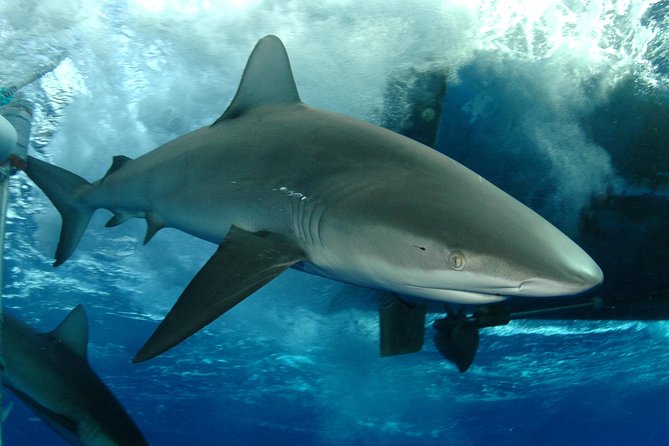
Shark cage encounters on Oahu feel unreal fast. This one pairs a floating cage with easy surface snorkeling so you can watch Galapagos and sandbar sharks glide past up close. I love that the whole setup is built for real comfort, from the guided cage entry to the clear, windowed viewing.
Two things I especially like: the small group size (max 12) and the fact you do not need any scuba experience. One thing to weigh: the ocean ride can get bumpy, and the water can feel chilly depending on the month, so plan for that.
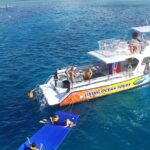
You start at Hale‘iwa Boat Harbor, hop aboard, and head out offshore. Then you spend your time where it counts: looking at sharks calmly, in real conditions, with crew commentary that actually helps the sight feel less scary and more fascinating.
In This Review
- Key takeaways before you book
- Hale‘iwa harbor start: the logistics that make the day feel easy
- Inside the cage: how the viewing actually works
- Sharks on Oahu’s North Shore: what you’re most likely to see
- Small-group energy and guide personalities you’ll remember
- What your 2 hours look like (and where the time feels “worth it”)
- Weather, waves, and what to wear so you enjoy it
- Pricing and value: is $100 a fair deal?
- Who should book this, and who might want a different plan
- Should you book this Oahu shark cage encounter?
- FAQ
- How long is the shark cage experience?
- Where does the tour start and end?
- Do I need scuba certification or prior diving experience?
- What sharks will I see?
- What’s included, and what should I bring?
- What does an observer ticket include?
- Is the tour dependent on weather?
Key takeaways before you book
- Short boat time, fast payoff: You’re out on the water briefly before the cage session starts.
- Easy snorkeling from the surface: Mask-and-snorkel time with polyglass windows for close viewing.
- Maximum 12 people: More personal feel than the big-boat circus.
- Good options for non-swimmers: An observer ticket exists, but it does not include cage time or snorkel gear.
- Guides bring the facts without killing the fun: Crew explanations and on-the-spot reassurance help a lot.
- Go early for smoother vibes: Many people recommend morning departures for a calmer ride.
Hale‘iwa harbor start: the logistics that make the day feel easy
The tour starts at Hale‘iwa Boat Harbor in Haleiwa, and that matters more than you might think. You’re not scrambling across the island at weird hours, and you can meet the crew, get oriented, and then settle into the boat rhythm without added stress. There’s no hotel pickup, so you’ll want to plan to arrive on your own.
From the reviews, the boat ride to the shark area is short, and you’ll often get a chance to notice other ocean life during the trip out and back. People have reported seeing whales while heading to and/or from the site, and that’s a nice bonus when conditions line up.
I also like that the experience is set up like a tight loop: leave from Hale‘iwa, do your cage-and-snorkel time offshore, then return to the same meeting point. That structure helps you keep your day simple. It’s also about timing. Most of your “wow” time is concentrated in that roughly two-hour window, rather than stretched out into a half-day of hanging around.
What about the group? With a maximum of 12 travelers, the day tends to feel personal. You’re more likely to get clear coaching during the cage entry and snorkeling setup, and you’re not just another body in line. If you’re the kind of person who hates crowded tours, this size is a strong point.
You can also read our reviews of more tours and experiences in Oahu.


Inside the cage: how the viewing actually works
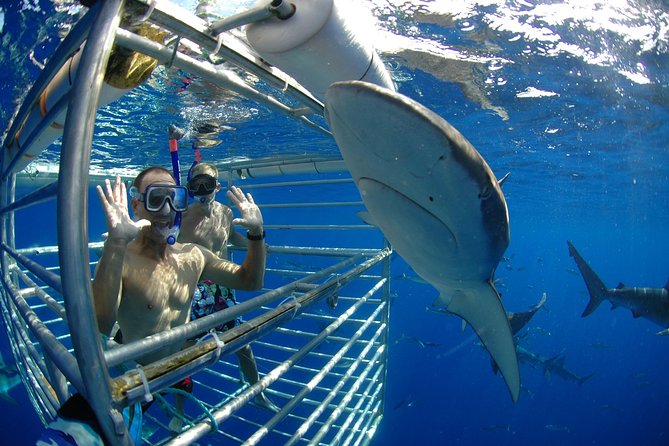
The core of the experience is the floating cage. You get in for a safe, controlled viewing setup, and you also have a chance to go surface snorkeling using provided gear. The key detail is how you’ll see the sharks: polyglass viewing windows.
What’s great about this design is that it reduces the guesswork and the fear. You can stay on the surface with your snorkel and mask, look through those large windows, and watch sharks glide by without having to swim hard or keep constant eye contact underwater. You’re not doing scuba drills. You’re doing “float, watch, breathe, repeat.”
Cage entry and exit also seems intentionally easy. Multiple reviews call out that getting in and out is straightforward, and that the crew makes it feel confident rather than chaotic. If you’re nervous about the water, that reassurance matters.
One practical note from the cage setup: some sides are bars, and only certain sides have polyglass windows. That means where you position yourself in the cage can affect what you see and how crisp the view feels. It’s worth staying flexible and letting the crew guide where to look from.
If you want footage, there are options. A number of people mention GoPros available to rent on the boat, which can save you from trying to rig your own setup for underwater viewing. You still bring the most important item yourself: a willingness to stay calm while something huge circles nearby. (The sharks are doing their thing; you’re just watching from a safe platform.)
Sharks on Oahu’s North Shore: what you’re most likely to see
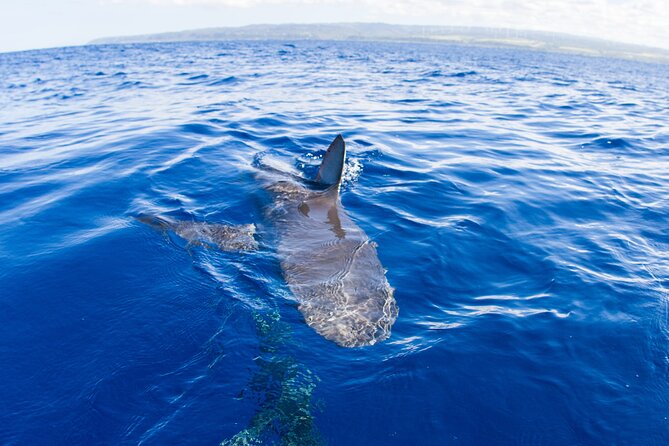
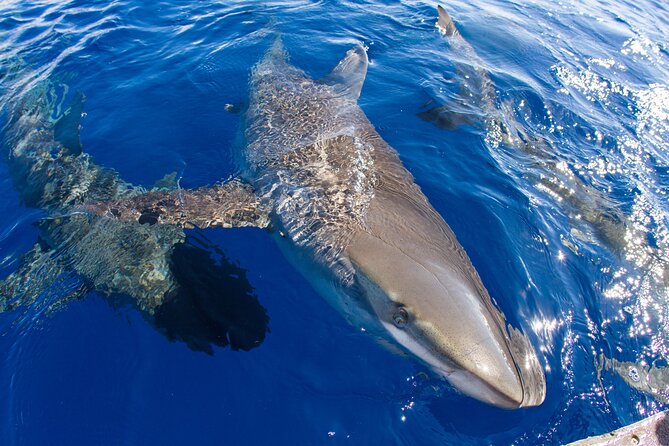
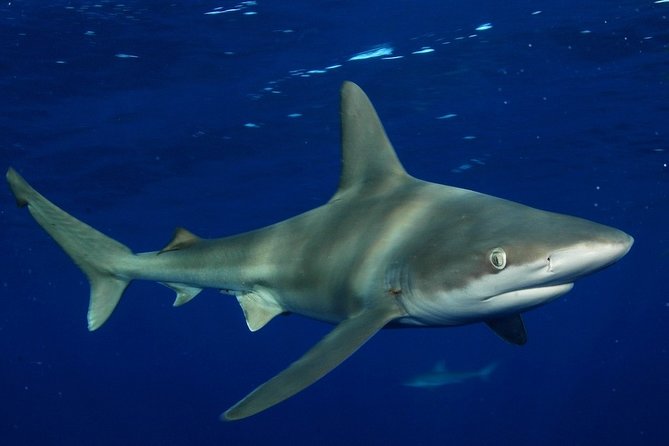
This is built around Galapagos and sandbar sharks in Oahu’s offshore waters. That’s the main promise, and it’s what you should plan your expectations around.
From real-world sightings, the number of sharks can be high on the right day. Several reviews describe being surrounded or seeing many sharks close to the cage at once, with people estimating anywhere from half a dozen to around a dozen-plus during peak moments. Visibility also plays a role. When water clarity is good, the whole experience becomes simpler and more magical because you can actually track their movement as they pass.
You might also see other sharks occasionally. Reviews mention tiger sharks in some cases, including reports of very large tiger sharks. The honest takeaway: while Galapagos and sandbar are the target species, ocean encounters include some randomness. The crew can’t control wildlife, but they can control safety, positioning, and your chances of seeing action.
Here’s the thing I think helps most first-timers: the sharks are not coming at the cage like they’re in a horror movie. People repeatedly describe it as calm once you’re in, even if the idea sounds scary at first. Watching them circle, glide past, and maintain their natural behavior makes the whole experience feel more like biology class than fear training.
The crew commentary also helps you interpret what you’re seeing. You’ll get facts about shark biology and behavior while you’re on the water, so the encounter doesn’t stop at visuals. It turns into understanding: how they move, what they’re likely reacting to, and why they’re important in the ocean ecosystem.
Small-group energy and guide personalities you’ll remember
A lot of tours say they’re friendly. This one backs it up with specific crew energy. Reviews highlight guides who are patient with questions, supportive for nervous first-timers, and good at teaching without being preachy.
Names that come up include Caleb, Jax, Captain David, and Efram (also spelled Efraim in one review). People describe the crew answering even what they consider dumb questions with real patience. That’s exactly what you want if you’re worried about being the only one who doesn’t “get” sharks.
I also like the tone of the hosting. You’re not expected to be a marine expert. You’re expected to listen, follow instructions, and relax. Several reviews mention fun touches like music on the boat, plus extra ways to capture the moment (like requesting extra footage).
Another practical win: they rinse you off with fresh water after the cage session. That saves you from immediately dealing with saltwater skin and gear cleanup. It’s a small service detail, but it can make your next stop feel nicer.
And then there’s the safety vibe. People repeatedly say they felt safe the whole time and that the crew handles the boat and cage with confidence. When you’re dealing with an ocean setting, confidence is a feature.
What your 2 hours look like (and where the time feels “worth it”)
Your day is basically one rhythm: meet at Hale‘iwa Boat Harbor, board up, head offshore, do your cage and surface snorkeling, then return.
The offshore portion is where the magic lives. Once you reach the shark encounter area, you’ll get into the floating cage. Then you have surface snorkeling time with your mask and snorkel. The polyglass windows help you track sharks without having to constantly swim around. You’re staying in the “easy view” lane.
How long do you get down there? You’re out at the shark habitat area for about two hours total, including the time at the site and the flow of getting in, getting settled, and taking turns moving between viewing and snorkeling.
What makes this structure feel efficient is that you don’t have a long, complicated equipment setup. Everything you need for snorkeling is provided. That keeps the mental load low. You can show up with less stuff and spend more of your energy on the actual experience.
Also watch for motion patterns. One review notes the cage rocks more than the boat. That’s a specific detail, and it’s exactly why I’d consider taking seasickness prevention if you’re even slightly prone to it. More than one person recommends motion-sickness medication, and at least one notes Dramamine taken ahead of time.


Weather, waves, and what to wear so you enjoy it
This is a “good weather required” activity. That sounds generic, but it becomes real when you’re on open water. If the seas are up, you will feel it. Reviews mention waves can be rough at times, and people recommend booking earlier departures for calmer conditions.
I’d plan for two comfort issues:
1) Chill water: One review specifically mentions cooler water in February and suggests a body suit. Even if you don’t want extra layers, something thin and snug can make your cage time more pleasant.
2) Motion: If you tend to get seasick, take precautions. Dramamine is specifically mentioned in a review, including a recommendation to take it the night before.
What should you bring?
- Towels (not included)
- Swimwear (not included)
- Sunscreen (not included)
- A towel for after you rinse off
- A plan for warmth if you’re visiting in cooler months
What you can travel lighter with:
- Snorkeling equipment is included
- Local taxes are included
And quick clothing wisdom: if you think you’ll be in and out of water, dress like you’ll be cold before you’re wet and cold after you’re wet. That way you stay focused on the sharks instead of shivering through it.
Pricing and value: is $100 a fair deal?
At $100 per person, this experience is priced like an activity that sells access, not just a boat ride. You are paying for a controlled viewing setup (the cage), plus guided instruction, plus snorkeling gear, plus an expert crew overseeing safety.
What makes it feel like good value isn’t only the ticket price. It’s the total experience design:
- You get a realistic wildlife encounter in a safe setup
- You don’t need scuba training
- You get both cage viewing and surface snorkeling time
- The crew provides shark biology commentary
- You often get extra sightings like whales on the way out or back
Also, the small group size helps justify the price. With max 12 travelers, you’re more likely to get personal attention and better guidance when it’s time to get in the cage and settle your mask and snorkel.
One more value angle: you can choose an observer ticket. If someone in your group is not ready to get in the water, that option can keep the whole family together without forcing everyone to do the same activity. Just be aware: observer tickets do not include getting in the cage or using snorkel equipment.
Who should book this, and who might want a different plan
This shark cage encounter is a strong match if:
- You want close wildlife viewing without scuba certification
- You’re curious about shark behavior and want real info, not just a spectacle
- You prefer smaller groups and clearer guidance
- Your group includes first-timers, kids (minimum age is 5), or people who are nervous about the ocean
It may be less ideal if:
- You get severely seasick and can’t medicate or handle waves
- You hate cold water (especially if you’re going in a month when the ocean runs cooler)
- You want a totally hands-off experience. You can observe, but the full magic usually comes from being in the cage and doing the surface snorkeling time
The best advice I can give from what’s consistently described: book early if you can. Morning departures show up again and again as the smoothest way to do the ocean part, which helps everything else feel easier.
Should you book this Oahu shark cage encounter?
Yes, if you want a safe, educational shark encounter with close viewing and a crew that makes nervous people comfortable. For $100, you’re buying more than a boat outing. You’re buying a structured, window-based way to see Galapagos and sandbar sharks behaving naturally, with real guidance and a small-group feel.
My only caution is to respect the ocean. Take motion sickness seriously if you’re prone to it, and dress for water temperature. If you do those two things, you’re set up for a memorable North Shore experience that stays fun and surprisingly calm once you’re in position.
FAQ
How long is the shark cage experience?
It lasts about 2 hours.
Where does the tour start and end?
You meet at Hale‘iwa Boat Harbor in Haleiwa, and the activity ends back at the same meeting point.
Do I need scuba certification or prior diving experience?
No. You can participate without previous scuba diving experience.
What sharks will I see?
The experience is designed around Galapagos and sandbar sharks living in the wild around Oahu’s North Shore. Some days you may see other species, but Galapagos and sandbar are the core expectation.
What’s included, and what should I bring?
Included: shark cage session, snorkeling equipment, local taxes, and an expert crew. Not included: towels, swimwear, sunscreen, hotel pickup/drop-off, and food and beverages.
What does an observer ticket include?
An observer ticket is mainly for people who want to join family or friends but not get in the water. It does not include getting in the cage or using snorkel equipment.
Is the tour dependent on weather?
Yes. It requires good weather, and if it’s canceled due to poor weather you’ll be offered a different date or a full refund.