REVIEW · HONOLULU
Honolulu: Historic Downtown Segway Tour
Book on GetYourGuide →Operated by Sidewalk Surfing Tours · Bookable on GetYourGuide
You can cover a lot of Honolulu in just two hours. This small-group Segway tour strings together the royal-era sights, downtown memorials, and street art, all with an easy glide that keeps the pace fun. I especially love how you get both Kaka’ako murals and major landmarks like Iolani Palace in one outing. One watch-out: Segways aren’t for everyone, and the tour is not suitable for mobility impairments.
The tour’s value really comes from the mix of stops: Mission Houses, Kawaiahao Church, Ali’iolani Hale, the King Kamehameha Statue, then Chinatown and Aloha Tower. You don’t just look at buildings—you roll past them on sidewalks and absorb the city’s layers in motion. The included helmet and practice time matter, because getting comfortable fast is the key to enjoying the rest.
I’d also note the logistics are simple but you should confirm the exact start point in your booking message. The details you receive may reference two nearby locations around Ala Moana/Kewalos Basin, and it’s worth double-checking before you arrive.
In This Review
- Key points worth your time
- Why a Segway fits downtown Honolulu so well
- Meeting point at Kewalos Basin Park, near food trucks and Ala Moana area
- Training first: helmet, safety briefing, and quick confidence
- Kaka’ako murals, Mission Houses, Kawaiahao Church, and Ali’iolani Hale
- King Kamehameha Statue, Iolani Palace, and the State Capitol power zone
- Vietnam/Korean War Memorial, then Chinatown’s shift in tone
- Hawaii Theater to Aloha Tower: the downtown waterfront finale
- Ala Moana Beach glide at the end: a calmer last stretch
- Price and time: does $155 make sense for what you get?
- Guides, languages, and what you’ll notice on the ride
- Who should book this Honolulu historic downtown Segway tour
- Should you book it?
- FAQ
- FAQ
- How long is the Honolulu Historic Downtown Segway Tour?
- What major landmarks are included?
- Is a safety briefing included?
- Do I need any prior Segway experience?
- What language options are available for the guide?
- Where exactly does the tour start?
- What should I bring?
- Is free cancellation available?
- Is the tour suitable for everyone?
Key points worth your time

- Two hours, one smooth downtown route: murals, palaces, memorials, and waterfront.
- First-timer friendly training: helmet + safety briefing + practice session before you roll.
- Small group (max 7): you’ll get more attention and tighter pacing.
- Japanese or English guiding: guides can explain clearly in English and Japanese.
- Photo stops built in: the guide helps with snapshots at key viewpoints.
- Ends along Ala Moana Beach: an easy finish after the downtown loop.
Why a Segway fits downtown Honolulu so well
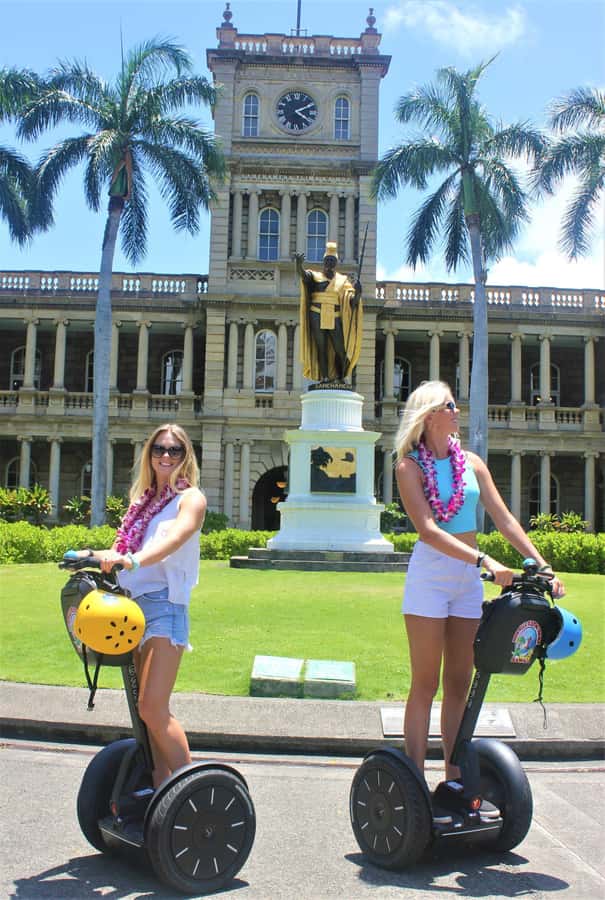
Honolulu’s downtown can feel like a lot at walking speed: sidewalks, intersections, glare off the pavement, and lots of short distances between big landmarks. A Segway solves the “too much ground, too little time” problem. In two hours, you can see the big names without burning your legs before you even reach the best corners.
This isn’t a sightseeing drive-by either. The route is paced for gliding along the sidewalks, so you’re close enough to notice details—murals in Kaka’ako, the grand scale of royal buildings, and the way Chinatown changes character block by block. If you like being out in the open air while still keeping momentum, you’ll probably find this format makes the city feel easier to understand.
You can also read our reviews of more historical tours in Honolulu



Meeting point at Kewalos Basin Park, near food trucks and Ala Moana area
The meeting point details include two nearby references, so don’t show up on autopilot. One part of the info says you meet next to the food trucks and the Makani Catamaran tour counter at Kewalos Basin Park pier, with a large sign that says FOOD TRUCKS. Another line says the guide meets you across the street from L&L BBQ shop on the east side of Ala Moana Park, next to the Magic Island parking lot.
So here’s my practical advice: check the confirmation message you get after booking and match it to what’s written there. Once you’re there, the start is easy—your guide organizes a short practice area before you head out.
Training first: helmet, safety briefing, and quick confidence
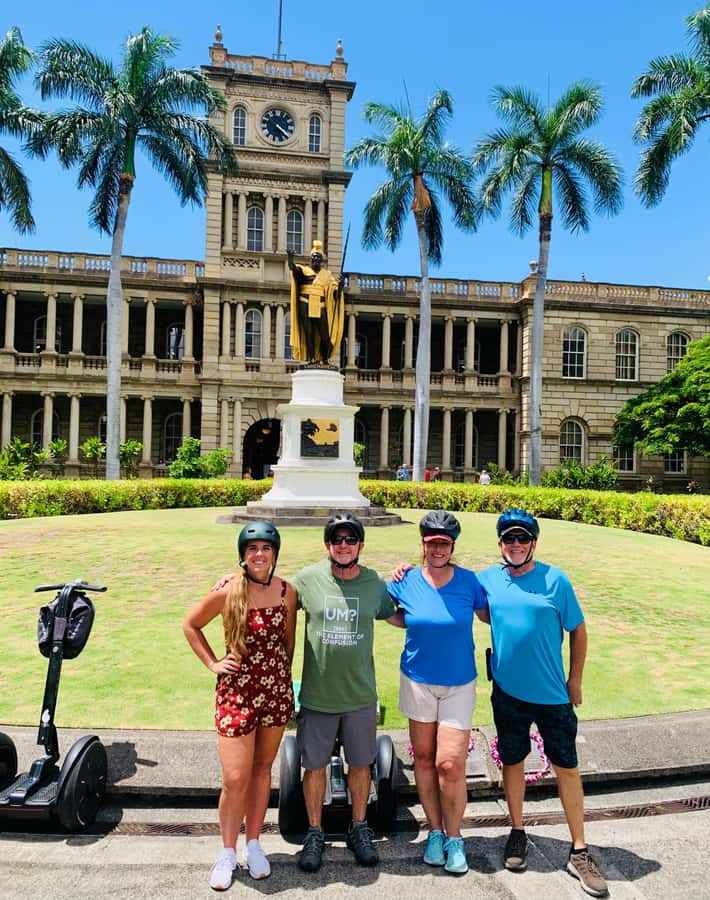
Before you start sightseeing, you’ll get a safety briefing and a practice session. You also get a helmet, which is straightforward but important. This matters because the tour includes small curb changes and sidewalk conditions, and the smoothness of your ride depends on being comfortable with balance and speed control.
The guiding style stands out here. In the experience’s Japanese-language feedback, guests highlight how clearly the instruction is explained and how the guide pays attention to the road surface. One recurring theme: guides help you get comfortable fast, and they’re mindful about steps and uneven parts of the route, so the experience feels controlled rather than intimidating.
If you’re brand new to a Segway, this training time is the difference between enjoying the sights and spending the whole tour thinking about the machine.
Kaka’ako murals, Mission Houses, Kawaiahao Church, and Ali’iolani Hale
The tour begins by rolling past the Kaka’ako wall art murals, which is one of the best ways to wake up your eyes in Honolulu. Street art here isn’t just decoration—it’s a visual shorthand for modern city identity right alongside older landmarks. If you like photos, this is where you’ll want to slow down and look around, because the walls add color to what would otherwise be a straight line of sightseeing.
From there, you glide toward the historic and cultural anchor points:
- Mission Houses
- Kawaiahao Church
- Ali’iolani Hale
These buildings put real names and institutions behind the skyline. Even from a sidewalk glide, you get the scale: the kind of structures that make you understand why Honolulu’s downtown developed where it did. If you enjoy architecture, you’ll appreciate that you’re not just “passing by”—the route is planned so you can absorb what each site stands for before you move on.
One subtle drawback: this first stretch can feel like your brain is switching gears from art to heritage fast. If you’re sensitive to change in pace, take a breath after each stop and let your photos and notes reset.
King Kamehameha Statue, Iolani Palace, and the State Capitol power zone
Next you’ll see the King Kamehameha Statue, then continue on toward Iolani Palace and the State Capitol. This segment is where Honolulu’s political and royal story gets visually loud. The palace and capitol area rewards a slower look, and the Segway helps because you can keep moving without rushing your eyes.
A good way to think about this stop is that the tour is building a timeline. Murals (present-day voice), then mission and church buildings (early civic-religious anchors), then royal and government structures (power, governance, legacy). When you see it in order, it’s easier to connect Honolulu’s identity beyond just the beaches.
If you’re the type who loves a great photo angle, watch for the moments when you’re at a clear curb line and can frame the building without obstruction. The guide can help you find those spots and capture your shots.




Vietnam/Korean War Memorial, then Chinatown’s shift in tone
After the royal/government landmarks, the route takes you to the Vietnam/Korean War Memorial. This stop changes the mood. It’s a reminder that Honolulu isn’t only about postcard scenes. Even on a moving tour, you get a chance to pause and take in what the memorial represents.
From there, you roll into Chinatown, where the streets feel different in texture and sound. The shift is part of the payoff: you’re moving from formal landmarks to a more everyday, local neighborhood rhythm. If you like to understand a city not just from monuments but from how daily life shows up in blocks, Chinatown is the right kind of contrast.
A small note for your comfort: this is also where sun and heat can feel heavier, especially if you’re riding between stops without much shade. Bring water and plan to drink a little often rather than waiting until you feel drained.
Hawaii Theater to Aloha Tower: the downtown waterfront finale
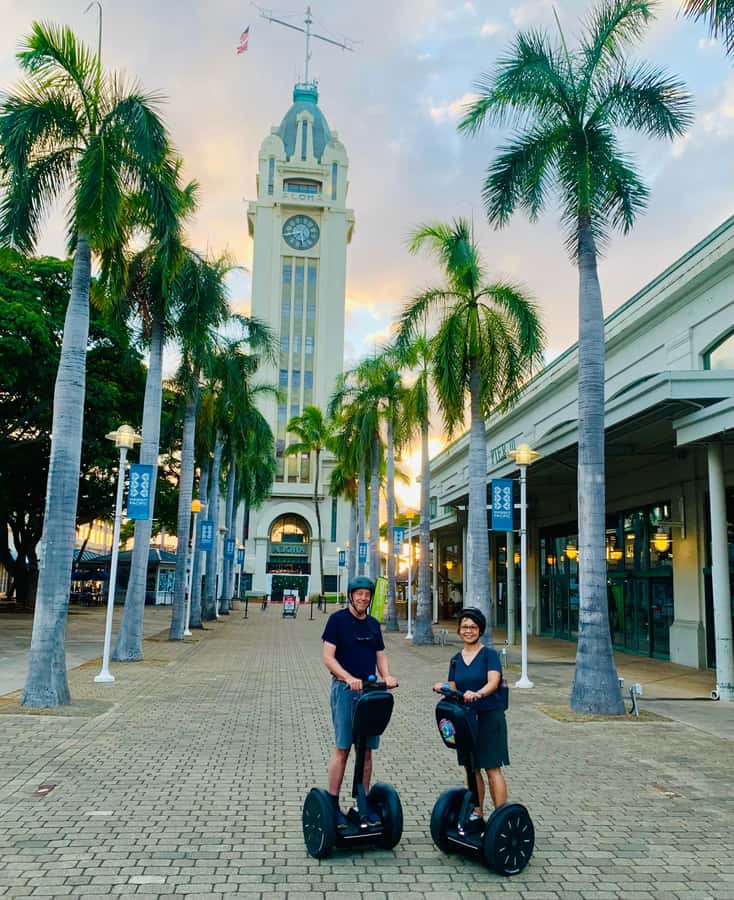
Once you’ve worked through Chinatown, you’ll head toward the Hawaii Theater and continue on to Aloha Tower. The theater brings you back to the cultural side of downtown—something grand and designed for gatherings—while Aloha Tower ties the tour to Honolulu’s harbor-facing identity.
Aloha Tower works well as a visual ending point before the final glide. You get a sense of how the downtown area connects outward toward the water, and the architecture helps the tour feel rounded rather than abruptly finished.
Ala Moana Beach glide at the end: a calmer last stretch
The tour finishes with a ride along Ala Moana Beach. This is the emotional reset you want after downtown streets and landmark clusters. The ocean air and wider walking space make it easier to unwind and slow your pace.
It’s also when your Segway confidence usually peaks. If you were focused earlier on balance, you’ll likely feel more at ease now, and that’s when you can enjoy the scenery instead of managing your technique.
This last segment also makes the tour feel practical. Instead of ending in the middle of traffic or at a random point, you close the loop with a scenic area where it’s easy to transition to your next activity—food, a shopping stop, or just lingering in the sun.
Price and time: does $155 make sense for what you get?
At $155 per person for two hours, the cost isn’t “cheap,” but it’s not out of line for a guided Segway experience in a prime downtown area. Here’s how I’d judge value:
- You’re not just buying transportation. You’re buying equipment (helmet) and guided setup via safety briefing + practice session.
- The route is packed with recognizable landmarks: Mission Houses, Kawaiahao Church, Ali’iolani Hale, King Kamehameha Statue, Iolani Palace, the State Capitol, Vietnam/Korean War Memorial, Chinatown, Hawaii Theater, and Aloha Tower.
- The small group size (up to 7 participants) means the pace stays controlled, and instructions stay clear—especially helpful for first-timers.
If you only cared about one or two major stops, you could do Honolulu downtown with a map and public transit. But when you want the convenience of seeing a long list in a short window, plus the fun factor of gliding, the price starts to feel more justified.
My best advice: treat this as a “downtown orientation + highlights” experience. It won’t replace deep dives on foot later, but it can give you the lay of the land so your next stroll is smarter.
Guides, languages, and what you’ll notice on the ride
A big reason this tour earns high marks is the guide experience. The standout detail is how smoothly the guiding works in Japanese, with clear instruction and careful attention to safety. English guiding is also available, so language won’t be a mystery.
One name that comes up in Japanese-language feedback is Timo. Guests specifically call out how well he teaches first-time riders and how he helps with photo spots. There’s also mention that a guide can tailor the route to a group’s wishes, which is a practical perk if you have your own must-see priorities.
This matters because a Segway tour lives or dies by the guide’s ability to keep everyone comfortable while still maintaining a sightseeing rhythm. When the instruction is clear, you stop thinking about the equipment and start paying attention to the city.
Who should book this Honolulu historic downtown Segway tour
This tour is a strong fit if:
- You’re a first-time Segway rider and want training first.
- You like seeing multiple downtown landmarks in one run without spending the day on your feet.
- You want both historic royal/government sights and street-level Honolulu scenes like murals and Chinatown.
- Your group would enjoy a small-group pace with time for photos.
It’s less ideal if you’re expecting a totally hands-off ride where you never think about the Segway. You’ll be actively steering and learning, even with practice time. And because it’s not suitable for mobility impairments (and pregnancy), make sure it fits your situation before you commit.
Should you book it?
I’d book this if you want a time-efficient way to understand Honolulu’s downtown without feeling rushed, and you’re excited by the idea of gliding past landmarks rather than only walking between them. The combination of major sites plus Kaka’ako murals plus Chinatown gives you variety, and the training makes it workable for newcomers.
Skip it if your goal is slow, quiet wandering with lots of independent exploration, or if you know you won’t feel comfortable on a Segway for the full two hours.
FAQ
FAQ
How long is the Honolulu Historic Downtown Segway Tour?
It runs for 2 hours.
What major landmarks are included?
You’ll see Mission Houses, Kawaiahao Church, Ali’iolani Hale, the King Kamehameha Statue, Iolani Palace, the State Capitol, the Vietnam/Korean War Memorial, Chinatown, the Hawaii Theater, and Aloha Tower, plus a ride along Ala Moana Beach.
Is a safety briefing included?
Yes. You get a helmet, a safety briefing, and a practice session before you set off.
Do I need any prior Segway experience?
No prior experience is required in the info provided, because you start with a safety briefing and practice session.
What language options are available for the guide?
The tour guide offers English and Japanese.
Where exactly does the tour start?
The information provided lists a start near food trucks and the Makani Catamaran tour counter at Kewalos Basin Park pier, and it also references meeting across from L&L BBQ on the east side of Ala Moana Park near the Magic Island parking lot. Confirm the exact meeting point in your booking details.
What should I bring?
Bring comfortable shoes, a hat, sunscreen, and water.
Is free cancellation available?
Yes. You can cancel up to 24 hours in advance for a full refund.
Is the tour suitable for everyone?
It is not suitable for pregnant women or people with mobility impairments.