REVIEW · HONOLULU
Pearl Harbor with USS Arizona and Hawaiian Kingdom History Tour
Book on Viator →Operated by Go Tours Hawaii · Bookable on Viator
Pearl Harbor hits harder with real context. This 5-hour tour pairs the USS Arizona Memorial with Honolulu’s royal-era landmarks, so you get the WWII story and the Kingdom of Hawai‘i storyline in one day. I like that everything core to Pearl Harbor is handled for you, including a USS Arizona ticket and round-trip transport from Waikīkī in an air-conditioned vehicle.
The big thing to consider is Pearl Harbor entry rules. You meet in Waikīkī (not at the memorial), and you should be ready for strict bag restrictions on-site—if you miss the instructions, it can slow down your entry.
In This Review
- Key points at a glance
- Getting from Waikīkī to Pearl Harbor: faster than DIY, but read the fine print
- USS Arizona Memorial: the boat ride, the film, and why the time feels short
- Pearl Harbor Visitor Center and the Road to War Exhibit: where the story sticks
- ʻIolani Palace and the King Kamehameha Statue: the Kingdom of Hawai‘i side of the day
- ʻIolani Palace: the only royal palace in the United States
- King Kamehameha Statue: big scale, clear symbolism
- Kawaiahao Church and the Mission Houses Museum: faith, daily life, and early contact
- Kawaiahao Church: coral-block architecture and koa interiors
- Mission Houses Museum: three restored homes with real dates
- Hawaii State Capitol in downtown Honolulu: modern architecture with a Hawaiian-shaped purpose
- Price and value: why $57 can work, and when it doesn’t
- Who should book this tour (and what to watch on a long history day)
- Main gotchas to plan around
- Should you book this Pearl Harbor and Kingdom history combo?
- FAQ
- What’s included in the USS Arizona Memorial part of the tour?
- Do I need to budget for entrance fees to the sites?
- Where do I meet the tour if I want to visit Pearl Harbor?
- Is the tour fully narrated?
- How long is the tour?
- Is pickup offered from Waikīkī hotels?
- How many people are on the tour?
- Is free cancellation available?
Key points at a glance
- Navy-operated boat ride to the USS Arizona Memorial after a short film
- Pearl Harbor Historic Sites Visitor Center with interactive displays and the Road to War Exhibit
- Downtown royal stops like ʻIolani Palace and the King Kamehameha Statue
- Faith and early contact history at Kawaiahao Church and the Mission Houses Museum
- Modern state government landmark with the Hawaii State Capitol’s distinctive design
- Small-group feel with a max of 24 travelers and a fully narrated format
Getting from Waikīkī to Pearl Harbor: faster than DIY, but read the fine print
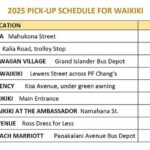
This is built for convenience. You get Waikīkī hotel pickup and drop-off in an air-conditioned vehicle, and the day runs on a set schedule designed to get you to Pearl Harbor in time for the memorial process. You’ll also use a mobile ticket, which keeps things simple if your phone battery is behaving.
One important policy changes the rhythm of the day: you cannot meet or receive tickets at Pearl Harbor. You start in Waikīkī and ride with the tour bus. That’s not a downside by itself; it’s actually safer and less chaotic than trying to coordinate timing on your own. But it does mean you should be early to your pickup stop and pay attention to any reminders your guide shares about what you can bring.
Bag handling is another practical point. At least one recent experience reported that bags are not allowed in the park area and had to be stored in storage facilities, with the tour bus not serving as a place to keep luggage. I’d treat this as a “plan for it” issue even if your exact route differs: bring minimal items, keep valuables on you, and assume you’ll have to follow on-site rules before you get to the water.
Guides can make or break the flow of a long day. Recent praise repeatedly mentions guides such as Kanoe/Kaona, Bob, and Rockie/Ricky, with folks liking how they explain what to do, name people, and keep the group moving.
You can also read our reviews of more historical tours in Honolulu

USS Arizona Memorial: the boat ride, the film, and why the time feels short
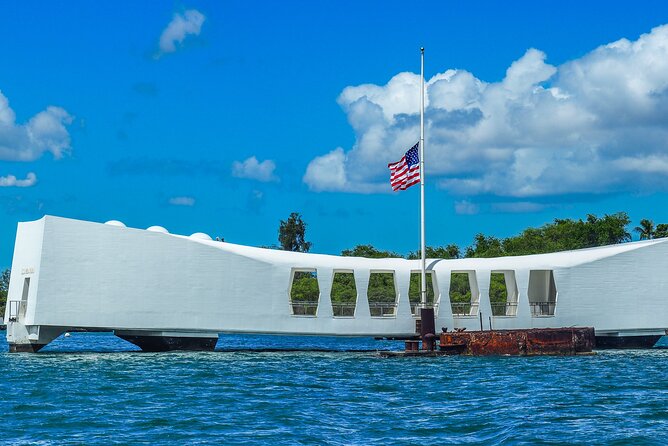
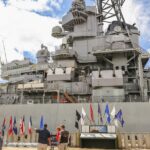
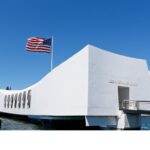
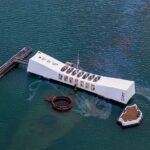
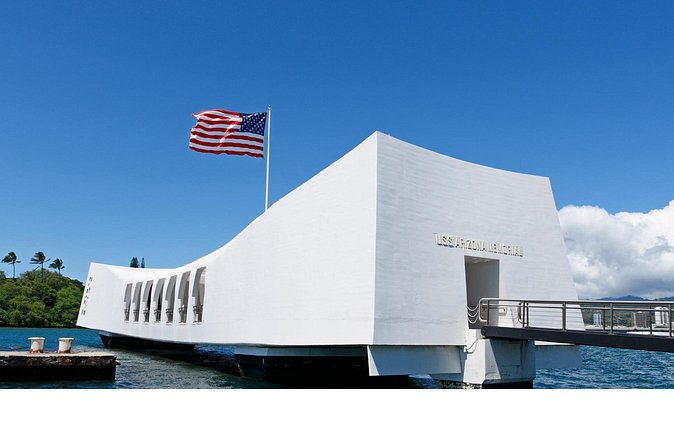
Your day starts with the USS Arizona Memorial, and the process matters. First, you watch an immersive film presentation that sets the stage for December 7, 1941. Then you board a Navy-operated vessel for the short ride out, with the memorial built directly over the submerged battleship USS Arizona.
Plan to slow down here. The whole point is that you’re not just looking at plaques; you’re physically placed over the site where so much happened. The tone tends to be quiet and respectful, and that’s exactly how you should treat it. People often come in with a photo in their head, but the memorial experience works better when you stop chasing angles and let the moment land.
Timing is another practical detail. This stop runs about 1.5 hours with your included admission ticket. If you’re the type who wants to read every panel and linger, you might feel a gentle squeeze. That’s not the tour being stingy; it’s the reality of shared visitor capacity and the overall schedule. If you’d rather take your time, go into the visitor center next while your memorial emotions are still fresh, instead of trying to sprint through both.
From the reviews, one clear theme is reverence plus good guidance. People describe the USS Arizona stop as moving and emphasize that it’s a must-do even for teens and adults. The same feedback also hints at why communication is critical: if you lose your guide or miss where to meet up afterward, it can create stress fast in a place where everything is time-sensitive.
Pearl Harbor Visitor Center and the Road to War Exhibit: where the story sticks
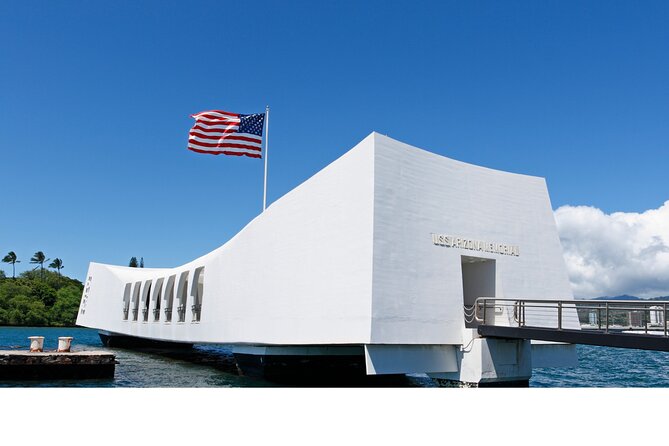
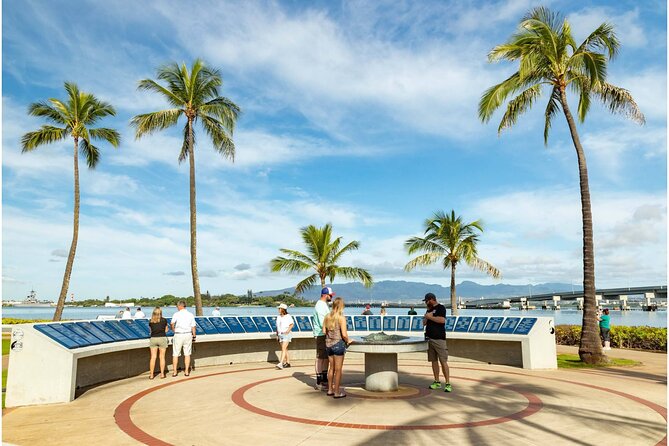
After the memorial, you’ll head to the Pear Harbor Historic Sites Visitor Center for about an hour. This is where the day turns from “what I feel” to “what I understand,” thanks to interactive displays and multimedia storytelling.
The highlight here is the Road to War Exhibit, built around artifacts, photographs from the attack period, and personal material. That combination helps you connect dates to real objects and real people. You’ll also get a clearer sense of how the attack changed Hawaii’s path and rippled beyond the islands.
This is the kind of stop that rewards a small shift in mindset. Instead of scanning for the biggest images only, try to pick one or two themes you want to understand better. Then let the exhibits support your questions: What led up to the moment? What happened next? How did it reshape life in Hawai‘i?
One limitation to note: an hour can feel brisk if you’re a slow reader. If you’re the type who loves museum detail, treat the Visitor Center as a “get oriented fast” stop. You can always return later on another trip if you want more time. But for a single-day combo tour, it does a strong job of grounding the memorial experience in context.
ʻIolani Palace and the King Kamehameha Statue: the Kingdom of Hawai‘i side of the day
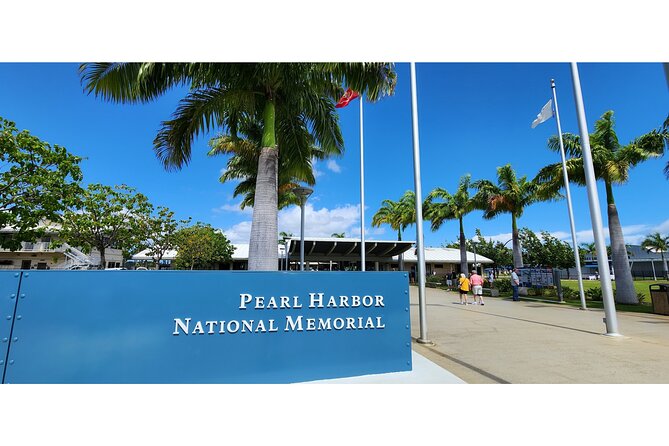
Here’s what I like about this tour: it doesn’t park you in just one time period. The day moves from WWII to Hawaiian monarchy and local governance, with downtown stops that help you see how Hawai‘i’s identity and institutions evolved.
ʻIolani Palace: the only royal palace in the United States
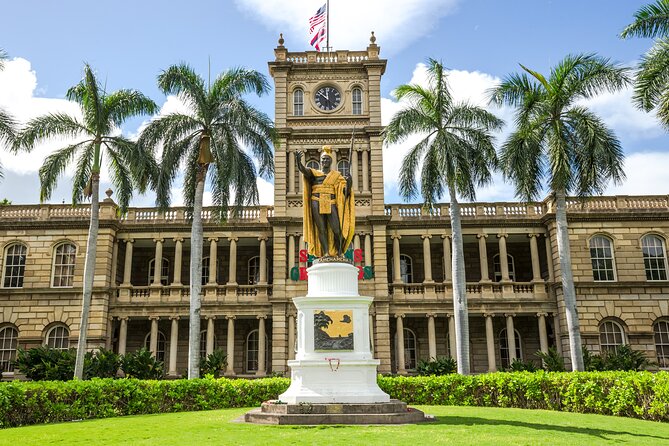
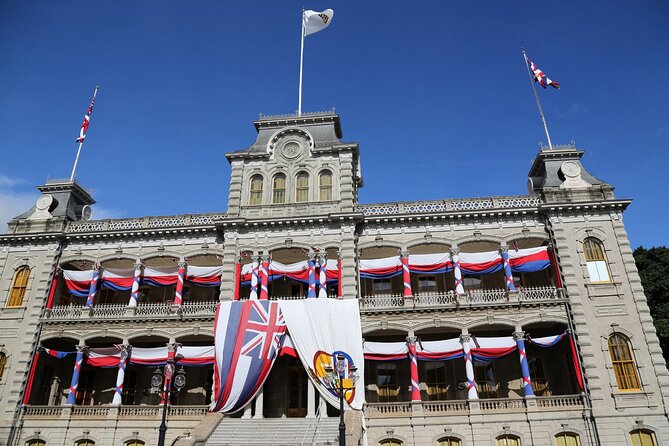
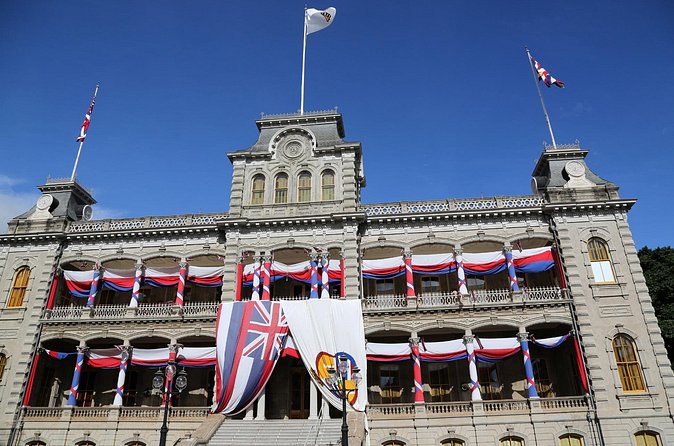
You’ll visit ʻIolani Palace, described as the only royal palace in the U.S. Built in 1882 during the reign of King David Kalakaua, it served as the official residence of Hawaiian monarchs until the overthrow of the Hawaiian Kingdom in 1893. Today, it operates as a museum, and the focus is on Hawaiian monarchy history and architecture.
What makes ʻIolani Palace especially worthwhile is the architecture blend—European and Hawaiian design influences. You’ll also see it as a symbol, not just a building. It’s one of those places where the walls carry a story about power, ceremony, and change.
A reality check: some feedback suggests certain palace time can be limited or that you might get more of a drop-off and exterior look than a full inside experience, depending on timing. If palace interior access is a top priority for you, keep your expectations flexible and listen closely to the guide at the start of the stop.



King Kamehameha Statue: big scale, clear symbolism
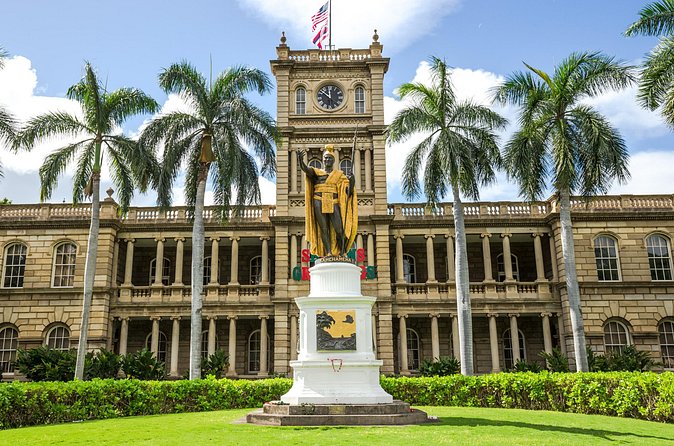
Next is the King Kamehameha Statue, a bronze sculpture of King Kamehameha I with a spear in his left hand and his right hand extended in a peace gesture. It’s commissioned in 1878 by King David Kalakaua and sculpted by Thomas Ridgeway Gould. The scale is dramatic: about 18 feet tall and weighing over 15,000 pounds.
This statue works well as a break in the day. You get a visual anchor to Hawaiian leadership and nation-building, and it’s easy to enjoy without needing museum-style concentration.
Kawaiahao Church and the Mission Houses Museum: faith, daily life, and early contact
To keep the day from becoming a checklist of famous stops, the tour also includes places that show what everyday life looked like in different eras.
Kawaiahao Church: coral-block architecture and koa interiors
Kawaiahao Church was established in 1820 and features coral block construction with a tall steeple that makes it a recognizable landmark from the city skyline. Inside, you’ll find koa wood furnishings and a calmer atmosphere geared toward worship and heritage preservation.
What I like about this stop is that it adds a cultural texture. You’re not only looking at political buildings. You’re seeing a site tied to spiritual life that’s still active as part of the community.
Mission Houses Museum: three restored homes with real dates
The Mission Houses Museum is a historic complex made up of three restored missionary homes:
- Frame House (1821)
- Chamberlain House (1831)
- Printing Office (1841)
The exhibits cover period furnishings, artifacts, and documents about missionary daily activities and cultural exchanges, and how those interactions affected Hawaiian society. This stop is a useful counterweight to the palace: instead of royal ceremonies, you see the institutions and routines tied to early 19th-century Western Protestant missions.
One caution: if your expectations are for a single “big museum building,” this may feel more like a curated walk through restored structures. That’s not a negative; it’s just a different pace. If you enjoy history through buildings and dates, it’s a good match.
Hawaii State Capitol in downtown Honolulu: modern architecture with a Hawaiian-shaped purpose
Next up is the Hawaii State Capitol, completed in 1969 and designed by John Carl Warnecke. It’s known for a volcano-inspired design language: two legislative chambers resemble lava flows, and the central rotunda links to a symbolic eye of a hurricane theme.
Around the Capitol, you’ll also have an open-air courtyard with native Hawaiian plants and a reflecting pool. It’s one of those places where you get a breather between more solemn sites and more detailed museum stops.
I like this stop because it shows Hawai‘i’s present-day political identity without getting stuck in either WWII or the monarchy era. Your day becomes a timeline: Kingdom heritage, missionary-era institutions, and then modern government built for Hawai‘i as a state.
Price and value: why $57 can work, and when it doesn’t
At $57 per person, this tour is aiming at a clear value proposition: you’re paying for transportation, narration, and included entry into the USS Arizona memorial. You’re also not required to budget separately for entrance fees based on what’s included.
Here’s how I think about value on a day like this. If you were to:
- manage your own transport from Waikīkī,
- buy your USS Arizona access,
- and pay for a guided framework for downtown history stops,
the costs would usually add up quickly in time and money. This tour tries to bundle those pieces into one price, and the inclusion of the USS Arizona ticket is the anchor.
That said, value depends on smooth execution. Some negative feedback points at issues like:
- ticket timing and standby lines,
- unclear meeting instructions at the memorial area,
- less guided time inside at certain stops,
- and cases where narration or air-conditioning didn’t match expectations.
None of that changes the math on paper, but it does affect whether you feel you got what you paid for. If you’re sensitive to delays, or if you’re counting on guaranteed, fully guided interior time at every listed stop, you’ll want to be flexible and show up prepared for the memorial logistics.
Who should book this tour (and what to watch on a long history day)
This tour is best for you if you want a one-day structure that connects Pearl Harbor and Honolulu’s historical layers. It works well for people who:
- want Waikīkī pickup so you’re not doing transit stress,
- prefer a fully narrated approach over wandering alone,
- and like the idea of seeing WWII history next to royal buildings and civic landmarks.
It’s also a decent fit for teens and adults because the USS Arizona stop is designed to be emotionally impactful, while the downtown sites help balance out the mood.
Main gotchas to plan around
- Pearl Harbor meeting location is Waikīkī, not the memorial site. Show up early at your designated pickup.
- Ticket entry can be strict. If anything goes sideways with boarding or timing, you may face standby-type handling.
- Bag rules at Pearl Harbor may apply. Bring minimal items and keep valuables accessible.
- Time at each stop is limited. If you want very long museum reading or lots of slow walking, you may feel rushed.
- Guide quality varies by day. In recent praise, names like Kanoe/Kaona, Bob, Rockie, and Ricky/Rockne came up alongside comments about enthusiasm, local context, and keeping the group together. If you end up with a less organized experience, the day can feel more like a bus route than a guided history run.
On top of that, the tour notes that you should have moderate physical fitness. Most stops are doable, but downtown walking and moving between sites is real, especially in heat.
Should you book this Pearl Harbor and Kingdom history combo?
If you want one organized day that links Pearl Harbor to Hawai‘i’s monarchy and governance story, this is a smart pick. The USS Arizona Memorial and Road to War Exhibit combination is the core reason to go, and the tour’s included entry and Waikīkī transport make it easier than building your own plan.
I’d book it if you:
- value guided structure,
- can follow on-site rules quickly,
- and are okay with a schedule that keeps each stop moving.
I’d think twice if:
- palace interior time is non-negotiable for you,
- you hate any chance of delays or standby-style entry changes,
- or you’re traveling with a lot of luggage and don’t want to deal with bag restrictions.
If you do book, show up early for pickup, travel light, and treat the USS Arizona and memorial sites with the quiet attention they deserve. That’s when this day feels like more than a checklist.
FAQ
What’s included in the USS Arizona Memorial part of the tour?
Your tour includes the USS Arizona ticket, plus the memorial experience that involves a short film and a Navy-operated vessel ride to the memorial area.
Do I need to budget for entrance fees to the sites?
Entrance fees for the included stops are listed as included, so you should not need extra money for admission.
Where do I meet the tour if I want to visit Pearl Harbor?
You meet in Waikīkī, and you ride the tour bus to participate. The policy states you cannot meet at Pearl Harbor or receive tickets there.
Is the tour fully narrated?
Yes, the tour is listed as fully narrated and offered in English.
How long is the tour?
The duration is listed as about 5 hours, including transportation between stops.
Is pickup offered from Waikīkī hotels?
Yes. Pickup and drop-off are offered from multiple Waikīkī locations, with a scheduled pickup window in the morning.
How many people are on the tour?
The tour lists a maximum group size of 24 travelers.
Is free cancellation available?
Yes, you can cancel for a full refund up to 24 hours in advance of the experience start time.