REVIEW · OAHU
18 Minutes SHARED Helicopter Tour in Honolulu
Book on Viator →Operated by Honolulu Helicopter Tours · Bookable on Viator
Honolulu changes fast once you’re above it. This 18-minute shared helicopter flight is built for maximum sightseeing with minimal effort, giving you Diamond Head and Waikiki from angles you just can’t get any other way.
I also like that it’s small (max 3 people), so the pilot can actually explain what you’re seeing while you’re soaking it in. One potential drawback: 18 minutes goes by quicker than you think, so you’ll want to plan your expectations around a fast highlight reel.
The nicest surprise here is the doors-off option at no extra charge, which can turn a short flight into a more thrilling one. On past flights, people singled out staff by name, like Scott and Inna and Valery and Stephan, for being friendly and keeping things safety-minded and upbeat. Still, with a short tour and changing air conditions, you may not get the same level of wildlife spotting every time (one person noted seeing turtles and whales, but that’s not something you can count on).
In This Review
- Key things that make this helicopter tour worth your time
- Why an 18-minute flight can beat a full-day plan
- Size matters: max 3 people, clearer explanations, less crowd energy
- “Doors-off” is the big value add, if conditions allow
- Meeting point at 1 Lagoon Dr: what to do before you fly
- From Honolulu Airport to the harbor: your first big view sweep
- Over Diamond Head: the volcanic ring and the 1899 lighthouse
- Waikiki second-look: another angle, same iconic shoreline
- What I’d look for in the weather before you book
- Price and value: $239 for 18 minutes, and what you’re really buying
- Who this tour fits best (and who might prefer something else)
- Final call: should you book this 18-minute shared helicopter tour?
- FAQ
- How long is the helicopter tour?
- What price should I expect to pay?
- Where does the tour start and end?
- How many people are on this tour?
- Is there an option to fly with the doors off?
- What’s included in the price?
- Is the tour offered in English?
- Is there a weight limit?
- What happens if weather is poor?
Key things that make this helicopter tour worth your time
- Max 3 people means the experience feels more personal than mass rides.
- 18 minutes packs major Oahu sights: harbor areas, Waikiki, Diamond Head, and downtown landmarks.
- Doors-off at no additional charge can make the views feel even closer.
- Aviation headset + phone lanyard help you hear the pilot and keep your phone handy.
- You fly over very specific landmarks like Ala Moana, Magic Island, Punch Bowl Cemetery, and the H201 interchange.
- 300 lb per passenger limit is listed upfront, so check this early if you’re unsure.
Why an 18-minute flight can beat a full-day plan

I love tours that respect your time, and this one does. Eighteen minutes doesn’t sound long until you realize you’re not spending that time hauling water bottles, hunting parking, or hiking uphill. Instead, you’re trading steps on the ground for sweeping views from above.
This works especially well if you’re on a tight itinerary, traveling with mixed energy levels, or you’re in Honolulu for a short stretch. You’ll get a quick “wow” map of the area: where the ocean meets the city, how Waikiki sits along the shore, and how Diamond Head dominates the skyline.
The flip side is simple: you won’t have time for a slow, lingering look at any one spot. If you’re the type who wants to stare at details for ages, you’ll feel a little rushed. Think of this as a highlight sprint.
You can also read our reviews of more tours and experiences in Oahu


Size matters: max 3 people, clearer explanations, less crowd energy
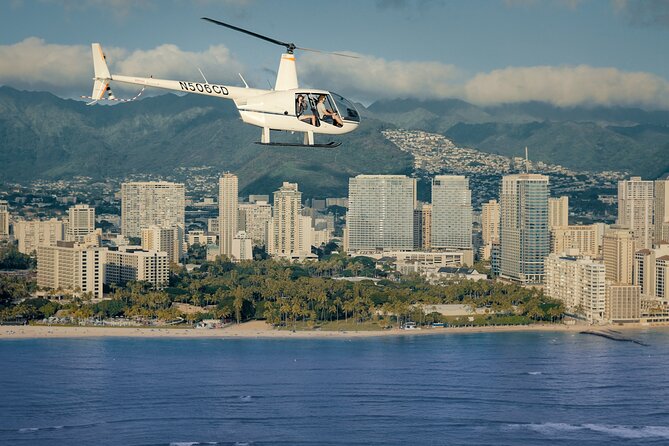
Most helicopter tours feel like you’re part of a line. Here, the cap is three travelers, which changes the vibe. You’re more likely to feel like you’re in a shared conversation with the pilot instead of being one face in a seat-filling machine.
The reviews also point to a consistent theme: staff and pilots keeping things both informative and safety-oriented. Names that came up include Scott and Inna, and Valery and Stephan. That matters because in the air, clear guidance can make the experience feel smoother and less chaotic.
If you’re celebrating something (anniversary, birthday, first-time helicopter ride), smaller group size tends to make it easier to keep the moment “yours,” not something diluted by constant group choreography.
“Doors-off” is the big value add, if conditions allow
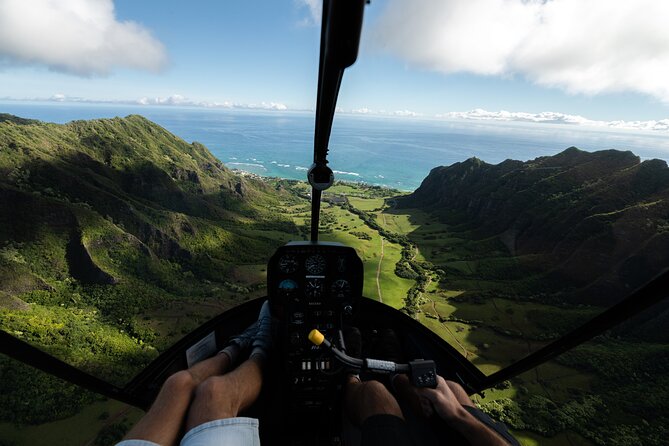
One of the easiest reasons this tour is worth considering is the option to fly with the doors off at no additional charge. For many people, that’s the difference between a scenic ride and a full-body, wind-in-your-eyes experience.
A practical way to think about it: doors-off doesn’t just mean cooler photos. It also changes how you perceive speed and distance. You feel closer to the coastline and the city grid beneath you, which can make the short flight feel longer and more intense.
That said, you still need to follow the crew’s safety calls and whatever rules apply on the day. The important part for you: the doors-off option is included in the pitch, not treated like an expensive add-on.
Meeting point at 1 Lagoon Dr: what to do before you fly

You’ll start and end at the same place: 1 Lagoon Dr, Honolulu, HI 96819. The area is listed as near public transportation, which is handy if you’d rather not scramble for parking.
Bring sunglasses and keep a light grip on your phone—especially because the tour provides a cell phone lanyard. That small detail is smart. Helicopter rides create moments where your hands want to do everything at once, and a lanyard helps prevent the classic “where’s my phone now” panic.
Also plan for sound. You get aviation headsets, and that matters because the pilot’s landmark explanations are part of what makes the flight feel meaningful instead of just visual noise.
Finally, arrive with a calm mindset. Even when everything runs on time, helicopters are still “real operations.” You’ll enjoy it more if you don’t treat the experience like a casual city bus stop.
From Honolulu Airport to the harbor: your first big view sweep
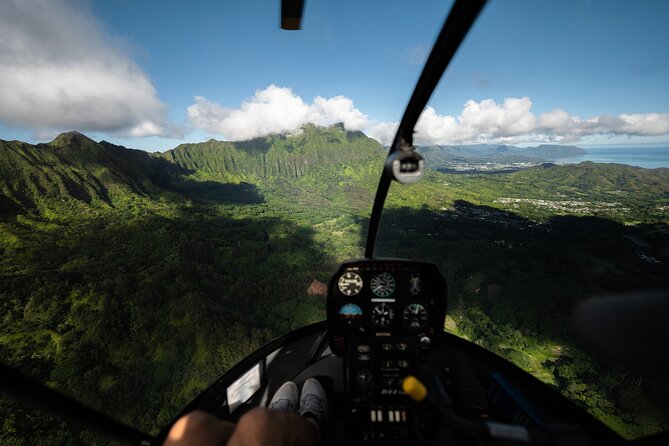
This flight starts at HNL and begins building your mental map right away. The first pass takes you over several of Honolulu’s most recognizable coastal and city areas:
- Sand Island and Honolulu Harbor
From above, the harbor and port areas make sense fast. You can spot how the coastline curves and how the harbor threads into the wider city. It’s a good opener because it orients you before you hit the Waikiki zone.
- Ala Moana Beach Park and Magic Island
These spots are more than names once you see the geometry from the air: the water, the shoreline shapes, and the way Waikiki’s beach life contrasts with more sheltered areas nearby.
- Ala Wai Harbor and Waikiki
This is the classic Honolulu “here’s the beach” section. Seeing it from above helps you understand how Waikiki’s shoreline is laid out and how neighborhoods stack along the coast.
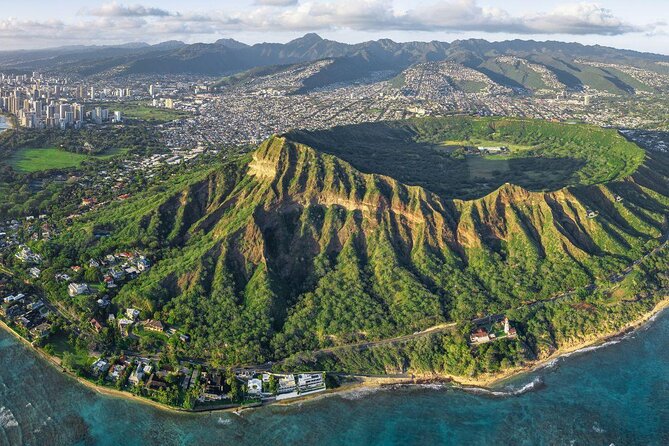
- Diamond Head
This is where you start feeling the scale of the volcano that shaped so much of the scenery. Diamond Head isn’t just a viewpoint; it’s a landmark that organizes the city visually.
- Ala Wai Golf Course
A golf course from above looks like neat green geometry. It’s one of those details that makes the aerial view feel like a real aerial map, not just pretty coastline.
- Honolulu Downtown and Punch Bowl Cemetery
Punch Bowl Cemetery is easy to recognize from the air because it’s a big, distinctive shape on land. From above, the city grid and the terrain contrast become obvious.
- H201 interchange
Interchanges can look abstract from the street. From above, they become readable. You’ll see how roads slice the city and connect it to the wider island.
Why this first sweep matters: it’s where you learn the “shape” of Honolulu. After this, everything else feels easier to place, including when the flight shifts toward Diamond Head’s dramatic profile.
Possible drawback for you: because you’re seeing a lot of zones quickly, you might not have time to pick favorites in the first moments. I suggest treating the first pass as orientation, then letting the later views sink in more.





Over Diamond Head: the volcanic ring and the 1899 lighthouse

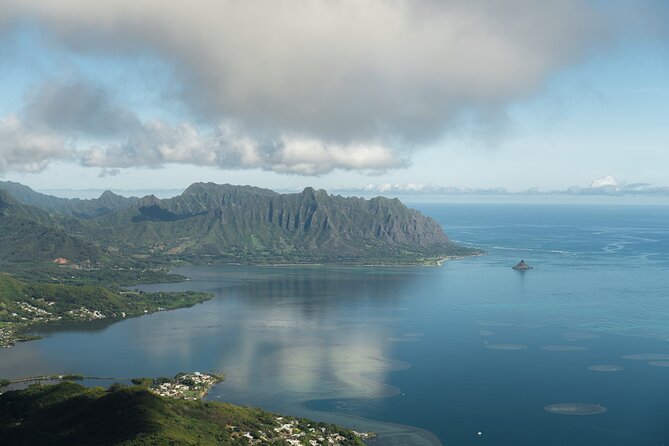
This part of the flight focuses on Diamond Head in a way that feels more specific and symbolic. You’ll glide over the Diamond Head volcanic tuff ring and Waikiki, with a view of the shoreline from high above.
A key highlight here is the Diamond Head Lighthouse, built in 1899. From the air, you’re not just seeing a lighthouse—you’re seeing its position on a geological landmark. That “where exactly is this in relation to the beach and the city” clarity is the kind of thing that’s hard to get from ground-level photos.
You’ll also return back over urban Honolulu and downtown after passing the Diamond Head area. That return view is useful because it gives you contrast: coast curves and beach lines on one side, and straight city structure on the other.
The real value: this is one of the rare times you can understand the relationship between the crater-like mountain shape, the coastline, and the grid below. It’s not just scenery; it’s spatial understanding fast.
Waikiki second-look: another angle, same iconic shoreline
The flight includes another Waikiki-focused segment, again starting in the Honolulu airport area and gliding back over Diamond Head and Waikiki. You’ll see Waikiki Beach and the shoreline from above, and you’ll get that lighthouse view again.
Why a second-look helps: Waikiki is long enough that your brain benefits from repetition. The first pass gives you the big picture. The second pass lets you start noticing patterns—where the shoreline changes, how the beach edges vary, and how buildings line up along the coast.
And yes, the option to fly doors off is part of the offering here as well. If the weather and safety conditions cooperate, doors-off can make this repeated look feel fresh instead of redundant.
Drawback to keep in mind: repeating a view can feel short on time, but it also increases your odds of catching the angles you care about most—especially if a portion of the ride feels too quick or too bright for photos.
What I’d look for in the weather before you book
This tour requires good weather. That’s not a loophole; it’s a real factor with helicopters. If weather is poor, you’ll be offered a different date or a full refund.
So, how should you think about that as a decision-maker? If your Honolulu trip has a flexible day and you can handle a reschedule, you’re in good shape. If your dates are carved in stone, it’s smart to consider that you might lose time waiting for a weather window.
Also, because the flight is short, you’ll get the most out of it when visibility is good. Clear conditions make the city grid and coastline edges much sharper.
Price and value: $239 for 18 minutes, and what you’re really buying
At $239 per person for an approximately 18-minute shared flight, you’re paying for a concentrated experience: big landmarks, quick aerial access, and the kind of views that are otherwise hard to earn on foot.
Here’s where the value logic clicks for me:
- You’re not paying for a long narration or time on the ground.
- You’re paying for an aerial route that covers multiple named areas—harbor zones, Waikiki, Diamond Head, downtown markers, and even Punch Bowl Cemetery.
- The doors-off option at no additional charge improves the “bang for your buck” feel because it’s not treated like a special surcharge.
The tour is also listed as limited to a maximum of 3 travelers, which can feel closer to a small private experience than something packed.
What to watch: because the flight is shared and short, it won’t suit someone who wants a long, slow, photo-by-photo sightseeing session. If your goal is a fast, thrilling overview of Honolulu’s geography, this price makes more sense.
Who this tour fits best (and who might prefer something else)
This is a great fit if:
- You want a first helicopter experience without committing to a long tour.
- Your “must-see” list includes Waikiki and Diamond Head but you’d rather skip hikes.
- You’ll appreciate hearing the pilot explain landmark-to-landmark geography with headsets and clear guidance.
- You want a more personal ride thanks to the max 3 people size.
You might want to consider alternatives if:
- You’re extremely sensitive to short rides and feel impatient with quick segments.
- You’re planning your day around it like a timed train connection with no backup option if weather changes.
- You need a longer time to stop and take photos from the air at multiple angles.
Final call: should you book this 18-minute shared helicopter tour?
I’d book it if you want the easiest way to get oriented to Honolulu from above and you’re okay with a fast flight that focuses on major highlights. The combination of Diamond Head + Waikiki views, max 3 people, included headsets, and the doors-off option creates a strong value mix for the time you have.
If your schedule can handle a weather shift and you’re comfortable with the idea of 18 minutes being a highlight sprint, this is the kind of experience that tends to become a “we’ll remember that” memory fast.
If you’re on the fence, ask yourself one question: would I rather hike and drive all day, or do I want the city’s shape in one short, thrilling loop? For most people, the answer is yes.
FAQ
How long is the helicopter tour?
It’s about 18 minutes.
What price should I expect to pay?
The price listed is $239.00 per person.
Where does the tour start and end?
It starts and ends at 1 Lagoon Dr, Honolulu, HI 96819, USA.
How many people are on this tour?
The tour has a maximum of 3 travelers.
Is there an option to fly with the doors off?
Yes. You have the option to fly with the doors off at no additional charge.
What’s included in the price?
You get an aviation headset and a cell phone lanyard.
Is the tour offered in English?
Yes, it’s offered in English.
Is there a weight limit?
Yes. Total weight per passenger is listed as 300 lbs.
What happens if weather is poor?
The experience requires good weather. If it’s canceled due to poor weather, you’ll be offered a different date or a full refund. You can also cancel up to 24 hours in advance for a full refund.