REVIEW · OAHU
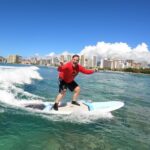
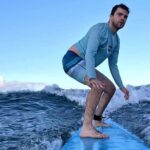
Surf Lessons get your Social Media video & photos you Surfing HI.
Book on Viator →Operated by Island Fiel Surf · Bookable on Viator
Surf lessons on Oahu should feel doable fast. This one is built around small groups and fast coaching, starting with a short land lesson. You’ll also get help getting on the board, not just a quick handoff to the ocean.
I like two things right away: the 10–15 minute land demo that covers fundamentals and ocean safety, and the teaching style that keeps the group tight so you’re not standing around waiting. You’ll be riding with owner Eddie Fiel (Island Fiel Surf) and instructor Johnny Noel, with gear support designed for beginners and improvers.
One consideration: the session includes free pics, but any Go-Pro footage and edits are extra, so plan for add-on costs if video is your main souvenir.
In This Review
- Key highlights worth your attention
- Meeting at Pau Hana Sailing and getting ready fast
- The 10–15 minute land demo that makes the ocean calmer
- Small groups of 2: why the coaching feels immediate
- What you wear and why it helps you catch more waves
- Ocean time starts the moment you enter
- Surf fundamentals in motion: safety, paddling, and takeoff basics
- The “one wave every 5 minutes” target and what it means for you
- Free photos for social media, plus optional Go-Pro video
- Price and value: what $100 really buys on Oahu
- Practical details: private group, transportation, and expectations
- Who this surf lesson fits best
- Should you book Island Fiel Surf?
- FAQ
- FAQ
- How long is the surf lesson?
- Where do I meet for the lesson?
- What’s included in the price?
- Is Go-Pro video included?
- How many people are in each group?
- What if weather is poor or I need to cancel?
Key highlights worth your attention
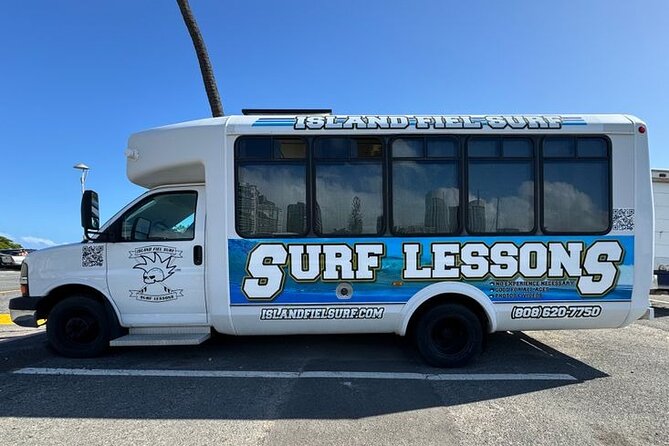
- Owner-led instruction from Island Fiel Surf with Eddie Fiel, plus Johnny Noel
- Custom 10–15 minute land demo focused on fundamentals and ocean safety
- Max 2 students per instructor, meaning you get hands-on coaching time
- Comfort gear that helps you stay in the game, including Excel dry suit tops/rash guards and reef shoes
- A wave every 5 minutes or less target, so you actually spend time surfing
- Free photos for social media, with optional Go-Pro add-ons if you want video
Meeting at Pau Hana Sailing and getting ready fast
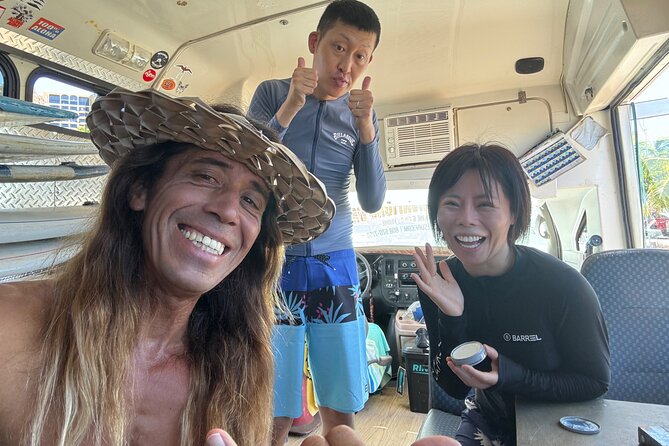
Your lesson starts at Pau Hana Sailing, 1651 Ala Moana Blvd, Honolulu. It’s a solid spot because it’s easy to reach and it keeps the whole plan simple: meet, gear up, and get moving. You’ll have about 5 minutes to prepare with your equipment before the lesson portion begins.
The timing here matters. A lot of beginner surf disappointments come from wasting time in transitions—waiting for boards, getting sized, or figuring out what to do next. This format is designed to shorten that gap so you start learning while your energy is still up.
If you’re coming with a plan for photos, this meeting point is also convenient. The provider offers a way to get content for your social media without turning the lesson into a production. The lesson includes mobile ticketing and uses clear entry-to-ocean flow, so you’re not stuck guessing what comes next.
You can also read our reviews of more photography tours in Oahu



The 10–15 minute land demo that makes the ocean calmer
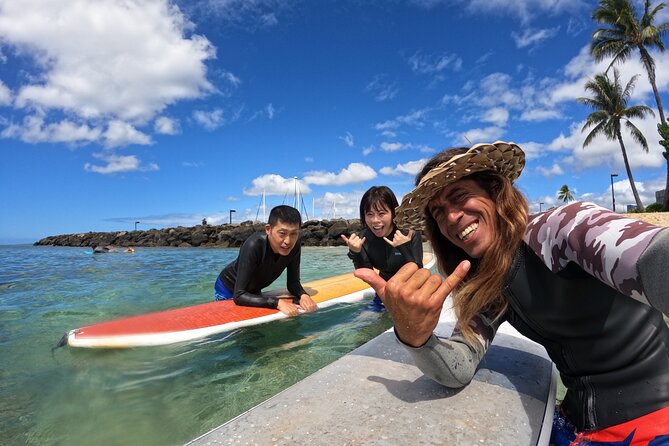
Before you hit the water, you get a 10 to 15 minute land demo. This isn’t just a generic “how to stand up” talk. It’s built around fundamentals of surfing and ocean safety, and the key detail is that the demo is custom to the students.
That customization is what helps most. If you’re brand new, you need the basics fast: how paddling works, where to place your body, what to do when you lose the board, and how to read what the ocean is doing. If you already have a bit of experience, you still benefit, because ocean conditions and safety rules change how you approach takeoffs and wipeouts.
The demo also reduces the usual beginner stress. When you understand the ocean safety part up front, you stop spending mental energy on guessing. Instead, you can focus on the simple goal: catch a wave, then ride it with the right body position.
And yes, they leave time for questions. The instruction team is set up to answer unanswered questions patiently, which is important when you’re trying to learn something physical and new in real time.
Small groups of 2: why the coaching feels immediate
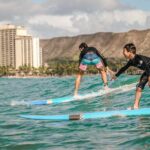
This is where the experience earns its reputation. You’re taught in small groups of 2 students per instructor. That means the instructor can watch your paddling, your stance, and your wave timing without splitting attention between a crowd.
For you, that turns into two practical benefits:
- You get more direct feedback rather than general tips.
- You spend less time waiting for your turn.
Surf lessons often fail a simple test: the lesson is one hour, but the time you spend actually surfing can be small. Here, the structure is clearly designed to keep ocean time productive. The provider even describes a wave expectation of one wave every 5 minutes or less, which only works when coaching is active and when the group size stays small.
In plain terms, this setup helps you avoid the worst beginner scenario: being on a board but not progressing because nobody can see what you need to fix.
What you wear and why it helps you catch more waves
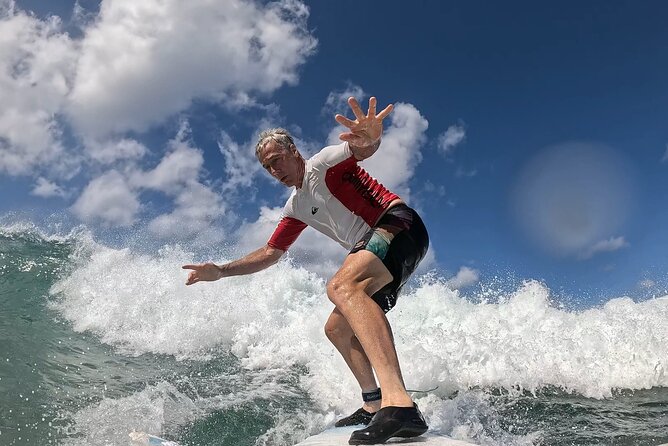
The included gear is a big part of why the lesson feels smooth. You get:
- Surf boards (NSP)
- Excel dry suit tops / rash guards
- Reef shoes
- Secured lockers for your belongings
Dry suit tops matter more than people think. In the fall and winter months, the water can feel chilly. A dry suit top helps you stay comfortable enough to keep paddling and practicing instead of fading after 20 minutes. It also helps you focus on balance and timing rather than your body reacting to cold.
Reef shoes are also a smart inclusion. You don’t want to spend your energy worrying about footing at the shoreline or managing slippery conditions. Having shoes that are made for ocean terrain makes everything feel safer and more natural.
And the note about not using oversized boards is important. Larger boards can be exhausting in a different way: you may not fall as easily, but you can fatigue quickly from extra effort. The lesson describes no oversized paddle boards, plus paddle assistance, which signals they’ll help when you need the extra push to catch waves.
Ocean time starts the moment you enter
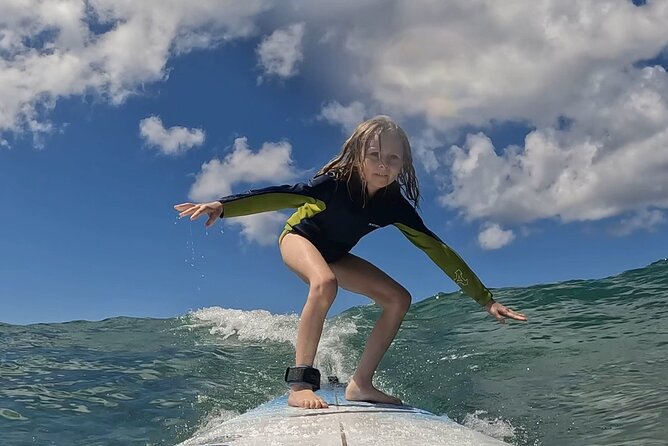
Once you’re geared up, the lesson switches from instruction to action. A clear rule is that ocean time starts when you enter the ocean. That means you’re not just warming up in knee-deep water while the clock disappears.
You should expect the instructors to emphasize ocean awareness early, then keep working on surfing basics as you go. The goal isn’t just one successful ride. It’s repeated tries with small adjustments until you can actually link paddling to takeoff.
The teaching team also says they know the waves well. In surf lessons, “knowing the waves” translates into a practical advantage: you’re more likely to be positioned where your attempts have a chance of turning into rides, instead of spending the session fighting bad angles.
You can also read our reviews of more tours and experiences in Oahu
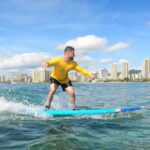

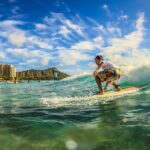


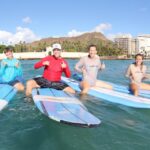
Surf fundamentals in motion: safety, paddling, and takeoff basics
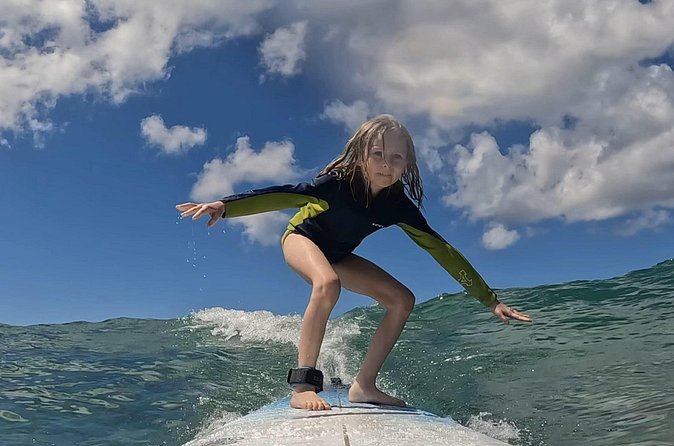
If you’re learning from scratch, the lesson’s content matters more than your level of fitness. The land demo covers fundamentals and ocean safety, then the ocean portion lets you apply that immediately.
Here’s what that typically looks like in a coaching-led lesson, and what to pay attention to as you practice:
- Paddling rhythm: You want energy-efficient strokes so you don’t burn out before waves come.
- Board control: Getting lined up matters. Many first-timers pop up too late or lose direction before a wave reaches them.
- Takeoff timing: This is usually the hardest part, and coaching helps you time it with the wave instead of guessing.
- Wipeout habits and safety: Knowing what to do during a fall is part of why ocean safety gets taught upfront.
The instructors also describe a key philosophy: they won’t let you suffer. That doesn’t mean there’s no effort. It means they’re not going to leave you stranded on the wrong setup or waiting endlessly for a miracle wave.
The “one wave every 5 minutes” target and what it means for you
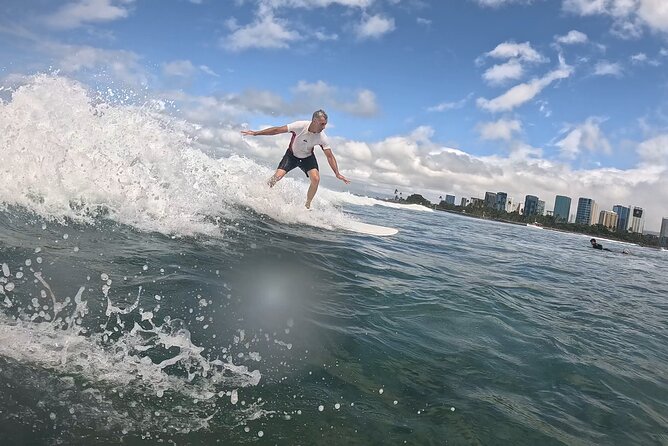
That wave every 5 minutes or less goal is one of the most valuable promises in the info you have. It’s essentially telling you: we’re planning for repeat attempts, not one or two rides and done.
In beginner lessons, repeat tries are where real learning happens. You can’t adjust what you feel in your body unless you get enough practice cycles. More time on waves also makes the lesson more fun because you keep the momentum going.
So, when you book, think of the hour as a sequence of attempts: get prepped, do the basics, then rack up ride chances. If you want a lesson mainly for photos, this still works because you’ll actually be moving and catching waves, not just paddling while others capture content.
Free photos for social media, plus optional Go-Pro video
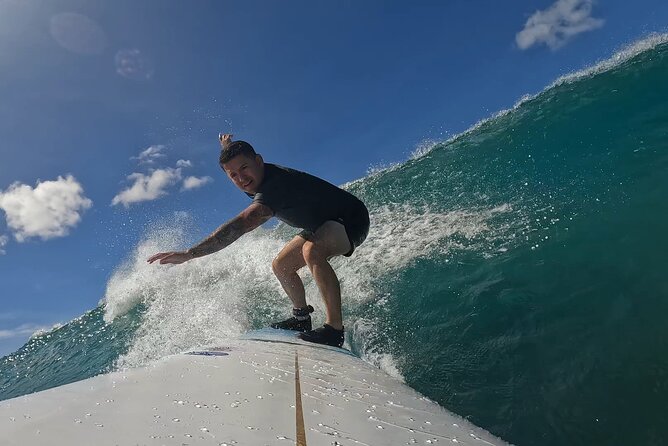
A big selling point here is that you get FREE PICS. For most people, that’s the sweet spot: you can post quickly without waiting on a long video edit.
If you want higher-end video footage, you can add Go-Pro footage later. The optional pricing is listed as:
- $39.99 by email (Go-Pro footage)
- $49.99 for purchase of SD-card
- $74.99 for YouTube edit
That’s not cheap, but it is normal for surf photo/video packages. The key is to decide what you value more:
- If you mainly want a few good surfing shots for Instagram or Facebook, the included photos should be enough.
- If you want full video with editing, factor the add-on cost into your budget before you book.
Price and value: what $100 really buys on Oahu
The price is $100.00 per person for about 1 hour. At first glance, surf lessons can look all similar, but the value comes down to what’s included and how the teaching time is used.
Here’s what you get at this price:
- Surf boards (NSP)
- Excel dry suit tops / rash guards
- Reef shoes
- Secured lockers
- 10–15 minute land demo
- Small groups of 2 per instructor
- Paddle assistance
- Free pics for social media
Then there are the extras:
- Go-Pro footage and video editing are not included.
For me, the strongest value signals are the small group size and the gear comfort. Small groups reduce wasted time and give you feedback faster. Comfort gear helps you stay in the water and keep practicing. Together, that boosts your odds of having a good learning session even if you start with no surf background.
So while $100 isn’t “cheap,” it’s not just paying for a board and a time slot. You’re paying for a teaching ratio and a setup aimed at getting you riding.
Practical details: private group, transportation, and expectations
This activity is described as private, meaning only your group participates. That can make a difference if you want a more focused lesson environment, and it also fits families or small groups who don’t want to be mixed into a larger class.
It’s offered in English, and most travelers can participate. Service animals are allowed. The meeting point is described as near public transportation, which helps if you’re not driving.
One detail to keep in mind: the ocean time begins when you enter the ocean. So when you’re deciding what to wear, plan for the fact you’ll be getting suited up quickly, then straight into the water portion.
Who this surf lesson fits best
This lesson is a strong match if:
- You’re new to surfing and you want structure (not just “try your best”).
- You want an instructor who can correct you often, thanks to 2 students per instructor.
- You care about getting photos for social media without paying extra for video.
- You’ll benefit from comfort gear like dry suit tops if you’re visiting when it’s cooler.
It may feel less ideal if your main goal is a full-length edited surf video, because that’s an add-on. Also, if you prefer a big-class “party vibe” with many classmates, this small-group approach is the opposite of that style.
Should you book Island Fiel Surf?
If you want a surf lesson that feels designed for you to actually improve in the hour, this is a good bet. The mix of custom land coaching, tight group size, and a wave-at-a-reasonable-pace goal gives you a better chance of walking away with real progress and usable photos.
I’d book it if:
- You want beginner-to-intermediate coaching with quick feedback.
- You value included gear and comfort, especially in cooler months.
- You care about learning ocean safety fundamentals, not just standing up once.
I’d think twice if:
- You want Go-Pro video edits as your main souvenir and don’t want to add cost.
FAQ
FAQ
How long is the surf lesson?
It runs for about 1 hour (approx.), including a 10 to 15 minute land demo and time in the ocean.
Where do I meet for the lesson?
You meet at Pau Hana Sailing, 1651 Ala Moana Blvd, Honolulu, HI 96815. The activity ends back at the meeting point.
What’s included in the price?
Included are surf boards (NSP), Excel dry suit tops / rash guards, comfortable reef shoes, and secured lockers for your belongings. You also get free pics.
Is Go-Pro video included?
No. Go-Pro footage is available for an additional fee (given as $39.99 by email, $49.99 for an SD-card, or $74.99 for a YouTube edit).
How many people are in each group?
The lesson runs with small groups of 2 students per instructor, with instruction from Eddie Fiel (owner of I.F.S.) and Johnny Noel.
What if weather is poor or I need to cancel?
The experience requires good weather. If it’s canceled due to poor weather, you’ll be offered a different date or a full refund. You can also cancel for a full refund up to 24 hours in advance.