REVIEW · OAHU
Surf lessons for beginners in Waikiki
Book on Viator →Operated by Hawaiian Boy Surf School · Bookable on Viator
Waikiki turns first-timers into surfers fast. This private one-on-one beginner surf lesson in Honolulu pairs you with an instructor and provides surfboards so you can focus on learning the basics at Waikiki Beach. The whole setup is built around helping you read the water, stay safe, and then try catching waves with personalized feedback.
What I like most is the hands-on style: you’re not stuck watching a crowd or guessing what you did wrong. In one-on-one coaching, instructors like Preston, Scotty, and Jameson reportedly run quick, clear instructions and then give tight, practical tips as you try again—so progress comes faster, even for kids. One thing to consider: there have been a few complaints about schedule changes or instructors not showing up, so I’d confirm your exact meeting details close to arrival and keep the provider contact handy.
In This Review
- Key Things You’ll Notice Before You Paddle Out
- Waikiki Surf Lessons: What the $100 Price Really Buys
- Meeting at the Duke Paoa Kahanamoku Statue: Logistics That Matter
- What Happens First on the Sand: Safety and Ocean Basics
- Waikiki Beach in Action: How Beginners Typically Get Their First Stand
- The Two-Hour Lesson Advantage: More Attempts, Less Waiting
- Included vs Not Included: Don’t Get Surprised by Bottled Water
- Instructor Quality: Preston, Scotty, and Jameson Show the Pattern
- Wave Conditions and Timing: What Can Change Your Day
- The One Real Risk: Booking Changes or Missed Starts
- Who This Private Waikiki Lesson Is Best For
- Quick Advice to Get the Best Outcome
- Should You Book This Surf Lesson in Waikiki?
- FAQ
- Where does the surf lesson start?
- How long is the surf lesson?
- Is this lesson private or shared?
- What’s included in the price?
- Is bottled water provided?
- What language is the lesson offered in?
- How do I get my ticket and confirmation?
- What is the cancellation policy?
- Is this lesson for beginners?
- Is the meeting point near public transportation?
Key Things You’ll Notice Before You Paddle Out
- Private coaching at Waikiki Beach means you get attention, not a one-size-fits-all lesson.
- Surfboards are included, so you’re not spending time on rentals before you even start.
- Safety and ocean basics first, then short practice cycles in the water.
- Instructors like Preston, Scotty, and Jameson are repeatedly praised for patience and clear explanations.
- Two hours is a big advantage for catching more attempts and building confidence.
- Wave conditions can affect outcomes, even with great instruction.
Waikiki Surf Lessons: What the $100 Price Really Buys
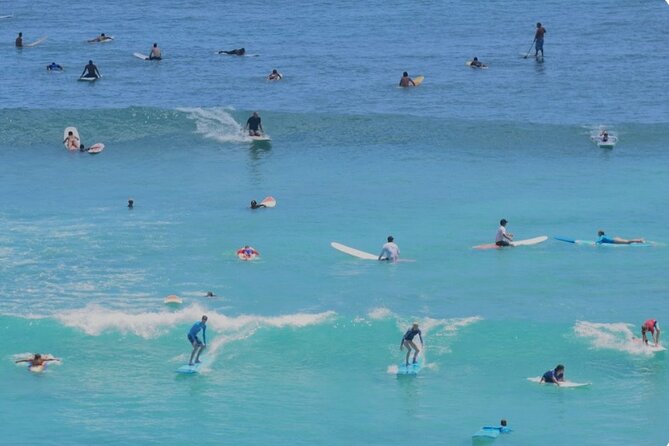
At about $100 per person for roughly two hours, this isn’t the cheapest way to learn surfing in Waikiki. But it’s also not pretending you’re getting “discount surf instruction” with a giant group. You’re paying for something that beginner surfers actually need: time, corrections, and a plan that matches your ability level.
A private lesson also changes how quickly you can improve. When you only share attention with your group, the instructor can fix the small stuff right away—how you position on the board, how you paddle, and when to try for your next wave. And the lesson is explicitly designed to get you standing (and ideally surfing your first wave) by the end of the session, so the pacing is geared toward first-wave success rather than slow sightseeing.
You can also read our reviews of more tours and experiences in Oahu


Meeting at the Duke Paoa Kahanamoku Statue: Logistics That Matter
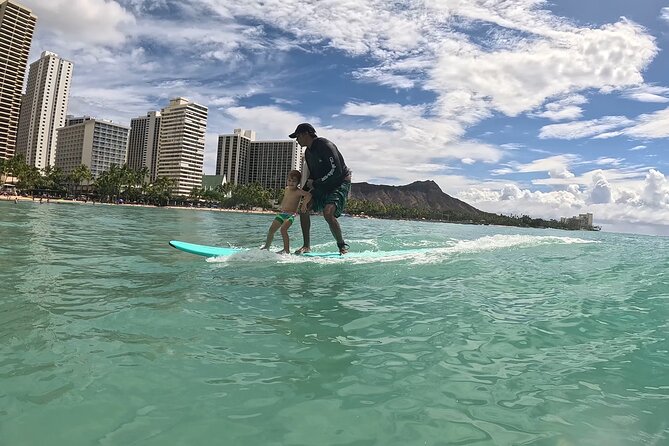
The meeting point is at the Duke Paoa Kahanamoku Statue on Kalākaua Ave in Honolulu. That’s a practical spot because it’s in the Waikiki area and is described as near public transportation. The lesson ends back at the same meeting point, so you’re not left figuring out how to get off the beach and back to your day.
Where people sometimes get stuck is simple: finding the instructor fast and knowing what to do with your stuff. Some reviews praise how easy it is to connect with the instructor on the sand. But a couple of negative experiences mention confusion around meeting details and where belongings should go during the lesson. My advice: arrive a bit early, ask immediately where to store your items, and don’t assume there will be a perfect spot.
If something seems off, use the provider phone number shown in responses, (808)970-2046, so you’re not stuck waiting with no updates.
What Happens First on the Sand: Safety and Ocean Basics
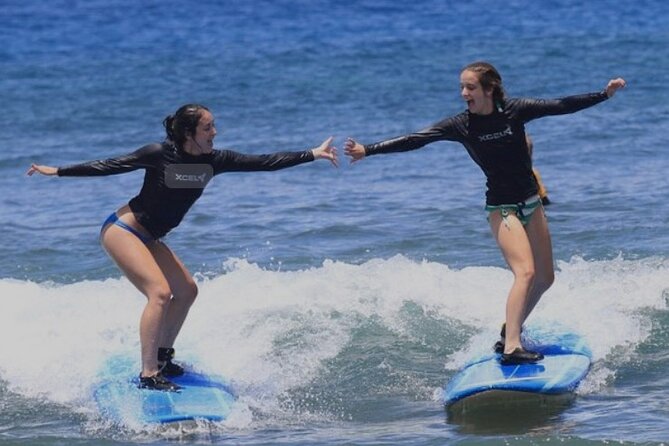
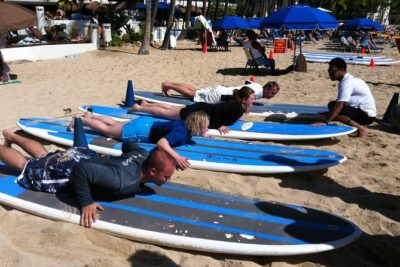
The lesson starts with instruction focused on the ocean, not just the board. You’ll get a rundown of safety protocols, learn how to understand ocean conditions, and go over basic technique before you ever get fully committed to paddling for waves.
For beginners, this part is worth more than it sounds. Surfing in Waikiki can look easy from shore, but currents, wave patterns, and takeoff timing all matter. The instructors also seem to use a style that helps first-timers move from guessing to doing. Several comments credit instructors with keeping things straightforward—explaining how waves break at that spot and what your body should do next.
Also, you’re not just “listening.” You’re oriented, then you’re put into the water with coaching as you practice. That mix is a big reason many people report getting up on the board quickly.
Waikiki Beach in Action: How Beginners Typically Get Their First Stand
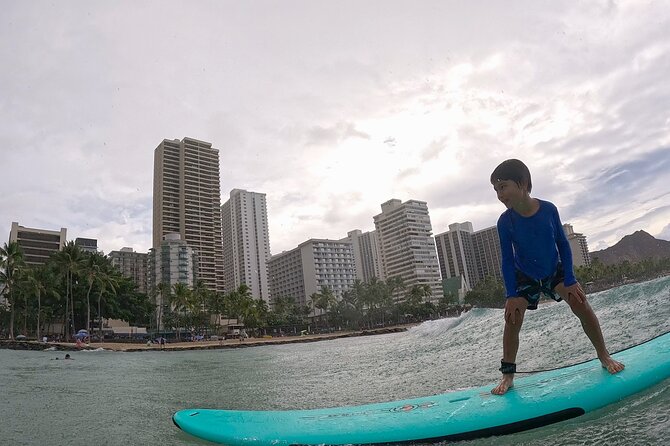
After the on-sand basics, the instructor takes you out to the water and helps you get positioned on the boards. This is where private lessons shine. You can repeatedly try without wondering whether your instructor is watching someone else.
Based on feedback, instructors commonly focus on a few practical moments:
- getting you set on the board before the wave arrives
- timing your paddle and takeoff
- adjusting your stance so you can stand instead of just tumble back into the water
In real-world lessons, beginners often need multiple tries, and a two-hour format gives more attempts than a short session. Reviews also mention that instructors made it their goal to catch as many waves as possible, which keeps momentum high—especially for teens and families who don’t want their day stuck in limbo.
One nice touch: Waikiki wildlife can sometimes show up while you’re waiting or between sets. There’s at least one report of a turtle swimming near the group, which is a reminder that you’re learning in a real ocean environment, not a training pool.
The Two-Hour Lesson Advantage: More Attempts, Less Waiting
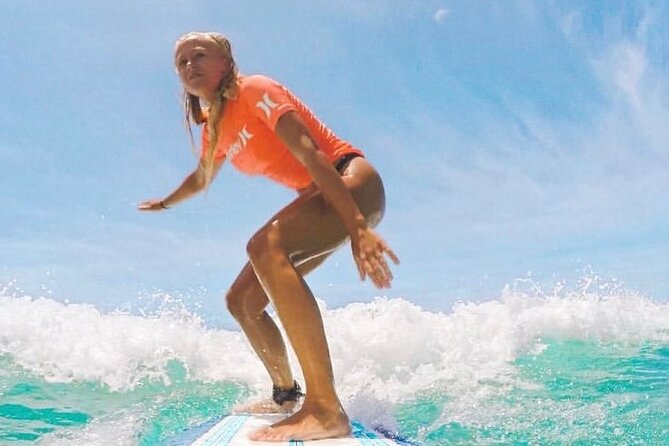
This experience is sold as a 2-hour surf lesson, and that matters. Surf progress isn’t linear. Some waves cooperate, some don’t, and beginners often need several tries just to link the sequence: paddle → pop up → stand.
More time usually means:
- more chances to attempt takeoffs
- more feedback loops while you’re still learning
- less pressure from the clock
A couple of reviews specifically point out that the two-hour lesson gave enough time to catch several waves and build real confidence—enough that some people felt comfortable renting a board later and surfing again. If you’re deciding between one hour and two hours, the longer session generally makes it easier for a beginner to feel progress before the lesson ends.





Included vs Not Included: Don’t Get Surprised by Bottled Water
Included:
- Surfboards
- Guide / instructor
Not included:
- Bottled water
That may sound minor, but it can matter when you’re sweating in the sun and chasing waves. Plan to bring water or purchase it before you settle in. Also, since the lesson is on Waikiki Beach and you may spend time in and out of the water, staying hydrated helps your energy last through the full session.
Instructor Quality: Preston, Scotty, and Jameson Show the Pattern
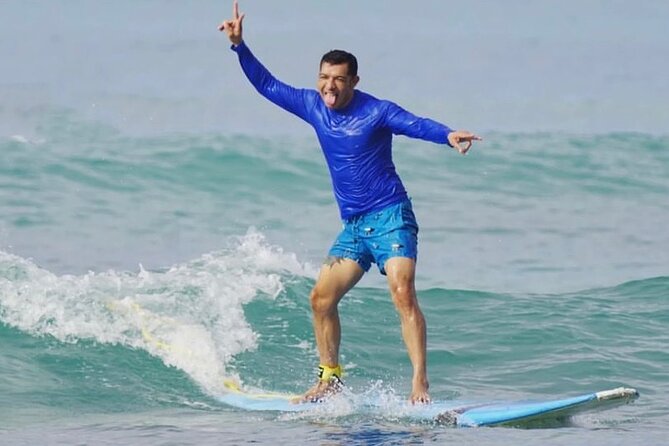
If you’re picking a surf school in Waikiki, the biggest variable is the person teaching. In the feedback you provided, certain names show up often and with strong praise:
- Preston: repeatedly described as patient, kind, and able to explain steps clearly, helping beginners stand quickly.
- Scotty: praised for positivity and encouraging coaching that leads to early success.
- Jameson: noted for friendly communication and effective instruction during the short time available.
Even when wave conditions weren’t ideal, the common theme was instruction that stayed focused and encouraging rather than vague. That kind of teaching tends to reduce the two biggest beginner problems: fear of wipeouts and confusion about what you’re doing wrong.
Wave Conditions and Timing: What Can Change Your Day
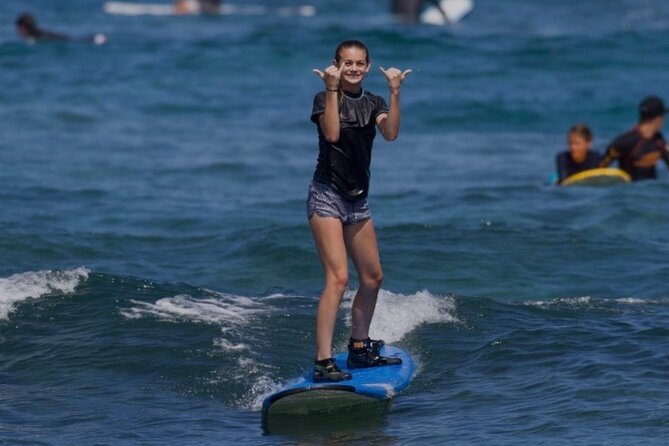
Surf lessons are weather-and-ocean dependent. Even with good instruction, you can still have a slower day if the waves aren’t cooperating. At least one family lesson was described as happening during a not-great wave day, but the kids still enjoyed learning and felt safe.
Timing also matters. There’s mention that evening sessions can be favored because of sunsets while surfing. If your schedule allows it, you might consider the time of day that fits both your comfort level and your group’s energy. If you’re booking as a family, choose a time when your kids won’t be melting down from hunger or tiredness between sets.
The One Real Risk: Booking Changes or Missed Starts
Here’s the balance you need to go into any surf booking in a public, regulated beach environment: sometimes schedules shift. Your provided information includes explanations about permit work and booking-system changes that affected lesson availability and contact.
So what does that mean for you as a practical traveler?
- Confirm your meeting details ahead of time.
- Arrive early so you can connect quickly if anything shifts.
- If you’re traveling for a special moment, keep a little buffer in your day.
Some negative reports describe instructors who didn’t show up and communication that took too long. That’s not something you should ignore. On the other hand, the strong reviews you included show the majority of sessions run smoothly, with instructors getting beginners standing fast and kids learning quickly. The lesson is worth it if you manage the “what if” part like a grown-up traveler.
Who This Private Waikiki Lesson Is Best For
This is set up for beginners and described as most travelers can participate. It also works well for:
- Kids and teens: multiple reviews describe teens learning quickly and feeling confident on the board.
- Families: one lesson is praised for getting an entire family learning in a short time.
- Couples and solo beginners: the private format keeps the focus on your learning curve rather than the group’s pace.
If you’re the type of person who hates standing around and waiting your turn, the private setup is usually a better match than bigger group surf programs. If you’re fine with trial-and-error and want a more social setting, you might still consider group lessons—but that’s not what this product is selling.
Quick Advice to Get the Best Outcome
Here’s how you can stack the odds in your favor without overthinking it:
- Choose two hours if it’s offered for your schedule.
- Arrive early and confirm where to store belongings.
- Go in expecting short practice cycles and repeated tries, not instant perfection.
- If you can, pick a time that matches your energy level so you can keep attempting waves rather than getting frustrated.
Should You Book This Surf Lesson in Waikiki?
I’d book this if you want a private beginner surf lesson that’s set up to get you standing with real coaching at Waikiki Beach. The best part is that the instruction style reported here focuses on clarity, safety, and quick feedback—plus surfboards are included, so you’re not burning your first hour on logistics.
I’d think twice if your schedule is tight or your surf lesson is tied to a hard deadline like a wedding moment, because a small number of experiences describe missed starts or last-minute changes. If you’re flexible and you confirm details early, you’ll likely have the kind of fun, confidence-building lesson that people are happy to repeat.
FAQ
Where does the surf lesson start?
The lesson starts at the Duke Paoa Kahanamoku Statue on Kalākaua Ave, Honolulu, HI 96815.
How long is the surf lesson?
It’s about 2 hours (approx.).
Is this lesson private or shared?
It’s private. Only your group participates.
What’s included in the price?
Surfboards and a guide/instructor are included.
Is bottled water provided?
No. Bottled water is not included.
What language is the lesson offered in?
The lesson is offered in English.
How do I get my ticket and confirmation?
You’ll receive a mobile ticket, and confirmation is received at the time of booking.
What is the cancellation policy?
You can cancel for free up to 24 hours in advance for a full refund.
Is this lesson for beginners?
Yes. It’s described as a beginner surf lesson, and most travelers can participate.
Is the meeting point near public transportation?
Yes, the meeting point is described as near public transportation.