REVIEW · OAHU
Surf Lesson Without the Crowds Including GoPRO Videos
Book on Viator →Operated by Michael McChrystal · Bookable on Viator
First time on a board can feel less scary here. This beginner-focused surf lesson in Oahu keeps you in a tight group, teaches you how waves work, and shows you how to actually ride one. Then you get out in the water to catch as many waves as possible, while a GoPro captures your wipeouts and wins.
What I love most is the combo of patient, step-by-step instruction (often with instructors like Rio, Mike, or John) and the way the lesson ends with edited surf media sent to your email. One possible drawback: you need to be able to swim, and the beach area can be rocky, so plan on bringing water shoes to protect your feet.
In This Review
- Key things that make this surf lesson worth it
- Ala Moana Surf Session: Why this spot feels calmer than Waikiki
- Meeting at 75 Ala Moana Park Dr and what you’ll do first
- How the wave works: what you learn before you paddle out
- Gear and fitness reality check: what you need to bring mentally and physically
- The heart of the lesson: small-group coaching that keeps you moving
- GoPro surfing without the chaos: your action gets recorded
- Tips for getting the most out of your 90 minutes
- Price and value: what $125 really buys
- Who should book this beginner surf lesson at Ala Moana
- Should you book it?
- FAQ
- Where does the surf lesson start?
- How long is the session?
- How much does it cost?
- What language is the lesson offered in?
- How big is the group?
- Do I need to be able to swim?
- What is included besides the surf lesson?
- Do I need to bring anything?
- How do I get the GoPro footage?
- What happens if the weather is bad?
- What is the cancellation window?
Key things that make this surf lesson worth it
- Tight group size: maximum of 5 travelers, so you get more direct attention than typical crowded lessons
- Learn the wave, not just the stance: basics on how a wave works plus surf etiquette before you paddle out
- A real practice session: you surf on your own for more of the time, not just watching
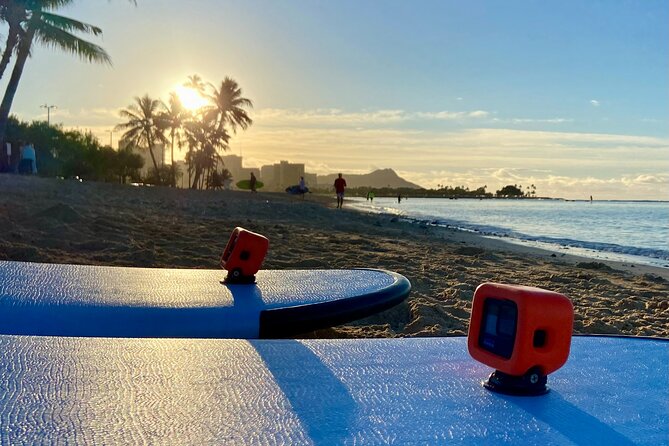
- GoPro captured action: your session is recorded so you can see what worked
- Edited videos and photos emailed afterward: you get the good stuff, not raw footage
Ala Moana Surf Session: Why this spot feels calmer than Waikiki
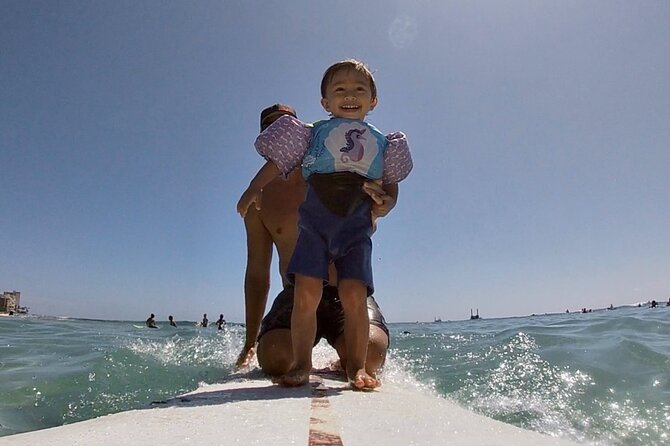
If you’re trying to avoid the chaotic, cattle-car vibe some beaches get, this location makes sense. The lesson starts at 75 Ala Moana Park Dr in Honolulu, and that area tends to feel more “local-friendly” than the busiest Waikiki lanes. You’re still in the Oahu surf zone, but the vibe is closer to a focused lesson than a nonstop crowd scene.
You’ll also benefit from the simple fact that you’re here for instruction and repetition, not sightseeing. The instructors run a structured beginner flow: quick beach basics, then straight to the water. That means your 90 minutes (about 1 hour 30 minutes) are used for learning and trying, not wandering around looking for where to stand.
You can also read our reviews of more tours and experiences in Oahu

Meeting at 75 Ala Moana Park Dr and what you’ll do first
You meet at 75 Ala Moana Park Dr, and the activity ends back at the same meeting point. From there, the lesson follows a clear rhythm that’s built for first-timers.
First comes the on-beach briefing. You’ll go over:
- how waves work (so you’re not guessing what to do)
- surfing basics you need before getting tossed around
- surf etiquette (how to behave in the water)
This early phase matters because surfing isn’t just balance. It’s timing, direction, and safety in a shared ocean. If you walk in knowing the “why,” you spend less time panicking and more time learning the pop-up and how to line up for your next try.
How the wave works: what you learn before you paddle out
This isn’t a lesson where you’re handed a board and hoped for the best. You’ll review the basics of surfing, including how waves form and how they break. That gives you a mental map for what you’re looking at once you’re in the lineup.
You also learn the etiquette side. That means you’re not only thinking about standing up; you’re also thinking about how to move around others, when to try, and how to respect the water flow. For beginners, that reduces stress fast. You’re not just learning a trick—you’re learning how to share the ocean safely.
If you’ve never surfed before, this is the part that helps the most. Standing up is the visible goal, but understanding what the wave is doing is the invisible one that keeps you from getting stuck.
Gear and fitness reality check: what you need to bring mentally and physically
The tour is aimed at people with moderate physical fitness, and there’s one non-negotiable requirement: you must be able to swim. In other words, this is beginner-friendly, but it’s still in real ocean conditions.
From the experience details and common beginner guidance from the group, plan for rocky water access. One practical tip that comes up is to bring water shoes because the reef can be rocky and sharp. Even if you’re careful, shoes help you focus on the lesson instead of foot discomfort.
You should also expect the instructors to get you set with surf-lesson essentials like a board, and you may be provided a rash guard or neoprene top (helpful when the water feels chilly). The key is that you don’t need to guess gear requirements at home—just show up prepared to swim and wear protective footwear.
The heart of the lesson: small-group coaching that keeps you moving
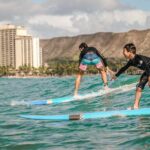
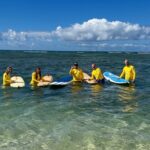
The biggest value here is repetition with real guidance. The session keeps the group small—maximum 5 travelers, and in practice it can feel even smaller. Many participants describe small groups where each person gets attention and encouragement instead of being an anonymous face.
That tight coaching shows up in how the instruction is delivered. Instructors like Rio, Mike, and John are described as patient and attentive, taking time to explain step-by-step and adjust cues based on how you’re doing in the moment. You’re not rushed through the learning curve.
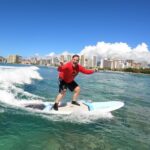
And then the lesson does something smart for beginners: it gets you catching waves. After the on-beach prep, you hit the water and spend time trying on your own—catching as many waves as possible within the 1.5-hour window. The goal is clear: get you to a beginner level where you can stand up and ride, not just paddle around.
One nice detail for your expectations: the waves and learning setup are chosen to help you succeed. Participants describe being able to stand up within the session, including first-time surfers who didn’t expect that. It’s still surfing—so wipeouts happen—but the instruction style aims to make progress feel possible.





GoPro surfing without the chaos: your action gets recorded
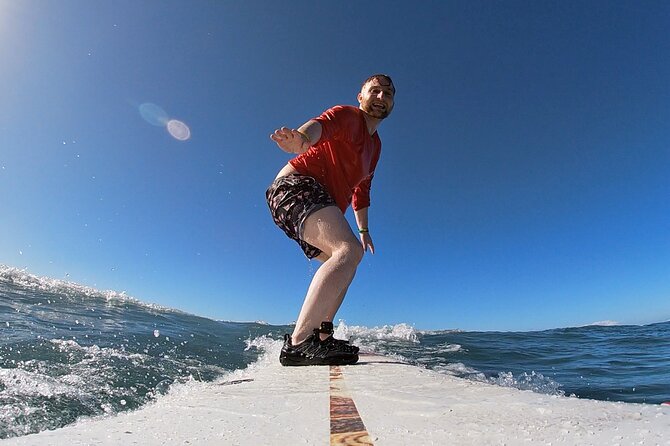
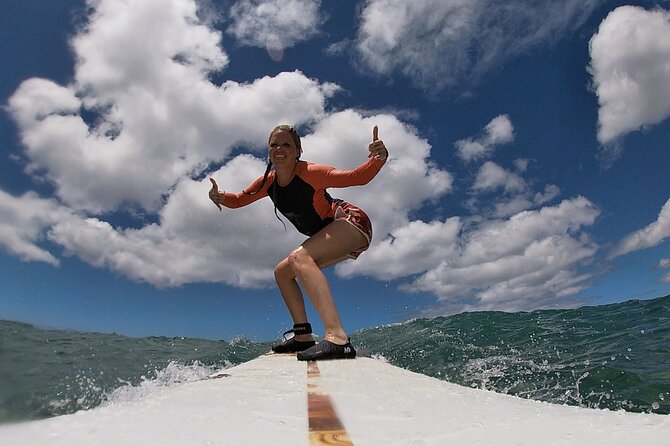
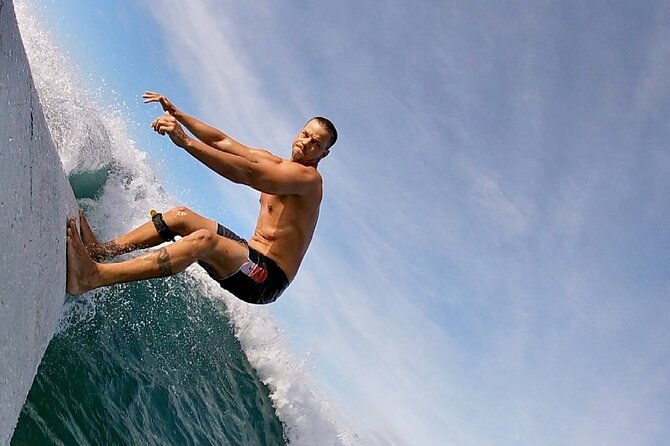
Here’s the part that most people actually remember afterward: the GoPro capture. While you’re surfing, the action is recorded so you can relive what happened—board angle, timing, and the moment you stand up (or learn from the fall).
This is a big deal for beginners. When you’re focused on everything—paddling, timing, balance—you don’t always understand what you did right. A video makes it easier to spot patterns. You also get proof that you were really out there catching waves, not just trying.
After the session, you’ll receive edited pictures and videos by email. Editing matters because it filters the “rough” footage down to the moments you want to see again. Some people report quick delivery (like within about 48 hours), but the only promise you should count on is that the media is sent after editing.
Tips for getting the most out of your 90 minutes
Your instructor’s job is to guide you—but you can make the lesson easier for both you and them. Based on how the session is structured, here’s how to maximize your time:
- Listen closely on shore because you’ll use that exact info in the water. The lesson starts with wave basics and etiquette for a reason.
- Focus on cues during your attempts. The coaching is designed to help you improve from one wave to the next, not just take random shots.
- Treat your session like practice reps. The tour is built around getting you back out there quickly, so you’ll want to stay engaged between waves.
- Wear foot protection. Bring water shoes to avoid turning every fall into a foot problem.
The overall vibe is upbeat and safety-forward. Many people describe feeling safe and supported even while learning. That emotional comfort matters. If you’re calm, your learning improves.
Price and value: what $125 really buys
At $125 per person for about 1 hour 30 minutes, this isn’t a casual “try surfing once and leave” deal. The value comes from the combination of small-group attention and the outcome you get afterward.
You’re paying for:
- instructor-led teaching that covers wave basics and etiquette
- hands-on coaching designed for beginners
- time in the water catching waves (not just standing on the shore)
- GoPro capture plus edited photos/videos emailed after
If you’re the kind of traveler who wants more than a souvenir, this is the right style. The edited media is effectively part of the product: it turns your learning session into a shareable story and helps you remember what you did. And because the group is small, you’re less likely to feel like you’re waiting your turn.
Who should book this beginner surf lesson at Ala Moana
This experience is a strong match if you:
- are surfing for the first time and want a calm learning environment
- prefer small groups over crowded “line up and hope” lessons
- want coaching that’s clear, patient, and supportive (with instructors like Rio, Mike, and John called out for attention)
- care about capturing the moment with GoPro and getting edited media afterward
It also works well for families and mixed skill levels, as long as everyone can swim. Some participants bring kids around 9 and up, and adults too. The instructors adjust to beginners, aiming to get you up and riding within the lesson.
If you’re an absolute beginner who’s nervous about going out, this is built for you. If you’re already advanced, you might still learn something from the wave basics and etiquette, but the value is strongest when you want structured coaching and lots of practice.
Should you book it?
Yes, if you want a beginner surf lesson that feels controlled, friendly, and focused on real progress. The standout value is the pairing of small-group instruction with GoPro-edited results you can watch later.
Book this if:
- you’d rather learn in a smaller setting than in a big crowd
- you want an instructor who slows down for safety and clarity
- you want the “I did it” proof on video and photo, not just a memory
Skip it if:
- you’re not comfortable swimming
- you hate the idea of learning on real ocean conditions
- you’re looking for a long, multi-hour surf day (this one is a concentrated 1.5-hour session)
If those checks pass, you’ll likely leave with sore muscles, a grin, and at least a few rides you can point to in your inbox later.
FAQ
Where does the surf lesson start?
The lesson meets at 75 Ala Moana Park Dr, Honolulu, HI 96815, and it ends back at the same meeting point.
How long is the session?
It lasts about 1 hour 30 minutes.
How much does it cost?
It costs $125.00 per person.
What language is the lesson offered in?
The tour is offered in English.
How big is the group?
The activity has a maximum of 5 travelers, which keeps the lesson from feeling overcrowded.
Do I need to be able to swim?
Yes. You must be able to swim.
What is included besides the surf lesson?
You’ll get GoPro action capture during the session, plus edited pictures and videos emailed to you afterward.
Do I need to bring anything?
You should plan to bring water shoes, since the reef can be rocky and sharp. You’ll also want to come in swim-ready and physically prepared for moderate activity.
How do I get the GoPro footage?
The edited photos and videos are sent to you by email after the session.
What happens if the weather is bad?
The experience requires good weather. If it’s canceled due to poor weather, you’ll be offered a different date or a full refund.
What is the cancellation window?
Cancellation is free up to 24 hours in advance for a full refund. Canceling less than 24 hours before the start time isn’t refundable.