REVIEW · OAHU
Semi-Private Stand Up Paddle Lesson with Waikiki Courtesy Shuttle
Book on Viator →Operated by Ohana Surf Project · Bookable on Viator
Your first SUP moment hits fast.
This Waikiki stand-up paddle lesson is built for beginners and real humans, with tight coaching and easy transportation from hotel-area meeting points to the water.
I like the 1 instructor for 2 participants setup because you get hands-on help, not vague tips. I also like that the basics are covered for you: board, paddle, rash guard, and reef shoes plus a safe place to store belongings.
One thing to consider: you must be able to swim (ages 13+), and if you cannot swim, you’ll be asked to flag it early since a private lesson may be required.
In This Review
- Key things to know before you go
- From your Waikiki hotel area to Ohana Surf Center, without the scramble
- Semi-private SUP coaching: what 1 instructor for 2 really means
- Gear included in your $129: what you actually get (and why it helps)
- The lesson flow on Waikiki water: step-by-step, from bus to first ride
- 1) Check-in at Ohana Surf Center
- 2) Move to the beach with your board
- 3) Instructor briefing: experience, swimming strength, concerns
- 4) Leash up and into the water
- 5) On-water practice with real-time coaching
- 6) Return to the Surf Center for photos, videos, and merch
- Price and value: is $129 a fair deal for a 2-hour intro?
- Who this SUP lesson fits best (and who might want a different plan)
- Small practical tips that make your lesson smoother
- Should you book this Waikiki SUP lesson?
- FAQ
- Where is the meeting point for the lesson?
- How long is the stand-up paddle lesson?
- Is pickup available in Waikiki?
- What equipment is included?
- Do I need to bring my own paddleboard or wetsuit?
- How many students are in a group?
- Do I need to be able to swim?
- What should I wear and bring?
- Are photos and videos included?
- What if I’m prone to seasickness?
Key things to know before you go
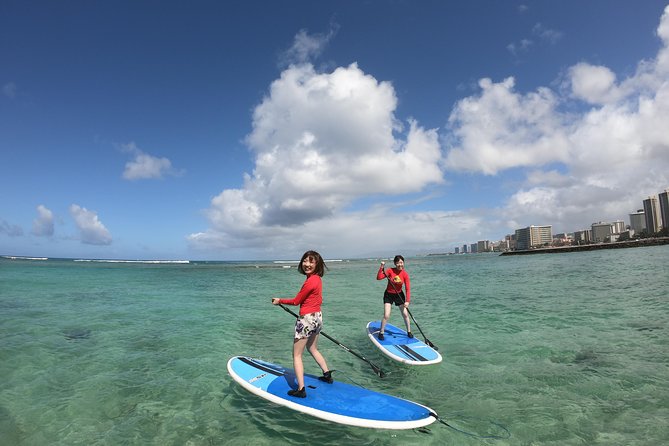
- Small group coaching (1:2) means you’ll get frequent check-ins as you learn balance.
- Courtesy shuttle in Waikiki keeps the logistics simple, with an air-conditioned yellow Surf School Bus or branded white shuttle.
- Full gear included: SUP board, paddle, rash guard, reef shoes—no need to hunt rentals.
- Belongings storage is built in, so you’re not juggling stuff while you suit up and head to the shoreline.
- Beginner-friendly pace is part of the plan, so even if you don’t stand right away, you can still have a win.
- Optional photos/videos are available after your session if you want proof for your camera roll.
From your Waikiki hotel area to Ohana Surf Center, without the scramble
Waikiki can be a lot of stop-and-go. This lesson tries to remove that headache. You start at a designated Waikiki meeting point (the listed start point is 2552 Kalākaua Ave, Honolulu, HI 96815), and you’ll be picked up from select locations.
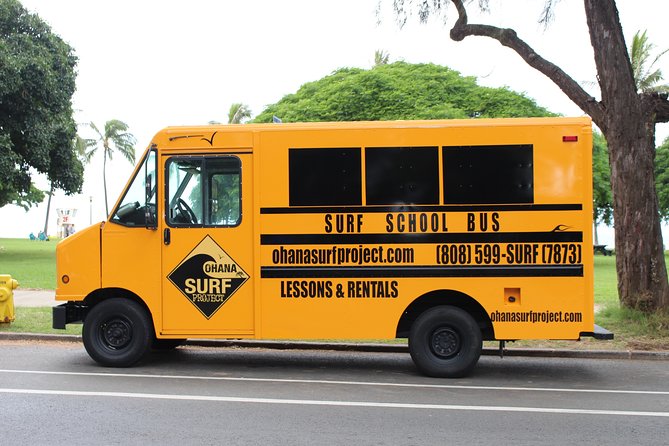
The handoff is straightforward. Staff meet you, then you ride in an air-conditioned bus—either a clean, easy-to-spot yellow Surf School Bus or a white shuttle with the company logo on the side. If you’ve ever dealt with parking, waiting, and finding the right beach access, you’ll appreciate how much this takes off your plate.
After you’re checked in, you’ll be shuttled to the Ohana Surf Center at the Waikiki Beach Marriott. That matters because it’s where you’ll gear up and where you’ll return after your time on the water. Having one home base reduces stress, especially when you’re changing into swimwear, tightening straps, or trying to keep your towel and sunscreen from becoming a mess.
Practical tip: come ready with your bathing suit and sunscreen already on. The activity notes ask you to wear your suit, bring a towel, and apply sunscreen ahead of time. That’s one of those small details that makes the whole day smoother.
You can also read our reviews of more private tours in Oahu
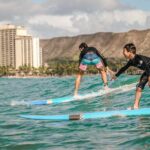
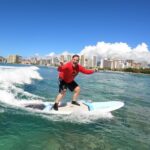
Semi-private SUP coaching: what 1 instructor for 2 really means
The headline is semi-private: a ratio of 1 instructor for 2 participants. In real life, that’s the difference between learning and just getting out there.
Because you have a dedicated instructor with you (instead of one instructor for a larger group), you can expect more direct feedback on:
- how you position your feet on the board
- how you grip and plant the paddle
- what to do when balance feels unstable
- when to try a first stand versus when to stay in a safer stance longer
The reviews point to a key theme: the instructors keep things encouraging even if you’re not sure you’ll get up. One of the instructors named in the feedback is Miguel, and the tone described is patient and upbeat. That’s exactly what you want on your first SUP try—someone who helps you try again without rushing you or making you feel behind.
You also get a quick personal check-in before you hit the water. The plan includes a conversation about your previous experience, swimming strength, and any concerns or conditions. That’s not just formality. Your comfort level affects how the instructor sets your first steps on the board.
Gear included in your $129: what you actually get (and why it helps)
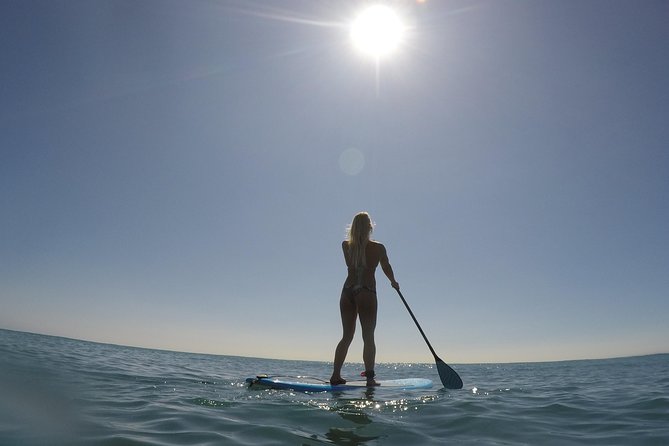
For $129, the value isn’t just that equipment is included—it’s that the gear is chosen for this environment and beginner comfort.
Your package includes:
- Stand-up paddleboard
- Paddle
- Rash guard
- Reef shoes
- A safe place to store your belongings
This matters more than it sounds. Reef shoes help you deal with shoreline conditions, and a rash guard gives you comfort plus a layer of protection for sun and water. If you’ve ever rented random gear that doesn’t fit well or doesn’t feel stable, you’ll understand why getting the right setup from the start can speed up learning.
A quick note on the “safe place to store belongings” part: it sounds basic, but it’s the difference between leaving your stuff somewhere uncertain and spending your energy on learning. You want your mind on balance, not bags.
Photos and videos are not included, but they’re available for purchase after the lesson. If you’re the type who likes a record of progress, this is handy. If you’re not, you can ignore it.
The lesson flow on Waikiki water: step-by-step, from bus to first ride
Here’s how the experience typically moves, and why each step matters.
1) Check-in at Ohana Surf Center
You shuttle to the Ohana Surf Center at the Waikiki Beach Marriott, then you get geared up. This is where you’ll be sorted and ready for the beach. Expect the instructor to meet you later at the ocean, but the check-in process is your warm-up phase: breathe, get your gear right, and get your bearings.
You can also read our reviews of more tours and experiences in Oahu




2) Move to the beach with your board
Once you’re close to the shoreline, you’ll walk your lesson boards to the water. This is a small stretch of time where you get used to the feel of the board before it hits the surf zone. If you’re nervous, this helps. You’re not instantly dropped into the water.
3) Instructor briefing: experience, swimming strength, concerns
You’ll meet your instructor and talk through things like prior experience and swimming strength. The group is built for students 13 or older who can swim, and if you’re not able to swim, you should flag that ahead of time because a private option may be required.
Also share any medical conditions or injuries before the lesson. That’s your chance to make sure coaching and safety guidance fit your situation.
4) Leash up and into the water
When you’re comfortable and ready, you’ll leash yourselves to the boards and go into the water. Leashes are one of those safety details that beginners often don’t think about until they’re thankful they exist.
5) On-water practice with real-time coaching
This is the heart of the lesson: you learn safe stand-up paddle basics and how to control your paddle and posture. Since the group is only two students per instructor, you’ll get frequent feedback.
And yes, the goal is learning, not perfection. The feedback includes a real-world scenario where someone didn’t manage to stand initially, while their partner got to stand for moments. That’s normal. Your job is to follow the cues and build confidence. Standing for a few seconds can turn into a few more with the next try.
6) Return to the Surf Center for photos, videos, and merch
After the lesson, you’ll head back to the Ohana Surf Center. That’s when you can check out photos and videos for purchase and browse merch if you want souvenirs.
Then you’ll be driven back to a designated Waikiki drop-off location. The experience ends back at the meeting point area, so you’re not left figuring out how to get back on your own.
Price and value: is $129 a fair deal for a 2-hour intro?
Let’s talk about the value in practical terms.
You’re paying for three things at once:
- Coaching time (1 instructor for 2 participants)
- Transport in Waikiki (courtesy shuttle from select locations, plus movement to the surf center and back)
- Gear (board, paddle, reef shoes, rash guard) and a safe place for belongings
A 2-hour session isn’t long. The upside is you don’t waste half a day chasing rentals, reading manuals, or figuring out what the board should feel like. The coaching format helps you progress quickly within that time window.
If you compare it to piecing together your own SUP rental plus lessons (often charged separately), this package structure tends to be the simpler and more predictable route—especially for first-timers who don’t yet know what “good” gear feels like.
One more value detail: you get a mobile ticket and clear meeting logistics with staff meeting you at pickup spots. That’s not glamorous, but it reduces the usual first-day friction that can turn an easy activity into a stressful one.
Who this SUP lesson fits best (and who might want a different plan)
This is a strong match if:
- you’re trying stand-up paddleboarding for the first time or want structured basics
- you want close guidance without a crowd
- you prefer an included-gear setup over figuring out rentals
- you can swim and you’re comfortable being out on the water for a lesson
It may be less ideal if:
- you cannot swim (flag it early; private may be required)
- you’re prone to seasickness and don’t have a plan, since the notes recommend taking a remedy you’re accustomed to about an hour before and checking with your doctor first
- you want a long, open-ended paddle. This is a lesson format, not a multi-hour tour
Small practical tips that make your lesson smoother
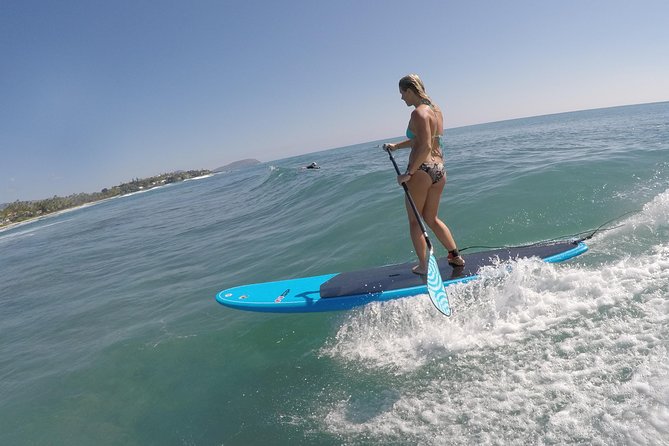
These come straight from what the experience expects from you:
- Wear your bathing suit ahead of time to save minutes at check-in.
- Bring a towel. You’ll want it right after the session when you’re dealing with wet gear and sun.
- Apply sunscreen before you go. Waikiki sun is no joke, and you don’t want to start learning while worrying about sunburn.
- If you’re unsure about your level, be honest. The instructor will tailor coaching based on your swimming strength and concerns.
- If you get nervous around water, remember the lesson is designed for gradual confidence—leashing up, practicing in a controlled way, and repeating the steps until they click.
Should you book this Waikiki SUP lesson?
If you want a beginner-friendly SUP intro with semi-private coaching, clear transport, and gear handled for you, this is an easy yes. It’s built to keep the learning curve reasonable and the experience fun, even when standing isn’t immediate.
I’d particularly recommend it if:
- you value 1:2 attention over saving money on a larger-group class
- you’re new to SUP and don’t want to experiment without an instructor
- you want the day to run on rails—pickup, check-in, lesson, then back to your drop-off
If you’re an advanced paddler looking for a big technical challenge or long distance on open water, you might find this too short or too introductory. For first-timers in Waikiki, though, it’s a solid, practical way to get on the board safely and learn fast.
FAQ
Where is the meeting point for the lesson?
The listed start point is 2552 Kalākaua Ave, Honolulu, HI 96815, USA. The activity ends back at the meeting point area.
How long is the stand-up paddle lesson?
The duration is about 2 hours.
Is pickup available in Waikiki?
Yes. There is a complimentary courtesy shuttle from select Waikiki locations. Your exact pickup location and time are emailed to you by the supplier.
What equipment is included?
You get the stand-up paddleboard, paddle, reef shoes, and a rash guard. The activity also includes a safe place to store your belongings.
Do I need to bring my own paddleboard or wetsuit?
No. All necessary equipment is provided, including gear for wearing during the lesson.
How many students are in a group?
The lesson uses a ratio of 1 instructor for 2 participants, so it’s semi-private.
Do I need to be able to swim?
Yes. All students must be 13 or older and able to swim. If someone cannot swim, you should advise staff ahead of time since a private lesson may be required.
What should I wear and bring?
Come wearing your bathing suit, and bring a towel. Also make sure to apply sunscreen ahead of time.
Are photos and videos included?
They are available for purchase after the lesson. They are not included in the base experience.
What if I’m prone to seasickness?
If you’re prone to seasickness, you may want to take a remedy you are accustomed to about an hour before the lesson. Check with your doctor for recommendations.