REVIEW · OAHU
Private Surf Lessons in North Shore Oahu
Book on Viator →Operated by North Shore Oahu Surf School · Bookable on Viator
Haleiwa makes it easy to fall in love with surfing. What I like most is the 2-hour private coaching that gets you standing up and riding, plus the ocean safety focus led by Hawaiian watermen with CPR/AED skills. A possible drawback is that you’re riding the weather—this experience needs good conditions, so plans can shift if the ocean isn’t cooperating.
In plain terms, you start on land learning surf etiquette, fundamentals, and how to read the water safely. Then you head out with the right board and long sleeve rash guard—and you get help paddling out and finding waves that match your level. I also appreciate that the team mentions sea turtles as part of the experience, which adds extra wonder beyond just learning to stand.
This is best if your goal is real progress in a short window. You’ll get a lot of attention, especially if you’re bringing kids or anyone who tends to be cautious in the ocean. Keep in mind it’s priced per person, so families should price it out against what you’d spend on lessons for each member.
In This Review
- Key highlights to look forward to
- Surf Lessons in Haleiwa: what makes it feel like real coaching
- How the timing and meeting point keep things simple
- Land briefing: the part that often makes or breaks your session
- Gear fitting and rash guard comfort: small step, big payoff
- In the water: how you go from paddling to standing
- Private and family-friendly: what the group setup really changes
- Sea turtles and ocean awareness: the “real Hawaii” bonus
- Price and value: what $135 per person is buying you
- Who should book this and who might hesitate
- Quick decision guide: should you book?
- FAQ
- How long is the surf lesson?
- Where does the experience start?
- Is gear included?
- Who teaches the lessons?
- Is this a private experience?
- What happens if the weather is bad?
- Is there a satisfaction guarantee?
Key highlights to look forward to
- Guaranteed progress: you’re promised time on waves with a goal of standing up and riding today
- Safety-first instruction: land briefing includes etiquette and ocean safety, with guides trained in CPR/AED
- Gear included: rash guard and surfboard fitting, so you’re not scrambling for equipment
- Private group attention: it’s only your group, which matters when learning is scary or awkward
- Sea turtle sightings: you may spot them while you’re out there
- Instructor patience shows up: the coaching style is repeatedly praised, especially with kids
Surf Lessons in Haleiwa: what makes it feel like real coaching
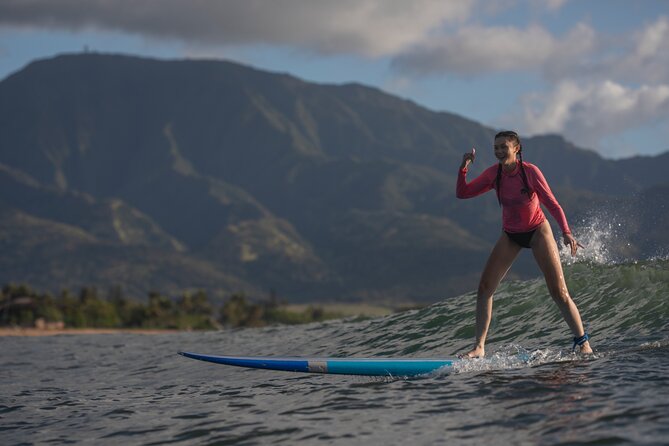
Haleiwa sits on Oahu’s North Shore, and it has that fast, friendly surf-town energy. What you’re paying for here isn’t just board time. It’s coaching designed to move you from first contact to actual wave attempts during a tight two-hour session.
The structure matters. You don’t just get tossed onto a board and told good luck. You begin with a land briefing that covers the fundamentals and ocean safety, so the water time has a purpose.
Two details stand out to me as practical, not just marketing: you get fitted with a board and you learn surf etiquette before paddling out. When those two things are done well, you waste less time guessing and more time trying.
There’s also a real “care factor.” The experience includes a promise that if you’re unhappy at any point, you’re not obligated to pay. That doesn’t mean it’s risk-free for the instructor. It means they’re aiming to get it right while you’re still there.
You can also read our reviews of more private tours in Oahu
How the timing and meeting point keep things simple
The lesson runs about 2 hours and returns to the meeting point at the end. That full loop is useful because you’re not trying to coordinate extra transport after you’re wet, sandy, and half-hungry.
You meet at 62-449 Kamehameha Hwy, Haleiwa, HI 96712. Having the meeting point in Haleiwa is a plus because it’s a practical base area for North Shore exploring, not some remote location that requires extra planning just to start.
You’ll want to plan to arrive a little early so you can check in, get fitted, and settle in before the briefing starts. The smoother the first 15 minutes go, the better the rest of the session feels.
Land briefing: the part that often makes or breaks your session
This is where you build the skills that keep you safer and help you stand sooner. The land briefing covers surfing fundamentals, surf etiquette, and the ocean safety basics you need before you paddle out.
For a beginner, etiquette sounds like a social thing. In reality it’s physics with people: where others are moving, how to avoid getting in the way, and how not to panic when conditions change. You learn what to do before you ever get out past the shore break.
The ocean safety piece is especially important on the North Shore. Even if you’re only going out for a beginner session, you’re still dealing with real waves and real water conditions. Guides trained in CPR/AED don’t just add confidence on paper—they signal that safety planning is part of their job, not an afterthought.
If you’re teaching kids or someone who’s anxious about the ocean, the land time is also psychologically helpful. You get a quick roadmap. You’re not surprised by what happens next.
Gear fitting and rash guard comfort: small step, big payoff
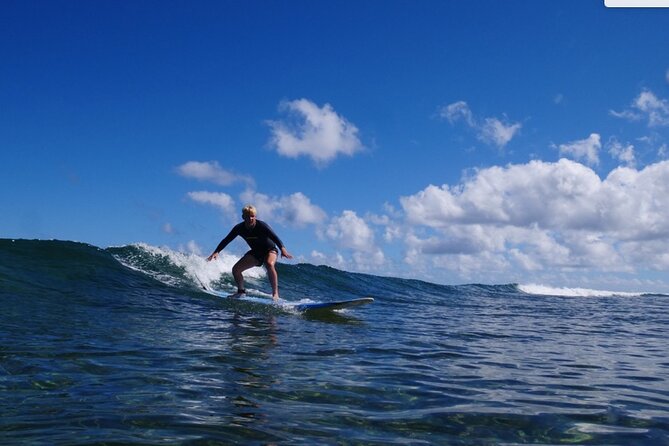
The lesson includes surfboard fitting and a long sleeve rash guard. That means you’re not stuck using a board that’s the wrong size or shape for your body and comfort level.
Board fit matters because it affects stability. When the board matches you better, you’re more likely to pop up earlier and maintain balance. When you’re learning, that changes everything: it’s the difference between a frustrating struggle and a session full of tries.
The rash guard isn’t just for warmth. It also reduces friction when you fall, paddle, and brush the surface with your skin. If you’re planning multiple hours on the coast, the comfort helps you keep energy for wave attempts.
In the water: how you go from paddling to standing
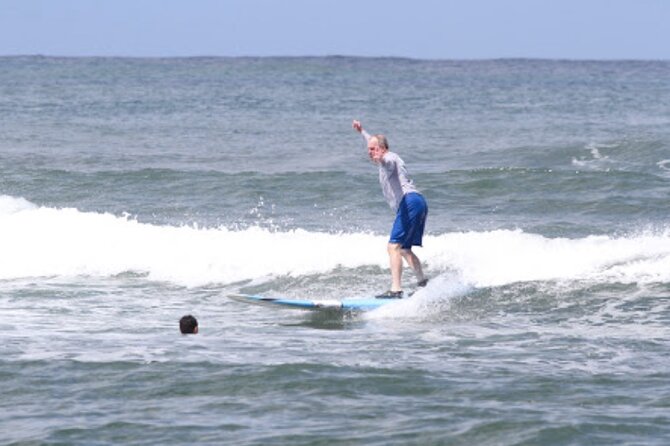
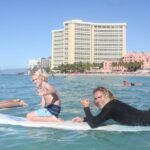
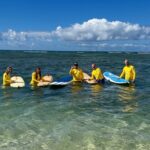
After the briefing and fitting, you get in the water and start practicing for real. The coaching goal is clear: you’re guaranteed to get you up and riding waves today.
What that usually means in practice is support at the moments that beginners struggle with most:
- getting into position
- paddling efficiently
- timing the pop-up
- understanding when to attempt a wave and when to wait
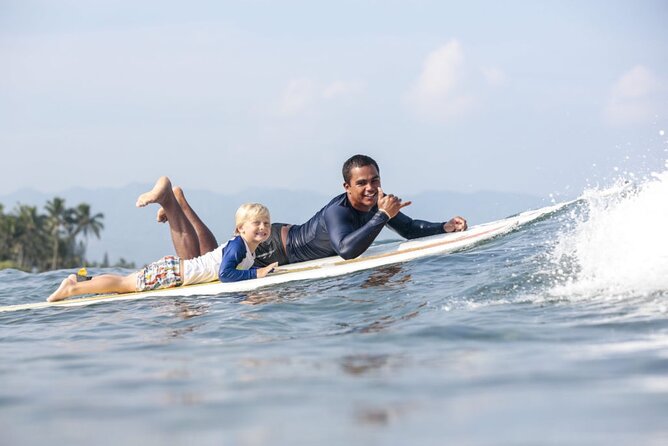
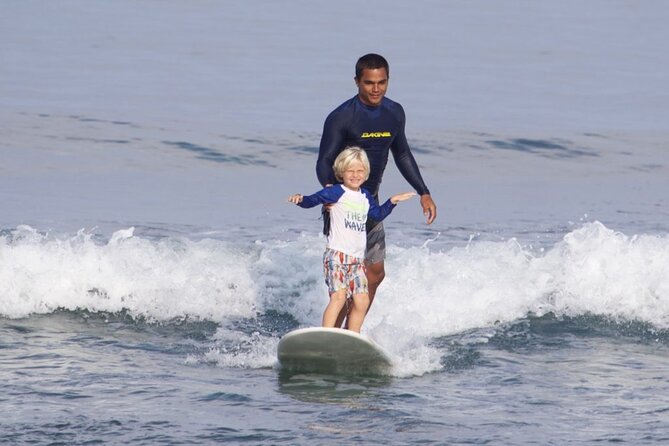
The instruction style is heavily praised for patience. In particular, parents highlighted how instructors didn’t rush kids or push past comfort too fast. One instructor is repeatedly described as helpful with a timid learner and focused on confidence-building, not forcing speed.
Another name comes up often: Micah. He’s described as a lifeguard legend, someone who knows how to teach while also doing the ocean job every day. That kind of background shows up in coaching that blends technique with awareness.
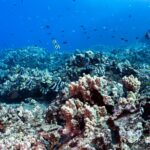
You may also see sea turtles while you’re out. That’s not something you should plan your entire expectations around, but it’s part of why the session can feel more special than a generic lesson.
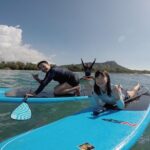
And yes, you’re not just out there on your own. The guides help you paddle out and give feedback to adjust your technique. Getting waves quickly is part of the value. Time on the water is the point of the whole experience.
You can also read our reviews of more tours and experiences in Oahu


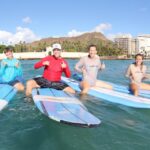
Private and family-friendly: what the group setup really changes
This is a private activity. Only your group participates. That matters because surfing instruction is hard to scale when everyone learns at different speeds.
For families, that one-on-one feel is a big deal. Kids need calm repetition. Adults often need reassurance and quick corrections. Private coaching lets the instructor shift pacing without cutting someone else’s progress short.
From what’s been shared, the coaching works especially well for beginners who want real guidance but don’t want to feel rushed. In one family scenario, an instructor worked with two kids, stayed attentive, and helped them ride waves back toward shore. Another highlight centered on a daughter who was nervous at first, and an instructor who built her confidence step by step.
If you’re traveling with multiple levels in your group, private instruction can be the difference between everyone having fun or everyone waiting in the sand.
Sea turtles and ocean awareness: the “real Hawaii” bonus
Sea turtles aren’t just a nice photo moment. They’re a reminder that you’re sharing the ocean with wildlife and with other surfers. The same surf etiquette you learn on land helps you avoid risky choices in the moment.
This experience keeps ocean safety front and center. You learn ocean knowledge as part of the lesson, not as a lecture you’ll ignore. That’s what makes it feel grounded: you’re not just learning to stand, you’re learning how to behave in the water.
The North Shore setting adds extra atmosphere too. Haleiwa has that mix of local surf expertise and visitor energy. When your guide has lifelong ocean knowledge, you’re more likely to hear practical tips that match what you actually see around you.
Price and value: what $135 per person is buying you
At $135 per person, this isn’t the cheapest thing on Oahu. But it also isn’t an overpriced “bucket list” booking that hands you a board and disappears.
Here’s what you get for the money, in the language that matters:
- 2 hours of instruction, not a short stop
- gear included (board fitting + rash guard)
- ocean safety basics and surf etiquette
- coaching from experienced Hawaiian watermen with CPR/AED training
- a focus on getting you standing and riding today
- private group attention (your group only)
If you’re comparing this to cobbled-together DIY lessons, the value improves quickly. You save time, avoid the guesswork of choosing an appropriate board, and get feedback when you need it most.
For families, pricing is per person. Group discounts are available, which can help when you’re traveling with siblings or a small extended group. I’d treat the final math as part of the decision: if everyone in your group will actually use their time in the water productively, private coaching pays off.
Who should book this and who might hesitate
You should book if:
- you’re a beginner and want coaching that targets standing and riding
- you’re bringing kids and you want patience, not pressure
- you want ocean safety to be part of the lesson, not just a quick note
- you’d rather get real wave practice in 2 hours than stretch learning across half a day
You might hesitate if:
- your schedule is tight and you’re worried about weather-driven changes (this experience requires good weather)
- you expect a long, multi-day progression—this is a 2-hour lesson, so it’s about fast progress and strong basics, not mastering advanced turns
If you’re the type who learns best with direct correction and structured steps, you’re in the right place.
Quick decision guide: should you book?
If you want a surf lesson that feels organized, safety-minded, and focused on you getting on waves, I’d say this is a strong choice. The combination of private group coaching, included gear, and instructors who bring real ocean training makes it a practical value, not just a fun outing.
Book it if your priority is confidence and wave attempts today. Skip it only if you need a guaranteed weather-proof plan or if you prefer a longer, slower learning arc.
In Haleiwa, the ocean is the main event. This lesson is built to help you join that event with less stress and more success.
FAQ
How long is the surf lesson?
The lesson is about 2 hours long.
Where does the experience start?
You’ll meet at 62-449 Kamehameha Hwy, Haleiwa, HI 96712, USA. The activity ends back at the meeting point.
Is gear included?
Yes. The lesson includes surfboard fitting and a long sleeve rash guard.
Who teaches the lessons?
The lessons are led by professional Hawaiian watermen with up-to-date CPR/AED lifeguarding skills.
Is this a private experience?
Yes. It’s private, so only your group participates.
What happens if the weather is bad?
This experience requires good weather. If it’s canceled due to poor weather, you’ll be offered a different date or a full refund.
Is there a satisfaction guarantee?
Yes. If anybody is unhappy at any time during the lesson, you are not obligated to pay.