REVIEW · OAHU
Paddleboard Yoga Class in Honolulu
Book on Viator →Operated by Yoga Floats, LLC · Bookable on Viator
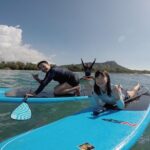
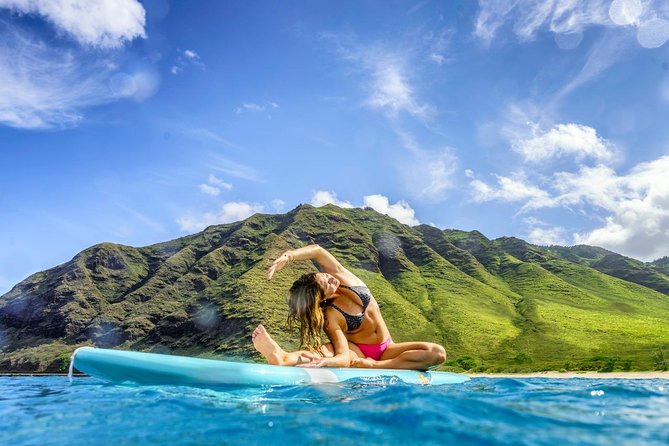
Yoga, but on wobbling water. That’s the whole trick of paddleboard yoga at Ala Moana, where familiar poses get rebuilt for the ocean, then you end with a lying meditation that moves with the waves. I love the small max-10 group feel, which keeps the instructor close for real adjustments. The class is also beginner-friendly without being boring. One drawback to consider: photo rules and add-on costs can be a surprise if you’re expecting to snap your own pics.
After you meet at Yoga Floats (near Ala Moana Beach Park / Magic Island), you start on shore with a quick explanation of balance, centered breathing, and board basics before anyone heads into the water. You then wade to waist-deep depth, drop an anchor, and build up from seated meditation to standing poses. The class is in English, and it’s designed for a moderate fitness level, not for hardcore athletes only.
What makes this especially appealing in Honolulu is the way the ocean becomes the teacher: you’re asked to stay steady while the water does its own thing. Expect safety briefing, a calm-water setup, and a guided flow that still leaves time to try poses that fit your comfort level. Bring your patience for a few tumbles, even if your yoga practice is solid on land.
In This Review
- Key things that make this SUP yoga class feel different
- Where you meet and what the morning (or session) starts like
- The safety briefing that actually helps (not just paperwork)
- Shore-to-water warmup: seated meditation, then kneeling work
- Standing and sun salutations: where you earn the wobble
- Free practice time: the part that helps you personalize the session
- The end you’ll feel in your body: stretching and savasana on a SUP
- Instructors and group vibe: why the max-10 limit matters
- Price and value in Honolulu: what $57.36 buys you
- Logistics that affect your day: location, transport, and water conditions
- Who should book SUP yoga, and who might not love it
- Should you book Paddleboard Yoga with Yoga Floats?
- FAQ
- FAQ
- How long is the Paddleboard Yoga class?
- Where is the meeting point for the class?
- Is the class offered in English?
- What’s included in the price?
- Do I need to have yoga or paddleboard experience?
- How many people are in the group?
- Are children allowed?
- Is transportation to and from the activity included?
- What happens if weather is bad?
- How does cancellation work?
Key things that make this SUP yoga class feel different
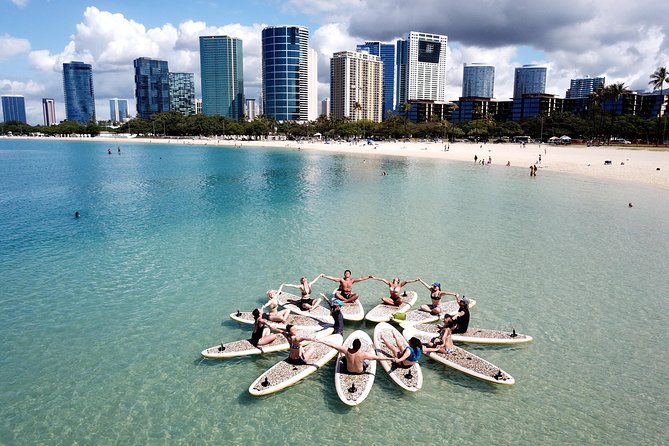
- Small group coaching (max 10): you get more hands-on cues than big-tour SUP yoga.
- Shore lesson first: balance and board control are explained before you stand up.
- Anchor + waist-deep starting point: it’s safer and more comfortable than far-off paddling.
- Balance-focused flow: sitting, kneeling, standing, and sun salutations on a moving board.
- Rocking savasana on the water: a lying meditation with the ocean rhythm.
- Instructors that adjust to ability: beginner-friendly variations and options for experienced yogis.
Where you meet and what the morning (or session) starts like
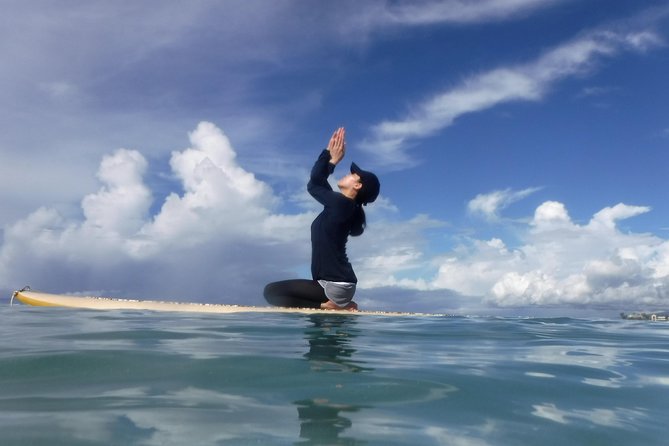
Most days start at Yoga Floats at the Ala Moana Blvd Park area by Magic Island. The exact pin is easiest if you search Yoga Floats on Google Maps, since the meeting point is close to where the shoreline and boardwalk life blur together. You’ll get a mobile ticket, and the class is run in English.
When you arrive, your instructor meets you with the small group setup. You’ll feel the difference right away: with a max of 10 people, there’s room for questions instead of watching from the edge while the instructor works with someone else.
Then comes the on-shore part. Before you step into the water, the instructor explains how to stay balanced and centered on the board. That matters more than you might think, because SUP yoga isn’t just land yoga moved onto a plank. It’s balance plus breath plus tiny corrections, all while the ocean shifts under you.
You can also read our reviews of more tours and experiences in Oahu
The safety briefing that actually helps (not just paperwork)
The instruction starts with safety and technique. You’ll get a briefing on how to handle the board in shallow water and what to do so you’re not fighting the ocean the whole time. Since you begin in waist-deep water, most students can build confidence fast without that far-off “what if I fall” fear.
A key detail is the anchor. After you wade out with your board, the group drops an anchor so you’re not drifting through the whole session. That lets the teacher focus on yoga cues rather than constant repositioning. It also keeps the class consistent, which helps you settle in and actually practice.
One more practical touch: you’ll likely see motion-sickness support mentioned by the team. At least one instructor equipped students with motion sickness bands. If you’re prone to nausea on boats or boards, ask what’s available before you get in the water so you can prep early.
Shore-to-water warmup: seated meditation, then kneeling work
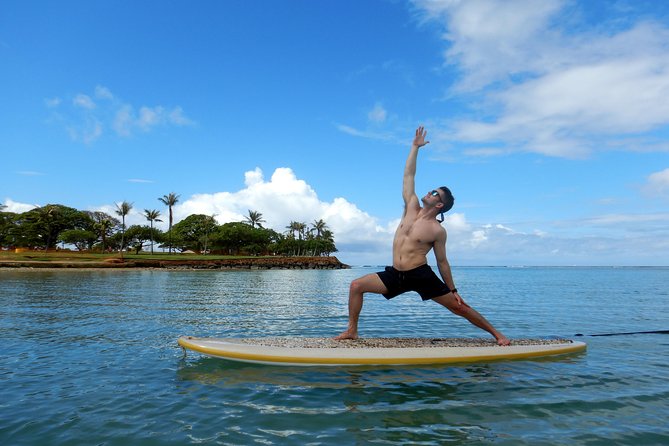
Once you’re in the water, you begin seated on the board with a meditation. This is a smart first move, because it lets your body learn the board’s motion before you ask your legs to do the hard part. Sitting also makes it easier for the instructor to check your stance and board position.
From there, the flow moves into sitting and kneeling positions to warm up. This is where you learn how to use your core and hips to stabilize, instead of gripping with your legs like you’re trying to hang on to a rope. The goal isn’t perfect stillness. It’s steady enough that your breath and alignment don’t collapse.
If you’re a yoga person, you’ll notice the studio logic is still there. But the ocean adds a new “teacher” layer: your balance training happens without the instructor turning it into a separate workout. It stays tied to the poses.
Standing and sun salutations: where you earn the wobble
After the warmup, you stand up and try a few sun salutations. This is the moment most people remember, because standing is where the board stops feeling like a platform and starts feeling like a living surface.
The instructor will guide you through the transitions—often more important than the final pose. When you move slowly and correctly, the ocean feels less dramatic. When you rush, the board feels louder.
The best part is the options. The class is designed for different ability levels, with variations offered so both total beginners and experienced yogis can participate. If you’ve got years of land yoga, you might find it harder in a fun way, because the board asks for balance control you don’t normally practice in a studio.
And yes, falling can happen. One solo rider described falling many times and still calling it smooth and super fun. That’s your reminder that the class isn’t built to punish you. It’s built to teach you how to recover and keep going.
Free practice time: the part that helps you personalize the session
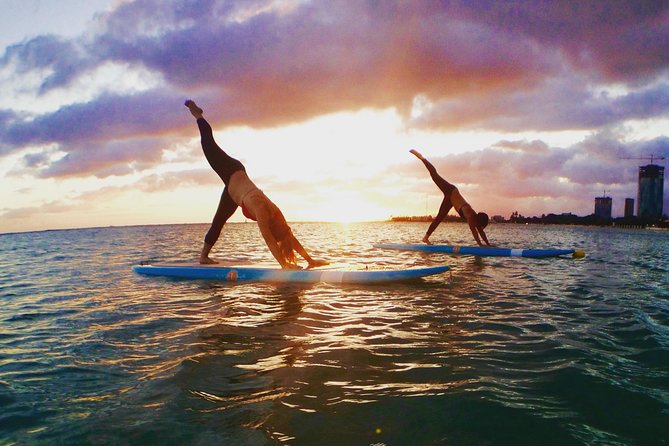
After the guided portion, you get free time to work on poses you care about—either to make them easier, challenge yourself, or simply linger in what feels good. This is valuable because a lot of SUP activities rush from one pose to the next. Here, you actually get a stretch of unscripted practice.
This free time also helps you read the water. If the ocean feels calm in your spot, you’ll naturally stabilize faster. If you feel wobblier, you can shift to poses that keep you grounded.
It’s also a good moment for photos if your guide offers them. Just know the photo experience can be structured. One review criticized the fact that you can’t take your own photos during the class and that photos cost extra. So, if photography is a must for you, treat that as something to confirm up front, not an automatic expectation.



The end you’ll feel in your body: stretching and savasana on a SUP
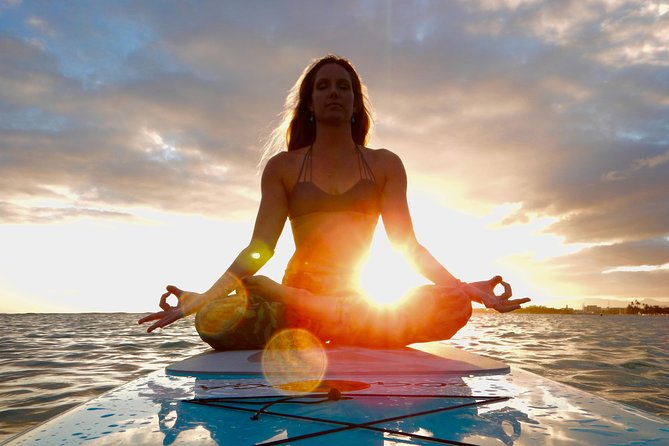
The session closes with deep stretching and a savasana. The twist is that you’re lying down on the board, rocking in the Hawaiian waves. If you’ve done studio savasana, you know the point is release. Doing it on the water adds a gentle, rhythmic motion that can make your mind quiet faster.
Lying down also changes your relationship with balance. Instead of focusing on standing stability, you’re learning to trust that the board, anchor, and your instructor’s guidance will keep you safe enough to let go.
This is the part that makes the class feel more like a real relaxation break than an obstacle course. Even people who found it challenging earlier often love how restful the ending becomes.
Instructors and group vibe: why the max-10 limit matters
In a class like this, the instructor is the product. The good news is that Yoga Floats’ coaches come across as warm, attentive, and willing to adjust the session to the group. Names that have come up include Kelsey, Julie, Emily, Krysta, Stacy, Karin, and Blake—each mentioned with clear praise for supportive teaching and helpful direction.
Small group size is the difference-maker. With up to 10 participants, the instructor can give specific feedback rather than generic statements. You’re more likely to get correct placement cues, and you’ll spend less time wondering what you’re supposed to do next.
It’s also a group vibe that encourages first-timers. One review specifically called it easy for people with no yoga experience. Another mentioned equipment being brand new, which adds to that calm, ready-to-go feeling when you arrive.
Price and value in Honolulu: what $57.36 buys you
The price is listed as $57.36 per person for about 1 hour 15 minutes. That number can look high if you compare it to a yoga class on land. But SUP yoga in Honolulu isn’t a studio rental. You’re paying for gear, skilled instruction, and the logistics of running a safe class at the water.
Also, the included professional guide changes the math. You’re not just renting a board and hoping for the best. You’re getting a structured flow, safety briefing, pose adaptation, and group support designed for real balance learning.
Is it great value? For most people, yes—especially if you want a guided way to try SUP without feeling lost. The small group cap and the coaching quality are what justify the price more than the minutes alone.
One caution: photo add-ons can change the total cost. If you’re the type who wants pictures of every pose, ask what’s included and what costs extra before you commit.
Logistics that affect your day: location, transport, and water conditions
The meeting location is in a popular Honolulu area near Ala Moana Beach Park and Magic Island, which makes it easy to connect with your broader day. It’s also noted as near public transportation. If you’re planning to see Waikiki sites before or after, this start point usually fits into an itinerary cleanly.
You do need good weather. That’s not a small detail with SUP. If conditions aren’t right, the activity can be rescheduled or refunded. On the bright side, when the weather cooperates, the calm-water setup makes it feel far more controlled than it sounds.
Transportation to and from the class is not included. So plan on getting yourself there and back. If you’re already walking or riding around central Honolulu, you’re in better shape than if you’re far out.
Who should book SUP yoga, and who might not love it
This class is a strong fit if you want a fun way to combine stretching, balance practice, and ocean time without needing hardcore paddling skills. You’ll also like it if you appreciate instruction that meets you where you are—beginner-friendly with options for seasoned yogis.
The class calls for a moderate physical fitness level. That doesn’t mean it’s intense. It means you should be comfortable with balance work, transitioning between seated, kneeling, and standing positions, and spending time in the water.
You might consider skipping if you strongly dislike wobbling, feel nervous about being on open water, or have medical issues where balance-on-water is risky. And if you’re sensitive to motion, plan ahead and ask about any motion support your instructor can provide.
Should you book Paddleboard Yoga with Yoga Floats?
Book it if you want an anchored, instructional SUP yoga class in Honolulu that focuses on how to adapt poses to the water. The max-10 group size, the step-by-step start on shore, and the classic end-of-session savasana on the board are the combo that keeps people coming back.
Don’t book it if your priority is cheap and self-directed. This is guided and structured, and you may run into photo limits and paid add-ons. Also, the ocean decides the schedule sometimes, since the class requires good weather.
If you want a peaceful, playful Hawaii activity that feels authentically tied to the water instead of pretending you’re on dry land, this is a great bet.
FAQ
FAQ
How long is the Paddleboard Yoga class?
It’s about 1 hour 15 minutes.
Where is the meeting point for the class?
You meet at Yoga Floats, located at Ala Moana Blvd Park, Honolulu, HI 96814, near Magic Island.
Is the class offered in English?
Yes, the class is offered in English.
What’s included in the price?
A professional guide is included.
Do I need to have yoga or paddleboard experience?
You can join even if it’s your first time. The class includes guidance and options for different experience levels.
How many people are in the group?
The maximum group size is 10 travelers.
Are children allowed?
Children under 17 must be accompanied by an adult.
Is transportation to and from the activity included?
No, transportation is not included.
What happens if weather is bad?
The experience requires good weather. If it’s canceled due to poor weather, you’ll be offered a different date or a full refund.
How does cancellation work?
You can cancel for a full refund up to 24 hours in advance. If you cancel less than 24 hours before the start time, the amount paid is not refunded.