REVIEW · OAHU
North Shore Beginner Surf Lesson, Hawaii
Book on Viator →Operated by Surf N Sea · Bookable on Viator
Surfing lessons start with a push and a plan. This North Shore beginner session pairs real coaching with small-group attention, so you get the rules, the ocean etiquette, and the on-board tips to catch your first waves.
I love that the lesson begins on land with basics like falling safely and how to behave around other surfers. I also love the hands-on way instructors help you paddle out and choose waves once you’re in the water, with coaching that keeps you moving toward standing up.
One thing to consider: there’s no transportation provided, so you’ll need your own drive to the surf spot after meeting at Surf N Sea in Haleiwa. And the activity assumes you can swim and handle water time without panicking.
In This Review
- Key things to know before you go
- Why Oahu’s North Shore is a smart place for your first surf try
- Two hours of progress: what the lesson covers step-by-step
- Waialua Bay and Haleiwa: how the stops shape the experience
- Gear, boards, and what you should bring anyway
- Instructors and small-group coaching that actually helps
- Safety first: etiquette, falling, and surfing rules you’ll use later
- Getting there: meeting point and the no-transport reality
- Price and value: what $104 buys you in real-world learning time
- Who this surf lesson fits best (and who should skip it)
- Should you book this North Shore beginner surf lesson?
- FAQ
- How long is the North Shore beginner surf lesson?
- How much does the lesson cost?
- Where do I meet for the lesson?
- Is transportation provided to the surf spot?
- Do I need to be able to swim?
- What are the rules for children and age?
- What equipment is included?
- Is there a limit on group size?
- Is this lesson recommended if I have back or knee problems?
Key things to know before you go
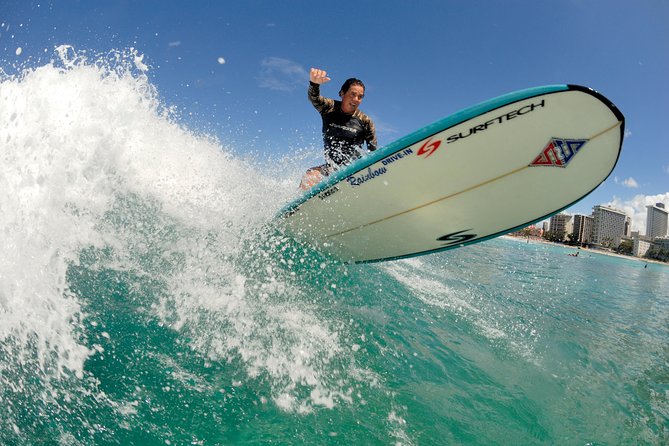
- Small group size (max 4 travelers) means you’re not lost in the crowd.
- All equipment provided including the surfboard, so you don’t need to hunt gear.
- Two-hour format covers land drills, ocean rules, and enough water time to try standing.
- Waialua Bay + Haleiwa stops give you a true North Shore experience while learning.
- Beginner-focused technique covers getting from laying to standing, step-by-step.
Why Oahu’s North Shore is a smart place for your first surf try
The North Shore on Oahu has a reputation for a reason. It’s where surfing culture is front and center, and it’s also where you can learn how the ocean works with a coach looking over your shoulder. That matters, because first-time surfing is not just about courage. It’s about timing, safety, and learning how to move with the conditions.
What I like about this lesson is that it doesn’t treat beginners like a spectator sport. It teaches you the “how” before you ask your body to do the “wow.” You start with basics that connect directly to what happens when you’re out there: falling safely, reading the water, and respecting the flow of surfers and waves.
You also get the fun factor right away. If you’ve dreamed about surfing in Hawaii, doing it on the North Shore with a coach who actually loves teaching is a quick path to confidence. And yes, it’s a little surreal to be learning while the North Shore is doing its thing in the background.
You can also read our reviews of more tours and experiences in Oahu

Two hours of progress: what the lesson covers step-by-step
This is an approximately 2-hour session, split between land practice and ocean time. That structure is the real value for a beginner. You don’t just get dumped into the surf and hoped for the best. You get a plan.
Here’s the flow you should expect:
On land, you get an intro to surfing the right way: rules and proper techniques taught by people who do this often and want you to have fun. You’ll go over falling safely and ocean etiquette. That part might sound boring, but it saves you from scrambling later. It also helps you understand why your instructor keeps correcting small things in the water.
Then you shift to the “how do I actually do this” drills. The lesson focuses on moving quickly from laying to standing using the easiest approach for beginners. You’ll practice catching waves mechanics too, plus what board you should use as a newcomer. Beginner surfboards are designed to make the first successes possible, and your instructor will explain how to use that advantage.
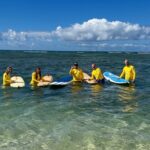
Once you’re in the water, the coaching becomes very practical. Instructors help with paddle technique, timing, and wave selection—so you’re not guessing. Many first-timers are surprised by how much better you do when someone calls out what to look for and where to go next. Several instructors are known for this style of teaching, including Henry, Travis, Eric, Tanner, Mark, and others who keep people calm and moving toward standing.
Waialua Bay and Haleiwa: how the stops shape the experience
Your session runs with two main stops: Waialua Bay and Haleiwa. Even without a long itinerary full of stops, the lesson still feels like a real North Shore outing, not a rushed drive-by.
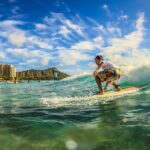
At Waialua Bay, you get the core surf action: instruction, water practice, and the moment you try your first clean run. For beginners, this kind of spot choice is about giving you a setting where you can learn wave basics without going straight into chaos. The coach’s job is to help you work with what you have—wind, swell, wave rhythm—and still get reps.
Haleiwa is the surrounding North Shore vibe that makes the day feel grounded. You meet at Surf N Sea in Haleiwa, and the area sets the tone: surf town energy, lots of ocean people, and the sense you’re doing something local rather than a canned tourist stunt.
The practical takeaway: you’re spending your time where learning happens, not hopping between five unrelated locations. That’s better for your energy and your chances of standing up.
Gear, boards, and what you should bring anyway
Good news: you’re not responsible for bringing a surfboard or chasing down rental gear. The lesson includes the surf board and the equipment you would need. That removes a huge friction point for first-timers.
But you still should think about what goes on your body before you start. The equipment helps you learn, but you’ll still be in the ocean for a chunk of time. One small tip that shows up in real beginner experiences: consider wearing a wet shirt so you’re more comfortable and less irritated by foam board contact. It’s an easy upgrade if you tend to get rubbed up or you know your skin gets grumpy in cold water.
Also plan for the basics that any water lesson demands: water-friendly clothes for after (you’ll likely want to change fast), sun protection, and a bag you trust with wet gear.
And because this is a beginner lesson, your instructor will guide you on which beginner-friendly setup to use. You don’t need to be a gear expert. You just need to show up ready to follow directions.
Instructors and small-group coaching that actually helps
A lesson like this succeeds or fails on the coach. Here, the group is intentionally small: a maximum of 4 travelers. That size matters because it changes the entire teaching dynamic. You’re easier to correct. You’re easier to spot when you need help. And you’re more likely to get a clear answer when you’re confused.
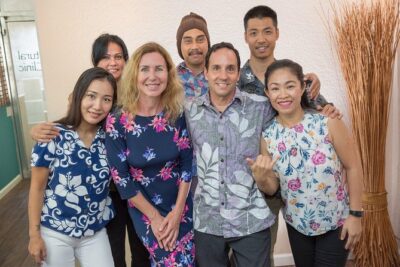
You can also see the teaching style in the way different instructors are described. Henry, for example, is repeatedly praised for being patient and supportive, making it feel safe enough to try again after wipeouts. Travis is highlighted for giving a strong overview before the water and then helping with paddle-out direction and wave spotting. Eric is mentioned as patient and detailed, and Tanner is credited with coaching technique and etiquette in a way that felt personalized.
Those are exactly the skills you want for beginners:
- clear instructions that you can repeat in your head
- encouragement that doesn’t feel fake
- water help that turns uncertainty into next steps
If you’re a solo traveler, this is one of the best ways to get real attention without joining a huge class. If you’re coming as a couple or family group, small size also helps teenagers and adults get the same chance to learn fast.





Safety first: etiquette, falling, and surfing rules you’ll use later
Surfing can look carefree from shore. Out there, it’s a sport with rules, and you’ll learn the basics before you paddle out.
The lesson starts with safety topics on land. You’ll cover falling safely, which is a big deal because injuries often happen when people panic and stiffen up. You’ll also learn ocean etiquette, the stuff that keeps everyone from colliding or creating risky situations.
In the water, instructors help with wave selection and positioning. They also help you figure out where you should be trying to catch waves—so you’re not taking a random gamble. This is one reason beginners often improve quickly in this format: the coach reduces guesswork.
One more safety reality to respect: this lesson is not for everyone. It’s not recommended for travelers with back or knee problems, and it also notes no recent surgeries. If you have mobility limits, talk to your doctor first and consider a gentler activity. Surfing is controlled effort, but it still involves paddling, balance, and sometimes getting knocked around by water.
Getting there: meeting point and the no-transport reality
You meet at 62-595 Kamehameha Hwy, Haleiwa, HI 96712. The lesson ends back at the meeting point.
Here’s the part you need to plan early: no transportation is provided. That means you’re driving from Surf N Sea to the surf spot location yourself. If you’re staying on the North Shore, this may be easy. If you’re coming from the other side of the island, add travel time to your schedule.
Also, build in a buffer for getting everyone together and getting parked. Beginner surfing lessons already have enough moving parts. You don’t want the day derailed by last-minute driving stress.
One more quick heads-up: the lesson is offered with morning or afternoon options. If you’re choosing between them, pick the time that best fits how you handle heat, sun, and energy levels. You’ll be in and out of the ocean, so your body will appreciate a schedule that makes sense.
Price and value: what $104 buys you in real-world learning time
At $104 per person for around 2 hours, this isn’t a bargain price. It’s also not “tourist snack” pricing. The value comes from what you get that self-guided rentals can’t give you:
- equipment supplied (board and gear)
- land instruction that teaches the fundamentals first
- coached reps in the water so you learn faster
- small-group attention (max 4)
- safety + etiquette guidance, which reduces mistakes
For many beginners, the biggest cost isn’t money—it’s time and frustration. Without coaching, you might spend the whole day wiping out and questioning every decision. With instruction, you’re more likely to catch waves and stand up sooner, which makes the lesson feel worth it even if the ocean conditions aren’t perfect.
The other value point: you can make your next steps easier. When you learn wave basics, board usage, and the rules of the lineup, you’re setting yourself up for future surfing sessions on your own. That future payoff is part of why people recommend this kind of beginner class so strongly.
Who this surf lesson fits best (and who should skip it)
This lesson is a strong match if:
- you can swim
- you’re okay with moderate physical activity
- you want a coached first experience with a small group
- you’re traveling to Oahu and want a North Shore “this is happening” moment
It may not be the best choice if:
- you have back or knee problems
- you’ve had recent surgeries
- you’re not comfortable in the water yet
There’s also an age rule that affects family planning: group surf lessons are for children 13 years old and above. If your child is under 13, they’re required to have a private lesson.
If you’re a parent with older kids, this kind of group setting can work well. It gives them structured coaching plus a little peer energy. If you’re a parent with a younger child, you’ll need to switch to the private option to meet the requirement.
Should you book this North Shore beginner surf lesson?
I’d book it if you want the simplest path to trying surfing with safety coaching, equipment included, and enough time in the water to actually learn. The small-group format is a real advantage, and the instructors’ style—patient, focused, and supportive—hits the exact nerve beginners need.
Skip it or reconsider if you can’t swim, have mobility limits (back or knee issues), or you’re counting on transport to get you to the water. Driving yourself is part of the deal here, so plan for it.
If you’re on Oahu for a short trip and you want a high-value “I did that” activity that’s still hands-on, this is one of the better ways to spend a morning or afternoon on the North Shore.
FAQ
How long is the North Shore beginner surf lesson?
It runs about 2 hours (approximately).
How much does the lesson cost?
The price is $104.00 per person.
Where do I meet for the lesson?
Meet at 62-595 Kamehameha Hwy, Haleiwa, HI 96712, USA.
Is transportation provided to the surf spot?
No. You need to drive from Surf N Sea to the surf spot location.
Do I need to be able to swim?
Yes. You must be able to swim for this experience.
What are the rules for children and age?
Group surf lessons are for children 13 years old and above. Children under 13 require a private lesson.
What equipment is included?
You’ll get a surf board and all the equipment you would need.
Is there a limit on group size?
Yes. The maximum group size is 4 travelers.
Is this lesson recommended if I have back or knee problems?
It is not recommended for travelers with back or knee problems, and it also notes no recent surgeries.