REVIEW · OAHU
North Shore Stand-Up Paddleboard Lesson
Book on Viator →Operated by North Shore Surf Girls - Surf School · Bookable on Viator
Glassy rivers beat the beach rush. This 2-hour North Shore stand-up paddleboard lesson teaches balance from the first moment you’re on the board, then takes you up the Anahulu River for calm paddling and sea turtle sightings. Instructors like Aimee and Charlotte keep it friendly and focused, especially if you’re brand new.
One thing to plan for is the meeting area. Parking near the launch can be a bit tricky, so arrive early and don’t assume you’ll coast in at the last second.
In This Review
- North Shore SUP lesson highlights you’ll feel right away
- North Shore stand-up paddleboard lesson: calm water, real instruction
- The 2-hour plan: practice first, then peaceful river time
- Getting balanced fast: how the instruction tends to work
- The Anahulu River ride: brackish water, near-effortless current
- Turning at the river end: about 60 minutes up, then back to the bay
- Banzai Pipeline and North Shore stops: the scenery without the scramble
- Sea turtle spotting: how to make it happen without losing your balance
- Small-group semi-private energy: 2–4 students per instructor
- Where you meet near Haleiwa Harbor, and how to plan your time
- What’s included (and what’s not) so you can pack smart
- Price and value: $80.13 for gear plus coaching in calm water
- Who should book this North Shore SUP lesson
- Quick tips to get the most from your time on the river
- Should you book it? My honest take
- FAQ
- How long is the North Shore SUP lesson?
- Where does the lesson start and end?
- What’s included in the price?
- What is the minimum age for the small-group lesson?
- Do I need to bring food or does the tour include it?
- What happens if weather is bad, or if I cancel?
North Shore SUP lesson highlights you’ll feel right away
- Small groups (2–4 per instructor): you get hands-on help instead of being one face in a crowd
- Knee-to-stand skill building: you start stable, then move to standing as you gain confidence
- Anahulu River brackish water: calm, beginner-friendly paddling with a strong chance of marine life
- Quiet “go upriver” rhythm: the trip toward the river end takes about an hour, then you turn back
- North Shore scenery stops: the route includes the North Shore feel and a look toward Banzai Pipeline
North Shore stand-up paddleboard lesson: calm water, real instruction
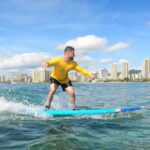
If you’re doing Oahu for sun and waves, you still need one break from the big-energy beach scene. A North Shore SUP lesson on the Anahulu River gives you that calmer side of Hawaii—water that feels glassy, a current that doesn’t fight you, and an instructor who can correct your stance before you even get frustrated.
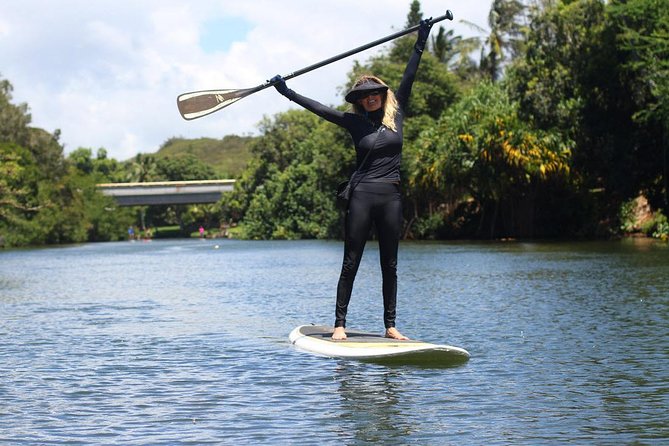
The value here isn’t just that you paddle. It’s that you learn to stay balanced and move smoothly. The lesson is set up for first-timers, with the kind of coaching that helps kids and adults who have never even tried a SUP board. You’re given the equipment, including a surf shirt, plus an experienced instructor who keeps the group moving at a safe pace.
And because this is the North Shore, it still feels like Hawaii. You’re not stuck in a backyard pool. You’re on the route between Haleiwa and Waialua Bay, in that mix of fresh and saltwater that creates the brackish tones people come for.
You can also read our reviews of more tours and experiences in Oahu
The 2-hour plan: practice first, then peaceful river time
This outing runs about two hours from start to finish. That time matters, because it’s long enough to learn the basics without rushing you into “good luck out there” mode.
You start near Haleiwa Harbor, at the mouth of the Anahulu River. From there, the plan is simple: learn your balance and paddle basics, then travel upstream. The river is the main event, and you’re there long enough to feel the difference between “trying to stand” and “actually cruising.”
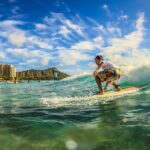
There’s also flexibility built in. A common rhythm is practicing stability on the board, then moving into a gentle touring pace. If you want, you can also try riding small waves in the bay at the end when conditions allow. That’s a fun bonus for people who want a little ocean energy without signing up for true surf pressure.
Getting balanced fast: how the instruction tends to work
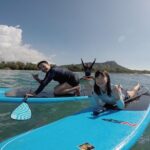
The first goal is stability. Even if you’ve never stood on a paddleboard before, you’ll usually get a quick start that avoids panic. A typical progression you can expect is starting lower on the board—often kneeling—so you can learn how the board moves under you. Then you practice balancing with the paddle in hand.
This matters because SUP beginners often fail for one reason: they try to stand too early. When you’re guided through it step by step, the board stops feeling unpredictable and starts feeling like a tool you can control.
You also learn paddle timing. Small changes—where your feet sit, how you plant the paddle, and how you rotate your torso—make a big difference on a moving river surface. With a small group, you can get corrections in real time instead of waiting for the instructor to finish a talk for everyone.
If you’re bringing family, this is where the lesson shines. People doing it with different skill levels are kept together and safe, with instructors staying patient when someone needs a slower pace.
The Anahulu River ride: brackish water, near-effortless current
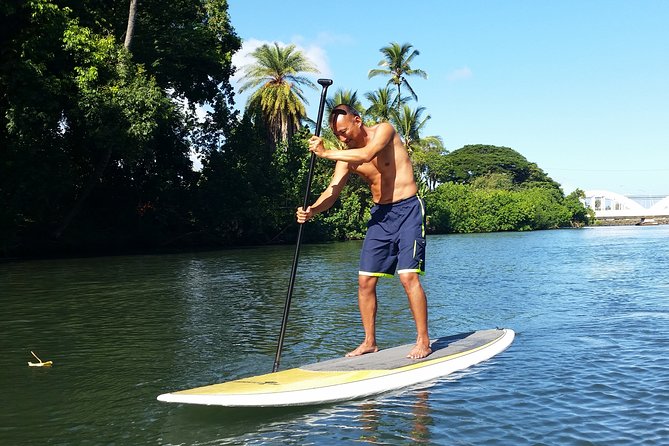
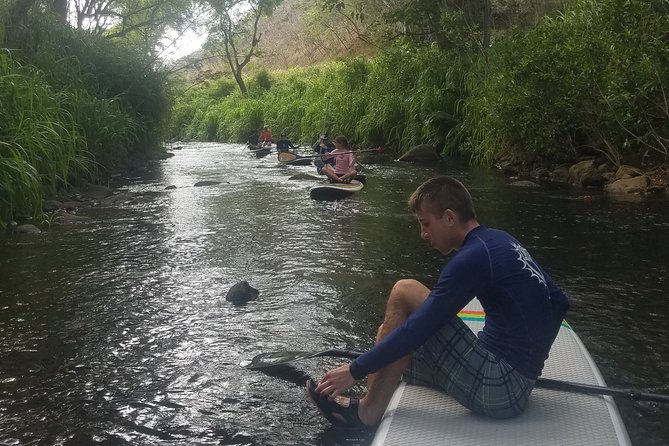
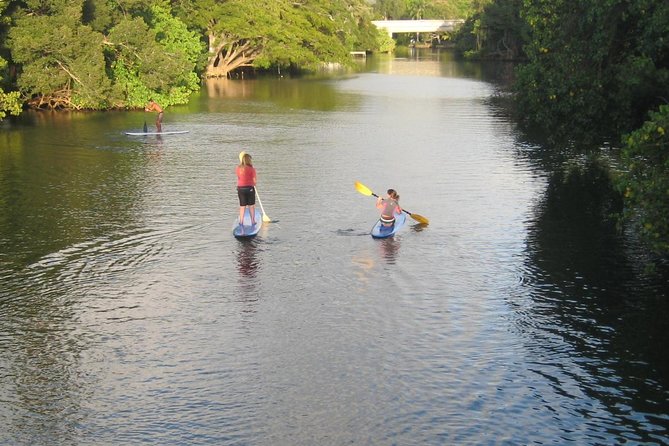
Once the basics are set, the river experience is where this stands out in the best way: it’s calm. The current is described as slight, which means you’re not working like crazy to keep forward momentum. Instead, you glide and focus on your balance.
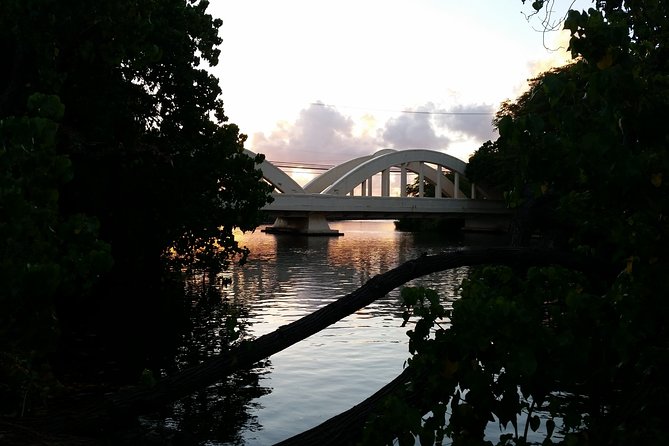
The Anahulu River feeds into Waialua Bay from the Koolau Range. Along the way, the water’s brackish—part fresh, part salt—and it can look a little different from the typical ocean blue. That mix is one of the reasons people love this stretch: it feels more secluded and more “nature first.”
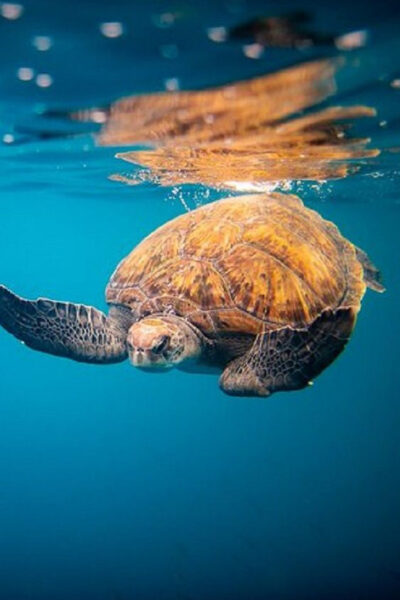
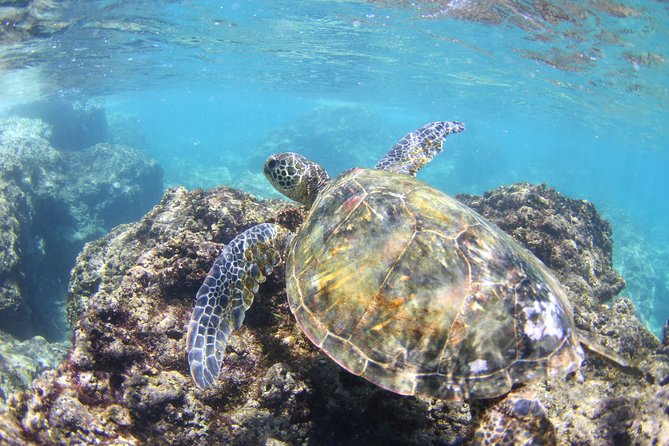
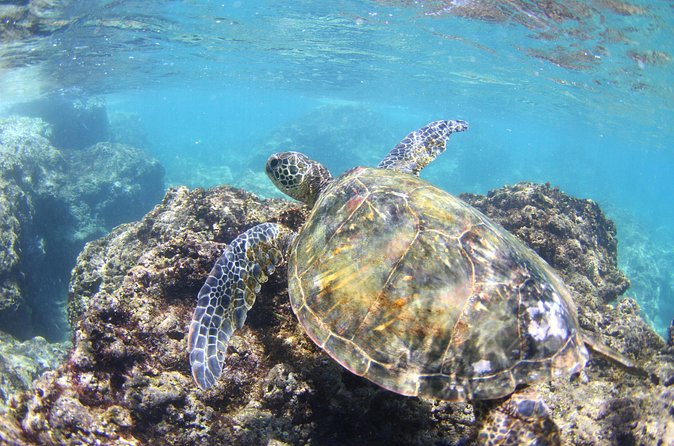
You also have a strong wildlife payoff. Keep your eyes open for sea turtles. On this route, you might spot turtles resting along the side of the river or moving quietly below the surface. The pace is slow enough that you can enjoy it rather than treat sightings like a race.
And the wildlife theme isn’t just hype. Instructors on this route keep the mood relaxed, so it’s easy to look up. When your board is stable, your attention can move from your feet to what’s around you.
Turning at the river end: about 60 minutes up, then back to the bay
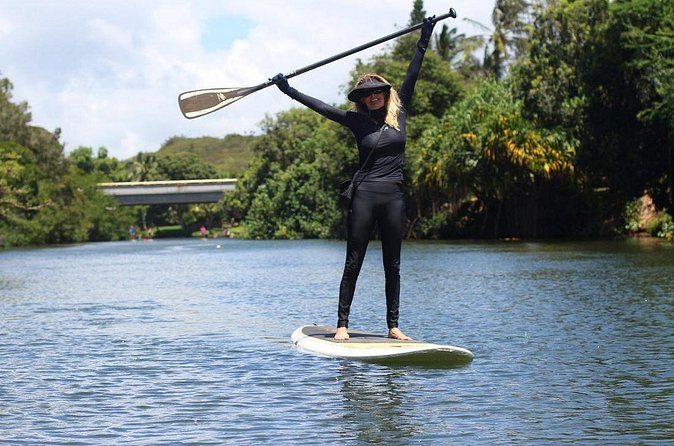
A journey up to the river’s end takes about 60 minutes. That’s a sweet spot for beginners because you’re not stuck doing nonstop “figure it out” time. You have a full half-hour to build confidence, then an hour to settle into cruising.
At the end, you turn around and follow the gentle current back toward Waialua Bay. That return trip is often the part where people start to feel like SUP is actually fun, not just work. Your body remembers the earlier balance practice, and you stop thinking so hard about every correction.
This up-and-back structure also makes timing easier for families. Kids aren’t exhausted after 20 minutes, and adults aren’t stuck paddling in circles to fill time. It’s a clear path with a real turnaround moment.



Banzai Pipeline and North Shore stops: the scenery without the scramble
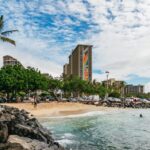
Even though this is primarily a water lesson, the outing includes North Shore scenery stops. You’ll see the Banzai Pipeline area as part of the route, plus North Shore viewpoints along the way.
That’s a nice balance. You’re not just doing a full-on river day with zero North Shore context. You get a sense of where you are on Oahu—the famous surf coast—without having to surf it.
Just remember: the water portion is the core. If you’re expecting a big sightseeing tour, you’ll be happier thinking of this as a SUP experience with a light scenic flavor, not a land tour with stops every 15 minutes.
Sea turtle spotting: how to make it happen without losing your balance
Seeing turtles is a real possibility here, but it’s not magic—your chances improve when you paddle calmly. The best approach is to keep your head up as you glide and avoid sudden body moves when you spot something.
A simple strategy: when you think you’ve got a sighting, slow down your paddling. Don’t yank the paddle out of the water. Keep your stance steady and give your eyes time to confirm the movement.
Also, the group pacing helps. With small groups, you’re less likely to get “pulled along” by constant passing. That gives you room to watch without feeling like you’re falling behind.
Small-group semi-private energy: 2–4 students per instructor
The lesson is set up to keep the coaching personal. Small-group options keep you limited to about two to four students per instructor, and the total group size is capped at 10 travelers.
That’s what you want on a beginner activity. A big group can turn instruction into a one-size-fits-all talk. Here, you’re more likely to get specific feedback—like foot placement and paddle angle—while you’re still learning.
Family lessons are a great match because different people start at different levels. Instructors can stay patient when someone needs extra time to stand or when older kids and adults have different comfort levels.
It also makes the experience more relaxed. Instead of feeling like you’re in a line, you feel like you’re learning in a small crew.
Where you meet near Haleiwa Harbor, and how to plan your time
You’ll meet at 62-611 Kamehameha Hwy, Haleiwa, HI 96712. The day ends back at the same meeting point.
This matters because hotel pickup isn’t included. You’re responsible for getting yourself there. The route is in a busy tourist area, and parking can be tricky, so build in time to get settled before your scheduled start.
If you’re coming with family, I’d treat this as a “show up early” activity. Not because the lesson is chaotic—because it’s smoother when everyone starts calm.
What’s included (and what’s not) so you can pack smart
The price includes the important stuff:
- SUP board
- Paddle
- Surf shirt
- An experienced instructor
What’s not included:
- Food and drinks
- Hotel pickup and drop-off
For most people, that means you should plan a simple pre-lesson routine: drink water, eat something that won’t upset your stomach, and then show up ready to go.
For clothing, bring a swimsuit or something you don’t mind getting wet, and wear sun protection. Sunglasses with a strap help, and a hat or other coverage is smart. The river time is calm, but the sun on Oahu is not.
Also, think about the “after” moment. If you’re in swim gear, you’ll want a way to change out of wet clothing afterward.
Price and value: $80.13 for gear plus coaching in calm water
At about $80.13 per person for roughly two hours, this is priced like a real instruction activity, not just a rental. That’s where the value is.
You’re not paying only for a board. You’re paying for:
- teaching you how to stand safely
- helping you paddle efficiently
- guiding you through a scenic route where conditions are suitable for beginners
- small-group attention that keeps the experience from turning into a self-guided gamble
If you’ve been thinking about trying SUP in Hawaii but worry you’ll flounder, paying for instruction is usually worth it. It reduces the risk of feeling embarrassed or stuck in the shallow end—because the lesson is structured to help you succeed quickly.
You might also compare this to surf lessons or more ocean-heavy SUP tours. This one leans toward calm, river-like conditions, which can be a huge factor for families and first-timers.
Who should book this North Shore SUP lesson
This is a strong fit if:
- you’re new to SUP
- you want a workout that feels manageable, with a lot of time to relax
- you’re traveling with kids (minimum age for small-group lessons is 8)
- you care about nature and wildlife, especially sea turtles
- you want small-group attention rather than a large crowd experience
You might reconsider if:
- you expect mostly ocean surfing or a high-adrenaline route
- you hate being out in direct sun and haven’t planned shade or water
- you don’t have a way to reach the meeting point near Haleiwa (since pickup isn’t included)
Quick tips to get the most from your time on the river
- Bring sunglasses with a strap so you’re not chasing them with one hand
- Wear a hat or sun protection that stays put while paddling
- Choose swimwear or quick-dry layers you’re comfortable getting wet
- Arrive early to handle parking without stress
- Keep your body relaxed on the board. Tension makes balancing harder
Should you book it? My honest take
Book this if you want a beginner-friendly North Shore experience that feels distinctly Hawaiian but still relaxed. The combination of calm river conditions, a clear progression from stability to standing, and the chance of sea turtles makes it a great pick for first-timers and families.
Skip it only if you want a surf-heavy ocean day or you’re struggling with logistics around getting to Haleiwa on your own. Otherwise, this is the kind of activity that teaches you a skill and gives you a story beyond the usual beach snapshots.
FAQ
How long is the North Shore SUP lesson?
It’s about 2 hours.
Where does the lesson start and end?
The activity starts at 62-611 Kamehameha Hwy, Haleiwa, HI 96712, USA and ends back at the same meeting point.
What’s included in the price?
The price includes equipment (stand-up paddleboard, paddle, and surf shirt) and an experienced SUP instructor.
What is the minimum age for the small-group lesson?
The minimum age is 8 years.
Do I need to bring food or does the tour include it?
Food and drinks are not included, and there’s no hotel pickup and drop-off either.
What happens if weather is bad, or if I cancel?
The experience requires good weather. If it’s canceled due to poor weather, you’ll be offered a different date or a full refund. You can cancel for a full refund up to 24 hours before the start time.