REVIEW · OAHU
Learn to surf with a local big wave rider on the North Shore of Oahu
Book on Viator →Operated by Chance King · Bookable on Viator
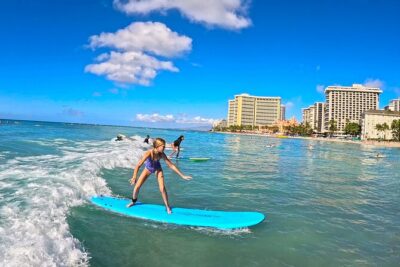
A first surf lesson can feel like chaos. This one runs on calm coaching and real North Shore experience. You learn from Chance King, a north-shore lifer and a big-wave surfer who also teaches with patience. The format is simple: a short safety talk, then smart coaching in the water so you can actually stand up and ride.
What I like most is the guarantee—you’re promised you’ll get up and riding, and if you’re not enjoying the session you get a 100% refund. I also love how the lesson is designed around what beginners need: how to stand, how to read the break, and how to move through the lineup without panic. That said, you’ll want decent stamina for swimming and paddling, because surfing is work even when it’s fun.
This is a private session for just your group, run in English, starting at Kahalewai Place in Haleiwa. Plan for about 1 hour 30 minutes, and remember the lesson depends on good weather and suitable conditions.
In This Review
- Key highlights before you go
- Surf coaching on Oahu’s North Shore, starting in Haleiwa
- The beach briefing: how you’re taught to stand and navigate
- Getting up and riding: the coaching style that keeps you moving
- How instructors choose the break for beginners (and why it matters)
- What “local big-wave rider” brings to your first surf session
- Expect a real group session, but with room to breathe
- Safety, sea-sickness, and keeping you comfortable
- What to wear and bring for board-burn-free learning
- Timing on Oahu: when to book for easier learning
- Value for 90 minutes: why this feels like more than a quick taster
- Who should book this surf lesson, and who should rethink it
- Should you book Haleiwa Surf Surf School with Chance King?
- FAQ
- FAQ
- How long is the surf lesson?
- Where do we meet for the lesson?
- Is this lesson private?
- What language is the instruction in?
- What happens at the start of the lesson?
- Do beginners get to ride waves?
- What if I’m not enjoying the session?
- Does the session run in bad weather?
- What’s the cancellation window?
Key highlights before you go
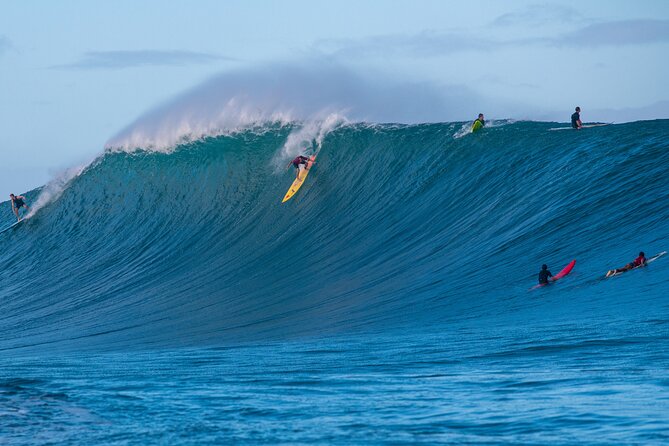
- Local big-wave knowledge from Chance King, not generic surf theory
- 15–20 minute beach briefing focused on safety and how to move on the board
- A guarantee to get riding, plus a 100% refund if you’re not enjoying it
- Small-group feel even when you’re several people—more attention, fewer wait cycles
- Beginner-friendly break choice with less crowding when possible
- Practical coaching in the water, with instructors like Caleb and Charlotte/Charolette supporting hands-on help
Surf coaching on Oahu’s North Shore, starting in Haleiwa
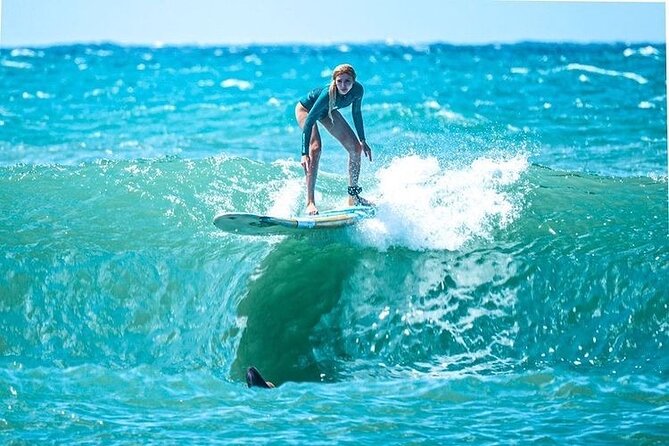
North Shore surfing has a reputation for big energy. This lesson keeps that magic, but it aims it at you getting results fast. The vibe is Aloha—friendly, direct, and focused on safety—so you’re not stuck in a long class before you ever touch the water.
You meet at Kahalewai Place in Haleiwa, and the session loops back there when it’s done. The total time is around 1 hour 30 minutes, which is short enough to fit a day, yet long enough for real learning. It helps that the experience is private for your group, so you’re not sharing your instructor time with random strangers.
Chance King is the owner of Haleiwa Surf Surf School. He’s north shore born and raised and has spent a lifetime around the ocean, including big-wave and tube-riding experience. That matters because even for beginners, the ocean isn’t just scenery—it’s currents, surf angles, and timing. You get coaching that sounds like it comes from being on the water all the time, not from a script.
You can also read our reviews of more tours and experiences in Oahu.


The beach briefing: how you’re taught to stand and navigate
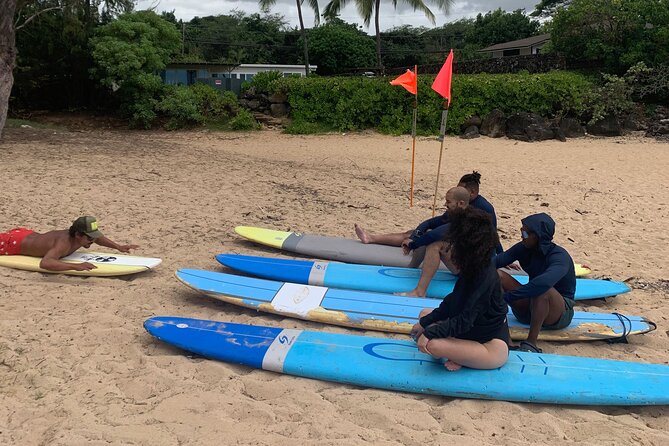
Before you ever paddle out, you get a short beach instruction and safety briefing, typically 15–20 minutes. This part is where many beginner lessons win or lose. Here, it’s built to set you up with the basics that directly affect whether you pop up or face-plant.
You’ll learn how to properly stand on the board. Not just stance in theory—more like the cues your body needs so you can actually execute it once a wave gives you a chance. You’ll also learn how to navigate the surf break, which is beginner gold. Getting in the right spot and timing your attempts can be the difference between stress and fun.
I like that the briefing includes practical movement, not just warnings. Your instructor also helps you understand what to do when conditions change. That’s important on the North Shore, where the ocean can shift quickly from playful to powerful.
And yes, you’ll hear safety guidance. The session is clearly built around keeping you comfortable while still getting you real waves.
Getting up and riding: the coaching style that keeps you moving
Here’s the promise that sets this lesson apart: you’re guaranteed to get up and riding during your session. If you aren’t enjoying it, the school says you’ll get a 100% refund. That doesn’t mean every wave is perfect. It means the instruction is geared toward outcomes, not just participation.
In practice, that usually comes from how instructors manage your attempts. Instructors are quick to get you in the water and quick to adjust when something isn’t working. People describe being supported the whole time, with tips that are specific enough to change your next try.
You can also feel the difference between a true beginner lesson and a “watch your turn” vibe. Instructors will place you and guide your wave selection. That reduces time lost to waiting, which makes the lesson feel like it’s happening for you, not around you.
One-on-one is mentioned directly as a benefit by people who booked. When your coaching time is more focused, you tend to get more rides—because you’re correcting faster and spending less energy on guesswork.
How instructors choose the break for beginners (and why it matters)
Not every spot is beginner-friendly. The North Shore has variety—different breaks, different crowd patterns, different levels of power. A big deal here is that the instructors appear to choose a beginner-oriented break that fits your group.
In the experience I’m describing, one review highlights that the beach Chance chose was great for beginners and wasn’t very crowded. Another point: people suggested scheduling an earlier time in the day and blocking out your whole day because it’s a lot of fun. That’s not a rule, but it lines up with a common reality on the North Shore: conditions and crowd levels can swing.
So what should you do with this? If you’re new, you want the lesson to feel like learning, not survival. Ask yourself if you’re okay with strong ocean energy. If you want a smoother start, aim for times when conditions and crowding are likely to be calmer.
Even if you don’t control the exact break, the fact that the school is selecting for beginners tells you they’re thinking about comfort first, then progress.
What “local big-wave rider” brings to your first surf session
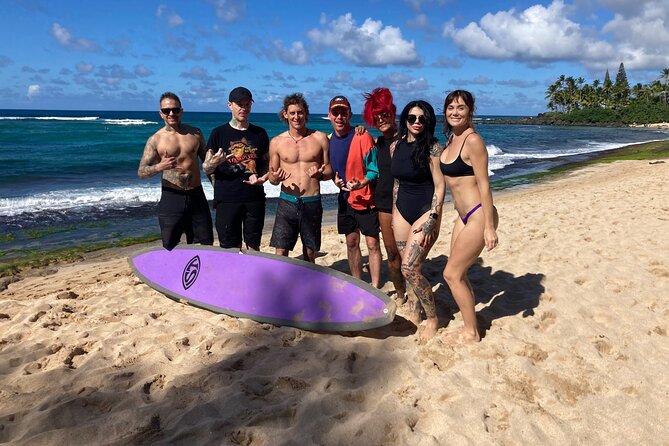
Big-wave experience can sound like it belongs on a different planet than a first lesson. But the value shows up in the details.
A rider like Chance is used to reading the ocean: where sets are likely to land, how the lineup behaves, and how to keep yourself safe while you’re surrounded by waves. Even if you’re not chasing barrels, that ocean-reading skill helps you understand where to sit, when to paddle, and how to respond if the wave timing doesn’t match your first instinct.
The teaching also has an honest edge. Reviews mention patience, pointed advice, and a chill approach. That combination is powerful. Surf is physical and also mental. Too much pressure can freeze you. Too little structure can waste time. This lesson seems to strike a balance.
You may have additional instructors supporting you, including Caleb and Charlotte/Charolette. That matters when you’re in a group of multiple students, because someone can stay especially attentive to a learner who needs extra reassurance or help timing a set.



Expect a real group session, but with room to breathe
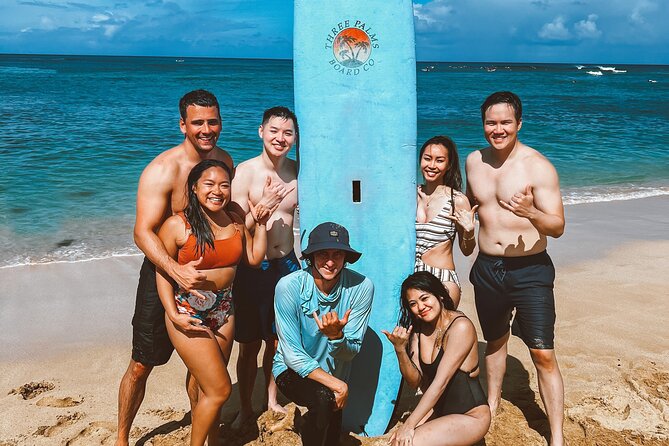
This is not a massive public class. It’s described as a private tour/activity, meaning only your group participates. That tends to produce a better experience because your instructor can manage your flow and adjust for everyone’s pace.
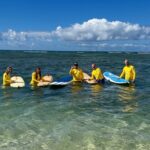
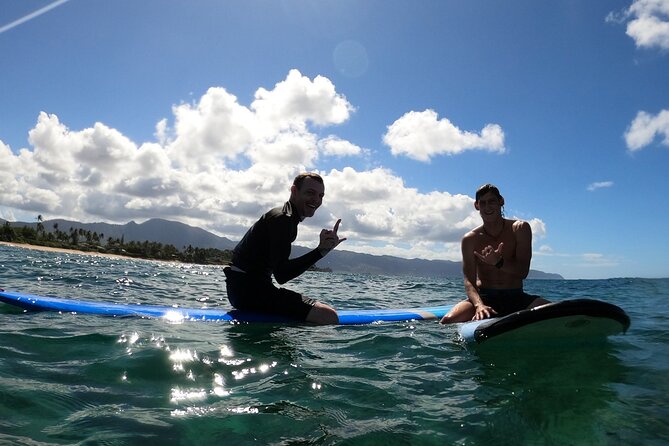
At the same time, some reviews mention groups of around four people, and people describe getting multiple surfs per person—often several rides with rest in between. That rest is part of why this works. You’re not exhausted before you ever find rhythm.
One of the best practical advantages of smaller group structure is that feedback happens faster. When you’re not waiting too long between attempts, your learning curve improves in real time. You can feel the difference after each correction.
So if you’re thinking about doing this as a couple, as a small family unit, or with friends, it can fit well. It also seems like it’s set up for mixed-ability beginners, since instructors can stay close to whoever needs extra guidance.
Safety, sea-sickness, and keeping you comfortable
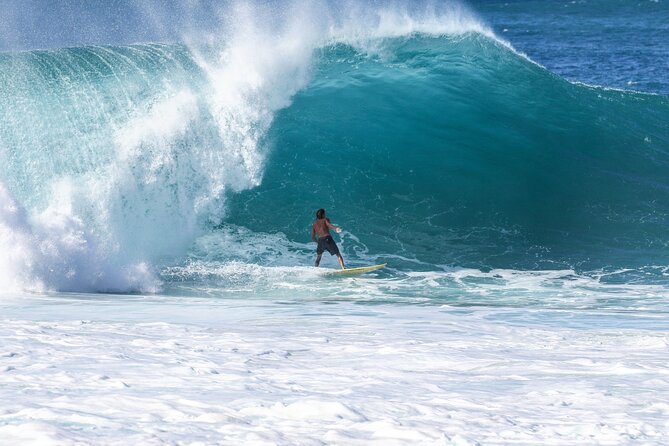
Surfing can trigger nervousness, and sometimes even motion sensitivity. One review mentions one person getting sea sick. The instructor brought her back to shore and made sure she was okay. That is the kind of response you want in a lesson—fast care, clear action, and no judgment.
There’s also practical safety guidance around board burn and how to dress. One review recommends wearing a one-piece and something covering your thighs. That’s not style advice; it’s comfort. Board rash is real, and covering up can make the difference between enjoying the session and thinking about pain.
Instructors also stay close while you’re learning. That “safe the whole time” feeling shows up across reviews. You’re still out in the ocean, so conditions are natural and unpredictable—but the teaching structure seems designed to keep you from spiraling into unsafe behavior.
What to wear and bring for board-burn-free learning
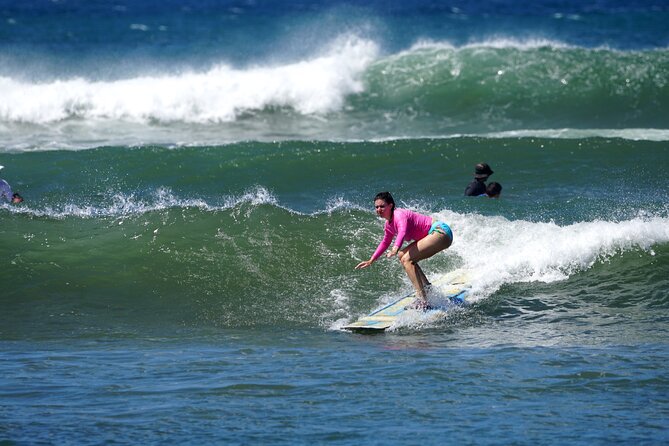
You don’t need much gear. You do need the right clothing so your body can handle repeated paddling and popping up.
Based on what worked for first-timers, I’d pack for this:
- Wear a one-piece if you can, and bring something that covers your thighs to reduce board burn
- Bring something to cover up a bit after you’re done, since you’ll be wet and salty
- If you’re prone to motion sensitivity, plan accordingly and speak up early so instructors can watch for signs
You might also want sunscreen that won’t irritate your face too badly, and a way to keep your belongings secure before and after. The listing notes the session is in English, but nothing says anything about equipment beyond what’s needed to surf. So plan like you’ll bring personal comfort basics and let the school handle the surf setup.
The key is to dress for friction and water, not for looking perfect.
Timing on Oahu: when to book for easier learning
On the North Shore, timing affects crowd levels and how the surf feels. People suggest scheduling earlier in the day and blocking out more time because it’s fun enough that you’ll want to keep going once you’re in the groove.
I’d treat that as advice for your plan, not pressure on the instructor. If you book earlier, you may find it easier to focus when the beach and lineup are calmer. If you book later, you might still have a great lesson—but you could experience more variables like crowding or shifting set rhythm.
If your schedule is tight, still book. A good instructor can work with conditions. But if you have flexibility, early sessions can feel smoother for first-timers.
Value for 90 minutes: why this feels like more than a quick taster
You’re paying for coaching, time in the water, and an instructor’s ability to match you with the right waves. This lesson is built around a short time window—about 1 hour 30 minutes—so you don’t spend your day waiting on instruction.
The best part is what the school commits to: you’re guaranteed to get riding. That’s not just marketing fluff. Surf lessons often fail beginners by focusing on technique drills without actual wave connection. Here, the structure seems designed to get you into wave after wave as you improve.
There’s also a refund option if you aren’t enjoying the session. In real life, refunds rarely happen because instructors work hard to make it enjoyable. But the guarantee changes the dynamic. It signals that the school is willing to adjust if the lesson isn’t landing.
Another value factor: group discounts. If you’re going with friends or family, that can reduce the per-person cost compared with private lessons elsewhere. And because the session is private for your group, you keep the attention rather than being diluted across a large class.
Who should book this surf lesson, and who should rethink it
This fits best if:
- You’re a first-timer who wants to get standing quickly
- You want patient coaching and clear safety guidance
- You like small-group attention and a calm, local approach
- You’re traveling with family or a few friends and want everyone to get real wave time
It may be less ideal if:
- You can’t do moderate physical effort in water (paddling, getting back up, repeating attempts)
- You strongly prefer highly theoretical lessons over hands-on ocean time
- You don’t want any possibility of motion sensitivity, since ocean riding can affect some people
Most travelers can participate, and service animals are allowed. It’s also near public transportation, which helps if you’re planning to get around Haleiwa easily.
Should you book Haleiwa Surf Surf School with Chance King?
If you want a first surf lesson that treats your safety seriously, focuses on getting you riding, and uses real North Shore experience, this is a strong pick. I especially like the combination of a short beach briefing, quick adjustments in the water, and the promise that you’ll stand up and enjoy the waves.
Book it if you want the feeling of learning from locals, not a generic program. And book it if you want a lesson that can handle different learner speeds—because instructors seem ready to stay close to whoever needs extra attention.
I’d think twice if you’re expecting a slow, classroom-style experience with minimal ocean effort. This is hands-on surf time, guided with calm professionalism.
FAQ
FAQ
How long is the surf lesson?
The session is about 1 hour 30 minutes.
Where do we meet for the lesson?
The meeting point is Kahalewai Place, Haleiwa, HI 96712, USA, and the activity ends back at the meeting point.
Is this lesson private?
Yes. It’s a private tour/activity, so only your group participates.
What language is the instruction in?
The experience is offered in English.
What happens at the start of the lesson?
You start with a short beach instruction and safety briefing (around 15–20 minutes), including how to stand on your board and how to navigate the surf break.
Do beginners get to ride waves?
You’re guaranteed to get up and riding during the session.
What if I’m not enjoying the session?
If at any time you aren’t enjoying your session, the school says they will refund you 100%.
Does the session run in bad weather?
It requires good weather. If canceled due to poor weather, you’ll be offered a different date or a full refund.
What’s the cancellation window?
You can cancel for free up to 24 hours in advance for a full refund. If you cancel less than 24 hours before the start time, you won’t get a refund.