REVIEW · OAHU
Exclusive Group Surfing Lesson with Waikiki Courtesy Shuttle
Book on Viator →Operated by Ohana Surf Project · Bookable on Viator
Waikiki makes first surfing feel possible. This 2-hour group lesson moves from pickup to your first wave, with coaching for beginners on sand and then on the water. I love the courtesy shuttle setup from select Waikiki hotels because it removes a lot of stress before you even hit the beach.
Once you get to the Ohana Surf Center at the Waikiki Beach Marriott, you’ll check in, get geared up, and watch a safety briefing before anyone paddles out. I also like that you’re provided with everything you’ll need, including reef shoes, a rash guard, and a surfboard, so you’re not hunting gear after you land.
One possible drawback: even with the small-group vibe, you may end up in a busier water session, and that can limit how many times you get to stand and ride. One group I read about logged roughly 7–8 runs in over the session, which is still fun, but it’s good to know.
In This Review
- Key Things You’ll Notice Right Away
- The Real Hook: Surfing Waikiki, Not Just Watching It
- From Waikiki Pickup to Ohana Surf Center Check-In
- Sand Instruction That Sets You Up for Standing
- Getting Leashed and Learning in the Ocean
- How Many Waves Will You Ride?
- Equipment Included (And Why That’s a Big Deal)
- Photos and Video: The Souvenir Option That Actually Works
- Price Value: Is $119 Reasonable in Waikiki?
- Who This Lesson Fits Best (And Who Might Consider Another Option)
- Practical Tips to Have a Better First Session
- Should You Book This Waikiki Surf Lesson?
- FAQ
- Where is the meeting point for this surfing lesson?
- Do you offer a shuttle in Waikiki?
- How long is the surf lesson?
- Is equipment included?
- Do I need to bring a bathing suit or towel?
- What are the age and swimming requirements?
- What if I have a medical condition or injury?
- Are souvenir photos included?
- Is it a small group lesson?
- What is the cancellation window?
Key Things You’ll Notice Right Away
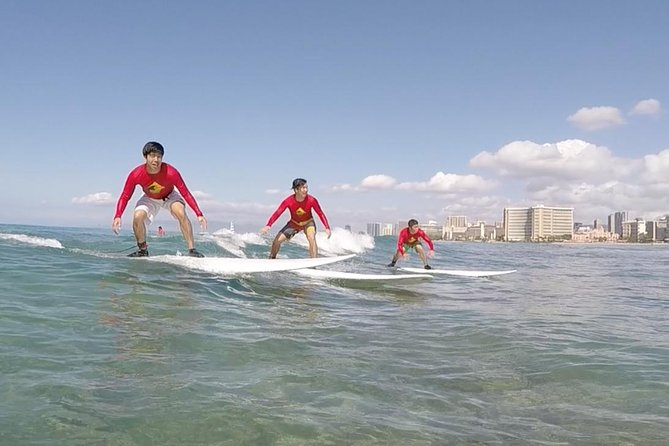
- Waikiki Beach lesson location with direct access to the action
- Sand basics first, then a move into the ocean with an instructor
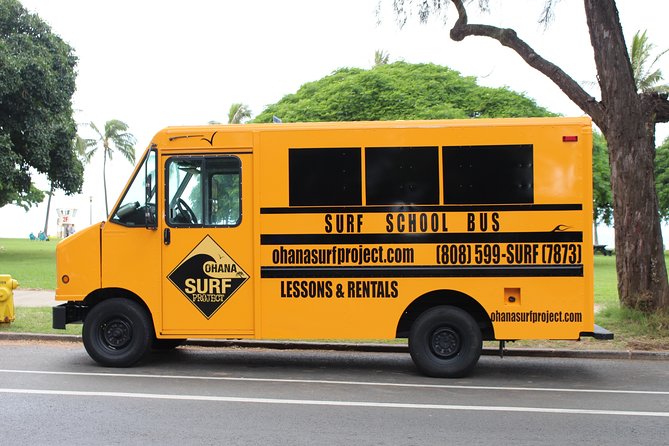
- Air-conditioned yellow Surf School Bus or white shuttle with the logo on the side
- Ohana Surf Center check-in at the Waikiki Beach Marriott for gear and safety prep
- Included equipment: rash guard, reef shoes, and surfboard
- Souvenir photos/videos for purchase after you’re done
The Real Hook: Surfing Waikiki, Not Just Watching It
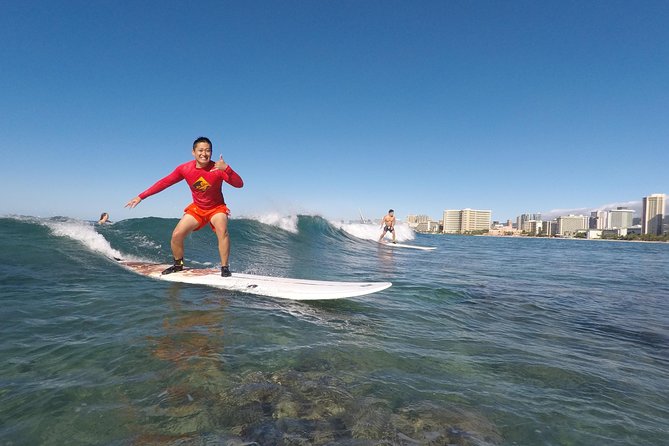
Waikiki is famous for a reason. The waves, the skyline backdrop, and the easy access make it one of the best places to learn without feeling like you’re on a different planet from everyone else.
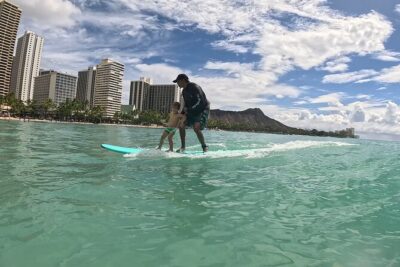
What makes this lesson especially appealing is the way it’s built for first-timers. You don’t just get shoved into the water and hoped for the best. You get instruction that starts on land, then moves to the ocean with coaching right there as you try to catch your first wave.
I also like that the day is designed to keep you moving. You’ll shuttle in, check in, get fitted and briefed, and then go right to the beach. Less waiting around usually means more actual time practicing, which is what you’re paying for.
You can also read our reviews of more tours and experiences in Oahu



From Waikiki Pickup to Ohana Surf Center Check-In
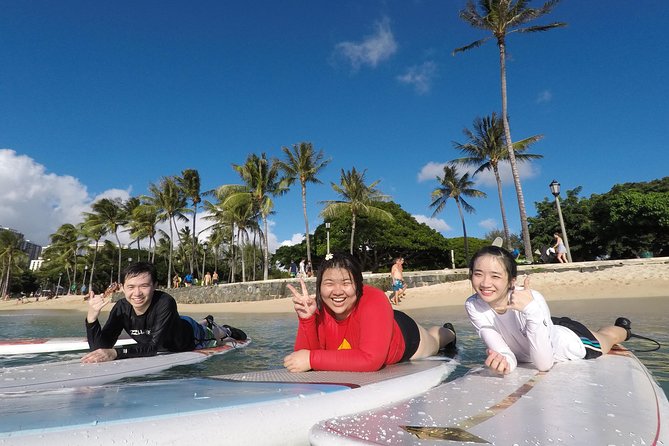
Your day starts with pickup at a meeting spot in Waikiki. The official start point is 2552 Kalākaua Ave, Honolulu, HI 96815, and there’s also complimentary transportation from select Waikiki locations. The exact pick-up location and time are emailed to you, so it’s worth checking your message when you get confirmation.
You’ll ride in an air-conditioned, clean, easy-to-spot yellow Surf School Bus or a white shuttle with the Surf School logo on the side. That’s not just convenient—it matters in Waikiki, where finding parking, entrances, and the right meeting point can turn into a mini adventure you didn’t plan.
Once you arrive, you head to the Ohana Surf Center at the Waikiki Beach Marriott. You’ll get checked in and geared up, then watch a safety briefing. There’s also a safe place to store your belongings, which is one of those small things that helps you relax once you’re heading toward the ocean.
After that, you’ll be shuttled to the beach area for the lesson.
Sand Instruction That Sets You Up for Standing
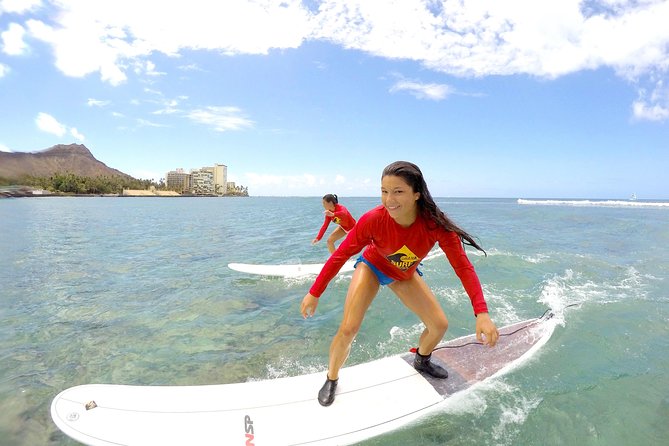
Surfing looks simple when someone else is doing it. In reality, beginners need a lot of the “why” before they try to paddle and pop up.
This lesson includes time on sand where you learn basic techniques and some key movements. That land practice is valuable because it gives your body something to copy. When you finally leash up and get into the water, you’re not starting from zero muscle memory.
Before you walk your lesson board down to the ocean, you’ll meet your instructor and talk through your experience level. You’ll also be asked about swimming strength and any concerns or conditions. If you communicate what you can handle, you’ll likely get more helpful positioning and pacing once you’re out there.
This part of the experience is also where you can manage nerves. First-time fear usually comes from not knowing what to do next. The sand segment helps you get your bearings fast.
Getting Leashed and Learning in the Ocean
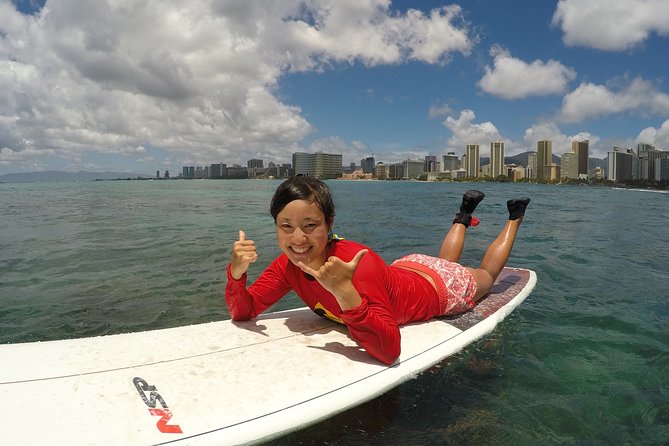
Once you’re at the ocean, you’ll talk with your instructor, then walk your high-quality lesson board into the water. Then comes the step that makes the whole beginner experience feel safer: you’ll leash yourself to the board before you start catching waves.
Leashing is one of those surf rules that feels annoying at first and then instantly makes sense. It helps prevent the board from getting away from you, which can happen quickly in surf zones.
From there, the instructor guides you through the process of riding. Instructors are focused on helping you build confidence rather than just logging time. A common thread from multiple people who’ve done this type of beginner lesson is that the coaching is patient and practical, and you’ll get plenty of encouragement while you try.
You’ll also be dealing with real ocean conditions—waves, water movement, and balance on a board. That’s the point. The difference here is that you’re not left to figure it out alone.
How Many Waves Will You Ride?
This is the question everyone asks, and it’s the one that matters most. The lesson is about 2 hours, and the exact number of runs depends on conditions and group flow.
One thing to watch for: while the lesson is described as a small group, you might experience a busier setup. For example, one group session reportedly had around 20–30 people, and individuals still got a handful of attempts—roughly 7–8 runs—before the session ended.
So here’s how I’d think about it: you’re not buying a private surf school where you get unlimited wave time. You’re buying structured coaching that gives you a shot at standing up and catching your first waves, plus enough repetition to actually learn the pattern.
If you’re the type who needs lots of one-on-one attention, consider whether a private lesson would fit better. But if you’re flexible, excited, and willing to learn in a group, this setup can be a great value.






Equipment Included (And Why That’s a Big Deal)
You’ll get full surf lesson gear: surfboard plus a rash guard and reef shoes. That matters because surfing is hard enough without worrying about whether your feet will be comfortable or whether you’ll be stuck in the wrong kind of footwear.
The rash guard also helps you stay comfortable in the water and can reduce the friction that beginners feel when they’re learning movement. Reef shoes are especially helpful for reefy areas, where bare feet aren’t ideal.
The surfboard you’re given is a lesson board, which is designed for learning. Using the right kind of board is often the difference between feeling hopeless and feeling like you can stand up.
And after the lesson, the Ohana Surf Center is where you check out photographs, videos, and merch. Even if you don’t buy anything, it’s nice to see what you did on the water—because beginner surfing has a way of feeling like a blur.
Photos and Video: The Souvenir Option That Actually Works
Surfing is one of those activities you’ll remember with your body more than your mind. You’ll remember the sensation of balance, the wipeouts, the moment you popped up—then later you might wish you had more than just your own shaky memory.
That’s where the photo and video sales come in. Souvenir photos are available for purchase after the lesson, and the center lets you view what was captured. People who did the lesson liked that they had footage to share with family and friends.
If you’re traveling with kids, this is even more valuable. Family keepsakes beat generic vacation photos, because surfing feels like a real achievement.
Just plan your budget if you know you’ll want the souvenir package. The lesson price covers the instruction and gear, while photos are a separate purchase.
Price Value: Is $119 Reasonable in Waikiki?
For $119, you get a pro instructor, equipment (including rash guard, reef shoes, and board), taxes and fees, a place to store belongings, and transportation to and from designated Waikiki meetings spots.
On its face, that sounds simple. The better question is whether you’re paying for real instruction and reduced friction.
Here’s what you’re really buying:
- professional coaching for beginners
- included gear (so you don’t spend extra on rentals)
- a structured day that gets you to the water without guessing
Given that surfing lessons can add up fast once you factor in equipment and on-site logistics, this pricing can feel fair. The value is strongest if you show up ready to learn—bring your towel, wear your bathing suit, and put on sunscreen before you leave your hotel.
The main “cost” you should accept is that it’s a group setting. That can mean fewer individual waves compared with a one-on-one lesson, so you’ll get better value if your goal is first-timer progress rather than maximum airtime.
Who This Lesson Fits Best (And Who Might Consider Another Option)
This experience is most suitable for people age 13 and older who can swim. The lesson is built as a group activity, and you’ll be in the ocean during the lesson, so swimming ability is not optional.
If you can’t swim, you should flag it ahead of time. The instruction notes that a private lesson may be recommended instead.
This lesson also tends to work well for families and mixed-experience groups. In the feedback I saw, adults who were nervous still got standing opportunities, and teens picked things up quickly. One instructor named Kevin came up as outgoing and attentive, which matches the kind of teaching style you want when you’re balancing confidence with actual technique.
If you’re traveling with kids, the “sand-to-water” structure helps a lot. Kids don’t just learn to paddle; they learn what to do next. Adults do too, even if they start out worried.
If you’re a total beginner who wants a fun first try and you’re okay sharing time in the ocean with others, this is a strong match.
Practical Tips to Have a Better First Session
You’ll get the best experience if you prepare like you mean it.
Come wearing your bathing suit and bring a towel. Apply sunscreen ahead of time. Waikiki sun can be fast, and you don’t want to scramble mid-day.
If you’re prone to seasickness, consider taking a remedy you’re used to about an hour before the lesson, and talk to your doctor for advice. That note is there for a reason, because water conditions and boat or shoreline movement can trigger nausea for some people.
If you have any medical conditions or injuries, tell the staff ahead of time. That’s not just paperwork; it helps instructors adjust how they coach you and how you move through the water.
Language support exists too: written materials are available in Spanish, Japanese, Korean, and Chinese. The staff will do their best to accommodate, but they can’t guarantee a specific language-speaking instructor without enough advance notice.
Should You Book This Waikiki Surf Lesson?
I’d book it if your main goal is a real beginner-friendly surf lesson in one of the most famous learning beaches in the world—without having to rent gear, figure out logistics, or guess how to prepare.
Book it especially if:
- you want instruction that starts on sand and continues in the water
- you’re comfortable sharing space in a group class
- you’re traveling light and prefer gear to be included
I’d think twice if:
- you need lots of one-on-one attention
- you’re not a confident swimmer (since the lesson is for people who can swim)
- you’re expecting a very quiet, private feel on the beach
Bottom line: at $119, you’re paying for coaching plus included equipment plus Waikiki-area transportation. If you show up ready, it’s a very workable way to earn your first surf experience on Waikiki.
FAQ
Where is the meeting point for this surfing lesson?
The start meeting point is 2552 Kalākaua Ave, Honolulu, HI 96815, USA.
Do you offer a shuttle in Waikiki?
Yes. Complimentary courtesy transportation is available from select Waikiki locations. The exact pick-up location and time are sent to you by email.
How long is the surf lesson?
The duration is about 2 hours.
Is equipment included?
Yes. You’ll receive all necessary equipment, including a rash guard, reef shoes, and a surfboard.
Do I need to bring a bathing suit or towel?
Yes. You’re asked to come prepared by wearing your bathing suit and bringing a towel and sunscreen.
What are the age and swimming requirements?
All students must be 13 or older and able to swim.
What if I have a medical condition or injury?
If you have any medical conditions or injuries you should know about, you should advise the staff ahead of time.
Are souvenir photos included?
Souvenir photos are available for purchase after the lesson, but they are not included in the base price.
Is it a small group lesson?
It’s described as a group lesson with a small-group approach, but the experience is still group-based and you may share the session with many people.
What is the cancellation window?
Free cancellation is available up to 24 hours in advance for a full refund. If you cancel within 24 hours, the amount paid is not refunded.