REVIEW · OAHU
Waikiki Surf Lesson (Hawaiian Boy Surf School)
Book on Viator →Operated by Hawaiian Boy Surf School · Bookable on Viator
Surfing in Waikiki is easier when someone teaches you the right way from minute one. This lesson is built for beginners on Waikiki’s south-facing, shallow shoreline, with an on-the-beach warm-up that covers safety, paddling, and basic surfboard control before you head into the water.
I especially like the clear progression: start on land, then get personal one-on-one guidance as you work on standing up and riding with your instructor right there. One consideration: schedules can get affected by beach permitting—one past customer reported an instructor no-show after waiting an hour.
In This Review
- What You’ll Probably Feel, Right Away
- Key Highlights
- Waikiki’s South Shore Advantage for First-Time Surfers
- Where to Meet: Kuhio Beach at the Duke Statue
- The 1-Hour Flow: Sand Basics to Standing Up
- On the beach: safety + control you actually use
- In the water: one-on-one coaching for your first rides
- Coaching That Adjusts to You (Not the Other Way Around)
- What’s Included (and Why It’s a Real Value)
- Best For: Kids, Couples, and True Beginners
- The Duke Statue Meetup and the Real Waikiki Reality
- Gear Tips: What to Bring So You Don’t Waste Time
- How to Set Expectations for First-Wave Success
- Should You Book Hawaiian Boy Surf School in Waikiki?
- FAQ
- Where does the Waikiki surf lesson start?
- How long is the lesson?
- Is this a private lesson?
- What’s included in the price?
- What’s not included?
- Do I need to speak English?
- Is there a mobile ticket?
- Can beginners participate?
- Is the guide in the water with you?
- What’s the cancellation policy?
What You’ll Probably Feel, Right Away
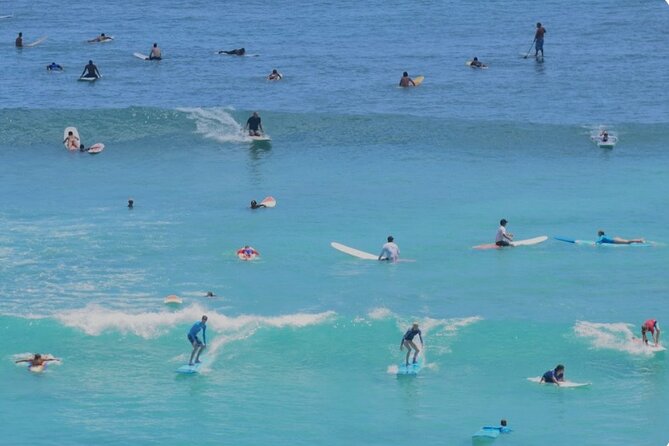
If you land a coach like Preston, it makes a big difference. In the feedback I saw, he’s described as calm and patient, asking about your experience and even picking smaller boards so you can actually stand and have fun instead of fighting the equipment.
That said, the one caution is that the lesson timing depends on authorized beach access. If you’re the type who hates uncertainty, have a backup plan for delays and keep the school’s contact number handy.
Key Highlights
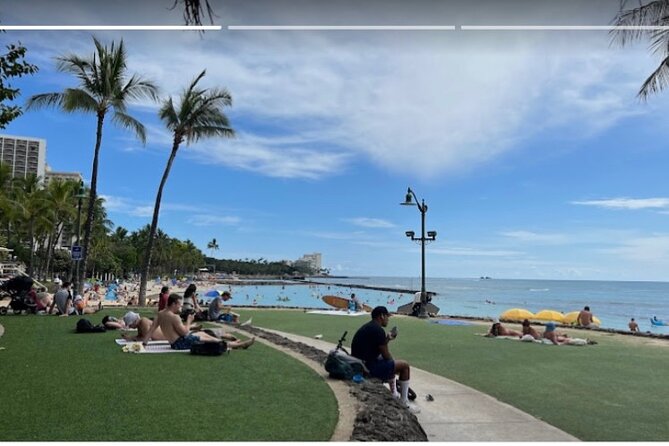
- South-facing Waikiki conditions: shallow water and sandy bottom help first-timers feel safer
- On-land fundamentals first: water safety, paddling, and board control before you try waves
- Private coaching for your group: only your group participates, so you get direct attention
- Instructor support in the water: you focus on standing up and riding with help nearby
- Board choices matter: feedback notes smaller boards when needed so you can progress faster
You can also read our reviews of more tours and experiences in Oahu
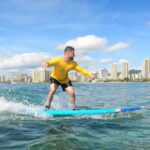


Waikiki’s South Shore Advantage for First-Time Surfers
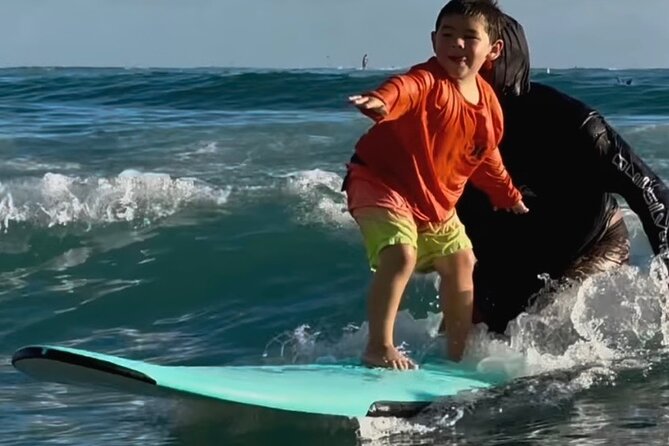
Waikiki has a reputation for being beginner-friendly, and this lesson leans into why. The south-facing part of the coastline is set up with gentler conditions: shallow water, sandy bottoms, and waves that tend to be more approachable than the big-swell spots you see in movies.
What this means for you: you spend less time stuck wondering what to do and more time learning the movement pattern. Surfing is mostly timing—paddle, pop up, balance. When the environment is forgiving, your body learns faster and you feel success sooner.
Also, the lesson is framed around realistic early goals. You’re not just handed a board and pointed toward the horizon. You start with safety and technique, then you build toward riding the wave with guidance.
Where to Meet: Kuhio Beach at the Duke Statue
You’ll meet at Kuhio Beach, 2453 Kalākaua Ave, Honolulu, HI 96815. Several people call out that the meetup is at the famous Duke statue area, which is useful because it gives you a clear visual landmark right in the Waikiki flow.
Why this matters: Waikiki can be crowded, and that meeting point clarity helps you avoid the classic travel move of wandering in circles while you wait. If you show up a bit early, you’ll get your bearings fast and start the lesson without stress.
Your lesson ends back at the meeting point, so you’re not stuck figuring out a separate drop-off after you’re wet and a little sunburned (very “Waikiki,” very fast).
The 1-Hour Flow: Sand Basics to Standing Up
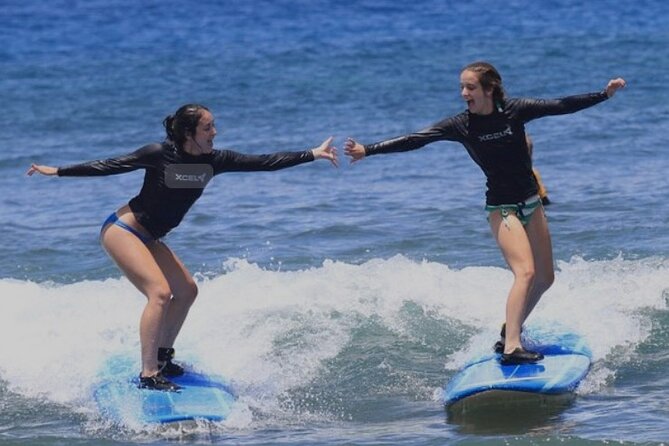
This surf lesson runs about 1 hour (approx.). The exact pacing can vary by conditions, but the structure is consistent: start on the beach, then move into the ocean.
On the beach: safety + control you actually use
First comes the foundation work. You get instruction on:
- water safety basics
- paddling technique
- surfboard control
- how to read and approach waves at an early skill level
That on-land step is more than a warm-up. It helps you understand what you should be doing when you’re already tired and balancing on a board. If you’ve tried surfing before and spent your time falling while guessing, this part is where the lesson starts correcting that.





In the water: one-on-one coaching for your first rides
Then you transition into the ocean for personalized instruction. The focus is simple and practical:
- get comfortable paddling out
- practice the stand-up sequence
- catch waves while your instructor stays close for support
The school also states you’re guaranteed to be surfing by the end of the lesson. No one should expect you to become a shredder in 60 minutes, but you should expect meaningful progress—especially if you’re willing to follow directions and try again after falls.
Coaching That Adjusts to You (Not the Other Way Around)
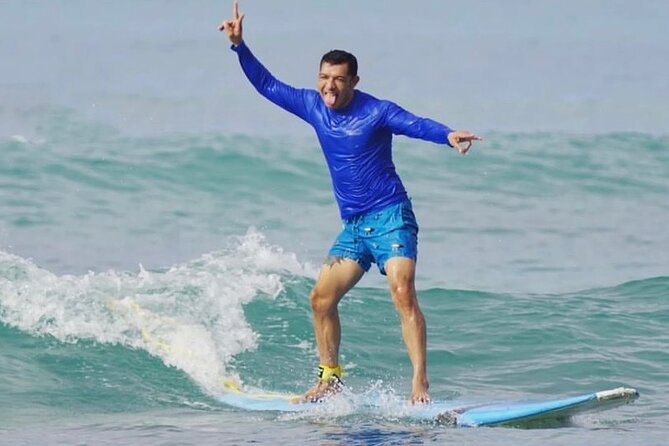
This is a private tour/activity. Only your group participates. That matters because surf instruction works best when the coach can watch you closely without distractions.
You’ll also get a coach who doesn’t treat every beginner the same. In the feedback, Preston is singled out for asking about your background and then selecting smaller boards when appropriate. That detail is huge for beginners: board size affects stability, speed, and how quickly you can pop up.
What you should take from that, even if you don’t get Preston: the best lessons adapt. If your instructor is matching the board and coaching style to your ability, you’ll learn faster and waste less energy.
What’s Included (and Why It’s a Real Value)
Included:
- surfboards
- a licensed guide
Not included:
- bottled water
At $100 per person for about an hour, you’re paying for coaching time and equipment, not just access to the beach. In Waikiki, where activities can be priced like souvenirs, the value here is the instruction that targets standing up and wave riding with real support.
If you’ve ever rented a board and tried to figure everything out alone, you know the difference immediately. Surfing isn’t just getting on a board; it’s timing, balance, and wave approach. The included surfboard plus a licensed guide means you’re not paying extra for the basics.
Quick practical note: bring your own water. The lesson doesn’t include bottled water, and after an hour in sun, you’ll appreciate a quick sip before you walk back into Waikiki heat.
Best For: Kids, Couples, and True Beginners
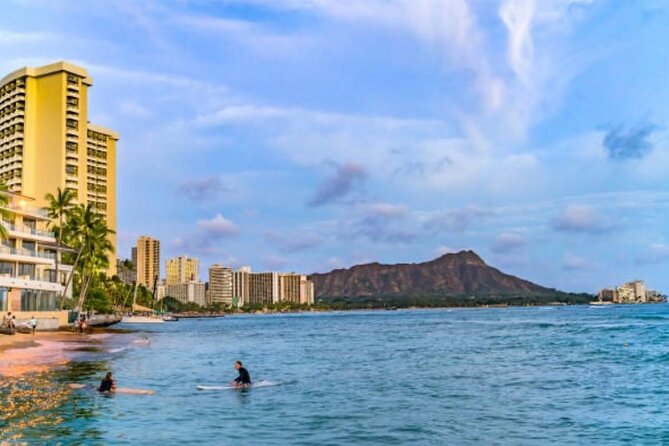
Most travelers can participate, and the lesson is designed with beginners in mind. If you’re new to surfing, the shallow, sandy setting and step-by-step structure can make a huge difference.
The reviews I saw strongly suggest it works well for different group types:
- Parents and kids: one parent mentioned their son and themselves getting up on the first try after instruction.
- First-time success: multiple comments mention learning to stand and ride within the lesson.
- Safety-focused coaching: feedback highlights that safety and technique go together in the coach’s approach.
If your goal is to have fun fast while learning the basics correctly, this fits. If your goal is advanced maneuvers or big-wave training, you’ll probably be better served elsewhere.
The Duke Statue Meetup and the Real Waikiki Reality
Waikiki is a high-energy area. You’ll be near public transportation, which makes it easier to plan around the lesson timing. But this also means crowds and logistics can happen fast.
Here’s the reality check based on provided feedback: one customer described a day with an instructor no-show at the meeting point and said they waited for an hour without a response. The provider later explained the issue as related to securing required beach permits and temporary booking system access limits.
So what should you do with that information?
- Check the confirmation you receive at booking time.
- Be ready to contact the school if anything feels off.
- Arrive early enough to settle in before the start time.
You’re not taking a rigid bus tour where everything is controlled. This is a beach activity, and beach access can involve local rules.
Gear Tips: What to Bring So You Don’t Waste Time
The only clear gear items guaranteed are the surfboards. Everything else is on you.
Since bottled water isn’t included, I’d plan to bring:
- water in a spill-safe bottle
- sunscreen (and reapply if you’re out long)
- a rash guard or swimwear you’re comfortable getting wet in
- a small towel or something to dry off quickly afterward
Even if you’re not a gear person, do one small favor: wear footwear you can walk in on Waikiki sand and pavement. After surfing, you’ll want something simple for the walk back.
How to Set Expectations for First-Wave Success
Surfing success on a beginner lesson is usually about attitude and repeat attempts. People often get discouraged after a couple of wipeouts, but this lesson is structured so you can keep trying with coaching that corrects your basics.
From the feedback:
- instructors often stay calm and patient
- coaches may use smaller boards to help you stand sooner
- kids can progress quickly with the right support
If you go in thinking you’ll definitely get one wave, great. If you go in thinking you’ll learn everything you need for a lifetime of surfing in one hour, you’ll feel disappointed. The more realistic goal is: leave with balance skills you can build on, plus confidence that standing and riding are achievable.
Should You Book Hawaiian Boy Surf School in Waikiki?
I’d book this if:
- you’re a beginner and want structured help, not guesswork
- you like the idea of on-land safety + technique before you get in the water
- you want a private lesson so you can learn faster
- you care about instructors adjusting the experience to your level
I might skip it (or at least plan extra buffer time) if:
- you hate schedule uncertainty and can’t handle a possible delay tied to beach access rules
- you’re only interested in advanced surfing skills rather than fundamentals and first rides
- you’re expecting water and snacks to be provided (water isn’t included)
If you want a solid first shot at Waikiki surfing with real coaching and the chance to be riding by the end of the lesson, this is a practical choice.
FAQ
Where does the Waikiki surf lesson start?
It starts at Kuhio Beach, 2453 Kalākaua Ave, Honolulu, HI 96815, USA.
How long is the lesson?
The duration is about 1 hour (approx.).
Is this a private lesson?
Yes. It’s a private tour/activity, and only your group participates.
What’s included in the price?
Surfboards and a licensed guide are included.
What’s not included?
Bottled water is not included.
Do I need to speak English?
The lesson is offered in English.
Is there a mobile ticket?
Yes, it includes a mobile ticket.
Can beginners participate?
Yes. Most travelers can participate, and the lesson is designed for beginner conditions.
Is the guide in the water with you?
The lesson includes personalized instruction in the water, focusing on standing up and riding waves with your instructor by your side for support.
What’s the cancellation policy?
You can cancel for a full refund up to 24 hours in advance of the experience’s start time. Within 24 hours, there is no refund.