REVIEW · OAHU
Oahu Shark Dive
Book on Viator →Operated by North Shore Shark Adventures · Bookable on Viator
Sharks up close, with real calm.
On Oahu’s North Shore, this shark cage experience takes you offshore from Haleiwa in search of wild predators, with a crew that sets expectations and keeps the whole thing running smoothly once you’re in the underwater shark cage. I like the simple idea: you’re not “hunting” anything, you’re just safely in place while sharks do what sharks do, and you get a real ocean experience instead of a staged show.
Two things I really like are the chance to see other marine life on the way out and back (dolphins, sea turtles, and in winter, humpback whales) and the option to participate in the cage or simply watch from the boat deck. One consideration: if the ocean is choppy, you may feel it, and a few visitors noted seasickness even with medicine.
In This Review
- Key points before you go
- North Shore timing, meeting point, and what the boat ride feels like
- The safety setup: how the cage experience stays controlled
- The sharks you’re most likely to see (and why the species matters)
- What it’s like underwater: masks, time in the cage, and that first sighting
- Boat-deck viewing: the best option for nerves and mixed groups
- Wildlife bonus moments: whales, dolphins, and sea turtles
- Snorkeling gear included: what it means for your plans
- Price and value: what $99.48 buys you in real terms
- Chilly water and rough seas: the main downside to plan around
- Who this is best for (and who might hesitate)
- Guide care in action: the human touch that changes everything
- Final verdict: should you book the shark cage experience?
Key points before you go
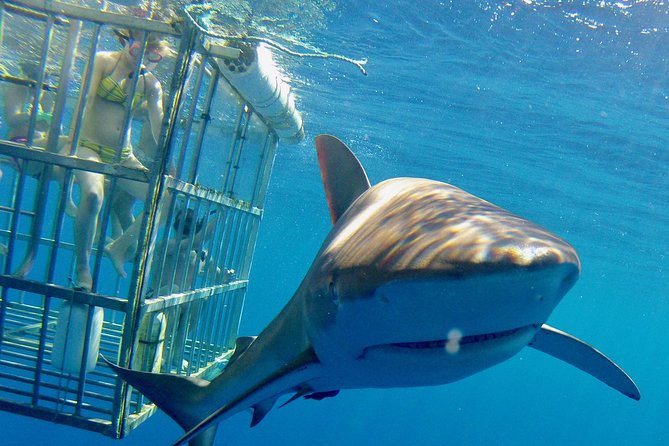
- Underwater shark cage keeps the experience hands-off but close enough for goosebumps
- Wildlife sightings can stack up on the cruise, especially in winter (humpback whales)
- Option to watch or enter the cage means this works for mixed comfort levels
- Big-shark odds: common sightings include Galápagos sharks and sandbar sharks
- High visibility can be excellent offshore, sometimes reported around 200 feet
- Small group size (up to 14 travelers) helps the day feel organized
North Shore timing, meeting point, and what the boat ride feels like
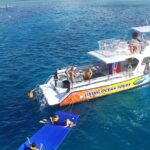
This starts at Haleiwa Harbor, at 66-101 Haleiwa Rd, Haleiwa, HI 96712. Check in 30 minutes early and plan to arrive with some breathing room; Haleiwa is a real destination, not a quick stop. From the first moment you’re onboard, you’ll notice the vibe is part excitement, part “okay, here we go,” because everyone can see how serious the safety briefing is.
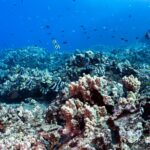
You’ll motor out from the harbor toward the open ocean. The goal is to get offshore where the water is clearer and steadier than you’ll get near runoff and shoreline waves. That matters because visibility is often reported up to about 200 feet (60m) when conditions cooperate, and better visibility means you actually get to appreciate what the sharks are doing rather than just catching blurry shadows.
On the way out, you might spot things that add value even if you’re there mainly for sharks. The cruise route gives a genuine chance for dolphins and sea turtles, and in winter, humpback whales can show up. I think this is one of the smartest parts of the whole experience: even if the shark moment takes a little to line up, you’re already on a North Shore wildlife cruise.
If you’re sitting there thinking, what’s the sea going to be like?, know that the boat ride out and back is part of the deal. A number of reviews mention rough water and seasickness. If you know you get motion sick, you’ll want to handle that seriously before you leave.
You can also read our reviews of more tours and experiences in Oahu.


The safety setup: how the cage experience stays controlled
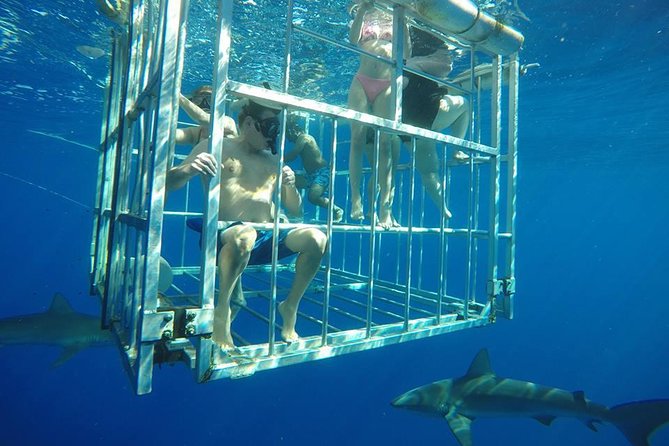
The heart of this tour is the underwater shark cage. You’ll get a briefing on safe practices before anyone goes in. The crew’s whole job here is to reduce the guesswork. They explain how to act in the cage so you can focus on watching rather than worrying.
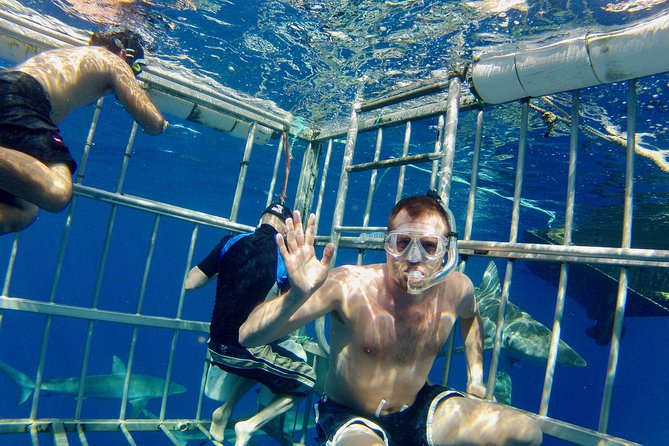
Once it’s time, you’ll strap on your mask and step into the cage. Then you’re lowered into the water. This is where the “close-up” part becomes real: sharks may circle near the cage and come in very near your face. That adrenaline hit is normal. The difference is that it’s happening inside a controlled setup, with staff monitoring the situation.
It also helps that this isn’t presented as a free-for-all. The cage allows a limited number of adults at one time (described as two adult divers with room that can expand depending on conditions and movement). If you’re traveling with family or a group with different comfort levels, the option to watch from the boat deck keeps the day from turning stressful. Everyone gets to participate in the moment that fits them.
One more thing that’s easy to overlook: you don’t need special swimming skills. That’s a big practical point, especially if you’re bringing a kid who can’t swim confidently or you’re someone who prefers to stay shallow. You’re there for the wildlife and the view, not for a physical challenge.
The sharks you’re most likely to see (and why the species matters)
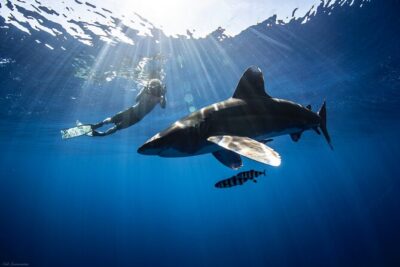
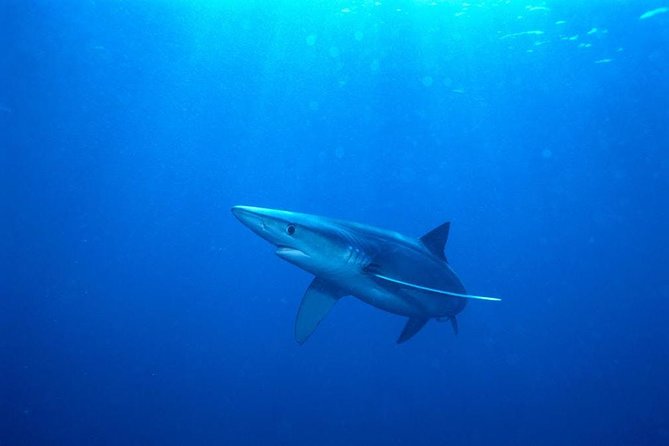
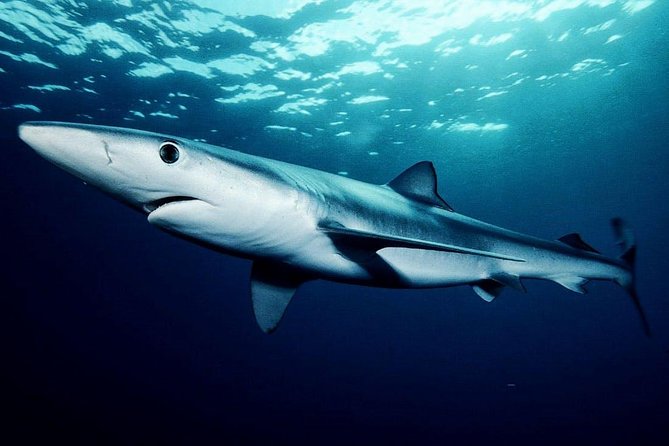
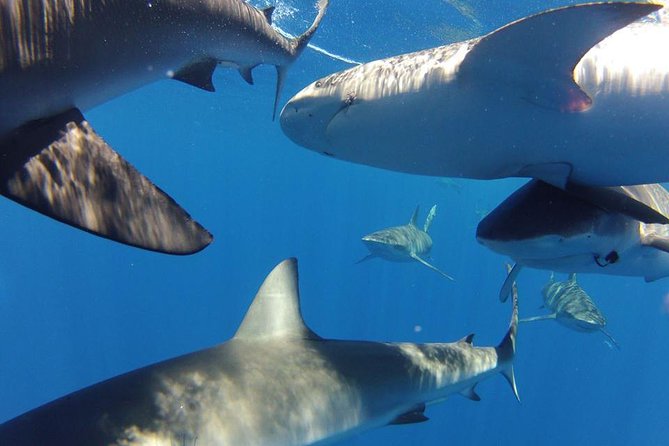
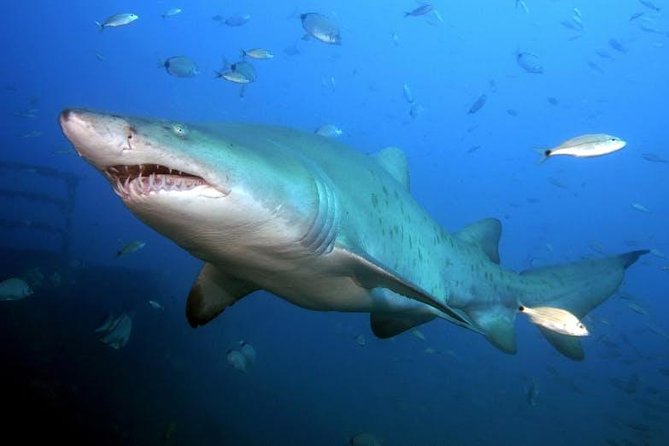
Common sightings around Oahu for this experience include Galápagos sharks, hammerhead sharks, and sandbar sharks. Sizes can vary, often described in the rough range of 5–15 feet (1.5–4.5m) depending on age.
Why does species matter? Because different sharks move differently, and you notice that when they’re close. A sandbar shark cruising near the cage can feel almost graceful and steady. A hammerhead’s head shape makes it look like it’s “on purpose,” even when it’s just doing what it does. And Galápagos sharks have that thick, powerful presence that can make the whole experience feel bigger than you expected.
This is also why the tour’s promise is meaningful: there’s a money-back guarantee that you see sharks. In real life, no operator can control wild animals 100%, but guarantees like this generally signal they’re serious about taking you to the right areas and managing timing so you’re not just hoping.
What it’s like underwater: masks, time in the cage, and that first sighting
When you first see a shark approach, there’s typically a split-second reaction. It’s not just that it’s big. It’s that it moves with confidence, and when it gets close, you’re suddenly very aware of how big the ocean really is.
Once you’re in, focus on the basics the crew emphasizes: stay calm, keep your body positioned as instructed, and don’t fight the motion. Offshore water can feel different than in the harbor, and you’ll probably feel the cage sway as waves roll through. Holding onto the cage as deck hands instruct is something you’ll likely hear more than once, and it helps you stay steady while watching.
Time matters too. Reviews describe a meaningful window in the cage (around the 20-minute range in some cases), which gives you enough moments to see circling behavior rather than just a quick pass. That’s a key quality point: watching sharks turn and travel in a circle is far more interesting than only seeing a fin briefly.
If you’re thinking about photos, bring your own camera if you can. Some guests wanted to take an underwater camera but hesitated because the water felt harsh and holding a device safely didn’t seem worth the risk. If that’s your situation, it’s still worth bringing something for the boat deck. Pictures from above can come out very clear, especially when visibility is good.
Boat-deck viewing: the best option for nerves and mixed groups
Not everyone wants to be in the cage, and that’s normal. What I like about this setup is the deck option doesn’t make you feel like a second-class passenger. You’re on the same boat at the same time slot as the people in the cage, so the whole group is tied to the same moment.
On deck, you still get the “big animal” effect when sharks swim close. And you can participate in the fun in other ways too: the crew often shares facts and helps you understand behavior, which turns random sightings into something you can actually interpret.
This is also where the experience becomes more family-friendly. Reviews include examples of non-swimmers and kids feeling comfortable because they weren’t forced into a scary unknown. If your group includes someone who gets anxious about tight spaces or water pressure, the deck option keeps the day enjoyable for everyone.


Wildlife bonus moments: whales, dolphins, and sea turtles
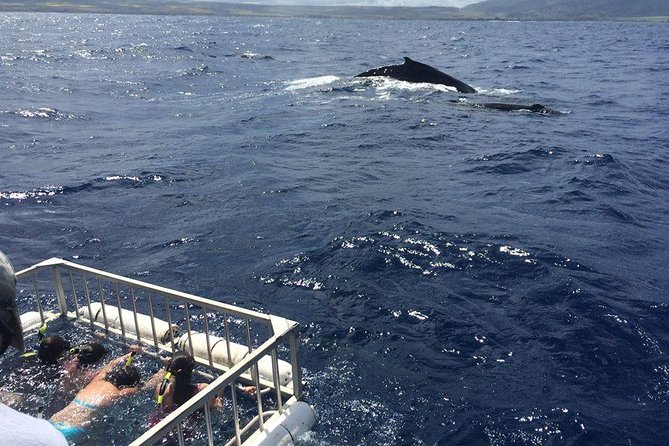
The shark portion is the headline, but the North Shore cruise can stack surprises. Dolphins and sea turtles are specifically called out as possible sightings during the ride to the shark area. In winter, humpback whales are also a realistic bonus.
If whales appear, it usually changes the mood on the boat fast. People relax into the moment, cameras come out, and suddenly the day feels like you’re doing more than checking a bucket-list box. Even if you’re nervous about the cage part, the chance of whale sightings can be a mental warm-up.
There’s also an important practical benefit to these bonus moments: they fill time between the safety briefing and the moment when the sharks are in position. That reduces that “waiting for something to happen” feeling.
Snorkeling gear included: what it means for your plans
Your ticket includes snorkeling equipment. That’s useful because if there’s time to snorkel during the day, you won’t have to rent gear at the last minute. It’s also helpful if you bring your own mask and want the rest of the kit covered.
One practical note: if you’re dealing with cold water or rough conditions, snorkeling may feel less appealing than watching from deck. Either way, you’re covered with the included gear.
Price and value: what $99.48 buys you in real terms
At $99.48 per person, this isn’t a “cheap thrill,” but it also isn’t in the scary-expensive category for what you get. Here’s what you’re really paying for:
- A guided safety system: trained crew, cage use, and briefings that make first-timers feel grounded
- Close-proximity wildlife viewing: sharks aren’t guaranteed anywhere, but the operator advertises a money-back guarantee if you don’t see sharks
- A small-group experience: capped at 14 travelers, which usually means less crowding and more attention
- A full ocean outing: offshore time, plus chances at dolphins, turtles, and winter whales
If you’re comparing it to tours where you mostly stay on deck and hope to spot a fin far away, this tends to feel like better value. You’re paying for controlled “inside the action” viewing, even if you choose deck viewing.
The one extra cost to watch for is the high-definition underwater video service upgrade offered on the boat for $75. If you want a polished memory (and you don’t plan to handle an action camera in the cage), that upgrade can be worth considering. If you’re happy with your own photos or deck viewing, skip it and save the money.
Chilly water and rough seas: the main downside to plan around
The most consistent practical drawback isn’t the sharks. It’s the ocean conditions. Water can run chilly, and motion can be intense when the sea is rough. Several people mention getting seasick, and one person said even Dramamine didn’t fully fix it.
So here’s the decision filter I’d use for you:
- If you’ve had motion sickness before, assume you’ll want medication and a plan.
- Bring something for nausea even if you think you’re tough. The cage itself can feel steady, but the boat ride can still get to you.
- Wear what keeps you warm. Cold water makes everything harder, and feeling uncomfortable can steal joy from the moment.
Also, don’t ignore the small details that sound boring: secure your mask correctly, keep your balance when boarding and entering, and listen when crew tells you to hold the cage a certain way. That’s how the experience stays safe even when the ocean isn’t cooperative.
Who this is best for (and who might hesitate)
This is a great match for:
- People who want hands-on proximity with sharks without swimming in open water
- Families with kids who can’t swim well, because there’s a no-swimming-skills requirement
- Nervous first-timers who need a crew to guide them through the moment
- Anyone who also loves North Shore wildlife cruising
It may feel less comfortable for:
- People who get knocked around by boat motion and don’t plan for seasickness
- Anyone who can’t handle cold water for even short periods
Age is listed as 5+ based on captain discretion and conditions, so kids can go, but final call depends on real conditions that day.
If you’re traveling solo, it can also work well because the group size is small and the crew helps keep the experience structured.
Guide care in action: the human touch that changes everything
What separates a memorable shark encounter from a scary one is the tone of the crew. Many visitors highlight how calm, friendly, and safety-focused the staff felt.
In one case, guide names Maddie and Emma were called out for straightforward instructions and kindness. That kind of direct coaching matters in the cage, because you don’t want a long speech at the worst moment. You want short, clear guidance that helps you behave correctly and see more.
If you’re anxious, don’t hide it. The experience is designed for first-timers, and the crew’s job is to keep you steady.
Final verdict: should you book the shark cage experience?
Book it if you want a safe, guided, close-up encounter with wild sharks on Oahu’s North Shore, and you’re okay planning for cold water and possible rough seas. The combination of a controlled shark-viewing setup, the small-group feel, and realistic odds for seeing other marine life makes this one of the more practical ways to do a shark experience without turning it into a gamble on your own nerves.
Hold off or choose a different day if you know you reliably get very seasick, or if winter weather has a history of wrecking you. You can still enjoy the North Shore, but your comfort will decide how much you actually remember.
If you’re still on the fence, I’d go with this rule: if you can handle a boat ride and you want real proximity to sharks, this is a strong “yes” for your Oahu itinerary.