REVIEW · OAHU
Oahu Shark Dive Educational Tour (No cage)
Book on Viator →Operated by Go Adventure Hawaii · Bookable on Viator
Sharks in open water, with real safety guidance. This no-cage shark encounter takes you out from Haleiwa and puts you in the same blue where Manō patrols, with a trained handler talking shark behavior as you snorkel.
What I really like is the focus on safety and calm pacing, with crew members such as Ricky guiding the experience and keeping watch while you’re in the water. I also like the small max group size (6), plus the optional underwater photo and video service from aboard the boat, delivered digitally a few days later. The main consideration: conditions can get choppy in wind, and shark sightings can vary day to day, so you’ll want to be flexible.
In This Review
- Key Points Before You Go
- A No-Cage Shark Swim That Actually Makes Sense on Oahu
- Hale‘iwa Boat Harbor: Easy Start, Clear Orientation
- The 3-Mile-Plus Open Ocean Part: How the Crew Sets You Up
- What Sharks You Might See
- Waialua Bay: Dolphins, Fish, and That Winter Whale Possibility
- Waimea Bay: Winter Surf Power and Summer Snorkel Calm
- Puaʻena Point Beach Park: A Laid-Back North Shore Stop
- Equipment, Photos, and the Little Things That Change Your Day
- The Underwater Photographer: Optional, But Popular
- Price and Value: Is $155 Reasonable for a No-Cage Swim?
- Who This Tour Is For (and Who May Feel Better Elsewhere)
- Should You Book This No-Cage Shark Encounter?
- FAQ
- How long is the Oahu Shark Swim tour?
- Is this shark swim done without a cage?
- Where does the tour start and end?
- How far off shore do you go?
- What shark species might you see?
- What snorkeling gear is provided?
- Is there an underwater photographer?
- How big is the group?
- What fitness level do I need?
- What happens if weather is bad?
Key Points Before You Go
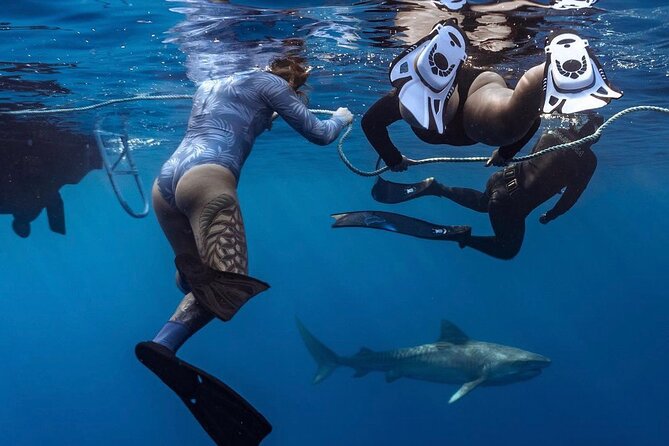
- No cage, open-ocean swim with trained shark handlers and safety crew in the water
- Small group (up to 6 travelers) for more personal attention
- About 2 hours on the water, then the rest of your day is free
- Snorkel gear and fins provided, plus tips for staying comfortable out there
- Optional underwater photo/video with digital delivery in the days after your trip
- North Shore route that can include Waialua Bay, Waimea Bay, and Puaʻena Point for extra wildlife and scenery
A No-Cage Shark Swim That Actually Makes Sense on Oahu
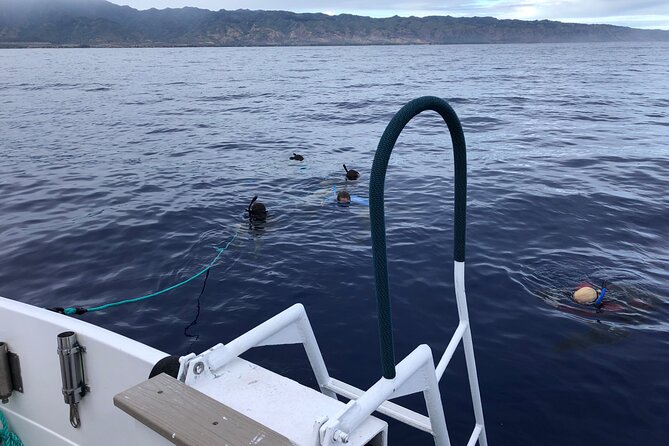
There are shark tours that feel like you’re doing a stunt, and there are shark tours that feel like you’re learning how this ocean world works. This one leans hard into the second option. You go beyond the idea of just seeing sharks and focus on how to be a respectful, calm snorkeler near Manō.
The big selling point is simple: you’re not in a cage. Instead, you swim with wild sharks in open water, guided by a professionally trained shark handler and supported by a dedicated safety team. That structure changes the whole vibe, because the crew is working to keep you comfortable and aware, not just waiting for the animals to appear.
You can also read our reviews of more tours and experiences in Oahu.


Hale‘iwa Boat Harbor: Easy Start, Clear Orientation
Your meeting point is Hale‘iwa Boat Harbor in Haleiwa. It’s also the kind of spot where you can get your bearings fast, which matters when you’re waking up early for a boat day.
One practical detail I’d follow: look for the business’s teal and white sign when you park. Reviewers also mention that the parking directions are spot on, so if you follow what you’re given when you arrive, you should have an easy time finding the departure setup.
You’ll board with a small group and an experienced captain, and then the day becomes part briefing, part ocean time. The tour is in English, and you’ll get confirmation at booking, with a mobile ticket used for entry.
The 3-Mile-Plus Open Ocean Part: How the Crew Sets You Up
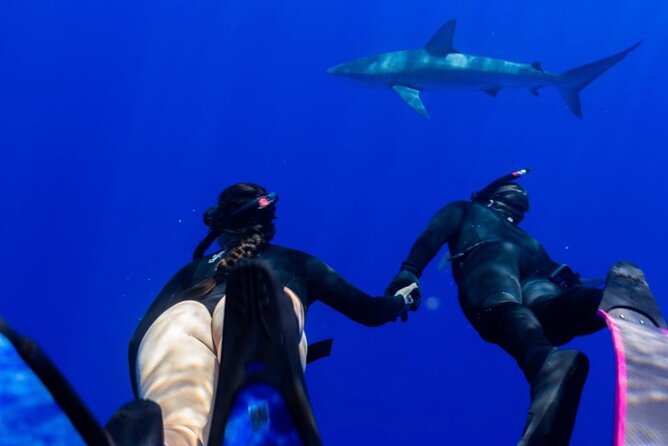
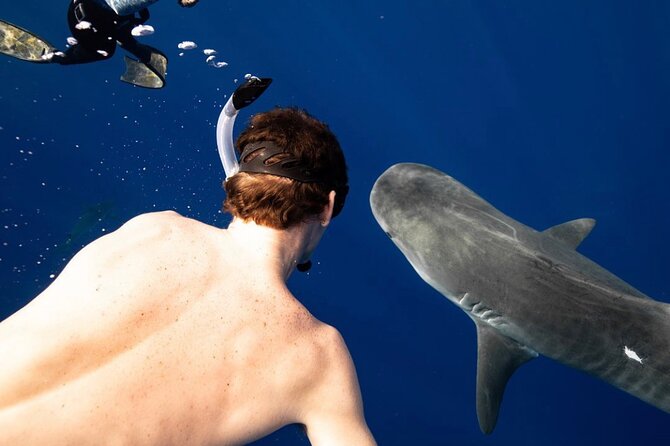
The core experience happens off the North Shore, with travel to about three miles out as the crew searches for Hawaii’s Manō. You’ll be in clear blue water, and the whole point is being close enough to understand what you’re looking at.
The tour’s safety approach is built into the format. You get safety guidelines for snorkeling and breath-holding techniques, and you’re guided by a shark handler who shares shark biology and behavior as you go. Crew members like Ricky are specifically highlighted for knowledge and calm leadership in the water, and that calm tone shows up again and again in the feedback.
Expect safety crew members to stay attentive while you’re swimming. Multiple reviewers describe the team getting between you and sharks when animals come close, so you’re not left guessing. That matters emotionally as much as it does practically: you’ll be able to enjoy the moment because someone is watching and steering the situation.
What Sharks You Might See
The tour description mentions possibilities like Galapagos, Sandbar, and Tiger sharks, with extra chances because you’re in a pelagic (deeper-water) zone. In real-world terms, that means your day could be dominated by one species or by a mix.
And sightings can be pretty close. Several reviewers report seeing around 10 or more sharks at once, while others mention encounters that feel like the sharks are curious and circling. There are no guarantees, but the format gives you a real shot at a memorable encounter.
Waialua Bay: Dolphins, Fish, and That Winter Whale Possibility
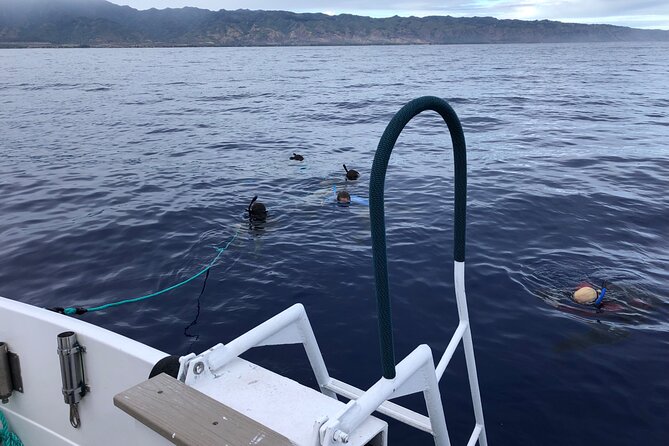
Your North Shore route includes time at Waialua Bay, an area known for lots of marine life. This is one of those places where the ocean isn’t a backdrop, it’s the main event. You might spot Hawaiian spinner dolphins, dozens of fish species (including malolo, also called flying fish), and in season, humpback whales.
The whale timing is important. The information you’re given specifically notes humpback whales migrating in the winter months. So if you’re traveling during winter, it’s smart to keep your eyes on the horizon and not assume this part of the day will be quiet.
The value of a route like this is simple: even if the shark moment runs a bit “shy” one day, you still get a natural-history tour feel. You’re out on the water where the ocean life is active.


Waimea Bay: Winter Surf Power and Summer Snorkel Calm
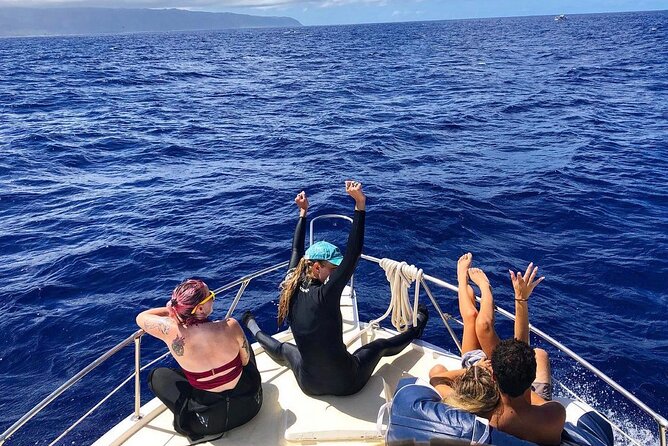
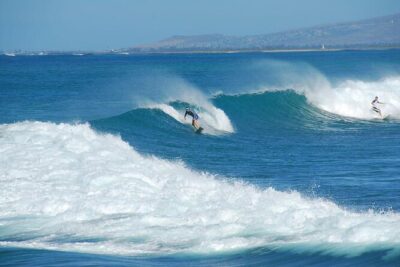
Next up is Waimea Bay, which is famous for a reason. In winter, it turns into a world-class surf spot with huge waves. In summer, it’s described as calmer—more like a turquoise swimming and snorkeling area, with a more relaxed mood and easier conditions.
That seasonal flip is why Waimea Bay belongs on this kind of itinerary. The crew is working within the North Shore’s changing rhythms, and you’re getting the coast’s mood swings in one day. Even if you only catch part of the scenery from the boat or a shore stop, the contrast is dramatic.
There’s also a cultural layer nearby with Waimea Valley, where you can find a short hike through botanical gardens to a waterfall. The tour doesn’t turn into a long hike day, but this is useful context if you want to add an extra block of time on your free afternoon.
Puaʻena Point Beach Park: A Laid-Back North Shore Stop
The route includes Puaʻena Point Beach Park, east of Haleʻiwa on the North Shore. This part of the shoreline is described as laid-back, with mellow waves and reef breaks that can be friendlier for beginners.
You’ll also find a shoreline mix of sand and lava rock, with tide pools along the edges. That means it’s a good spot to slow down after the open-ocean portion. It’s also where you might spot Hawaiian green sea turtles resting on the beach or grazing near rocks.
If you’re the type who needs a mental exhale after being in cold-blue water with sharks overhead (even when it feels safe), this stop can be a perfect reset.
Equipment, Photos, and the Little Things That Change Your Day
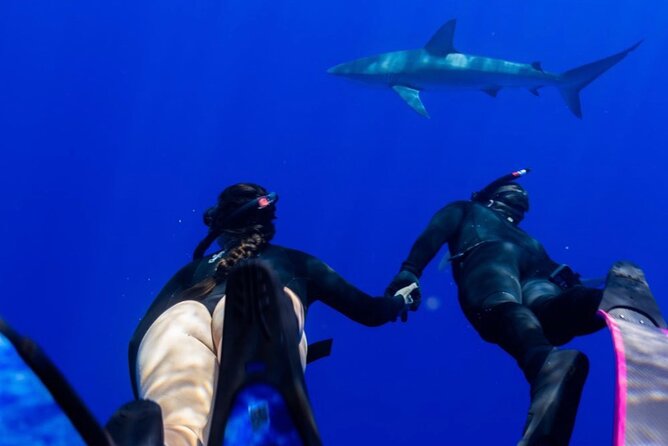
You’re provided with snorkel equipment and fins. Reviews also mention wet suits and snorkel gear with anti-fog, plus the fact that the crew pays attention to comfort. Those details matter more than they sound. If your gear works smoothly, you can focus on the sharks instead of fighting your mask.
The Underwater Photographer: Optional, But Popular
There’s an underwater photographer aboard. Their services are at a fee, and the photos and video are sent digitally a few days later.
This is a nice add-on if you want more than memories. People specifically mention photographers like Parker for patience and kindness while capturing shots in the water. The crew’s vibe seems to be: you’ll get help staying positioned for better photos without feeling rushed.
If you’re the kind of traveler who hates buying souvenirs but loves real documentation, this is the type of expense that can feel worth it. If you’d rather keep costs down, you can skip it and still get the experience.
Price and Value: Is $155 Reasonable for a No-Cage Swim?
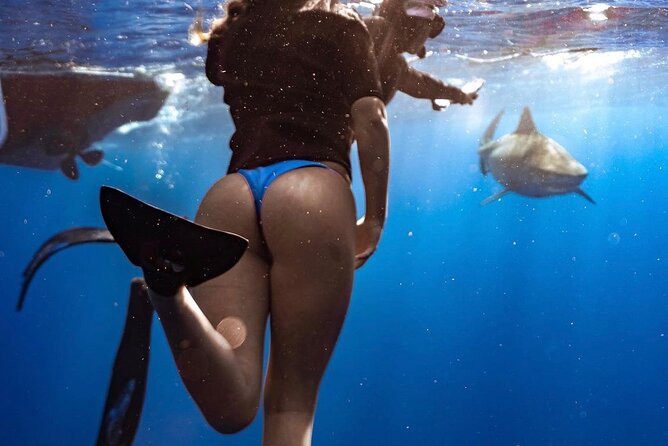
At $155 per person for about two hours, the pricing can feel steep if you only compare it to typical snorkel trips. But this tour is not a general snorkel cruise. You’re paying for a trained shark handling team, safety coverage in open water, and a small group setup (max 6).
Also, the experience is built around being in the zone. The tour description puts you roughly three miles off the North Shore to find Manō. That kind of out-to-the-blue effort costs money in boat time, staffing, and safety planning.
The best way to judge value is what you’re buying emotionally and practically:
- You’re paying for no cage, which is a major difference-maker.
- You’re paying for time and attention, not just a location.
- You’re paying for optional media that can turn the day into something you relive.
If you’re traveling with friends who are nervous about open ocean, the small group size can also be part of the value. More space and more crew attention usually equals less stress.
Who This Tour Is For (and Who May Feel Better Elsewhere)
This experience fits best if you want the real shark part: being out there in open water, seeing wild behavior, and learning along the way.
It’s a moderate physical fitness activity, and the pace is designed for snorkeling and staying comfortable in the water. If you’re confident in open water and snorkeling, you’ll likely feel at ease faster because the crew gives clear safety guidance.
It can also suit travelers who are done with big, loud operations. Multiple people point out that this isn’t a huge commercial production, and the small team approach makes it feel more personal.
The main caution is not the sharks. The main caution is your comfort with water conditions and the fact that sightings can vary. One reviewer even mentions that wind and waves can make the day feel rougher. If you hate boat rides or you know you struggle in choppy water, check the day’s conditions and consider whether you want a lower-key option too.
Should You Book This No-Cage Shark Encounter?
I think you should book it if you want a shark experience that feels serious and structured, not gimmicky. The combo of trained handlers, no cage, and safety crew attention is the heart of the value. Add the optional photo/video from a boat-based underwater photographer, and it’s a solid way to turn a bucket list moment into something you can actually keep.
You might skip or choose another day if you can’t handle open-ocean conditions or you’re hoping for guaranteed sightings every single time. The ocean is alive, and Manō can be shy on some days. Still, if you’re flexible and you’re ready to trust the crew, this is the kind of Oahu activity that can stick with you long after you go home.
FAQ
How long is the Oahu Shark Swim tour?
The tour runs for about 2 hours, and then the rest of your day is free.
Is this shark swim done without a cage?
Yes. This is a no-cage experience, where you swim with sharks in the open ocean with guidance and safety support.
Where does the tour start and end?
It starts at Hale‘iwa Boat Harbor in Haleiwa and ends back at the meeting point.
How far off shore do you go?
The experience description says the boat travels about three miles off of Oahu’s North Shore.
What shark species might you see?
The tour information mentions the possibility of Galapagos, Sandbar, and Tiger sharks, depending on conditions and the area you’re in.
What snorkeling gear is provided?
Snorkel equipment and fins are provided.
Is there an underwater photographer?
Yes. A professional underwater photographer is aboard and offers photo and video services for a fee, with digital delivery a few days later.
How big is the group?
The tour has a maximum of 6 travelers.
What fitness level do I need?
Travelers should have a moderate physical fitness level.
What happens if weather is bad?
This experience requires good weather. If it’s canceled due to poor weather, you’ll be offered a different date or a full refund. You can cancel up to 24 hours in advance for a full refund.