REVIEW · OAHU
Honolulu Haunts and Hauntings Ghost Tour
Book on Viator →Operated by Honolulu Haunts By Us Ghost Adventures · Bookable on Viator
Honolulu has ghosts hiding in plain sight. This Honolulu Haunts and Hauntings Ghost Tour strings together famous (and spooky) Honolulu stops like Iolani Palace, historic courts, and old cemeteries, with an English-speaking guide sharing researched history and paranormal lore.
I especially like the mix of place-based history and ghost stories, not just spooky talk floating in the air. And when the guide hits the right pace, like Jade, Lon, Terry, or Hope, the walk stays fun and clear.
One possible drawback: the paranormal side can feel more subtle than horror-movie intense, so if you’re hunting for jaw-dropping hauntings, you’ll want to set expectations for a lighter, respectful experience.
In This Review
- Key things that make this tour worth your time
- A 1-hour walk that swaps crowds for atmosphere
- Iolani Palace: where royalty, revolt, and lingering spirits meet
- Kaua’nona’ula: a name that means rain with a red rainbow
- The old building stop and the white kimono rumor
- Supreme Court grounds: sentences, orphanhood, banyan-tree laughter
- The first Christian church and Hawaii’s oldest cemetery
- Two oldest missionary homes: Protestant roots and long-dress sightings
- Price and logistics: is $32 worth it?
- Getting the most out of it: small moves that change everything
- Who should book this tour?
- Should you book Honolulu Haunts and Hauntings?
- FAQ
- How long is the Honolulu Haunts and Hauntings Ghost Tour?
- What does the tour cost?
- Where does the tour start?
- Is the tour offered in English?
- Is food or drink included?
- Are motorized transportation services included?
- What is the maximum group size?
- Is there a physical fitness requirement?
- Can I cancel and get a refund?
Key things that make this tour worth your time
- Guides get named often: Jade, Lon, Terry, and Hope are repeatedly praised for pacing and storytelling.
- Short and easy-going: about an hour, with a mostly flat, low-stress walk.
- Real Honolulu landmarks: you’ll hit major historical sites, from royal grounds to court-era buildings.
- Cemetery stories go past the headstones: you’ll hear why 296 markers may not tell the full story.
- Respect is part of the script: sacred places are handled carefully, not like a gimmick.
- Small-group energy happens: some departures run very small, which helps you hear the guide and ask questions.
A 1-hour walk that swaps crowds for atmosphere
This tour is built around an easy time commitment: about one hour. You’re not signing up for a long slog across town. Instead, you get a focused loop through central Honolulu with just enough time at each stop to absorb both the history and the eerie stories.
The route is described as low-effort and mostly flat, which matters in a place where sidewalks can still feel like an obstacle course in the heat. If you’re traveling with mixed mobility or you just want an evening activity without the cardio tax, this fits well.
You can also read our reviews of more tours and experiences in Oahu.



Iolani Palace: where royalty, revolt, and lingering spirits meet
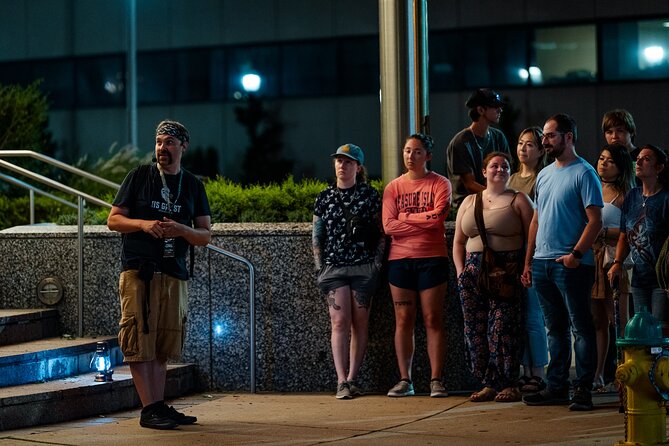
Iolani Palace is the kind of stop that makes you slow down without trying. It’s tied to the late 1800s and the feel of an official royal world—then it gets darker. The grounds have long been associated with haunting stories, and the tour connects that to major events like the historic coup involving a sitting monarchy in American history.
The guide’s framing centers on the palace as a sacred place, not just a spooky photo backdrop. You’ll also hear the legend that the last queen fought for a free Hawaii until her death, and that her spirit is said to still watch over Honolulu.
Practical tip: when you’re in a place tied to real power and real tragedy, you’ll get more out of it if you go in with curiosity and a little respect. The best moments here usually come from paying attention to what the guide says you should notice, like the mood of the grounds and how the story is connected to the location.
Kaua’nona’ula: a name that means rain with a red rainbow
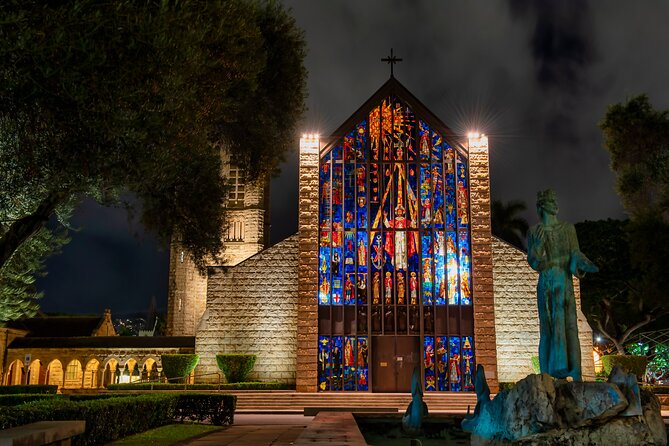
Next comes an intersection known as Kaua’nona’ula, meaning rain with the red rainbow. What’s interesting is that the tour doesn’t lean on a specific historic event that happened there. Instead, it leans on what people report: creepy sightings and unexplained encounters.
This stop is the tour’s reminder that not every haunted place has to come with a courtroom transcript or a dated headline. Sometimes the “why” is cultural memory, local legend, and repeat stories that keep getting told.
What to expect: a more story-forward stop. If you like the blend of Hawaiian meaning and modern ghost lore, this is a nice breather between heavier sites.
The old building stop and the white kimono rumor
Then you’ll hear plenty of tales tied to an old building—stories passed along by workers and customers who were around the space. The headline rumor is a ghost in a white kimono, and the tour adds a twist: a news article is said to exist about a tragedy that follows when the host reveals herself.
A key thing to know: this is where the tour leans hardest into the paranormal narrative energy. Even when guides keep the tone respectful, you’re clearly moving from documented-sounding history into folklore and personal accounts.
How to get value here: listen for the difference between what’s presented as history versus what’s presented as legend. If you prefer your stories grounded, ask the guide a follow-up like what part is tradition and what part is tied to specific events. A good guide will know how to answer without making it awkward.
Supreme Court grounds: sentences, orphanhood, banyan-tree laughter
The tour’s Supreme Court stop has a layered past. The court opened in 1871, and you’ll hear how it became a last resort for cases—then, before the area was associated with punishment, it once held an orphanage.
That orphanage element adds one of the more haunting images on the route: a rumor that if you sit near the banyan trees at the edge of the lot, you can hear children’s laughter. You’ll also hear stories about lost souls connected to criminals sentenced to death in the early 1900s.
Why this stop works: it’s not just “spooky vibes.” It gives you multiple timelines in one location—royal era, legal era, then child-centered history—so the ghost stories don’t feel random. They feel attached.
Small drawback to consider: if you wanted huge goosebumps, this stop might land more as a mood-and-meaning lesson than a jump-scare show. Still, it’s a standout because it ties the supernatural element to real shifts in the site’s purpose.



The first Christian church and Hawaii’s oldest cemetery
Now you move into the kind of place that changes your mindset fast: the first Christian church built in Hawaii and an area described as the state’s oldest cemetery. The stories focus on something subtle but chilling—how the gravestones may not tell the full picture.
You’ll hear that there are 296 gravestones, but it’s estimated that many more bodies lie beneath the surface. On top of that, you might encounter tales of strange smells, quiet whispers, and the ghost of a young boy said to wander the cemetery.
For me, this is one of the most powerful stops on the tour, because it treats the cemetery like a memory site, not a theme park set. Even if you don’t buy every paranormal claim, the stories still work as a way to understand why people feel the weight of the place.
Two oldest missionary homes: Protestant roots and long-dress sightings
The last major historical stop is a small museum area with two of the oldest homes in Hawaii, built by missionaries from New England to spread Protestant beliefs. The haunting stories here are very visual: you’ll hear about the ghosts of missionary women dressed in long dresses and about sounds of children.
This is also where the tour’s “history meets haunting” approach feels most balanced. You get architecture and belief-history context, and then you get the ghost narratives people connect to that context.
If you’re the kind of traveler who likes cultural history, this ending tends to feel satisfying. You leave with a clearer picture of early influence, even if the supernatural pieces stay open-ended.
Price and logistics: is $32 worth it?
At $32 per person for about an hour, the value depends on what you want from a ghost tour. If you like history that’s tied to specific Honolulu sites—and you want a guide to connect the dots—you’ll likely feel like you got your money’s worth.
Here’s why it can feel good value:
- You get all fees and taxes included, so the final price is straightforward.
- The tour includes researched stories and documented accounts, plus a professional guide.
- The walk is short and mostly flat, so you aren’t paying for an all-day event that drains your energy.
What to watch:
- The experience is not marketed like a full-throttle paranormal show. It’s more of a story walk with spooky elements.
- One honest-sounding caution from recent experiences: if your idea of a great tour is tightly verifiable history with lots of hard detail, you might find some portions more folklore-driven than you expected.
My practical advice: go with a curiosity mindset, not a courtroom-transcript mindset. You’ll enjoy it more, and you’ll still come away with plenty of specific, place-based history.
Getting the most out of it: small moves that change everything
This tour goes best when you help your guide help you. Since it can be a small group in some departures, you can often get a back-and-forth feel—use it.
A few practical ideas:
- Arrive a touch early at 447 S King St so you’re not late into the first story.
- Listen for how the guide separates history, legend, and paranormal accounts. If you care, ask.
- If you’re sensitive to sound, position yourself where you can clearly hear the guide from the start. Soft voices and street noise can turn a great story into an incomplete one.
- Bring the right mindset for sacred sites: the tour’s tone works best when you treat the locations as meaningful, not just creepy backdrops.
Also, the tour doesn’t include food or drink, so plan your day like you would for a one-hour evening walk. No need for a big meal beforehand, but it helps if you’re not hungry or rushed.
Who should book this tour?
Book it if you want:
- A short, easy Honolulu activity with history plus spooky stories
- A way to see central landmarks without trying to map everything yourself
- A respectful ghost tour where the stories connect to real places
Skip it (or temper expectations) if you want:
- A guaranteed, intense paranormal performance
- A tour that is 100% hard facts with minimal legend
- Building access and big in-room investigations—this is framed as a guided walk through historic grounds and notable sites
Should you book Honolulu Haunts and Hauntings?
If you like your travel with stories attached to real Honolulu locations, I’d say yes. The $32 price makes sense for what you’re getting: a tight one-hour walk, a focused set of major sites, and guides who often bring the tour to life with strong pacing—especially names like Jade, Lon, Lon, Terry, and Hope.
Just go in knowing this is spooky-history storytelling, not a guaranteed paranormal proof session. If that matches your vibe, you’ll come away with a more personal sense of Honolulu than you’d get from a standard stop-and-snap approach.
FAQ
How long is the Honolulu Haunts and Hauntings Ghost Tour?
It runs for about 1 hour.
What does the tour cost?
The price is $32.00 per person.
Where does the tour start?
It starts at 447 S King St, Honolulu, HI 96813, USA, and ends back at the meeting point.
Is the tour offered in English?
Yes, it’s offered in English.
Is food or drink included?
No. Food and drink are not included.
Are motorized transportation services included?
No. Motorized transportation is not included.
What is the maximum group size?
The tour has a maximum of 35 travelers.
Is there a physical fitness requirement?
The tour lists a moderate physical fitness level.
Can I cancel and get a refund?
Free cancellation is available up to 24 hours in advance for a full refund.