REVIEW · HONOLULU
Hawaii Volcanoes National Park Experience from Oahu
Book on Viator →Operated by Aloha Sunshine Tours · Bookable on Viator
A single day can still feel like two islands. This Oahu-to-Big Island tour uses included inter-island flights plus a private-vehicle day to stitch together Kona coffee, Punaluʻu’s black sand, and the stars of Hawaii Volcanoes National Park.
What I liked most is how the guide brings the places to life, from plainspoken volcanic science to real island stories. I also love the practical pace: you get major sights without spending your whole day driving yourself, and you’ll likely hit big moments like lava-tube walking and sea turtles on the beach.
One thing to watch: it’s a long day with changing weather, and services can be limited. If you’re the type who hates cold van time, brings snacks helps—especially since the day mixes craters, coastline, and higher elevation stops.
In This Review
- Key takeaways before you go
- Inter-island flight + Kona pickup: what your day actually looks like
- Greenwell Farms: Kona coffee with actual backstory
- Manuka State Wayside Park: a short trail with a science-y payoff
- Punaluʻu Bake Shop + lunch reality check
- Punaluʻu Black Sand Beach: turtles, basalt, and rough water
- Hawaii Volcanoes National Park: Kīlauea highlights without wasting the day
- Mauna Kea Access Road + Kohala Coast: higher elevation and big views
- Hilo as your cultural and human finish line
- Price and value: what $589.99 really buys you
- The guide effect: why Mel and Henry come up again and again
- Who should book this full-day Big Island hit
- Should you book Aloha Sunshine Tours from Oʻahu?
- FAQ
- Is round-trip airfare included?
- Where do I meet the group at Kona Airport?
- What’s included in Hawaii Volcanoes National Park?
- Are meals included?
- What should I bring for the day?
- Is there cell service in the park?
- Are service animals and kids car seats allowed?
Key takeaways before you go
- Flights are included between Honolulu and Kona, which cuts down on planning stress.
- Small group size (max 22) in an air-conditioned vehicle keeps things manageable for a full day.
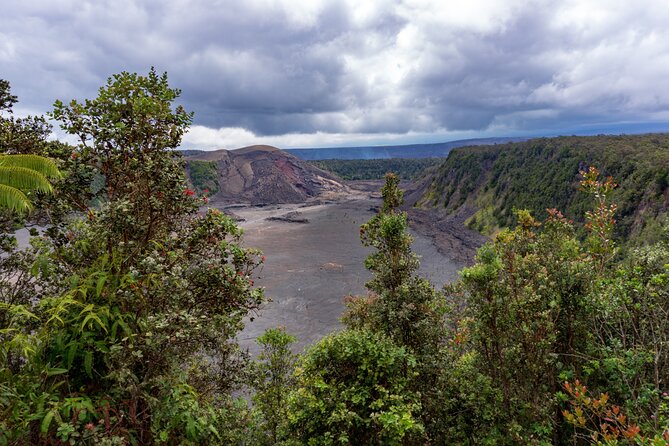
- Volcanoes National Park admission is included, and the stop covers multiple signature features (crater views, lava tube, steam vents).
- Greenwell Farms + Kona coffee gives you context for why Kona brew is a thing.
- Punaluʻu Black Sand Beach is the turtle stop—expect rough surf and keep swimming expectations realistic.
- No cell service in parts of the park means you should plan ahead with offline maps and downloaded info.
Inter-island flight + Kona pickup: what your day actually looks like
This is built for people staying on Oʻahu who want the Big Island highlight reel in one shot. You fly round-trip between Honolulu and Kona International Airport, then start the ground portion at Kona. Your posted start time is 8:00 am, and you’ll meet at the lot behind Alaska Baggage claim B-2.
After that, you’re on the road in an air-conditioned vehicle for most of the day. That matters because the Big Island isn’t a straight-line game: distances add up quickly, and you’ll be bouncing between climate zones. Even when you’re not hiking, you’re still traveling, so comfort and timing are the hidden value here.
Bring a light rain layer and be ready for temperature swings. Higher elevations can turn cool fast, and the tour’s own guidance calls out weather variability. On this kind of schedule, you’ll be thankful you packed layers.
You can also read our reviews of more tours and experiences in Honolulu.

Greenwell Farms: Kona coffee with actual backstory
Greenwell Farms is one of the oldest Kona coffee operations, founded in 1850 by Henry Nicholas Greenwell. It sits on the slopes of Mauna Loa, where the soil is volcanic and the daily pattern helps the coffee mature: sunny mornings, cloudier afternoons, and consistent rainfall.
This stop is only around 30 minutes, so think of it as a quick hit: you’re there to get the setting and the story, then move on. The payoff is how the coffee tour becomes more than a tasting gimmick. You learn why Kona coffee is high quality—volcanic soil and microclimate—not just that it tastes good.
If coffee is your thing, this stop tends to land well. One of the strongest signals from people who did this day is that the coffee is delicious, and the stop feels informative without being long-winded.
Practical tip: If you’re sensitive to sun, wear a hat. You’re on farm time under open skies, and you won’t want to do the rest of the day chasing sunscreen.
Manuka State Wayside Park: a short trail with a science-y payoff
Next you head to Manuka State Wayside Park, a 13-acre spot on Highway 11 (the Hawaiʻi Belt Road), on Mauna Loa’s slopes. The star here is the 2-mile Manuka Nature Trail, which gives you wet-and-dry forest variety in a small space.
This stop is free and quick—about 30 minutes—so you’re not doing a long hike. But even a short walk can be meaningful here because the park has native plants and wildlife you might not expect on a time-crunched Big Island day. You’ll also see interpretive signs that connect the vegetation to local geology and ecology.
This is a good contrast to the volcano stops. After seeing active geology at Hawaii Volcanoes National Park, Manuka reminds you that the island’s story is also plants, birds, and ecosystems surviving in different moisture zones.
Wear closed-toe shoes. Trail surfaces can be uneven, and the tour guidance is clear: skip flip-flops.
Punaluʻu Bake Shop + lunch reality check
Punaluʻu Bake Shop in Naʻālehu is famous for traditional Hawaiian sweet bread, with flavors like taro, guava, and mango. It’s also described as the southernmost bakery in the U.S., and it’s built for travelers: baked goods, a gift shop, and a garden.
You get another 30-minute stop here, plus it’s where you’ll stop for lunch. People typically like it for the taste and the cultural vibe, and it’s a classic checkpoint that breaks up the driving.
The practical heads-up: this is a popular place, and the timing is tight. One person found the lunch stop disappointing because the bakery felt crowded and options weren’t ideal. Another said snacks and included drinks didn’t match what they expected. So I’d treat lunch as a “plan to find something good” moment, not a guaranteed perfect meal.
If you want a smoother day, pack a backup snack. The tour also advises you to bring water and snacks since services can be limited during the day.
Punaluʻu Black Sand Beach: turtles, basalt, and rough water
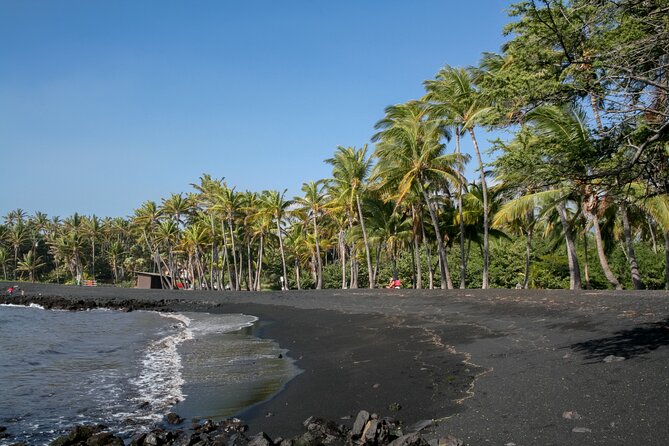
Punaluʻu Black Sand Beach is one of the most photo-worthy stops on the southern coast. The black sand is basalt—volcanic material—so the beach is basically geology you can walk on.
The best part here is the chance to see Hawaiian green sea turtles basking near shore. It’s not a “guaranteed” wildlife viewing situation, but the stop is famous for it, and people do report seeing turtles.
Keep one expectation grounded: the waters can be rough, and the stop description frames it as less ideal for swimming. Plan for viewing, photos, and the shoreline experience, not a beach day with laps.
This is a great place for a quiet reset between the coffee stop and the crater day. Even if you don’t get a turtle sighting, the black sand plus coconut palms and sea views make it memorable.




Hawaii Volcanoes National Park: Kīlauea highlights without wasting the day
This is the reason most people do this tour.
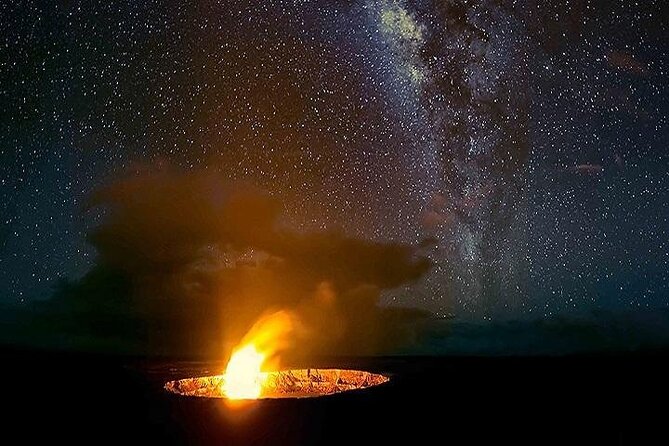
You start at the visitor center to get the geology and history context, then you head out to multiple signature areas. The tour’s national park time is about 2 hours, and it’s designed to hit several “you came all this way” moments.
Here’s what you can expect in the park:
- Halemaʻumaʻu Crater: The tour focuses on seeing the glow of molten lava when conditions allow. Sometimes it’s dramatic; sometimes it’s not as visible depending on activity and conditions.
- Kīlauea Iki Rainforest Lookout: A big contrast from the crater glow. This viewpoint frames a crater surrounded by rainforest remnants from earlier eruption activity.
- Thurston Lava Tube: A walk through a tunnel formed by flowing lava. People often call this a standout, because it’s physical and easy to understand.
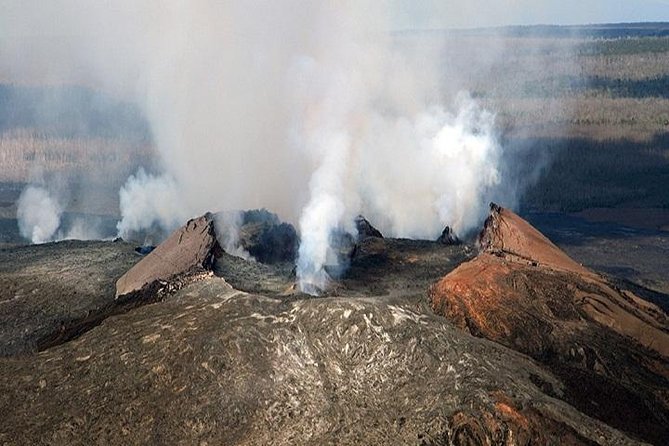
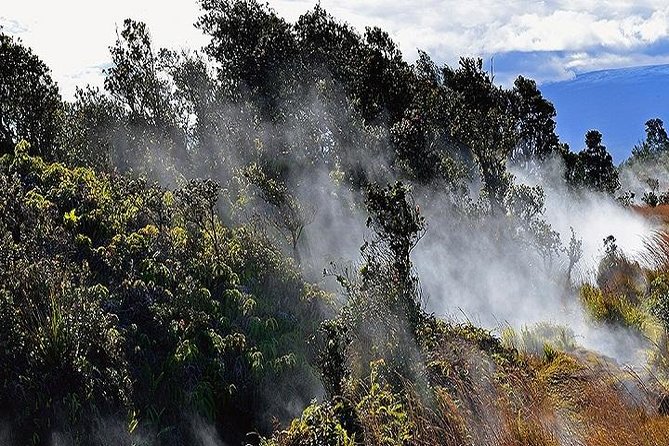
- Active steam vents: You’ll feel heat rising from geothermal activity. It’s not just a view; it’s a body-level reminder that the ground is still alive.
The park is also an active volcanic area, so you’ll be asked to follow safety guidance. A specific concern is volcanic gases. If you have asthma or other respiratory issues, this is worth taking seriously and discussing with your clinician beforehand. The tour guidance calls out that sulfur dioxide can worsen respiratory conditions.
Also: no cell service in many parts of the park. Download anything you need ahead of time, and don’t rely on your phone for navigation once you’re in the rough coverage zones.
Mauna Kea Access Road + Kohala Coast: higher elevation and big views
Later in the day, the drive includes Mauna Kea Access Road, which is described as steep and winding, climbing from Saddle Road (Route 200). As you go up, conditions change fast—grassy plains to barren volcanic terrain, thinner air, and colder temperatures.
This part of the tour isn’t a hike-only stop; it’s about the road journey and the changing altitude. The tour guidance is blunt: bring layers because it can get cool and wet at higher elevations.
Then you shift toward the Kohala Coast, known for scenic views and drier conditions compared with other island areas. This is the “change-of-world” segment: fewer dramatic geothermal moments, more coast and perspective.
If you get motion sick, consider sitting where the van feels smoothest for you. A couple of comments mention carsickness, and with a long day of driving, that’s not a joke.
Hilo as your cultural and human finish line
The tour also includes Hilo. The provided highlights for Hilo focus on history and museums, plus a few specific stops that help you understand why this town matters on the Big Island.
You’ll see:
- Lyman Museum (natural and cultural history)
- Hilo Historic District (preserved early 20th-century buildings)
- Pacific Tsunami Museum (impact of tsunamis on the region)
- Liliuokalani Gardens (honor Queen Liliʻuokalani)
There’s also mention of the Hilo Farmers Market as a lively local hub for goods and produce. Even if you only get time for a quick look, it’s a nice finish after a day focused on volcanic geology.
This is a good fit for people who like their science with context. The volcano day tells you how the island was shaped. Hilo helps explain how people lived with those forces—especially in places shaped by disaster and resilience.
Price and value: what $589.99 really buys you
At $589.99 per person, this tour isn’t the budget option. But it’s also not just “transportation and a checklist.”
Here’s where the value shows up:
- Round-trip airfare between Honolulu and Kona is included. Inter-island flight pricing can swing hard, and buying flights separately adds risk and complexity.
- Park admission for Hawaii Volcanoes National Park is included.
- You get a private-vehicle style day with an air-conditioned ride and a guide who shares island context and site stories.
- The day is structured to reduce wasted time. Instead of stitching together multiple rentals and road stops, you’re set up to hit the Big Island highlights in a single day.
Where the price can feel heavy is lunch and personal pace. Meals are at your own expense, and the day can be tight—especially around popular stops. If you’re someone who needs long, quiet downtime to fully enjoy a meal, you may feel the schedule.
My suggestion: If you’re short on days on Oʻahu and you really want Kīlauea plus black sand turtles, the package can feel like paying for speed and simplicity. If you have several days to spare on the Big Island, you might get more relaxed value by doing fewer stops and staying longer.
The guide effect: why Mel and Henry come up again and again
One of the most praised parts of this experience is the guide. Two names show up strongly: Mel and Henry. People describe them as funny, engaging, and very strong on the science and history behind the places—especially at the volcano sites.
That matters because Volcanoes National Park can be overwhelming without context. When your guide can explain what you’re seeing at Halemaʻumaʻu, how lava tubes form, or what steam vents mean, the park time feels better spent.
There’s also a note on guide style: one family described a more structured, military-like approach, and the feedback suggested they would’ve preferred a more relaxed pace. So if you’re sensitive to strict tone, it may help to communicate your comfort level when you’re meeting the group.
Overall, the guide is the glue for the whole day. Without that, you’d just be hopping stops. With it, you’re getting the why.
Who should book this full-day Big Island hit
This tour is a great match if you:
- Are staying on Oʻahu and want Big Island volcano highlights without planning a multi-day road trip.
- Love geology and want guided stops at Halemaʻumaʻu, Thurston Lava Tube, and the steam vents.
- Prefer a small-group day over driving yourself.
- Want the best chance at the Punaluʻu turtle stop without coordinating multiple routes.
It’s less ideal if you:
- Need lots of food breaks and quiet time, since the schedule moves.
- Have significant mobility limits for walking at sites like the lava tube area (sturdy shoes matter).
- Have respiratory issues and are concerned about volcanic gases—talk with a medical professional first.
The tour is marked as suitable for most travelers, and it allows service animals. Car seats are available for children ages 4 and under.
Should you book Aloha Sunshine Tours from Oʻahu?
If you only have one day to make the Big Island count, I think this is an efficient, good-value way to do it. The included inter-island flights take away a major headache. Then you stack the day with the big, iconic pieces—Kona coffee, black sand turtles, and a packed Volcanoes National Park stop.
My main “think twice” is about expectations: this is not a slow, leisurely day. It’s a lot of driving, short stops, and cool weather potential. Pack layers, bring backup snacks, and plan for limited cell service.
If those trade-offs work for you, book it. This is the kind of day that turns into a real bucket list memory—especially when the volcano portion hits its most dramatic moments.
FAQ
Is round-trip airfare included?
Yes. Round-trip airfare from Honolulu International Airport to Kona International Airport is included.
Where do I meet the group at Kona Airport?
If you fly into Kona International Airport, meet at the lot behind Alaska Baggage claim B-2.
What’s included in Hawaii Volcanoes National Park?
Park admission is included, and the visit includes stops such as Halemaʻumaʻu Crater, Kīlauea Iki Rainforest Lookout, Thurston Lava Tube, and active steam vents.
Are meals included?
No. Meals are at your own expense. Lunch is stopped for at Punaluʻu Bake Shop.
What should I bring for the day?
Bring water, snacks, sunscreen, and a hat. Wear sturdy, closed-toe shoes. Pack layers, including a rain jacket, because weather can change quickly, especially at higher elevations.
Is there cell service in the park?
Cell phone service is limited or nonexistent in many parts of the park, so plan accordingly.
Are service animals and kids car seats allowed?
Service animals are allowed. Car seats are available for children ages 4 years and under.