REVIEW · HONOLULU
Arizona Memorial Pearl Harbor and Honolulu City Tour from Kona
Book on Viator →Operated by Aloha Sunshine Tours · Bookable on Viator
Pearl Harbor has a gravity that follows you home. This day trip from Kona stitches together round-trip flights, a guided stop at the USS Arizona Memorial, and a fast but meaningful look at Honolulu’s key landmarks.
I like that the morning starts with an organized flow: you’re handed the tickets, you get a guided narrative in town, and you’re not stuck figuring out how to fit Pearl Harbor into a short visit. The one thing to watch is service and timing: some booking experiences describe strict or confusing pickup moments, and there are also accounts of Pearl Harbor access not matching expectations for pre-arranged entry—so you’ll want to confirm your details and build in extra patience early in the day.
In This Review
- Key Highlights You’ll Actually Notice
- Kona to Honolulu in One Shot: Why This Tour Can Be Worth the Money
- Pearl Harbor Visitor Center: The 23-Minute Film That Sets the Stage
- USS Arizona Memorial: Wreckage Details and the Names Wall
- Timing and access reality check
- Downtown Honolulu in 45 Minutes: How to Get Value Without Getting Lost
- Punchbowl National Memorial Cemetery: The View Is Part of the Message
- Iolani Palace and Aliʻiōlani Hale: Royal Power, Now in the Middle of Town
- Kawaiahaʻo Church: Old Worship, Clear Cultural Significance
- Price and Value: What $399.99 Really Buys (and What It Doesn’t)
- Tips That Make the Day Go Smoother
- How Much Walking Is Involved?
- Should You Book This Kona to Oahu Pearl Harbor and Honolulu Tour?
- FAQ
- Is airfare included in the price?
- What stops are included in the tour?
- Are tickets for Pearl Harbor provided or do I need to buy them?
- Can I bring a bag or purse into Pearl Harbor?
- Where is pickup in Honolulu, depending on my airline?
- What time does the tour start?
- Is the tour refundable if I cancel?
Key Highlights You’ll Actually Notice
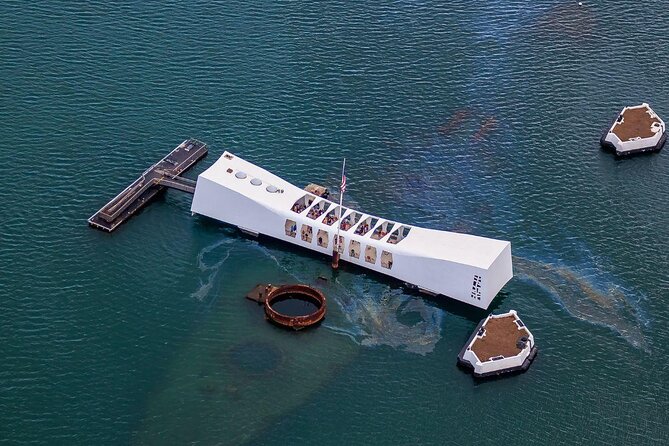
- USS Arizona Memorial boat ride + exhibit time: you get context first, then you go out to the memorial by Navy-operated boat.
- The Tears of the Arizona and the Names Wall: you’ll see the wreckage details and the 1,177 names etched into the remembrance wall.
- Punchbowl views from an extinct volcano: the cemetery sits in crater ground with big sightlines over Honolulu.
- Iolani Palace and government history in one loop: monarchy stories plus stops at the Kamehameha statue and Aliʻiōlani Hale.
- Small-group style with narration: the tour is described as up to 15, with overall activity capacity noted as higher—either way, you’ll have a human guide driving the story.
Kona to Honolulu in One Shot: Why This Tour Can Be Worth the Money
If you’re staying on the Big Island and want Oahu highlights without building an entire travel plan from scratch, this is the kind of “packaged day” that can save your energy. The price is steep at $399.99 per person, but it’s not just a sightseeing ticket. It includes round-trip airfare from Kona to Honolulu International Airport, air-conditioned vehicle transportation, and admission to the paid sites on the program.
In practice, that means your morning isn’t a scramble of rental cars, ticket websites, and time math. You also avoid a chunk of uncertainty that comes with figuring out how to get from one major site to another while keeping Pearl Harbor timed right.
Do note the trade-off. Because flights are included, your day can run on an early schedule. The meeting/pickup structure is also specific: pickup is tied to your airline terminal and baggage claim area, and Pearl Harbor has its own rules that don’t allow bags on-site. If you’re the type who likes to wake up late and wander freely, this tour’s structure may feel tight.
You can also read our reviews of more city tours in Honolulu

Pearl Harbor Visitor Center: The 23-Minute Film That Sets the Stage
Your first major stop is the Pearl Harbor Historic Sites Visitor Center. This is where the day starts to make sense. Before you’re sent toward the water, you’ll have time to work through exhibits that explain what led up to the attack on December 7, 1941. It’s the kind of groundwork that helps when you later see the remains of the ship and the names of the people who were lost.
A highlight here is the 23-minute documentary film, which gives you a clear overview of the attack, its impact, and the significance of the USS Arizona Memorial. Even if you already know the basic timeline, the film ties the story to what you’re about to experience physically.
You’ll then board a U.S. Navy-operated boat for a short ride across the harbor. The ride is brief—about 10 minutes—and it’s described as calm. That matters. It’s not just transportation. It’s the moment where you go from “museum mode” into “memorial mode,” with views of the surrounding military installations as the air changes from tourist chatter to reflection.
USS Arizona Memorial: Wreckage Details and the Names Wall
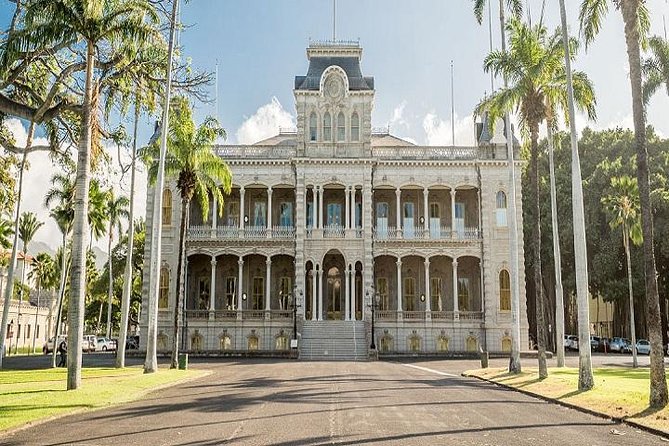
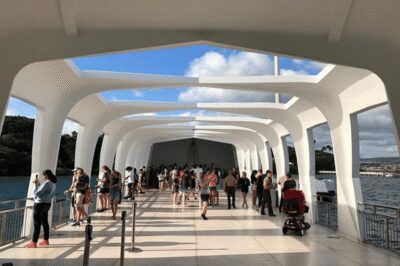
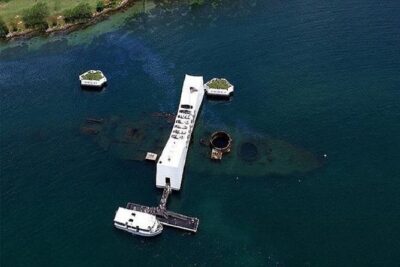
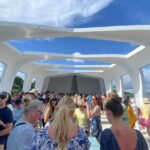
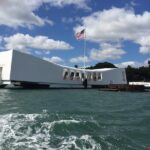
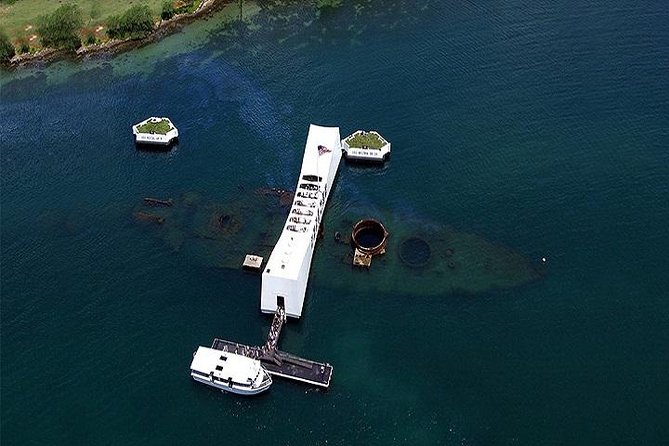
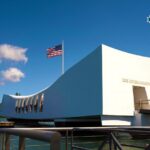
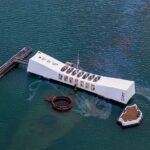
At the memorial, the tone changes fast. The USS Arizona Memorial is an open-air structure spanning the remains of the sunken battleship. The design is simple on purpose. It’s meant for quiet attention, not big photos or loud commentary.
Inside, you can look down toward the water to see parts of the wreckage. One of the details people remember is the outline of the ship just below the surface, along with oil droplets often referred to as the Tears of the Arizona. Whether you’re a history buff or not, this is the kind of visual detail that makes the tragedy feel real.
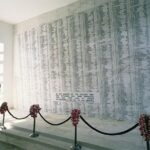
At the far end is the Remembrance Wall, with the names of the 1,177 crew members who died aboard USS Arizona. This is where the site becomes personal. You’re not reading random text—you’re encountering a wall-sized roll call of people. It’s also why the site asks for respectful silence. The memorial experience is built around quiet.
Timing and access reality check
Your tour description emphasizes admission handling and avoiding long waits, but Pearl Harbor access can still be time-sensitive. Some booking experiences describe being placed on a standby-style flow rather than having guaranteed pre-set access, which can add waiting time. My advice: go in assuming this stop may be governed by the rules of the day, not just your schedule on paper. If you’re sensitive to delays, build emotional space for it.
Downtown Honolulu in 45 Minutes: How to Get Value Without Getting Lost
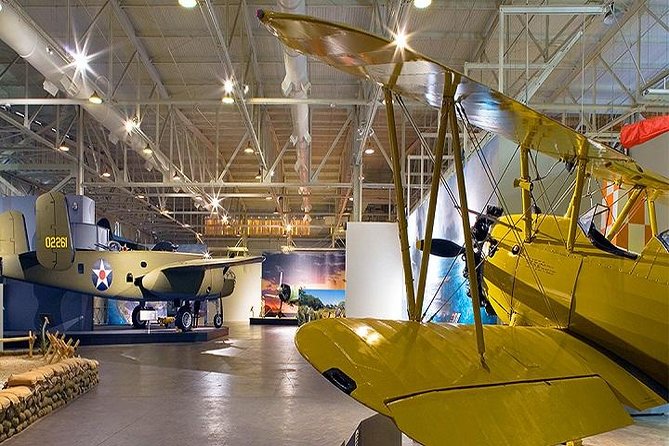
After the memorial, you’ll head into downtown Honolulu for about 45 minutes. This isn’t a deep, slow city walk. Think “fast orientation with a guide.” The program is narrated, so you’re not just seeing buildings—you’re hearing the thread that connects Hawaii’s past, cultural identity, and the modern city layout.
This short segment can be surprisingly helpful if you’re wondering what you’re looking at. You’ll get context for the places you later visit, especially as the route turns toward royal-era sites. It’s a good trade if you don’t want to spend half a day on a bus.
The key here is to listen and look at the same time. Even short city stops work best when you’re alert for “why is this here?” moments—because the guide is filling in those gaps for you.



Punchbowl National Memorial Cemetery: The View Is Part of the Message
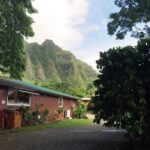
One of the most moving stops comes with one of the most scenic backdrops. The National Memorial Cemetery of the Pacific sits on top of an extinct volcano, also known as Punchbowl. The location matters because it changes how the cemetery feels: you’re above the city and surrounded by the sense that the viewpoint is part of remembrance.
The grounds are described as beautifully maintained, with rows of white headstones set against green landscape. But beyond the neatness and symmetry, the real payoff is the crater setting. Because Punchbowl is elevated, you can take in striking views of downtown Honolulu, Diamond Head, and the coastline.
This is also a stop where you’ll want to slow down. The cemetery is not designed to be rushed. Your walking time may be limited depending on the group flow, but the emotional pacing should be your pace. If you’re prone to moving too fast when you’re tired, this is the place to fight that habit.
Iolani Palace and Aliʻiōlani Hale: Royal Power, Now in the Middle of Town
Next comes a stop that feels like a shortcut to understanding Hawaii’s monarchy. Iolani Palace is described as the only royal palace in the United States. That fact alone makes it a rare stop, but what you’ll actually benefit from is the story: you’ll learn about Hawaii’s monarchy and hear about King Kalākaua and Queen Liliʻuokalani, the last reigning monarchs.
The palace time is brief—about 15 minutes—so don’t expect a long, self-guided museum day. Instead, think of it as a guided “big picture moment,” then a chance to look around quickly so the stories stick.
From there, you’ll see the iconic King Kamehameha Statue, which symbolizes Hawaii’s unity and strength. Nearby is Aliʻiōlani Hale, the historic government building that now houses the Hawaii State Supreme Court. Even if you don’t go inside, the sight connects you to how governance used to be physically centered in the kingdom’s capital life.
Your guide will also do talk story—bringing the official sites to life with human detail instead of just dates. That kind of narration is exactly what makes a short city stop feel worth it.
Kawaiahaʻo Church: Old Worship, Clear Cultural Significance
The program also includes Kawaiahaʻo Church, often described as the Westminster Abbey of the Pacific. That nickname is useful because it sets expectation: this is one of the older Christian places of worship in Hawaii.
The value here isn’t only architecture or age. It’s the role the church played in Hawaii’s religious history, explained by the guide during the stop. When you pair this with Iolani Palace and the surrounding government landmarks, the whole area starts to feel like a timeline you can walk through—even when the time on each stop is short.
If you like your cultural context delivered by a person standing beside you, this church stop is a nice “story pause” between heavier memorial moments.
Price and Value: What $399.99 Really Buys (and What It Doesn’t)
At $399.99 per person, this tour has to earn its place. Here’s what you’re paying for:
- Round-trip airfare from Kona to Honolulu (a major cost saver if you’re not planning to fly anyway)
- Pickup tied to your airline terminal and baggage claim area
- Air-conditioned vehicle for the Honolulu portions
- Admission tickets for the scheduled paid stops (and tickets provided by your guide)
What you’re not paying for is just as important:
- Meals are at your own expense
- At Pearl Harbor, purses and bags are not allowed inside the secure areas
There are on-site dining options at the Pearl Harbor Visitors Center and near the Battleship Missouri—food trucks, snack stands, and cafes where you can eat before or after your visit. That’s helpful if your day runs tight.
Now for the honest part. Some negative booking experiences describe major instruction confusion (pickup timing, flight departure timing, and finding the bus) and mention less time at Pearl Harbor than expected. You can’t control every operational factor on a multi-stop day, but you can control your readiness. Show up early for the pickup location. Keep your phone charged for quick contact. And treat morning timing as sacred.
Tips That Make the Day Go Smoother
These are the practical rules that can make or break your morning:
- Wear comfortable shoes. You’ll walk more than you think across city blocks.
- Know the Pearl Harbor bag rule: no purses and bags inside; you can store bags for $7.00 each. Clear plastic bags are allowed if contents are visible.
- No swimwear. It’s a memorial site with restrictions.
- If you’re unsure about what bag type works for you, plan to pack light and keep it visible.
- The memorial experience includes a request for respectful silence while you’re on the USS Arizona Memorial.
One more thing: tipping is part of the culture here. Cash for your guide is appreciated if you enjoyed the narration and pacing.
How Much Walking Is Involved?
This isn’t marketed as a full wheelchair-friendly day. The program notes it’s not recommended if you can’t walk about 4 city blocks. That includes the Honolulu areas and the way the route moves between the stops.
If you have limited mobility, you might still manage it with your own pace, but you’ll need to be realistic about the walking segments and time in outdoor spaces like Punchbowl. On the other hand, if you can do moderate walking and you’re okay with short stop times, this is manageable.
Should You Book This Kona to Oahu Pearl Harbor and Honolulu Tour?
I’d book this if you want a structured, history-heavy day on Oahu with flights and entrance handled for you and you’d rather spend your time listening than planning. It’s a strong fit for first-timers who want Pearl Harbor plus a quick sweep of Honolulu’s key landmarks like Punchbowl and Iolani Palace.
I’d hesitate if you’re very sensitive to schedule changes and early pickups. Some accounts describe confusion around pickup timing and frustration with guide conduct, including one report that named a guide Ariel as rude. It’s not a dealbreaker for everyone, but it’s a reason to double-check your pickup instructions, read any updated messaging carefully, and arrive early.
If you do go, pack light for Pearl Harbor, start calm, and don’t rush the memorial moment. The aircraft-to-memorial-to-city flow is intense, but the emotional payoff at USS Arizona is the kind of experience that tends to stick.
FAQ
Is airfare included in the price?
Yes. The tour includes round-trip airfare to Honolulu International Airport from the Big Island, plus transportation by air-conditioned vehicle during the Oahu portion.
What stops are included in the tour?
The program includes Pearl Harbor (Visitor Center and USS Arizona Memorial) and Honolulu highlights such as National Memorial Cemetery of the Pacific (Punchbowl), Iolani Palace, the area around King Kamehameha Statue / Aliʻiōlani Hale, and Kawaiahaʻo Church.
Are tickets for Pearl Harbor provided or do I need to buy them?
Tickets are included and you’ll receive them from your driver/guide on the morning of your tour, so you don’t need to manage Pearl Harbor ticketing yourself.
Can I bring a bag or purse into Pearl Harbor?
No. Purses and bags are not allowed inside Pearl Harbor. Bags can be stored for $7.00 each. Clear plastic bags with visible contents are allowed, and medical equipment bags are allowed if they meet the bag rule described.
Where is pickup in Honolulu, depending on my airline?
Pickup depends on your airline: if you flew Southwest, pickup is at Terminal 2, baggage claim 31, area 5. If you flew Hawaiian, pickup is at Terminal 1, area 1.
What time does the tour start?
The start time is 7:00 am with pickup details provided based on your arrival terminal and airline.
Is the tour refundable if I cancel?
Yes. You can cancel for a full refund if you cancel at least 24 hours before the experience’s start time. If you cancel within 24 hours, the amount paid is not refunded.