REVIEW · OAHU
Adventure Course Extreme Including Climbing Wall & Rappel
Book on Viator →Operated by Coral Crater LLC · Bookable on Viator
Ninja skills meet gravity on Oahu. This Extreme adventure course in Kapolei has you working an aerial challenge path with 18 elements, then shifting to a climbing wall and ending with a 50-foot freefall. I love the mix of playful competition and real physical problem-solving, and I love that the team supplies the safety gear and coaching. One thing to consider: it’s serious adrenaline, and it’s not for people who don’t have strong fitness, plus there’s a strict 275-lb weight limit.
What makes it feel worth your time is the pace and attention. You’re not stuck in a giant crowd since the group tops out at 15, and you can pick a morning or afternoon timeslot. I also like that the experience is designed for people who want a guided challenge, not a DIY outdoor project.
Weather plays a big role in whether you’ll fly through the course. If conditions aren’t good, you’ll get a different date or a full refund, so keep your schedule flexible if possible. And remember, you check in 30 minutes early, because being late means no refunds.
In This Review
- Key Things I’d Focus On Before You Go
- Kapolei’s Extreme Tower: the simple pitch
- Aerial Obstacle Course: 18 challenge elements for real body control
- Climbing Wall: faster technique beats brute strength
- The 50-foot freefall: the adrenaline payoff
- What the certified guide and safety setup mean for you
- Price and value: is $109 a fair deal on Oahu?
- Where you meet in Kapolei (and how to plan around the check-in)
- What to wear and bring: shoes and weight limits you can’t ignore
- Group size, motion, and the “competition” vibe
- Weather and refunds: know how to handle a plan B
- Who should book this extreme course (and who should skip it)
- After you finish: the session wraps back at the meeting point
- Should you book Adventure Course Extreme Including Climbing Wall & Rappel?
Key Things I’d Focus On Before You Go
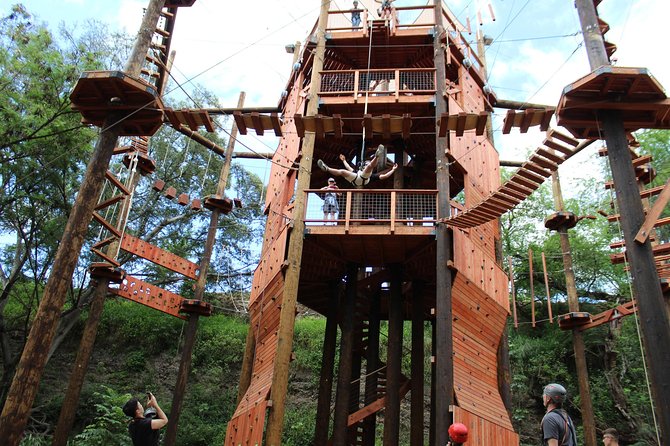
- 18 obstacle elements on the aerial course, built to test balance, strength, and nerves
- Certified tour guide support plus safety equipment and instruction throughout
- Climbing wall coaching so you’re not guessing your way up
- 50-foot freefall for the big, heart-thumping finish
- Small group (max 15) which usually means less waiting and more direct help
Kapolei’s Extreme Tower: the simple pitch
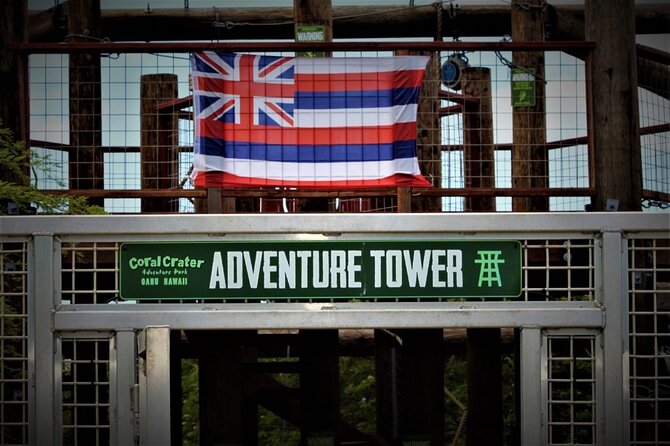
This is an active, guided adventure package in Kapolei that combines three different “get your adrenaline moving” challenges under one roof. You’ll spend your time on an aerial obstacle course, move to a climbing wall, and then take the jump from the top of the tower for a freefall moment.
The big value here isn’t just that you do multiple activities. It’s that you do them with safety equipment and instruction, which matters when the setting is high off the ground. You’re coming for the thrill, but you’ll also get coached so you’re not walking in blind.
It’s also set up for friendly competition. The experience is explicitly about trying to beat your friends and family on the course, which turns “doing obstacles” into a game instead of just exercise.
You can also read our reviews of more tours and experiences in Oahu.


Aerial Obstacle Course: 18 challenge elements for real body control
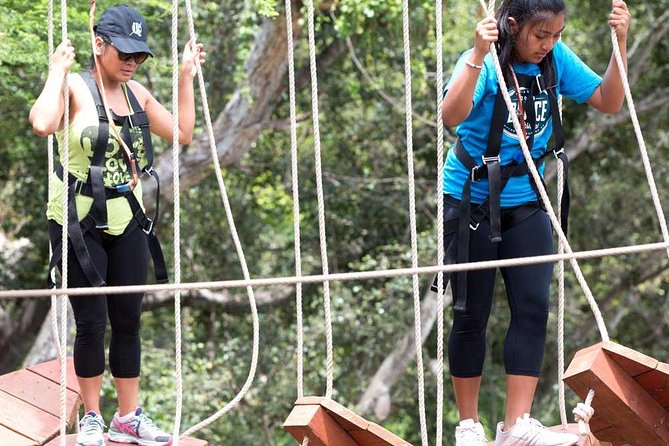
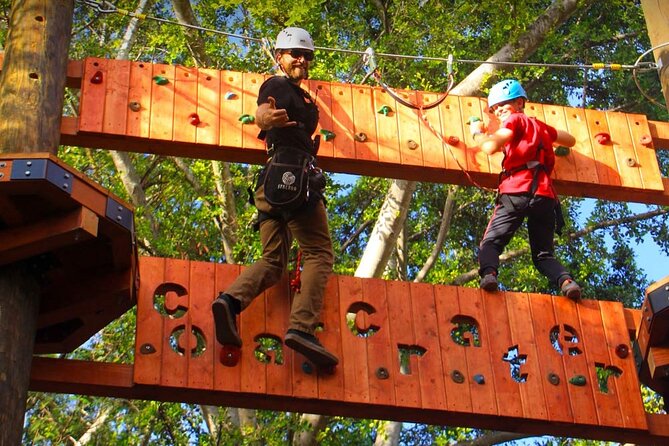
The aerial part is the centerpiece. You’ll navigate 18 challenge elements that ask you to climb, swing, and jump through the course like an Island Ninja in training. That combination is key: it’s not one single skill. You’ll use grip strength, core control, balance, and timing all in one session.
What I like about this setup is that it’s varied. If one obstacle doesn’t click, you’re not stuck repeating it. The course keeps moving you from one style of challenge to another, so you get multiple chances to build confidence quickly.
You should also expect a bit of the psychological work that comes with anything high up. Even if you’re fit, the height changes how your brain handles each move. The guidance and safety system help, but you’ll still feel that “okay, now commit” moment on certain transitions.
Climbing Wall: faster technique beats brute strength
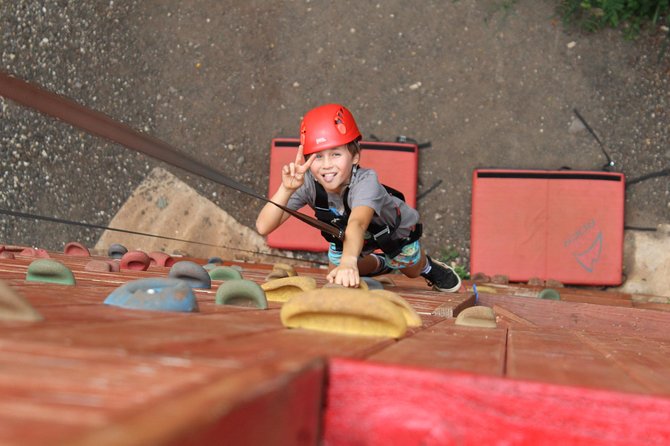
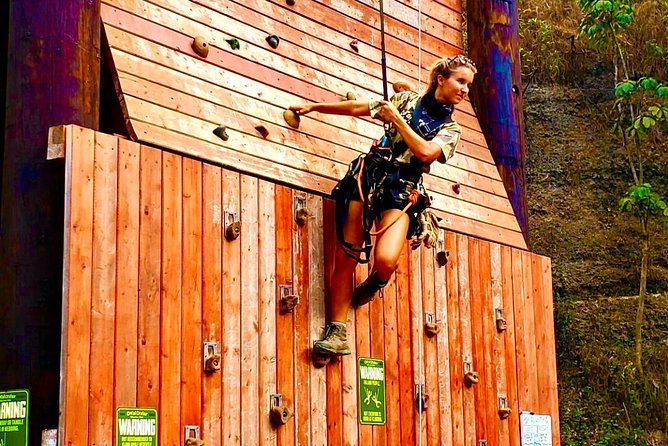
After the aerial course, you’ll tackle the climbing wall. This is where the experience shifts from obstacle navigation to a more direct vertical challenge. And instead of leaving you to figure it out on your own, the guides rope you in with pointers so you can improve your technique fast.
The climbing wall is a smart second act. By then, you’ve warmed up and you understand the gear and the pace, so you can focus on how to move efficiently. I’d treat it like a chance to work on clean body position and steady movement rather than just trying to muscle your way up.
If your group is competitive, this is also where the “fastest to the top” energy can really kick in. It’s not just about finishing. It’s about getting up well and doing it quickly.
The 50-foot freefall: the adrenaline payoff
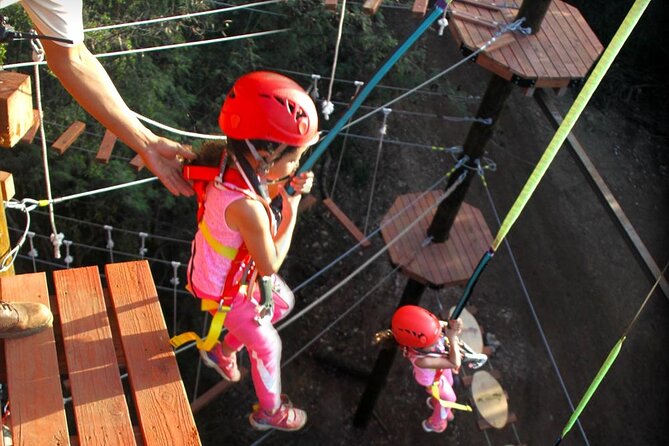
Then comes the moment most people remember. You jump 50 feet off the top of the tower for a freefall experience. This is the part that turns an outdoor adventure into a story you’ll tell later.
Here’s the practical way to think about it: freefall is short, but it’s intense. Even with safety systems and instruction, you’ll likely feel that quick burst of adrenaline right as you leave the top. If you’re the type who overthinks, this is where you’ll want to focus on the guide’s cues and your breathing rather than calculating every second.
The upside is that you’re not doing this alone. Professional guides are there to help you get started and to give you the info you need right when it matters.
What the certified guide and safety setup mean for you
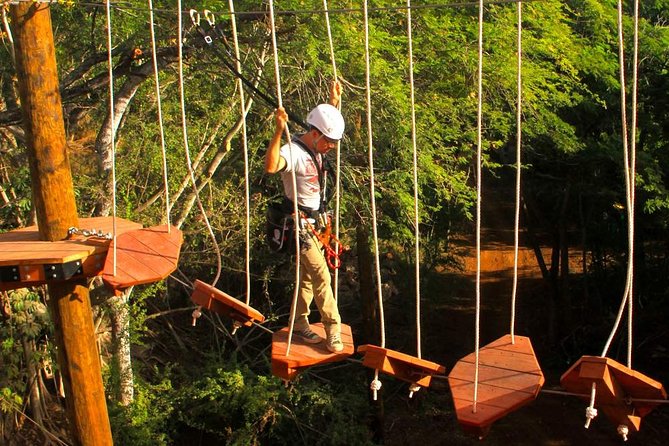
This package includes a certified tour guide, plus all safety equipment and instruction. That’s a huge deal in any high-adventure setting. You’re not responsible for assembling gear or figuring out how to use it while you’re already stressed by heights.
The small-group cap of 15 travelers also changes the feel of the session. Instead of getting rushed or ignored, you’re more likely to get personal check-ins and corrections when you need them. That matters for technique on the aerial elements and the climbing wall, and it matters even more for the freefall start.
A note on physical readiness: the experience is listed as requiring a strong physical fitness level. Translation: you should be comfortable moving, gripping, and sustaining effort for a couple of hours, not just doing light walking.


Price and value: is $109 a fair deal on Oahu?
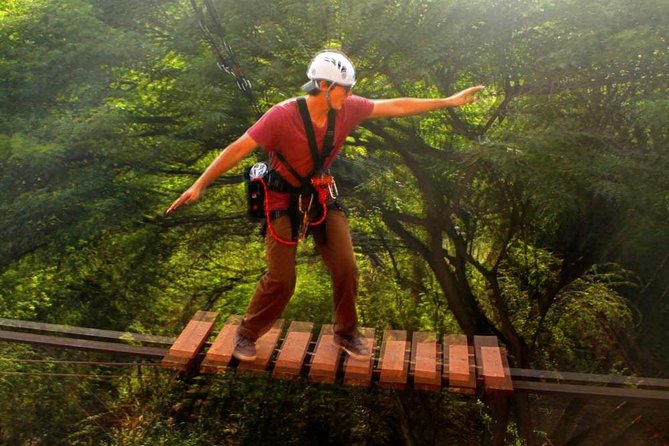
At $109 per person for about 2 hours 30 minutes (approx.), this is priced like an organized, guided activity package, not a casual attraction. The value comes from the fact that it combines three major components—aerial obstacle course, climbing wall, and 50-foot freefall—plus instruction and safety gear.
If you were to price each part separately (and you usually would), you’d likely end up spending more for the same supervised setup. Here, you’re buying time with a certified guide and access to equipment you don’t have to bring or rent yourself.
It’s also booked fairly far ahead on average (about 65 days), which is another quiet hint that slots can fill. If you’re set on this date, I’d plan to lock it in rather than assuming you can walk up last minute.
Where you meet in Kapolei (and how to plan around the check-in)
You’ll start at 91-1780 Midway St, Kapolei, HI 96707, USA, and the activity ends back at the meeting point. That back-to-start setup is convenient. It means you’re not juggling a shuttle schedule or trying to figure out transportation after you’re adrenaline-drained.
Check in 30 minutes before your start time. If you’re late, there are no refunds, so give yourself a buffer. Since it’s near public transportation, you’re not strictly tied to a car, but you’ll still want to arrive early enough that you’re calm when it’s time to get fitted and briefed.
Timeslots are offered in the morning or afternoon, so you can match it to your broader Oahu plan. If you’re pairing this with beach time, I’d generally aim for a time when you won’t feel rushed afterward.
What to wear and bring: shoes and weight limits you can’t ignore
Closed-toed shoes are required. The good news is that Crocs and water shoes are okay as long as they’re closed-toe options. This is one of those rare cases where you don’t need full hiking boots, but you do need something that works with the demands of climbing and moving around safely.
The weight rule is strict: you must enter passenger weights at booking, and the maximum is 275 lbs (no exceptions). If you’re booking for a group, double-check this early. It’s the kind of detail that can derail plans if it’s handled at the last minute.
Also, all passengers need a strong physical fitness level. If you’re coming from a day of lounging, make sure you still feel ready to climb, swing, and move on the aerial elements.
Group size, motion, and the “competition” vibe
The experience is designed to let you compete with friends and family on the course. That doesn’t mean it turns into a chaotic contest. It means you’ll likely be motivated to go for speed and clean moves as you work through obstacles and climb.
With a maximum of 15 travelers, that competition is more friendly than frantic. You’re sharing the experience, but it’s not a huge crowd where you’re constantly waiting for other people to finish.
If you’re traveling with kids, teens, or mixed fitness levels, this structure can work well because it’s guided. People can focus on doing their best on each element rather than comparing themselves to strangers.
Weather and refunds: know how to handle a plan B
This is weather-dependent. You’ll need good weather for the experience, and if it’s canceled due to poor conditions, you’ll be offered another date or a full refund.
Cancellation is free up to 24 hours before the experience starts, with a full refund if you cancel at least 24 hours in advance. Within 24 hours, refunds aren’t provided, and changes close to the start time aren’t accepted. So if there’s any chance of storms, keep your schedule flexible and don’t gamble too close to departure.
Who should book this extreme course (and who should skip it)
This is a strong match if you want:
- a guided aerial challenge with 18 elements
- a real climbing wall session with coaching
- the main-event thrill of a 50-foot freefall
- a setting where the group stays small (max 15)
You might want to think twice if:
- you don’t meet the “strong physical fitness” requirement
- you’re uncomfortable with height and sudden movements
- you’re near the weight limit, since it’s 275 lbs max with no exceptions
It’s also well-suited for groups who want a shared activity with a built-in competitive element, and for visitors who’d rather do one focused adrenaline hit instead of scattering time across multiple random stops.
After you finish: the session wraps back at the meeting point
When your time is up, the activity ends back at the meeting point. That’s practical on a busy Oahu day. You’re already in Kapolei, and you don’t have to plan extra travel to get yourself home after adrenaline fades.
Should you book Adventure Course Extreme Including Climbing Wall & Rappel?
If you want an organized, high-energy activity with real instruction, this is an easy yes. The best reason to book is the combination: you get an aerial course, a climbing wall with coaching, and a 50-foot freefall in one guided session, all wrapped in safety equipment and a certified guide.
Also, the numbers look reassuring: it has a 4.9 overall rating and a 100% recommendation rate based on 44 reviews. The recurring theme is simple—people come for the thrill and leave feeling it was worth the money.
Book it if you’re fit, you can follow safety directions, and you’re okay with heights. Skip it if you’re not physically ready or if the strict 275-lb weight limit (and the closed-toe shoe rule) would be an issue.
If you want one serious Oahu adrenaline experience that’s structured, guided, and built for speed, this Extreme tower course is a solid bet.